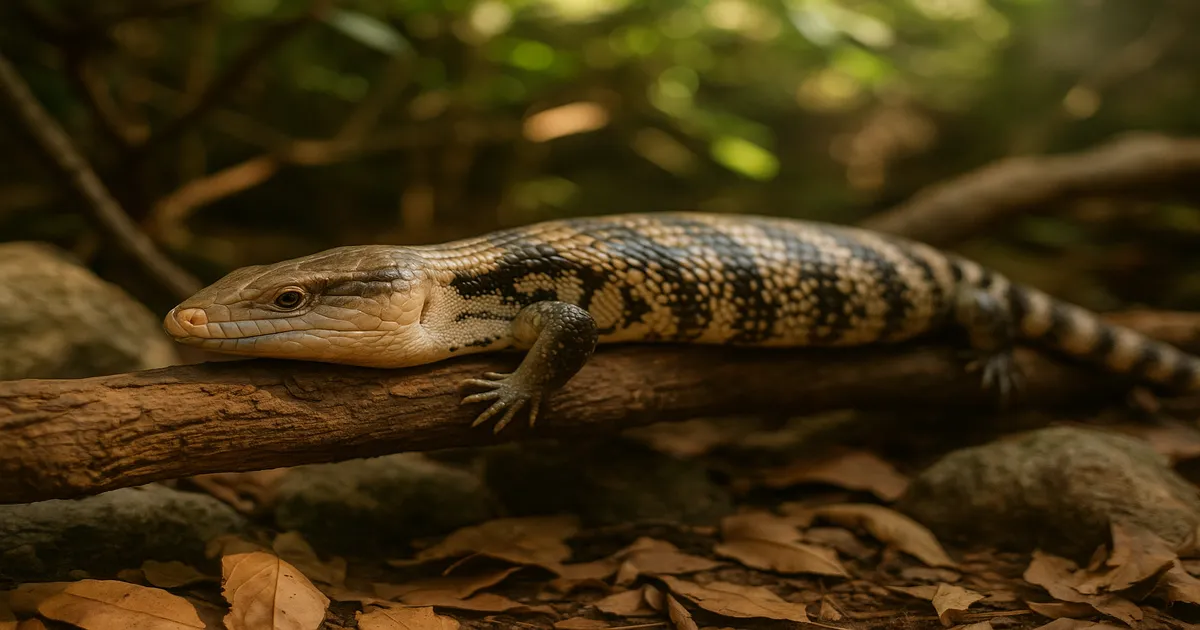
Quick Answer: The Blue-Tongued Skink is the best tegu alternative for most keepers — docile, omnivorous, and manageable in a 4x2x2 ft enclosure. If you want the full large-lizard experience closest to a tegu, the Savannah Monitor is the right call, provided you’re willing to do the husbandry correctly.
If you’re looking for the best alternatives to a tegu, you’re probably in one of a few situations: you live somewhere tegus are banned, you want a similar experience in a more manageable package, or you’ve done your research and realized an 8x4x4 ft enclosure isn’t happening in your apartment. All valid reasons. The good news is that several species genuinely deliver on what makes tegus so appealing — intelligence, handleability, and that satisfying sense that your lizard actually knows you exist.
This guide covers six alternatives in depth, with a comparison table, individual species reviews, and honest verdicts on who each one is actually right for.
Best Tegu Alternatives at a Glance
Top Pick for Most Keepers: Blue-Tongued Skink
The Northern Blue-Tongued Skink (Tiliqua scincoides intermedia) is the most accessible tegu alternative on this list by a wide margin. It’s docile from a young age, eats a varied omnivore diet that mirrors the tegu feeding experience, and fits comfortably in a 4x2x2 ft enclosure. Captive-bred animals are widely available, the care community is excellent, and I’ve yet to meet a keeper who regretted starting with one.
Top Pick for the True Tegu Experience: Savannah Monitor
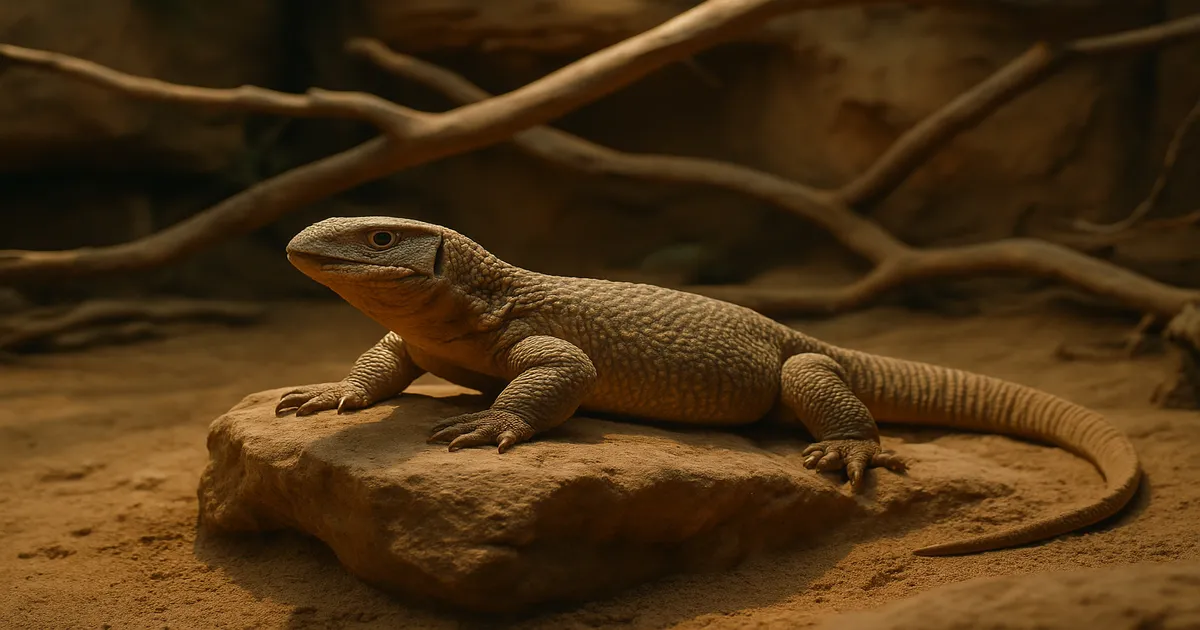
If what you specifically want is a large, intelligent lizard that commands a room and forms a real bond with you, the Savannah Monitor (Varanus exanthematicus) is the answer. It matches a tegu in size and commitment level — but it has a reputation for dying young in captivity that’s almost entirely the result of bad husbandry. Get the setup right (deep substrate, invertebrate-heavy diet, proper humidity), and you’ll have a completely different animal than what most people describe.
What to Look for in a Tegu Alternative
Size and enclosure footprint. Adult tegus need a minimum of 8x4x4 ft. That’s a significant chunk of any room, and it’s one of the main reasons people start looking at alternatives. Some species here — Savannah Monitor, Black-Throated Monitor — require similar square footage. Others, like the Ackie Monitor or Blue-Tongued Skink, work in a 4x2x2 or 4x2x3 ft enclosure, which is a meaningful reduction.
Temperament. The core appeal of a tegu isn’t its size — it’s the personality. Tegus are one of the few reptiles that genuinely seem to enjoy human interaction. Any species worth considering as an alternative needs to score well here, either naturally (Blue-Tongued Skink, Bearded Dragon) or with consistent handling investment (Savannah Monitor, Black-Throated Monitor).
Diet complexity and feeding costs. Tegus are omnivores, and feeding them is genuinely interesting — you’re rotating insects, eggs, whole prey, fruits, and vegetables. Some alternatives mirror that variety (Blue-Tongued Skink, Savannah Monitor with enrichment feeding). Others are more invertebrate-restricted (Ackie Monitor), which is fine nutritionally but changes the feeding dynamic.
Experience level. Some species on this list will punish beginner mistakes badly. The Savannah Monitor’s reputation for dying at three or four years old exists for a reason — it’s usually because someone kept it too dry, fed it mice, and gave it six inches of substrate. Be honest with yourself before committing to a species that requires precision husbandry.
Legal status. Argentine Black & White Tegus are banned or heavily regulated in Florida, Georgia, and parts of South Carolina due to their invasive status. Most alternatives here — Blue-Tongued Skinks, Ackie Monitors, Savannah Monitors, Bearded Dragons — are legal in the vast majority of US states, but always verify with your state’s fish and wildlife agency before purchasing.
Tegu Alternatives Compared: Specs at a Glance
| Species | Adult Size | Min. Enclosure | Basking Temp | Humidity | Diet Type | Experience Level | Lifespan |
|---|---|---|---|---|---|---|---|
| Argentine B&W Tegu (baseline) | 4–6 ft | 8x4x4 ft | 110–120°F | 60–80% | Omnivore | Intermediate | 15–20 yrs |
| Blue-Tongued Skink | 18–24 in | 4x2x2 ft | 100–110°F | 40–60% | Omnivore | Beginner | 15–20+ yrs |
| Ackie Monitor | 24–28 in | 4x2x3 ft | 150–170°F (surface) | 40–60% | Invertebrates | Intermediate | 15–20 yrs |
| Savannah Monitor | 3.5–5 ft | 8x4x4 ft preferred | 130–140°F | 50–70% | Invertebrates | Intermediate–Advanced | 10–15 yrs |
| Bearded Dragon | 18–24 in | 4x2x2 ft | 100–110°F | 30–40% | Omnivore | Beginner | 10–15 yrs |
| Dumeril’s Monitor | 3.5–5 ft | 6x3x4 ft | 120–130°F | 70–90% | Fish/invertebrates | Intermediate–Advanced | 15–20 yrs |
| Black-Throated Monitor | Up to 6 ft | 8x4x4 ft | 130–140°F | 50–70% | Whole prey/invertebrates | Expert | 15–20+ yrs |
Blue-Tongued Skink (Tiliqua spp.)
The Northern Blue-Tongued Skink is genuinely the easiest entry point into large lizard keeping. These animals are calm, curious, and seem to actively enjoy being handled — a combination you don’t find in most reptiles. Their omnivore diet (roughly 50–60% protein from insects, snails, and lean meat; 40–50% vegetables and leafy greens) means feeding time is interesting and varied without being complicated. Reputable breeders like Backwater Reptiles and independent hobbyist breeders on MorphMarket regularly have captive-bred animals available.
Care specs:
- Adult size: 18–24 inches
- Basking spot: 100–110°F (38–43°C)
- Ambient warm side: 85–90°F (29–32°C)
- Cool side: 75–80°F (24–27°C)
- Humidity: 40–60% (Indonesian subspecies prefer 60–80%)
- UVB: T5 HO 6% or 10%
- Enclosure: 4x2x2 ft minimum
- Lifespan: 15–20+ years
Pros
- Exceptionally docile and handleable, even as juveniles
- Manageable enclosure size — fits in most living situations
- Omnivore diet mirrors the tegu feeding experience on a smaller scale
- Strong captive-bred availability; the care community is large and well-developed
Cons
- Not a size equivalent to a tegu — if you specifically want a large lizard, this won’t scratch that itch
- Subspecies care differences (Northern vs. Indonesian humidity requirements) trip up new keepers regularly
- Wild-caught Indonesian imports are still circulating in the trade; avoid them
Best for: Keepers who want tegu-like personality and an omnivore feeding experience in a manageable, beginner-friendly package.
Ackie Monitor (Varanus acanthurus)
Don’t let the 24–28 inch adult size fool you into thinking Ackies are low-effort. These are true monitors — curious, active, and constantly investigating everything in their environment. The extreme basking temperatures (surface temps of 150–170°F/65–77°C) intimidate a lot of new keepers, but they’re non-negotiable. In the wild, Ackies wedge themselves into rock crevices to access intense radiant heat while keeping their core body temperature regulated. You need to replicate that with a proper rock pile or slate basking structure, and you need a quality infrared temperature gun to verify you’re actually hitting those numbers — not guessing.
Care specs:
- Adult size: 24–28 inches (60–70 cm)
- Basking surface temp: 150–170°F (65–77°C)
- Ambient warm side: 90–95°F (32–35°C)
- Cool side: 75–80°F (24–27°C)
- Humidity: 40–60% with a humid hide
- UVB: T5 HO 10%
- Enclosure: 4x2x3 ft minimum (height matters for climbing and thermal gradient)
- Substrate depth: 6–12 inches minimum
- Lifespan: 15–20 years
Pros
- True monitor intelligence and activity in a manageable body size
- One of the most readily breeding monitor species in captivity — rewarding for keepers interested in producing offspring
- Does well in pairs or small groups, which adds an interesting social dimension
- Strong captive-bred availability from dedicated Ackie breeders
Cons
- Extreme basking temperature requirements are easy to under-provide without a temperature gun to verify surface temps
- Deep substrate is frequently neglected — Ackies need room to burrow and will suffer without it
- Diet is more invertebrate-restricted than a tegu’s; less dietary variety overall
Best for: Intermediate keepers who want monitor-level intelligence and activity without committing to a 4–5 ft animal.
Savannah Monitor (Varanus exanthematicus)
Here’s the thing about Savannah Monitors: the species has a terrible reputation for dying young, and almost none of it is the animal’s fault. The typical captive savannah monitor is kept too dry, fed primarily mice and rats, given six inches of substrate, and dies of fatty liver disease or metabolic bone disease at age three. A savannah monitor kept on 18–24 inches of burrowing substrate, fed primarily roaches, snails, and earthworms, and maintained at 50–70% humidity is a completely different animal — healthy, active, and capable of living 10–15 years. The husbandry information is out there. There’s no excuse for getting it wrong anymore.
Care specs:
- Adult size: 3.5–5 ft (105–150 cm)
- Basking spot: 130–140°F (54–60°C)
- Ambient warm side: 90–95°F (32–35°C)
- Cool side: 75–80°F (24–27°C)
- Humidity: 50–70%
- UVB: T5 HO 10% or 12%
- Enclosure: 8x4x4 ft strongly preferred; 6x3x3 ft absolute minimum for a juvenile
- Substrate depth: 12–24 inches
- Lifespan: 10–15 years with proper care
Pros
- True tegu-size equivalent in terms of visual impact and keeper commitment
- Intelligent and genuinely tameable with consistent handling
- Widely available as captive-bred from reputable breeders
- Enrichment feeding with snails and roaches is engaging for both the animal and the keeper
Cons
- Husbandry errors are extremely common and often fatal — less forgiving of mistakes than a tegu
- The temptation to feed rodents is real (they’re easy, cheap, and the monitor will eat them eagerly) — resist it
- Wild-caught animals are heavily parasitized and should be avoided entirely
Best for: Experienced keepers who want the full large-lizard commitment and are willing to do the husbandry correctly.
Bearded Dragon (Pogona vitticeps)
The Bearded Dragon isn’t a size equivalent to a tegu, and I won’t pretend otherwise. But it earns a spot on this list because it genuinely delivers on the personality side of what makes tegus appealing. Beardies are among the most interactive reptiles in the hobby — they track movement, tolerate extended handling, and have distinct individual personalities. If what you’re actually after is a lizard that engages with you rather than merely tolerates you, a beardie is worth serious consideration. They’re also the most beginner-friendly animal on this entire list, which counts for something.
Care specs:
- Adult size: 18–24 inches (45–60 cm)
- Basking spot: 100–110°F (38–43°C)
- Ambient warm side: 85–95°F (29–35°C)
- Cool side: 75–80°F (24–27°C)
- Humidity: 30–40%
- UVB: T5 HO 10%
- Enclosure: 4x2x2 ft minimum
- Diet: Omnivore — insects and leafy greens; juveniles skew heavily insectivore
- Lifespan: 10–15 years
Pros
- Exceptionally handleable and personable — one of the most human-tolerant reptiles you can keep
- Well-documented care with an enormous, active community to draw on
- Manageable enclosure size and relatively straightforward husbandry
- Captive-bred animals are widely available at virtually every price point
Cons
- Not a size equivalent to a tegu — if raw size is what you’re after, look elsewhere
- Shorter lifespan than most alternatives on this list
- Less visually dramatic; won’t stop people in their tracks the way a 5-foot monitor will
Best for: Keepers who want tegu-like personality and daily interaction without any of the size, complexity, or enclosure footprint.
Dumeril’s Monitor (Varanus dumerilii)
Dumeril’s Monitor is genuinely underrated in the hobby, mostly because most keepers don’t know it exists. This is a docile, dark-scaled, semi-aquatic monitor that reaches 3.5–5 ft and is noticeably calmer than most monitors of comparable size. The high humidity requirements (70–90%) and need for a substantial water feature make the setup more involved, but keepers who put in the work end up with an impressive, handleable animal that almost nobody else at the reptile show has. That’s not nothing.
Care specs:
- Adult size: 3.5–5 ft (105–150 cm)
- Basking spot: 120–130°F (49–54°C)
- Ambient warm side: 85–90°F (29–32°C)
- Cool side: 78–82°F (26–28°C)
- Humidity: 70–90%
- UVB: T5 HO 10% or 12%
- Enclosure: 6x3x4 ft minimum with a large, deep water feature (the animal will soak and swim regularly)
- Diet: Fish, invertebrates, whole prey; crabs and crayfish are excellent enrichment feeders
- Lifespan: 15–20 years
Pros
- Unusually docile for a monitor of its size — much calmer than a Nile or Asian Water Monitor of comparable length
- Long lifespan; a well-kept Dumeril’s is a genuine 15–20 year companion
- Visually striking dark patterning; the semi-aquatic behavior is genuinely interesting to observe
- A rewarding choice for keepers who want something less commonly seen in the hobby
Cons
- High humidity requirements (70–90%) complicate enclosure design and maintenance significantly
- Less commonly available as captive-bred than other species on this list — finding a quality CB animal takes more effort
- The large water feature requirement adds cost and maintenance burden to an already complex setup
Best for: Intermediate keepers who want a large, docile monitor with a unique profile and are prepared for high-humidity husbandry.
Black-Throated Monitor (Varanus albigularis ionidesi)
The Black-Throated Monitor is the apex of this list — massive, powerful, and capable of forming a genuine bond with a dedicated keeper. Adults regularly reach 5–6 ft and are built like tanks. These animals can cause serious injury if mishandled, and that’s not a scare tactic — it’s just true. With consistent, patient handling from a young age, they can become remarkably calm. But this is an expert-level species, full stop. The enclosure requirements rival or exceed a tegu setup in scale and cost, and the feeding response on an adult is something you need to respect.
Care specs:
- Adult size: Up to 6 ft (180 cm)
- Basking spot: 130–140°F (54–60°C)
- Ambient warm side: 90–95°F (32–35°C)
- Cool side: 78–82°F (26–28°C)
- Humidity: 50–70%
- UVB: T5 HO 12%
- Enclosure: 8x4x4 ft minimum — and that’s genuinely a minimum, not a suggestion
- Diet: Whole prey, invertebrates, eggs; rodents can be offered occasionally but shouldn’t be the staple
- Lifespan: 15–20+ years
Pros
- True tegu-size equivalent — if you want maximum size and presence, this delivers
- Highly intelligent; capable of genuine tameness and keeper recognition
- Visually spectacular; one of the most impressive lizards in the hobby
- Long lifespan makes the investment worthwhile for the right keeper
Cons
- Expert-level only — not a species that forgives inexperience or inconsistent handling
- Powerful enough to cause serious injury; strong feeding responses require careful management
- Captive-bred animals are less commonly available and command higher prices
- Setup and ongoing feeding costs are substantial
Best for: Expert keepers who want the ultimate large-lizard experience and are going in with full awareness of what’s involved.
Our Verdict: Which Tegu Alternative Is Right for You?
Best overall: Blue-Tongued Skink. For the widest range of keepers — beginners, intermediates, people with limited space, people who just want a lizard they can actually interact with — the Northern Blue-Tongued Skink wins. It’s docile, long-lived, eats an interesting omnivore diet, and fits in a manageable enclosure. It’s not a size equivalent to a tegu, but for most people asking this question, it’s the right answer.
Best for the true tegu experience: Savannah Monitor. If you want the full commitment — the large enclosure, the daily interaction, the impressive animal that makes people stop and stare — the Savannah Monitor is the closest thing to a tegu that isn’t a tegu. Go in knowing the husbandry learning curve is real, and don’t let anyone talk you into feeding it mice as a staple.
Best monitor intelligence in a smaller body: Ackie Monitor. The pick for keepers who specifically want monitor-level intelligence and activity but aren’t in a position to house a 4–5 ft animal. Get the basking temperatures right, provide deep substrate, and you’ll have one of the most engaging lizards in the hobby.
Best for beginners who want personality over size: Bearded Dragon. If size isn’t the priority and you just want a lizard that genuinely seems to enjoy being with you, a Bearded Dragon is hard to beat. The care is well-documented, the community is enormous, and the animals are consistently personable.
Best underrated pick: Dumeril’s Monitor. Intermediate keepers who want something genuinely different and are prepared for high-humidity husbandry should seriously consider Dumeril’s. You’ll be one of very few people in your area keeping one, and the animal itself is a genuinely calm, impressive monitor.
Best for expert keepers only: Black-Throated Monitor. The ultimate pick for experienced keepers who want maximum size, intelligence, and presence. Approach it with the same respect and preparation you’d give a tegu — and then some.
One final note: Before purchasing any large lizard, verify the legal status in your specific state and county. Tegus are banned in Florida, Georgia, and parts of South Carolina. Some monitor species carry their own restrictions in certain jurisdictions. A quick call to your state’s fish and wildlife agency before you buy is always worth the time.
Frequently Asked Questions: Tegu Alternatives
What is the easiest large lizard to keep instead of a tegu?
The Blue-Tongued Skink is the most accessible option — docile from a young age, manageable in a 4x2x2 ft enclosure, and backed by well-documented care requirements and a large community. It’s not quite “large” in the tegu sense, but it’s the most beginner-friendly lizard that delivers a genuinely interactive experience.
Is a savannah monitor easier to keep than a tegu?
Neither is strictly easier — they’re comparable in commitment level. Savannah monitors arguably have a steeper husbandry learning curve because the consequences of getting diet and substrate wrong are severe and fast-moving. Tegus are more forgiving of minor care mistakes but require more space. If you’re new to large lizards, start with a Blue-Tongued Skink before committing to either.
What lizard is most similar to a tegu in personality and intelligence?
Savannah Monitors and Black-Throated Monitors come closest to tegu-level intelligence and bonding potential. Both are capable of genuine recognition of their keeper and can become remarkably calm with consistent handling. The Savannah Monitor is the more accessible of the two; the Black-Throated Monitor is strictly for experienced keepers.
Are tegus banned, and what should I get instead?
Argentine Black & White Tegus are banned or regulated in Florida, Georgia, and parts of South Carolina due to established invasive populations. If you’re in one of those states, Savannah Monitors, Ackie Monitors, and Blue-Tongued Skinks are all legal in most US jurisdictions — but always verify with your state’s fish and wildlife regulations, as laws change and local restrictions vary.
Can an Ackie Monitor replace a tegu for someone with limited space?
Yes, and it’s one of the best options for exactly that situation. An Ackie needs a 4x2x3 ft enclosure versus a tegu’s 8x4x4 ft — a significant reduction. You’re not getting the same size or dietary variety, but you are getting genuine monitor intelligence, high activity levels, and a long-lived animal that rewards attentive keeping. For space-limited keepers who want monitor-level engagement, the Ackie is the right call.