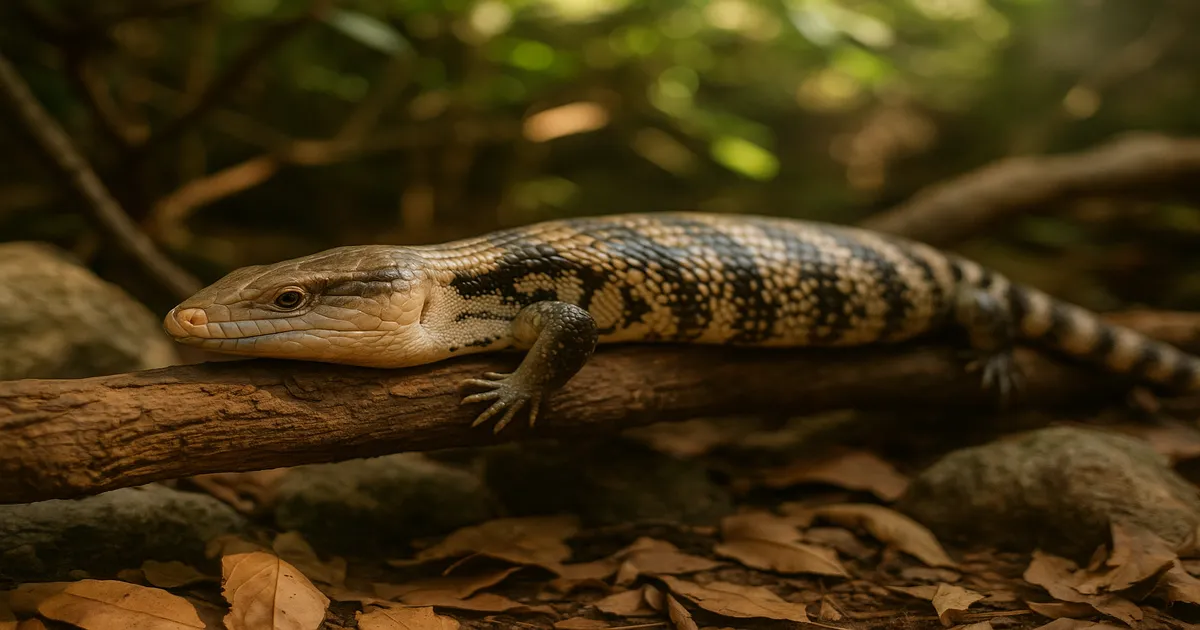
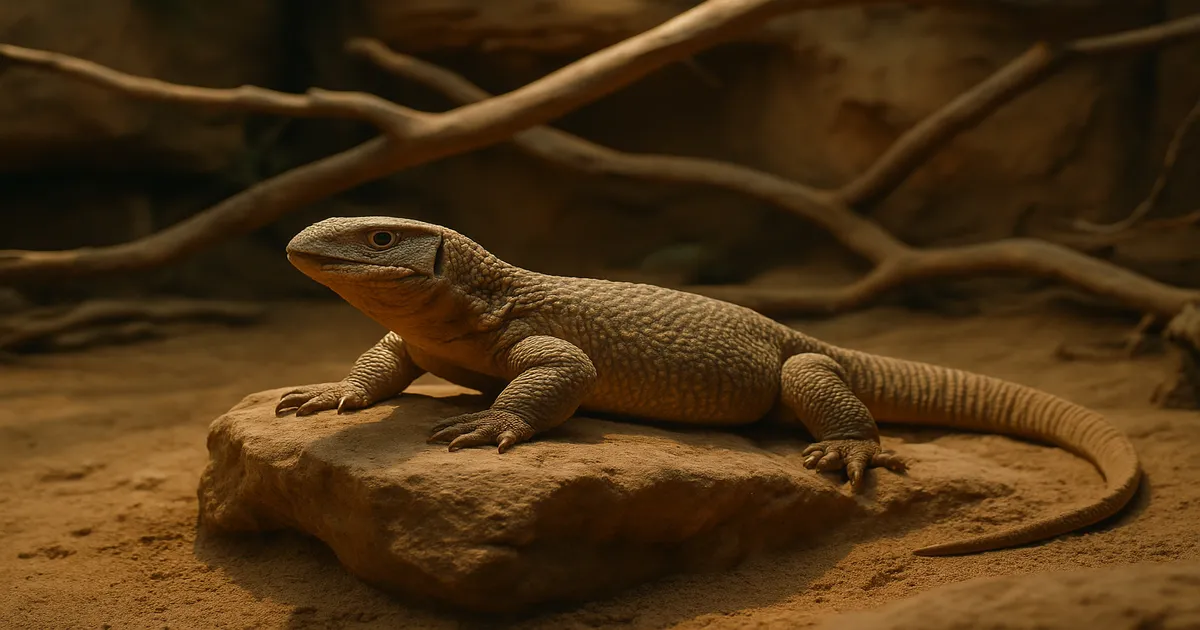
Quick Answer: Savannah monitors (Varanus exanthematicus) are intelligent, fossorial lizards from sub-Saharan Africa that grow 3.5–4.5 feet long and live 10–15 years in captivity — longer with excellent care. They need a massive enclosure (minimum 8×4×4 ft for adults), a basking surface of 130–150°F (54–66°C), at least 18 inches of burrowing substrate, high-output UVB, and a diet built around invertebrates, not rodents.
If you’re figuring out how to care for a savannah monitor, start here: this species gets misrepresented constantly. They’re sold cheap at expos, often pitched as “beginner-friendly” monitors, and set up in enclosures that would be fine for a bearded dragon. That mismatch is why so many of them die young. Done right, though, savannah monitors are genuinely fascinating animals — curious, interactive, and capable of real personality. They just demand that you do the homework first.
Savannah Monitor Care at a Glance
Species Snapshot
| Feature | Details |
|---|---|
| Scientific name | Varanus exanthematicus |
| Adult size | 3.5–4.5 ft (1.1–1.4 m) |
| Lifespan | 10–15 years (20+ with excellent care) |
| Origin | Sub-Saharan Africa |
| Temperament | Intelligent; tameable with consistent handling |
Key Care Requirements
| Parameter | Requirement |
|---|---|
| Adult enclosure (minimum) | 8×4×4 ft (240×120×120 cm) |
| Adult enclosure (recommended) | 10×5×5 ft (300×150×150 cm) or larger |
| Basking surface temp | 130–150°F (54–66°C) |
| Warm ambient | 95–100°F (35–38°C) |
| Cool side | 80–85°F (27–29°C) |
| Nighttime | 70–75°F (21–24°C) |
| Burrow temp | 80–88°F (27–31°C) |
| Ambient humidity | 40–60% |
| Burrow humidity | 70–80% |
| Substrate depth | 18–24 inches (45–60 cm) for adults |
| UVB | T5 HO 12% or 10.0 tube; UVI 3–6 at basking zone |
| Diet | Invertebrate-heavy; rodents 10–15% max |
Natural History and Behavior
Savannah monitors range across sub-Saharan Africa from Senegal in the west to Sudan and Ethiopia in the east. They live in savannah, grassland, and scrubland — environments with distinct wet and dry seasons, moderate humidity, and soil warm enough to bake on the surface but cool and moist several feet down. That seasonal cycle matters for how you set up their captive environment.
In the wild, they eat beetles, millipedes, scorpions, snails, and other invertebrates. Small rodents and bird eggs show up occasionally, but invertebrates are the foundation. This is one of the most important facts in savannah monitor care, and it’s routinely ignored by keepers who default to mice because it’s convenient.
These are also burrowing animals. A captive monitor that can’t burrow isn’t just missing enrichment — it’s under chronic physiological stress. Burrowing is how they thermoregulate, manage humidity, and feel safe.
Savannah monitors are sharp. They recognize individual keepers, learn routines, and have distinct personalities. Compared to Nile monitors or black-throated monitors, they’re generally calmer — but “calmer” doesn’t mean low-maintenance.
One strong recommendation before we go further: source captive-bred animals only. Wild-caught savannah monitors are cheap and everywhere at reptile expos, but they arrive dehydrated, stressed, and loaded with internal parasites. Many never fully adapt to captivity. A captive-bred animal from a reputable breeder costs more upfront and saves you heartbreak and vet bills down the road.
Savannah Monitor Enclosure: Size, Setup, and Design
Plan for the adult setup before you ever bring the animal home.
Enclosure Size by Age
- Hatchlings (0–6 months): 4×2×2 ft (120×60×60 cm)
- Juveniles (6–18 months): 6×3×3 ft (180×90×90 cm)
- Adults (18+ months): Minimum 8×4×4 ft (240×120×120 cm); recommended 10×5×5 ft or larger
Seriously experienced keepers often convert entire rooms for adult animals. That’s not overkill — it’s what the species warrants.
Materials and Construction
Commercial glass tanks aren’t practical for adult savannah monitors. They lose heat too fast, they’re not built for the substrate depth you need, and they’re almost never large enough. Custom PVC or melamine builds are the standard — they retain heat and humidity far better than glass or wood, which warps with moisture. (Animal Plastics T8 PVC Enclosure)
Front-opening doors are non-negotiable. Reaching in from the top triggers a defensive response — it mimics an aerial predator. Front access makes handling and maintenance much less stressful for both of you.
Cross-ventilation also matters more than most people realize. Screen panels on opposite sides of the enclosure prevent stagnant, humid air from building up and causing respiratory problems, while the deep substrate retains moisture where it’s actually needed.
Decor and Enrichment
Keep it functional:
- Cork bark hides on both warm and cool sides — large enough for the animal to fully disappear inside
- A soaking dish big enough for the whole body; heavy ceramic dog bowls work perfectly and don’t tip
- Climbing structures for juveniles — thick branches, cork rounds
- Foraging enrichment — bury prey in the substrate rather than dropping it in a bowl; this alone makes a measurable difference in behavior and body condition
Temperature, Lighting, and Humidity
Basking Temperatures
The basking surface needs to hit 130–150°F (54–66°C). That’s not a typo. Savannah monitors bask on sun-baked rock and soil that reaches these temperatures in the wild, and their digestive and immune systems are calibrated for it. If you’re hitting 110°F and calling it done, you’re impairing your animal’s metabolism.
Always verify with an infrared temperature gun — not an ambient thermometer, not a stick-on dial.
Full thermal gradient:
- Warm ambient: 95–100°F (35–38°C)
- Cool side: 80–85°F (27–29°C)
- Nighttime: 70–75°F (21–24°C)
- Burrow: 80–88°F (27–31°C)
Letting temps fall overnight is fine — it mirrors their natural environment. Advanced keepers also implement a seasonal cycle: a 2–3 month “dry season” in winter with reduced feeding, slightly cooler temperatures, and less substrate misting. This rest period supports long-term metabolic health and may encourage breeding behavior.
UVB Lighting
Savannah monitors are Ferguson Zone 4 animals — they receive high UV exposure in nature and need it in captivity. Skip UVB and you’re looking at metabolic bone disease, immune suppression, and a shorter-lived animal. D3 supplementation alone doesn’t replicate what proper UVB lighting does.
Use a T5 HO Arcadia 12% or Zoo Med Reptisun 10.0 tube spanning at least two-thirds of the enclosure length. Target a UVI of 3–6 at the basking zone, verified with a Solarmeter 6.5. Replace tubes every 12 months — UV output degrades well before the visible light does. Photoperiod: 12–14 hours in summer, 10–12 hours in winter.
Humidity: Surface vs. Burrow
Here’s the misconception that kills a lot of these animals: savannah monitors are not desert reptiles. Ambient humidity should stay at 40–60%, and the burrow microclimate should be 70–80%. Chronically dry conditions cause retained shed, dehydration, respiratory infections, and kidney disease.
Achieve burrow humidity by misting the substrate deeply with a pump sprayer — not by spraying the enclosure walls. The lower substrate layers hold moisture; the surface stays drier. That’s the natural microclimate you’re replicating.
Substrate: Depth, Composition, and Moisture
This is the most neglected aspect of savannah monitor care, and it’s not close. A monitor sitting on 3 inches of reptile carpet is an animal in distress. Burrowing isn’t optional — it’s how they thermoregulate, manage humidity, and feel safe.
Minimum depth: 12 inches (30 cm). For adults, 18–24 inches (45–60 cm) is where you want to be. There’s no workaround for this.
Best mix: 60–70% additive-free organic topsoil + 30–40% play sand. Add coconut coir to improve moisture retention. The goal is substrate that holds tunnel shape without collapsing — pack it firmly when setting up. If you dig a tunnel and it caves in immediately, the mix is too dry or too sandy.
Buy topsoil in bulk from garden centers. It’s the same product sold in pet stores at a fraction of the price.
Keep the lower layers slightly moist and the surface drier. Use a pump sprayer to water deeply every week or two — push the nozzle into the substrate and mist several inches down. Check burrow humidity with a digital hygrometer placed near substrate level.
Feeding Your Savannah Monitor
The Invertebrate-First Diet
Rodents are not a staple food for savannah monitors. A diet built around mice and rats will shorten your animal’s life. Savannah monitors fed primarily on rodents develop fatty liver disease, become obese, and die years earlier than they should. They look big and “healthy” while it’s happening, which is part of why this mistake persists.
The dietary foundation should be:
- Dubia roaches
- Black soldier fly larvae
- Hornworms
- Silkworms
- Snails (highly recommended — see the tip below)
- Superworms (in moderation)
- Appropriately sized whole prey
Mice or rats should be no more than 10–15% of the total diet — occasional variety, not a staple.
Feeding Schedule by Age
- Hatchlings: Daily or every other day
- Juveniles: Every 1–2 days
- Adults: 2–3 times per week; watch body condition carefully — fat pads behind the head or at the tail base are warning signs
Supplementation
- Calcium + D3: Dust insects 2–3× per week for juveniles, 1–2× per week for adults (Repashy Supercal LoD)
- Multivitamin: Once per week for all ages
Water and Hydration
Provide a dish large enough for the animal to soak its entire body. Monitors soak regularly and will also defecate in the water — change it every day or two. Dehydration is a serious and underappreciated problem in captive savannah monitors.
Common Savannah Monitor Care Mistakes
Enclosure too small. Adults kept in 4×2×2 ft setups develop chronic stress, obesity from lack of movement, and stereotypic pacing. Plan for the adult enclosure from day one.
Basking temps too low. Targeting 100–110°F at the basking spot impairs digestion and immune function. Verify with a temp gun and target 130–150°F.
Rodent-heavy diet. This is the most common way keepers accidentally shorten their monitor’s life. Transition to an invertebrate-based diet. If your animal refuses roaches, snails are almost universally accepted and make a great bridge food.
Insufficient substrate depth. Two to four inches of substrate denies the animal its most fundamental behavioral need. Minimum 12 inches; 18–24 inches for adults.
Treating them like desert animals. Dry conditions cause dehydration, retained shed, and kidney disease. Maintain 40–60% ambient humidity, keep the deep substrate moist, and provide a soaking dish.
Buying wild-caught animals. First-year mortality is high. Source captive-bred animals from reputable breeders and get a fecal exam done by a reptile vet on arrival regardless.
Skipping UVB. D3 supplementation helps but doesn’t replace proper UVB lighting. Install high-output T5 HO UVB from day one.
Pro Tips for Savannah Monitor Husbandry
Use a burrow camera. Savannah monitors spend a lot of time underground — that’s normal, healthy behavior. Install a small wildlife camera or USB endoscope near a burrow entrance so you can check on your animal without disturbing it. Keepers who don’t do this often assume their monitor is ill when it’s simply behaving naturally.
Make them forage. Stop putting food in a bowl. Scatter roaches around the enclosure, bury prey in the substrate, make the animal work for its meal. This activates natural hunting behavior, provides real exercise, and dramatically reduces pacing.
Use snails for picky eaters. Snails are almost irresistible to savannah monitors — nutritious, moisture-rich, and the shell-crushing behavior gives the jaw a real workout. If you’re transitioning a wild-caught animal onto captive feeders, or trying to get a sick monitor eating again, start with snails. Garden snails from pesticide-free areas work, as do purchased feeder snails.
Tame through scent. Before handling sessions, rub your hands on the enclosure substrate. Savannah monitors rely heavily on chemosensory input, and an unfamiliar scent reads as a threat. Making your scent part of their environment reduces defensive responses and speeds up taming considerably.
Implement seasonal cycling. For 2–3 months in winter, reduce feeding frequency, drop temperatures slightly, and ease off substrate misting. This mimics the African dry season and appears to support long-term metabolic health. Experienced keepers consistently report better longevity in animals that are seasonally cycled.
Frequently Asked Questions About Savannah Monitor Care
How big do savannah monitors get in captivity?
Most captive savannah monitors reach 3.5–4.5 feet (1.1–1.4 m) as adults. Males tend to be larger than females. Animals fed a rodent-heavy diet often appear larger due to obesity, not actual healthy growth — so size alone isn’t a reliable indicator of good husbandry.
Are savannah monitors good pets for beginners?
They’re often marketed that way, but no — not really. They need enormous enclosures, precise temperatures, deep substrate, and a diet that takes real effort to source. A keeper who’s already comfortable with large lizards and willing to do the work can absolutely succeed with a savannah monitor. Someone looking for a low-maintenance reptile should look elsewhere.
How long do savannah monitors live?
In captivity, 10–15 years is typical with decent care. Animals kept in proper conditions — correct temperatures, invertebrate-based diet, deep substrate, UVB — can reach 20 years or more. Animals fed primarily rodents in undersized enclosures often don’t make it past 5–7 years.
How do I tame a savannah monitor?
Consistency and patience. Start with short, calm handling sessions — 5 to 10 minutes — and work up gradually. Never grab from above. Let the animal walk onto your hand rather than being scooped up. Scent familiarization (rubbing your hands on the substrate before handling) helps significantly. Some individuals tame down quickly; others take months. Wild-caught animals may never fully relax.
What do savannah monitors eat in captivity?
The bulk of the diet should be invertebrates: dubia roaches, black soldier fly larvae, hornworms, silkworms, snails, and superworms. Whole prey like appropriately sized fish or chicks can be offered occasionally. Mice and rats should make up no more than 10–15% of the diet. Dust insects with calcium + D3 several times per week and a multivitamin once weekly.