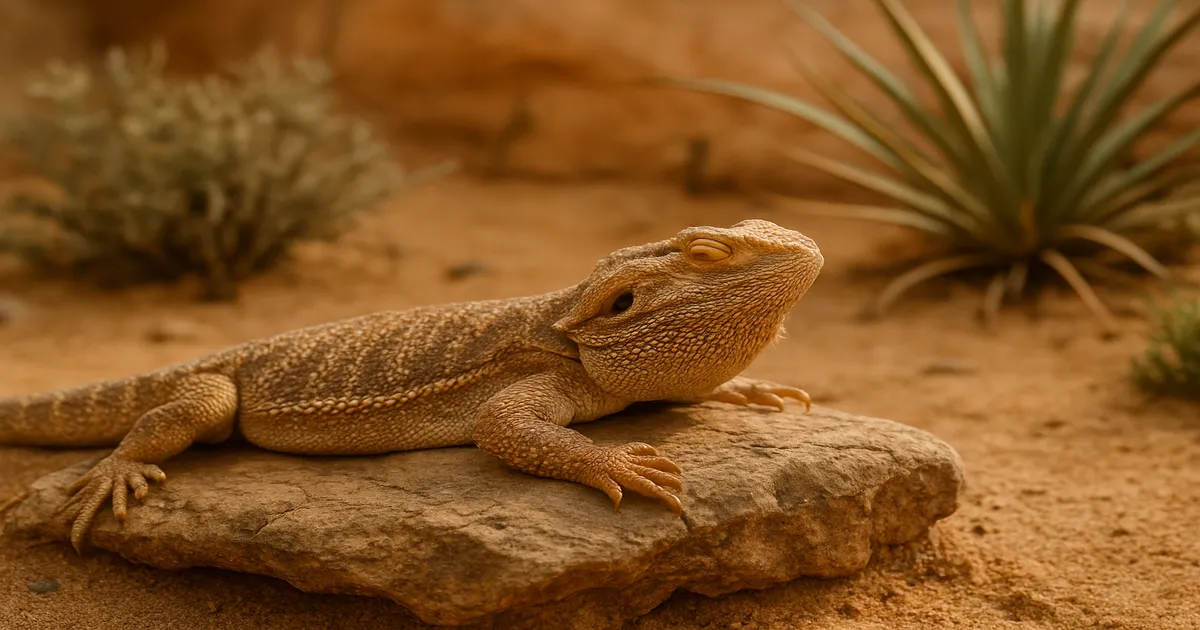
Quick Answer: Caring for a bearded dragon means getting four things right: a large enclosure (120-gallon minimum for adults), a basking surface of 105–115°F (40–46°C) measured with an infrared temp gun, high-output T5 HO UVB lighting, and a diet that shifts from insect-heavy to plant-heavy as they mature. Nail those four, and you’ve got a thriving lizard for 10–15 years.
Knowing how to care for a bearded dragon properly is the difference between a healthy, interactive pet and one that quietly declines from entirely preventable problems. Pogona vitticeps — the Central Bearded Dragon — comes from the arid scrublands of interior Australia, and everything about their husbandry traces back to that origin. They’re genuinely one of the best reptile pets out there: alert, handleable, and surprisingly personable. But they have real requirements that can’t be fudged.
At a glance, a bearded dragon needs:
- A 120-gallon or 4’×2’×2’ enclosure (minimum) for adults
- A basking surface of 105–115°F (40–46°C) measured with an infrared temp gun
- High-output T5 HO UVB lighting (Arcadia 12% or Zoo Med Reptisun 10.0 T5 HO)
- A diet that’s mostly insects as a juvenile, mostly leafy greens as an adult
- Calcium supplementation at every feeding
Adults reach 18–24 inches and live 10–15 years with solid care. If you want a lizard that tolerates handling, learns your routine, and doesn’t demand the white-knuckle environmental management of a chameleon or a tree monitor, bearded dragons are hard to beat.
Enclosure Size and Setup
What Size Enclosure Does a Bearded Dragon Need?
| Age / Size | Minimum Enclosure |
|---|---|
| Hatchling to 6 inches | 20-gallon long (30”×12”×12” / 76×30×30 cm) |
| Juvenile (6–12 inches) | 40-gallon breeder (36”×18”×16” / 91×46×41 cm) |
| Sub-adult to adult | 120-gallon or 4’×2’×2’ (122×61×61 cm) |
| Ideal adult size | 6’×2’×2’ (183×61×61 cm) or larger |
The single most common mistake I see is keeping an adult in a 40-gallon long-term. A 24-inch dragon in a 36-inch enclosure can’t establish a proper thermal gradient — it’s either too hot everywhere or too cold everywhere, and the animal is chronically stressed either way.
Enclosure material matters too. PVC and ABS plastic enclosures (Animal Plastics, Zen Habitats) are the professional standard — great heat retention, durable, purpose-built for reptiles. Melamine wood enclosures are a solid budget option; just make sure all interior surfaces are sealed against moisture. Glass terrariums are widely available and workable, but they bleed heat badly and you’ll fight to maintain temperatures, especially in winter.
Repurposed aquariums are a hard no. Poor ventilation, top-opening only, almost always undersized.
Front-opening doors aren’t optional. Approaching a bearded dragon from above triggers their prey response — in the wild, things coming from above are hawks and eagles. A front-opening door means you’re entering their space from the side, which is far less stressful and makes taming significantly easier.
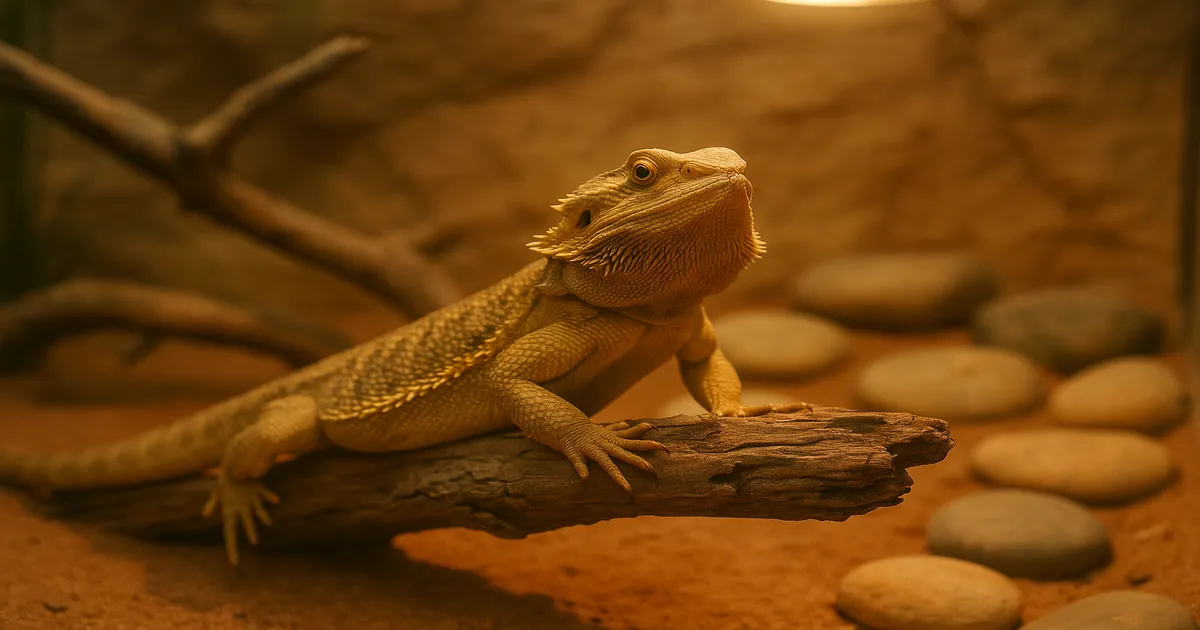
On decor: Give them a basking platform (flat slate tiles, flagstone, or cork bark elevated 6–10 inches below the basking bulb), at least one snug cool-side hide, and some climbing structures — cork rounds, driftwood, artificial rock ledges. Bearded dragons are naturally inclined to perch and survey their territory. A bare enclosure with just a heat lamp is technically functional and genuinely boring for the animal.
Temperature and Heating
Bearded Dragon Temperature Requirements
| Zone | Target Temperature |
|---|---|
| Basking surface | 105–115°F (40–46°C) |
| Warm-side ambient | 85–95°F (29–35°C) |
| Cool side | 75–85°F (24–29°C) |
| Nighttime minimum | 65°F (18°C) |
Always measure basking surface temperature with an infrared temp gun — not just an ambient probe. Dark slate under a bulb that reads 100°F in the air can hit 120°F+ at the surface, which causes thermal burns.
Here’s something the reptile hobby doesn’t talk about enough: a 90W PAR38 halogen flood bulb from a hardware store costs $5–8 and outperforms a $20 branded “reptile basking bulb” in every meaningful way. Same heat output, broader spectrum, low-level UVA that’s actually beneficial for behavior and appetite. Save the reptile-brand markup for things that genuinely matter. Pair it with a dimmer thermostat (Herpstat or Inkbird ITC-306T) to dial in the exact basking temp without constantly swapping bulbs.
For nighttime heat: if your room drops below 65°F (18°C), you’ll need a supplement. A Deep Heat Projector (DHP) emits infrared-C that penetrates tissue and warms the body core — the closest thing to actual solar radiation you can get in captivity. A Ceramic Heat Emitter (CHE) is a cheaper alternative that produces heat without light. Either works. What doesn’t work: red or blue “night” bulbs. Bearded dragons can see those wavelengths — they disrupt sleep and stress the animal. Under-tank heaters are equally useless as a primary source; dragons thermoregulate dorsally, not through their belly.
UVB Lighting for Bearded Dragons
Why UVB Is Non-Negotiable
Bearded dragons are Ferguson Zone 3–4 animals. In the wild they bask in intense, unfiltered sunlight and need a UV Index (UVI) of 4.0–6.0 at the basking spot — among the highest of any commonly kept reptile. Insufficient UVB is the leading cause of Metabolic Bone Disease (MBD): soft jaw, tremors, bowed limbs, eventually pathological fractures. It’s heartbreaking and almost entirely preventable.
The bulbs that actually deliver those numbers:
- Arcadia 12% T5 HO — gold standard for most setups
- Zoo Med Reptisun 10.0 T5 HO — widely available, solid alternative
- Arcadia 14% T5 HO — for large or tall enclosures
T8 bulbs and compact/coil UVB bulbs don’t cut it for bearded dragons. Full stop.
Mount T5 HO bulbs 10–14 inches (25–36 cm) above the basking surface. One important caveat: standard aluminum window screen blocks 30–50% of UVB. If your enclosure has a mesh top, either reduce the mounting distance or install the bulb inside. The only way to actually verify your UVI is with a Solarmeter 6.5 — it’s around $250, which stings, but it’s the only tool that tells you what the dragon is actually receiving.
Photoperiod: 12–14 hours of light in summer, 10–12 in winter. This seasonal variation supports natural brumation behavior. A digital outlet timer makes it effortless.
Replace T5 HO bulbs every 12 months regardless of whether they still look bright. UV output degrades invisibly — a bulb that appears perfectly functional may be producing zero usable UVB.
Feeding and Nutrition
How to Care for a Bearded Dragon’s Diet
The ratio shifts dramatically as they grow:
- Juveniles (under 6 months): 70–80% insects, offered 2–3 times daily; 20–30% leafy greens
- Sub-adults (6–12 months): 50/50 split; insects once daily
- Adults (12+ months): 70–80% leafy greens; insects 3–5 times per week
Overfeeding insects to adult dragons leads to obesity, fatty liver disease, and gout. Adults are primarily herbivores in the wild — their captive diet should reflect that.
Best feeder insects: Dubia roaches are the best all-around feeder — great calcium-to-phosphorus ratio, easy to keep, and most dragons love them. Black soldier fly larvae (BSFL) are an excellent second option. Crickets work fine but smell terrible and escape constantly. Hornworms and silkworms make great hydrating treats. One rule that never changes: feeder insects should be no wider than the space between the dragon’s eyes. Oversized prey causes impaction and, in rare cases, neurological damage.
Staple greens: Collard greens, mustard greens, turnip greens, dandelion greens (flowers included), endive, and escarole. All high-calcium, low-oxalate. Rotate through them regularly.
Foods to avoid:
- Fireflies — toxic; even one can kill a bearded dragon
- Spinach and beet greens — high oxalates bind calcium
- Avocado and rhubarb — toxic
- Mealworms as a staple — high fat, poor calcium-to-phosphorus ratio
- Wild-caught insects — pesticide risk
Supplementation schedule:
- Calcium without D3: dust every feeding
- Calcium with D3: twice weekly only if UVB is inadequate (not a substitute for proper lighting)
- Reptile multivitamin (Repashy Supervite or Herptivite): 1–2 times per week
Hydration: Many bearded dragons won’t drink from a standing water dish. Offer a lukewarm soak 2–3 times per week for 15–20 minutes — most will drink during the soak, and it supports healthy shedding. Yellow or orange urates are a warning sign of dehydration or kidney stress and warrant a vet visit if persistent.
Substrate
For adults, a 60/40 or 70/30 mix of organic topsoil and play sand is my personal go-to — it mimics natural desert substrate, supports digging behavior, and works beautifully in a bioactive setup. Excavator clay is another solid option if you want burrow structures that hold their shape. For hatchlings and juveniles, paper towels or ceramic tile only. Not glamorous, but it eliminates impaction risk entirely and makes it easy to monitor feces and urate color.
Substrates to avoid: Calcium sand (causes impaction regardless of what the label claims), cedar or pine shavings (toxic aromatic oils), walnut shell (sharp edges, serious impaction risk), and reptile carpet (harbors bacteria, snags toenails).
Common Bearded Dragon Care Mistakes
Inadequate UVB is the big one. If your dragon has a soft jaw, tremors, or limbs that look bowed or rubbery, get to a reptile vet immediately and reassess your lighting setup.
Other mistakes that cause real harm:
- Keeping adults in undersized enclosures
- Basking temps too low — cold dragons can’t digest properly, and food can literally rot in the gut
- Cohabitation — bearded dragons are solitary; housing two together causes chronic stress, and the submissive animal almost always stops eating and wastes away
- Panicking over normal brumation and force-feeding or over-handling a healthy animal that’s just slowing down for winter
On the nutrition side: inconsistent calcium supplementation adds up fast. Also watch out for leaning too heavily on high-oxalate greens like spinach, overfeeding mealworms, and missing early dehydration signs.
On handling: always approach from the front or side, never from above. Wait at least an hour after feeding before picking them up. A persistently black beard, gaping mouth, or flattened body means the dragon needs space — not more interaction.
Pro Tips
Use paper towels when starting out. For the first few weeks with a new dragon, skip the substrate and use paper towels. You can monitor feces consistency and urate color without any variables muddying the picture.
Weigh your dragon weekly. A gram kitchen scale is one of the most useful tools you can own. A dragon can look perfectly fine while losing significant body mass — weight loss is often the first sign something’s wrong. A healthy adult should stay within about 5% of their weight week to week.
Prepare for brumation properly. Fast them for 1–2 weeks beforehand and give warm soaks to encourage full gut clearance. Food left in the digestive tract during dormancy can cause fatal bacterial growth.
Getting a picky dragon to eat greens: wiggle your finger under the salad bowl to simulate movement. It sounds ridiculous. It works. Bearded dragons are hardwired to respond to movement, and that little bit of animation can trigger a feeding response in a dragon that’s been ignoring a perfectly good bowl of collard greens for days.
Find a reptile vet before you need one. Emergency vet searches at midnight with a sick dragon are not how you want to meet your reptile vet for the first time.
Frequently Asked Questions
How often should I feed my bearded dragon?
Juveniles under six months get insects 2–3 times daily in 10–15 minute sessions. Adults get fresh leafy greens daily and insects 3–5 times per week. The ratio shifts significantly as they age — adults are primarily herbivores and shouldn’t be eating insects at every meal.
What size tank does an adult bearded dragon need?
The absolute minimum is a 120-gallon or 4’×2’×2’ (122×61×61 cm) enclosure. Ideally you’d go bigger — a 6’×2’×2’ gives them room for a proper thermal gradient and natural behaviors. A 40-gallon is fine for a juvenile temporarily, but it’s not a long-term home for a full-grown dragon.
Can two bearded dragons live together?
No. Even when they appear to be getting along, cohabitation causes chronic stress, resource competition, and bullying. The submissive animal typically stops eating and slowly wastes away. It’s not worth the risk.
How do I know if my bearded dragon is sick?
The most reliable early indicator is weight loss — weigh weekly on a gram scale. Other warning signs: yellow or orange urates, lethargy outside of brumation season, soft jaw or limb tremors (MBD), retained shed, and appetite loss lasting more than two weeks without a brumation trigger. Any of these warrants a call to a reptile-experienced vet.
What does it mean when a bearded dragon’s beard turns black?
Context matters. A black beard can mean stress, territorial display, or courtship — sometimes a male will blacken his beard just because he caught his own reflection. A persistently black beard in a newly set-up enclosure almost always means the dragon is stressed and needs more time to settle in. Give them space and let them acclimate at their own pace.