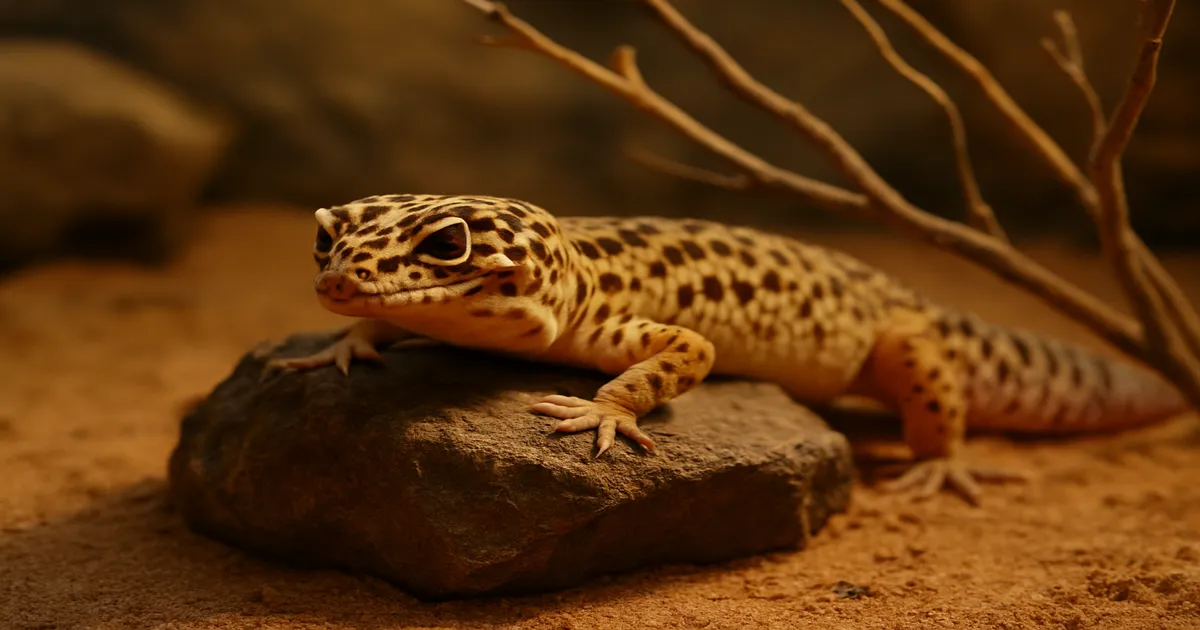
Quick Answer: Leopard geckos need a 40-gallon breeder enclosure with a warm-side surface temperature of 88–92°F (31–33°C), ambient humidity of 30–40% with a moist hide at 70–80%, and a strictly insect-based diet with calcium supplementation every feeding. Get the heating and supplementation right, and you’ve got an animal that can live 15–20 years.
Leopard geckos are, genuinely, one of the best reptiles you can keep. Knowing how to care for a leopard gecko properly isn’t complicated, but there are a handful of details — mostly around heating and nutrition — where people consistently go wrong. Get those right and everything else falls into place.
Leopard Gecko Care at a Glance
Species Snapshot
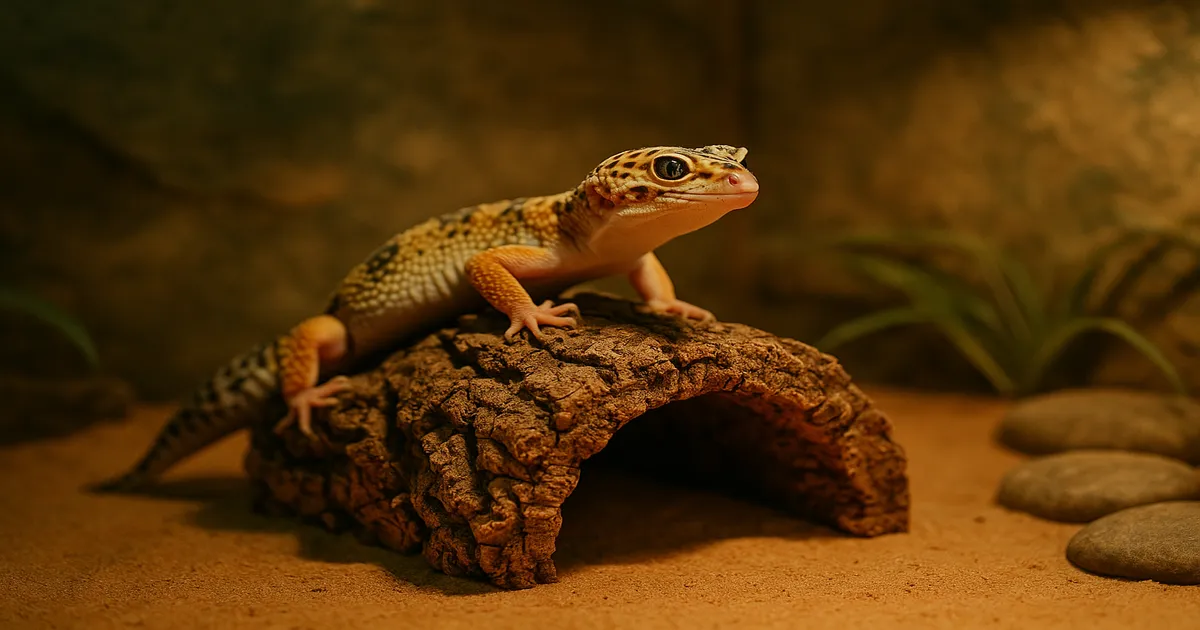
Eublepharis macularius comes from the rocky, arid scrubland of Afghanistan, Pakistan, and northwestern India. They’re crepuscular to nocturnal — spending hot days tucked into rock crevices and emerging at dusk to hunt. In captivity, that translates to a species that’s naturally calm, handleable, and perfectly sized for most living spaces.
They’re also one of the few gecko families with actual movable eyelids. No sticky toe pads, no wall-climbing. They’re ground dwellers through and through, and their enclosure setup should reflect that.
Key Care Requirements
| Parameter | Value |
|---|---|
| Enclosure size | 40-gallon breeder (36” × 18” / 91 × 46 cm) minimum recommended |
| Warm-side surface temp | 88–92°F (31–33°C) |
| Cool-side temp | 72–78°F (22–26°C) |
| Ambient humidity | 30–40% |
| Moist hide humidity | 70–80% |
| Diet | Insects only; calcium supplement every feeding |
| UVB | Recommended (low-level, Ferguson Zone 1–2) |
| Lifespan | 15–20+ years |
Enclosure Setup
Size and Type
The technical minimum for a single adult is a 20-gallon long (30” × 12”), but I’d push back on that as a long-term setup. A 40-gallon breeder (36” × 18” × 18”) gives you enough floor space to run a proper thermal gradient, fit three hides comfortably, and add enrichment without it feeling like a shoebox. Floor space is what matters — this is a terrestrial animal, and height is largely irrelevant.
For enclosure type, you’ve got three solid options:
- Glass terrariums (Exo Terra, Zoo Med): Front-opening models are ideal — top access stresses geckos. Good visibility, widely available.
- Plastic tubs (Sterilite, Rubbermaid 56qt+): Breeders love these for a reason. Excellent heat retention, cheap, stackable. Not pretty, but they work.
- PVC enclosures (Zen Habitats): Great insulation, durable, worth the higher upfront cost if you’re serious about the hobby.
One thing to watch: screen-top enclosures bleed heat and humidity fast, especially in dry climates. If you’re in the desert Southwest or heating a cool room, avoid them or cover most of the screen.
Enclosure Layout
Run a warm-to-cool gradient from one end to the other. Heat source goes under one-third of the floor on the warm end; the opposite end stays unheated. You need three hides minimum:
- Warm hide — directly over or beside the heat source
- Cool hide — on the opposite end
- Moist hide — middle or warm side; packed with damp sphagnum moss
Add cork bark, slate, and a few artificial plants for visual barriers. Geckos feel safer when they can’t see the entire enclosure at once — open space reads as exposure, not freedom.
Heating and Temperature
Why Surface Temperature Is What Actually Matters
Leopard geckos regulate body temperature by pressing their belly against warm surfaces — not by sitting in warm air. This is called thigmothermy, and it’s why the floor temperature inside your warm hide is the number that matters. A warm room with a cold floor does nothing for digestion or immune function.
Target 88–92°F (31–33°C) on the warm-side surface. Cool side should sit at 72–78°F (22–26°C). Don’t let the cool side drop below 65°F (18°C) at night — brief dips are fine, sustained cold is not.
Heating Equipment
- Under-tank heaters (UTH): The most common option. Cover roughly one-third of the floor on the warm side. (Zilla Heat Mat)
- Deep heat projectors (Arcadia DHP): Penetrates substrate to heat it from above, mimicking solar-warmed rock. Excellent as a standalone or paired with a UTH.
- Ceramic heat emitters (CHE): Good for raising ambient air temperature in cold rooms. No light output, runs 24/7 safely.
Thermostats Are Non-Negotiable
An unregulated UTH can hit 110°F (43°C) or more. Thermal burns from uncontrolled heat pads are one of the most common — and most preventable — injuries in captive leos. Every heating element needs a thermostat. Full stop.
Three types to know:
- Dimmer/rheostat: Cheapest, least precise. Acceptable in a pinch, not ideal.
- On/off thermostat: Reliable, causes minor temperature cycling.
- PID (proportional) thermostat: Maintains precise temps with almost no fluctuation. This is what I’d buy.
Spend the money on a PID thermostat. It’s the most important piece of equipment in the whole setup.
Measuring Temperatures Accurately
Use an infrared temperature gun pointed directly at the floor of the warm hide. Stick-on dial thermometers run 10–15°F (6–8°C) off and will give you false confidence. For ambient readings on both ends, a digital thermometer/hygrometer combo is all you need.
Skip hot rocks entirely — they create unpredictable hot spots and have burned countless geckos. Red and blue “night” bulbs are also unnecessary and disrupt sleep cycles.
Lighting and Humidity
UVB: Not Required, But Recommended
The old thinking was that nocturnal geckos don’t need UV exposure. That’s been revised. Based on Ferguson Zone research, current best practice is low-level UVB (Zone 1–2) — an Arcadia ShadeDweller Pro or Zoo Med T5 HO 5.0 mounted 12–18 inches (30–46 cm) above the basking zone.
UVB lets geckos synthesize D3 naturally, which reduces metabolic bone disease risk even when you’re supplementing. If you skip UVB, calcium with D3 twice monthly becomes non-negotiable rather than optional.
Run 12–14 hours of light in summer, 10–12 hours in winter. A basic digital outlet timer handles this automatically. Even without UVB, provide a visible light source — geckos need a consistent day/night cycle.
Humidity: Ambient vs. Moist Hide
Keep ambient enclosure humidity at 30–40%. Sustained high humidity causes respiratory infections and scale rot in these arid-adapted animals. A digital hygrometer is the only reliable way to track this.
The moist hide is different. Inside it, you want 70–80% humidity using damp sphagnum moss or coconut fiber. The squeeze test: the substrate should be just damp enough that you can barely squeeze a single drop of water from a handful. Not soaking, not dry — right in between.
How to Care for a Leopard Gecko’s Diet
What They Eat
Strictly insects. No fruit, no vegetables, no exceptions. Good feeder options:
- Dubia roaches — my personal favorite; great nutrition, don’t smell, don’t chirp
- Crickets — widely available, good gut-loading potential
- Mealworms — fine as part of a varied diet, not as the sole food source
- Black soldier fly larvae (NutriGrubs) — excellent calcium-to-phosphorus ratio
- Hornworms — great for hydration; treat-level frequency
- Waxworms — treats only, high fat
Prey sizing rule: nothing wider than the space between the gecko’s eyes.
Feeding Schedule
- Juveniles (under 6 months): Daily, as much as they’ll eat in 10–15 minutes
- Sub-adults (6–12 months): Every other day
- Adults (12+ months): Every 2–3 days, 6–8 appropriately sized prey items
Adult obesity is a real problem in captive leos. A fat tail is healthy; fat rolls around the neck and shoulders are not — that’s fatty liver disease in the making.
Gut Loading and Supplementation
Feed your insects a nutritious gut-loading diet for 24–48 hours before offering them to your gecko. Gut-loaded with nothing, they’re empty calories. Carrots, leafy greens, squash, and a commercial gut load all work well.
Without UVB:
- Calcium without D3 — every feeding
- Calcium with D3 — twice monthly
- Multivitamin — 1–2× monthly
With UVB:
- Calcium without D3 — every feeding
- Multivitamin — 1–2× monthly (D3 supplementation can be reduced or eliminated)
Tong-feed from day one. It keeps your fingers out of the equation and conditions the gecko to associate tongs with food, not hands.
Substrate
What Works
Paper towels are the right call for any new gecko’s first 30–60 days. You can monitor feces, urate color, and feeding response without any variables getting in the way. After that: reptile carpet, ceramic tile (excellent heat conductor, easy to clean), or non-adhesive shelf liner all work for simple setups.
For naturalistic adult enclosures, a 60–70% organic topsoil / 30–40% play sand mix is the standard. Keep it slightly compacted and barely moist — counterintuitively, this reduces impaction risk compared to very dry, loose, fine particles. Well-fed geckos at correct temperatures have minimal impaction risk on this substrate.
What to Avoid
- Calcium sand: The “digestible” marketing is misleading. It causes impaction, especially in juveniles or sick animals.
- Cedar or pine shavings: Toxic aromatic oils. Never.
- Walnut shell: Sharp fragments cause impaction and internal injury.
Common Leopard Gecko Care Mistakes
Running a UTH without a thermostat. This is the big one. Thermal burns are painful, slow to heal, and entirely preventable.
Measuring air temperature instead of surface temperature. If you’re checking the air above the warm hide and calling it done, you’re missing the number that actually matters.
Mealworm-only diets. Poor calcium-to-phosphorus ratio, high fat. Vary the feeders. Inconsistent calcium supplementation is the leading cause of metabolic bone disease — which is completely preventable.
Handling too soon. Wait 1–2 weeks before handling a new gecko. Moving into a new enclosure is stressful, and handling on day one compounds that. Keep early sessions to 5–10 minutes, always support the full body, and skip handling within 48 hours of a meal.
Housing two males together. This isn’t a “they might fight” situation — it’s “someone will get seriously hurt or killed.”
When to See a Reptile Vet
Find a reptile-experienced vet before you need one. Signs that need professional attention: weight loss exceeding 10% over 2–4 weeks, suspected cryptosporidiosis (do not attempt to treat this at home), retained shed causing circulation issues, or any neurological symptoms. A gram-accurate kitchen scale and weekly weigh-ins make it easy to catch problems before they become emergencies.
Shedding, Handling, and Enrichment
Helping With Sheds
You’ll know a shed is coming when the gecko’s color goes dull and milky. Proactively boost the moist hide humidity 3–5 days before. After every shed, check the toes — retained shed there is invisible until the toe starts to necrose, and it’s the number one cause of toe loss in captive leos.
Never pull stuck shed dry. Soak the gecko in shallow 80–85°F (27–29°C) water for 10–15 minutes, then use a damp cotton swab to gently roll off any remaining pieces. Patience here prevents permanent damage.
Handling and Body Language
Start with 5–10 minute sessions after the initial acclimation period. Always support the full body — geckos that feel unsupported will scramble and stress. Slow, deliberate tail waving means hunting focus; back off and let them stalk. A dropped tail (autotomy) is a stress response; it regrows but never looks exactly the same. Chirps and squeaks are normal communication, not a sign of illness.
Frequently Asked Questions About Leopard Gecko Care
How long do leopard geckos live in captivity?
With proper care, leopard geckos regularly live 15–20 years, and some males exceed that. Wild individuals rarely make it past 10. Lifespan is directly tied to husbandry quality — correct heating, a varied diet, and consistent supplementation make the biggest difference.
Do leopard geckos need UVB lighting?
They don’t strictly require it to survive, but current best practice recommends low-level UVB (Ferguson Zone 1–2) via an Arcadia ShadeDweller Pro or Zoo Med T5 HO 5.0. UVB enables natural D3 synthesis and reduces metabolic bone disease risk. If you skip it, calcium with D3 twice monthly becomes non-negotiable.
How often should I feed my leopard gecko?
Juveniles under 6 months eat daily; sub-adults eat every other day; adults eat every 2–3 days, roughly 6–8 appropriately sized prey items per feeding. Overfeeding adults is a genuine health risk — obesity leads to fatty liver disease and a shortened lifespan.
What’s the best substrate for a leopard gecko?
Paper towels for the first 30–60 days — they let you monitor health easily. For long-term setups, a 60–70% organic topsoil / 30–40% play sand mix works well for adults. Avoid calcium sand, cedar or pine shavings, and walnut shell regardless of what the packaging claims.
Why is my leopard gecko not eating?
Most likely causes: stress from a recent move (give them 1–2 weeks), incorrect surface temperatures, an upcoming shed, or the natural appetite reduction that comes with winter cooling cycles. Persistent refusal beyond 2–3 weeks — especially with weight loss — warrants a vet visit to rule out parasites or illness.