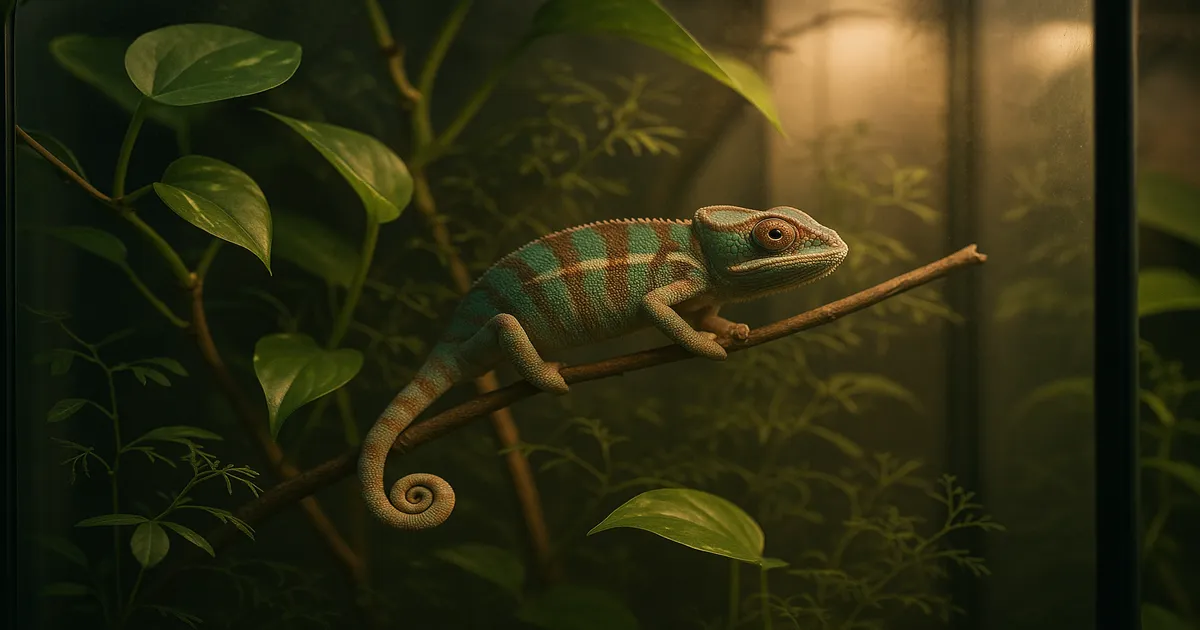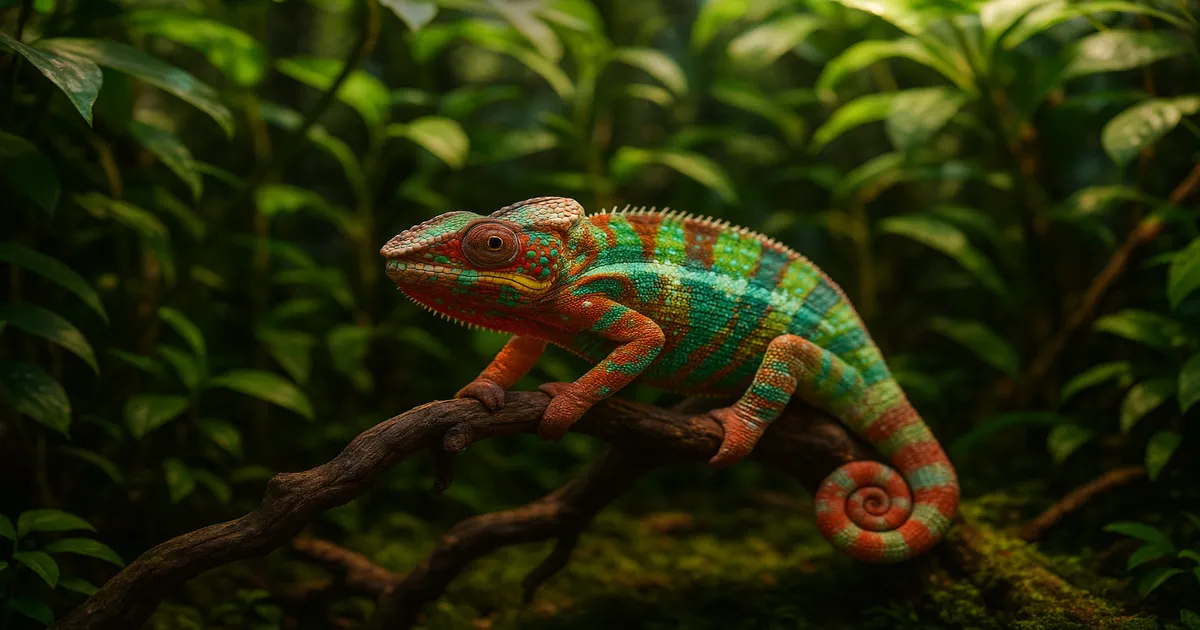
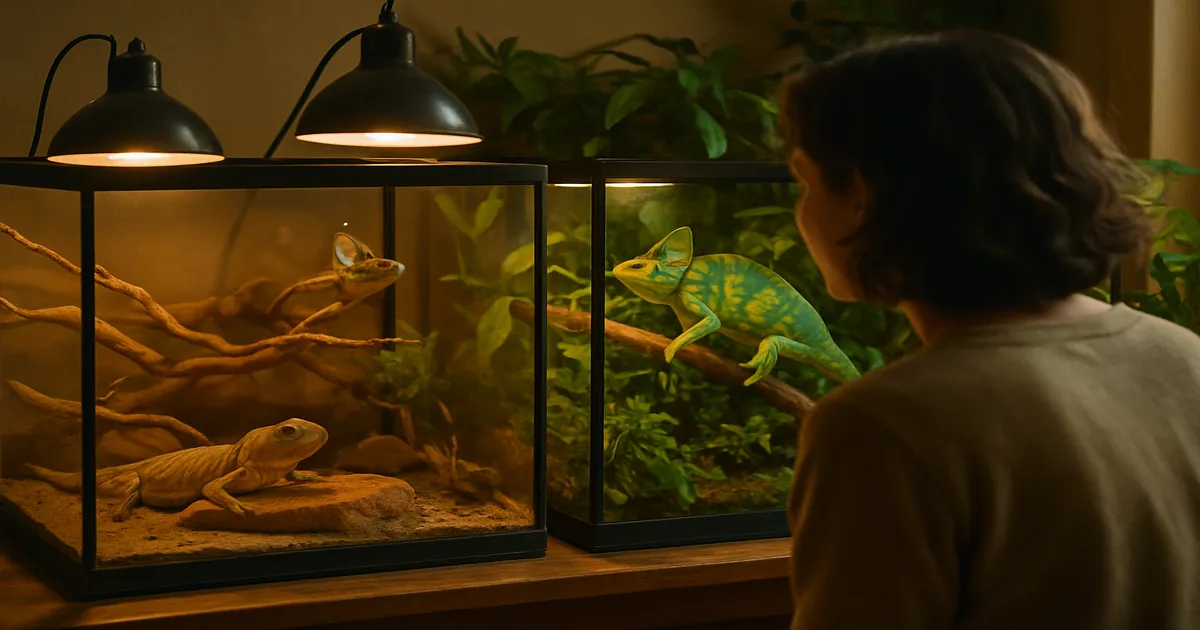
Quick Answer: Veiled chameleons (Chamaeleo calyptratus) are arboreal lizards from Yemen and Saudi Arabia that need tall screen enclosures, strong UVB lighting, and consistent misting — they drink only from leaf droplets, not standing water. Males reach 18–24 inches and live 5–8 years; females are smaller and shorter-lived. They’re one of the more forgiving chameleon species for newer keepers, but proper setup from day one isn’t optional.
Knowing how to care for veiled chameleons properly is the difference between an animal that thrives for years and one that slowly declines from entirely preventable problems. These are genuinely rewarding reptiles — active, visually striking, and surprisingly personable once settled — but they have specific needs that can’t be improvised. Get the fundamentals right and they’re not that hard to keep. Cut corners on ventilation, hydration, or UVB and you’ll be dealing with a sick animal faster than you’d expect.
Veiled Chameleon Species Snapshot
| Feature | Details |
|---|---|
| Scientific name | Chamaeleo calyptratus |
| Origin | Yemen, southwestern Saudi Arabia |
| Adult size | Males 18–24 in (46–61 cm); females 10–14 in (25–36 cm) |
| Lifespan | Males 5–8 years; females 3–5 years |
| Temperament | Bold for a chameleon, but still stress-prone |
| Difficulty | Beginner-accessible with proper research |
Core requirements at a glance:
- Enclosure: Minimum 24×24×48 in screen for adult males
- Basking temp: 85–95°F for adult males; 80–85°F for females and juveniles
- UVB: T5 HO bulb (Arcadia 6% or 12%, Zoo Med Reptisun 10.0) — non-negotiable
- Humidity: 50–70% ambient; drop to 30–50% overnight
- Misting: 2–3 times daily, 2–5 minutes per session
- Diet: Varied insects + plant matter, properly gut-loaded and supplemented
- Housing: Always solitary — cohabitation kills
Understanding Veiled Chameleons Before You Buy
Veiled chameleons come from a surprisingly wide range of environments across Yemen — from the hot, dry Tihamah coastal plain to the cooler, more humid Asir mountain terraces. That natural variability is a big part of why they handle captivity better than many other chameleon species. They’re not locked into one narrow set of conditions. There are even established feral populations in Florida and Hawaii, which tells you something about their adaptability.
That said, “forgiving” doesn’t mean “indestructible.”
Compared to most chameleons, veileds are bold. They’ll hold their ground rather than flee, and some individuals genuinely seem to tolerate — even enjoy — regular interaction. But there’s wide individual variation, and stress is always something to manage. A chameleon that’s comfortable with handling one day can be defensive the next depending on husbandry, health, and mood. Don’t buy one expecting a cuddly pet. Do expect an engaging, visually dynamic animal that rewards patient, respectful interaction.
Buy captive-bred. Wild-caught animals arrive stressed, often parasite-laden, and acclimate poorly. Captive-bred veileds are healthier, more accustomed to captive conditions, and better for the species. Most reputable breeders sell captive-bred animals, so there’s rarely a reason to settle for wild-caught.
Sexing veileds is easy even in hatchlings — males have a small tarsal spur (a little heel spur) on each hind foot. Males also develop a noticeably larger casque, grow significantly larger overall, and display more vivid patterning. This matters for care because females have specific reproductive needs that males don’t, and getting the sex wrong early leads to problems down the road.
Enclosure Setup
Screen vs. PVC vs. Glass
Screen enclosures are the right call for veiled chameleons in most situations. The airflow they provide is essential for respiratory health, and the open structure prevents the dangerous heat buildup that glass tanks create. Dragon Strand and ReptiBreeze are solid options at different price points.
PVC hybrid enclosures — solid sides with a screened top and front — work well in dry climates where an all-screen setup loses humidity too fast. Glass terrariums are a problem: poor ventilation, difficult temperature gradients, and chameleons often stress-pace against their own reflection. Don’t use them.
Size Requirements
- Juvenile (under 4 months): 16×16×30 in — smaller spaces help them find food
- Adult female: 18×18×36 in minimum; 24×24×48 in preferred
- Adult male (minimum): 24×24×48 in
- Adult male (recommended): 36×24×72 in — more space noticeably reduces stress
Chameleons are arboreal. They feel exposed and vulnerable on the ground. When choosing between a wider enclosure and a taller one, go taller every time.
Plants, Perches, and Layout
Live plants aren’t optional decoration — they’re functional. They retain humidity, provide drinking surfaces, and give the animal places to hide, which is critical for psychological security. Good choices: pothos, umbrella plant (Schefflera arboricola), hibiscus, and ficus. Rinse everything thoroughly before it goes in and repot in pesticide-free soil. Avoid dieffenbachia and philodendron — both are toxic.
For branches, aim for a diameter roughly matching the animal’s body so they can grip properly. Cork branches and manzanita wood both work well. Mix horizontal perches with vertical climbing structures to encourage natural movement.
Substrate and Drainage
Standing water breeds bacteria fast. The simplest approach is a bare bottom with a drainage hole and catch tray. If you want something more naturalistic, a bioactive setup with a LECA drainage layer, ABG-mix substrate, springtails, and isopods works well and reduces maintenance over time. Avoid cedar, pine, or loose particulate substrates that juveniles might swallow.
Temperature, Lighting, and UVB
Temperature Targets
- Adult male basking: 85–95°F; most keepers target around 90°F
- Adult female basking: 80–85°F — females are more heat-sensitive, and running them too warm drives egg overproduction
- Juvenile basking: 80–85°F
- Ambient mid-cage: 72–80°F
- Cool zone (bottom): 65–72°F
- Nighttime: Allow to drop to 60–70°F
Temperatures above 95°F sustained for any length of time can be fatal. Always verify with a temperature gun rather than guessing — the Etekcity Lasergrip infrared thermometer is cheap and accurate enough for this job.
The nightly temperature drop matters more than most new keepers realize. Letting the enclosure cool to 60–70°F at night mimics the natural highland conditions these animals come from and is directly linked to better long-term immune function. If your room drops below 60°F, a ceramic heat emitter on a thermostat can maintain a safe minimum without disrupting the light cycle.
UVB: The One Thing You Can’t Skip
Metabolic bone disease from inadequate UVB is one of the most common — and most preventable — conditions in captive chameleons. Veiled chameleons are Ferguson Zone 3 animals, which means they need a UV Index of 2.9–7.4 in the basking zone. That requires a proper T5 HO linear bulb. Coil/compact UVB bulbs produce inconsistent output and have been linked to eye damage in reptiles. Don’t use them as a primary UVB source.
The Arcadia 6% Forest works well for most setups; use the Arcadia 12% Desert if your fixture sits further from the basking perch. The Zoo Med Reptisun 10.0 T5 HO is a solid alternative. Position the bulb 6–12 inches from the basking perch and consult the manufacturer’s UV gradient chart for your specific bulb.
Replace bulbs every 6–12 months. UVB output degrades well before the bulb stops producing visible light. A Solarmeter 6.5 is the only reliable way to verify actual output — expensive, but worth it if you’re serious about this hobby.
Run a 12-hour on/12-hour off photoperiod as your baseline. Some keepers shift to 14/10 in summer and 10/14 in winter to support natural breeding cycles. Either way, use an outlet timer — consistent photoperiod is one of the easiest things to get right and one of the most commonly neglected.
How to Care for Veiled Chameleons: Hydration
How They Drink
Chameleons drink by lapping water droplets off leaves. They won’t use a standing water dish — don’t bother with one. In the wild, morning dew and fog coat the vegetation; in captivity, you replicate that through misting and drip systems.
Mist 2–3 times daily for 2–5 minutes per session, at minimum in the morning and afternoon. Manual misting with a pump sprayer works, but consistency is the hard part. An automatic system like the MistKing Starter removes the human error factor and is genuinely worth the investment. Aim nozzles at foliage, not directly at the animal.
Some chameleons — especially newly acquired or stressed animals — won’t drink during active misting. A slow drip system running for a few hours gives them time to drink on their own terms. It’s a simple backup that has saved more than a few animals from chronic dehydration.
Humidity Targets
- Daytime ambient: 50–70%
- Post-misting peaks: 80–100% briefly — normal and fine
- Overnight: Drop to 30–50% with good airflow
The wet/dry cycle matters more than hitting a constant number. High humidity after misting followed by a proper dry-out period mirrors what these animals experience naturally. Constant high humidity with poor airflow is a reliable recipe for respiratory infections.
Recognizing Dehydration
Watch for sunken or “pinched” eyes, orange or yellow urates (healthy urates are white), skin that doesn’t spring back when gently pinched, and unusual lethargy. For a noticeably dehydrated animal, the shower method works well: place the chameleon on a plastic plant in a shower with lukewarm water misting nearby surfaces — not directly on the animal — for 20–30 minutes. Then reassess your misting setup. Dehydration in a well-misted enclosure usually means the animal isn’t drinking during sessions and needs a drip system added.
Feeding Veiled Chameleons
Feeder Insects
Staples: dubia roaches, crickets, black soldier fly larvae (BSFL/Calci-worms), hornworms.
Rotate in occasionally: silkworms, blue bottle flies, waxworms (high fat — use sparingly), superworms (adults only).
The prey-size rule: nothing wider than the chameleon’s head. Oversized prey can cause impaction and, in bad cases, neurological damage.
Feeding frequency:
- Juveniles (0–6 months): daily; 10–20 small insects
- Sub-adults (6–12 months): daily or every other day
- Adults: every other day; 8–12 appropriately sized insects
Plant Matter
Veileds are genuinely omnivorous — they eat plant material in the wild, which is unusual among chameleons. Offer collard greens, dandelion leaves, hibiscus leaves and flowers, pothos leaves, and rose petals. Some individuals eat these enthusiastically; others ignore them. Offer them anyway, and remember that the live plants in the enclosure serve double duty here.
Gut-Loading and Supplementation
An un-gut-loaded cricket is basically a hollow shell of protein with almost no nutritional value. Feed your feeders 24–48 hours before offering them — quality greens, carrots, squash, and a commercial gut-load product. The nutrition in your feeder insects is only as good as what you fed those insects.
Supplementation schedule most experienced keepers follow:
- Plain calcium (no D3): Every feeding or every other feeding
- Calcium with D3: Twice per month
- Multivitamin: Twice per month
Use a beta-carotene-based multivitamin rather than one with preformed vitamin A (retinol). Hypervitaminosis A causes serious harm — skin sloughing, swelling, organ damage. Repashy Calcium Plus uses safer beta-carotene and covers both calcium and vitamins in one product. Over-supplementing D3 is equally dangerous — it causes calcium to deposit in soft tissues. Twice monthly is the ceiling, not the floor.
Common Veiled Chameleon Care Mistakes
Enclosure errors: Glass tanks. Coil UVB bulbs. Expired UVB bulbs that look fine but have degraded output. No nighttime temperature drop. Enclosure placed near a window (greenhouse effect). High-traffic, noisy room placement.
Hydration mistakes: Misting too infrequently or for too short a session. No drainage — standing water breeds bacteria and mold fast. Relying solely on misting without a drip system backup.
Feeding blunders: Cricket-only diet. Skipping gut-loading. Retinol-based vitamin A supplements. Supplementing D3 more than twice monthly. Prey that’s too large.
Cohabitation. This deserves its own line. Veiled chameleons are strictly solitary — housing two together, even briefly, causes chronic stress and eventually death. Even visual contact between males triggers significant stress responses. Keep them separated, always.
Excessive early handling. New animals need 2–4 weeks of minimal disturbance to settle in. Handling a stressed, newly acquired chameleon suppresses its immune system and sets a bad foundation for the relationship.
Female-specific: egg binding. Every female veiled chameleon keeper needs a lay bin — a container at least 12 inches deep filled with slightly moist sand/soil mix — before they need it. Gravid females that can’t find a suitable laying site become egg-bound, and dystocia is fatal without emergency vet intervention. Also: don’t overfeed females. Females kept warm with unlimited food overproduce eggs, leading to follicular stasis and serious reproductive complications. Feed adult females every other day or every three days, not daily.
Health and Handling
A healthy veiled chameleon is alert, holds a rounded body posture, has bright and responsive coloration, clear eyes, and produces white urates. It actively tracks prey and moves through its enclosure with purpose.
Concerning signs: persistently dark or dull coloration (not just resting colors), sunken eyes, open-mouth breathing, mucus around the mouth or nostrils, swollen limbs or jaw, weight loss, and failure to eat for more than two weeks outside of a known shed or brumation period.
Find a reptile-experienced vet before you need one. Chameleons hide illness well — by the time symptoms are obvious, the animal has often been sick for a while. Annual wellness checks are worth it.
Veiled Chameleon Care FAQ
How often should I handle my veiled chameleon? Start slow. Give a new animal at least 2–4 weeks to settle before any handling. After that, short sessions of 10–15 minutes a few times a week is plenty for most individuals. Watch body language — a chameleon that’s puffing up, gaping, or turning dark wants to be put back.
Can veiled chameleons live together? No. They’re solitary animals and must be housed alone. Even females housed together will stress each other out. Even visual contact between males causes measurable stress. There are no exceptions worth trying.
How do I know if my veiled chameleon is getting enough water? Check the urates — the white solid portion of their waste should be bright white, not yellow or orange. Eyes should be full and rounded, not sunken. If you’re seeing orange urates or sunken eyes, increase misting frequency and add a drip system.
Do veiled chameleons need a lay bin even if I don’t want them to breed? Yes. Female veileds produce infertile clutches regardless of whether a male is present. Without a suitable laying site, they become egg-bound, which is a veterinary emergency. Keep a lay bin with at least 12 inches of moist sand/soil available at all times once your female reaches sexual maturity (around 4–6 months).
What’s the biggest mistake new veiled chameleon keepers make? Inadequate UVB, honestly. It’s the one thing that’s easy to get wrong — buying the wrong bulb type, placing it too far away, or forgetting to replace it on schedule — and the consequences (metabolic bone disease) are severe and largely irreversible by the time you notice them. Get a proper T5 HO bulb, position it correctly, and replace it every 6 months whether it looks burned out or not.