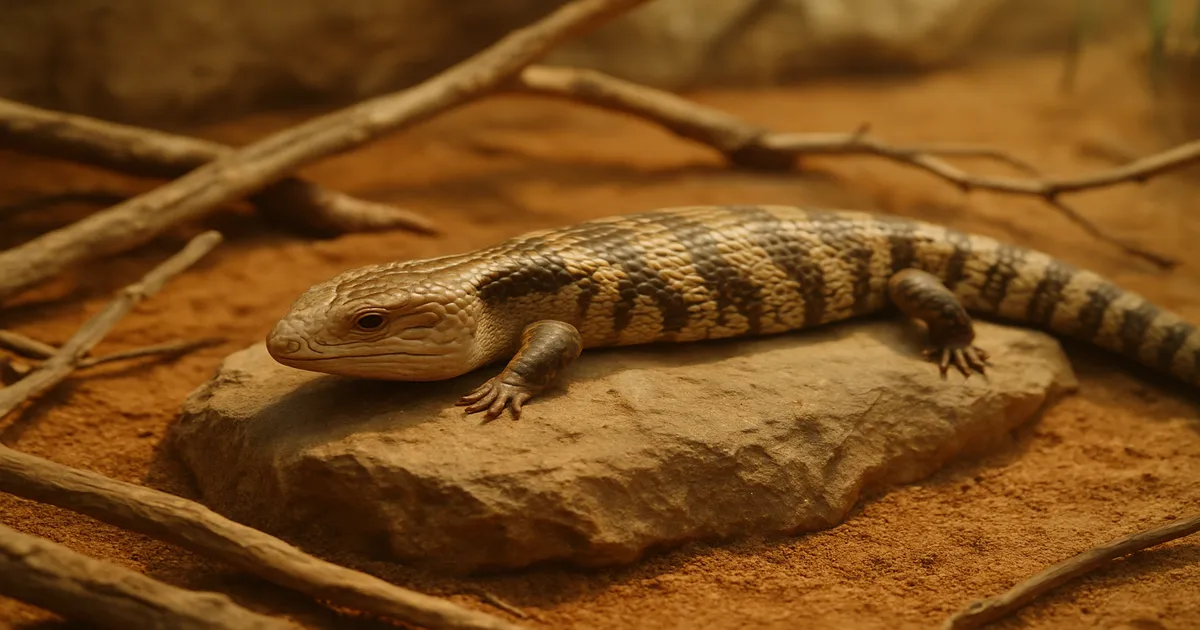
Quick Answer: Blue tongue skinks are large, docile, diurnal lizards that make excellent pets for committed keepers. Adults reach 18–24 inches and live 15–20+ years, so this is a long-term relationship. They need a minimum 4×2×2 ft enclosure, a basking spot of 100–110°F (38–43°C), UVB lighting, and an omnivorous diet of protein, vegetables, and some fruit.
Blue tongue skinks consistently rank among the best large lizards you can keep — and honestly, it’s not hard to see why. They’re handleable, they eat well, and they’re actually interesting to watch during the day. Learning how to care for blue tongue skinks properly isn’t complicated, but there are a handful of details — species ID, temperature measurement, humidity — where getting it wrong causes real problems down the line. This guide covers everything you need to get it right from day one.
Blue Tongue Skink Care at a Glance
Key Stats
| Parameter | Value |
|---|---|
| Adult size | 18–24 inches (46–61 cm) |
| Lifespan | 15–20+ years |
| Activity | Diurnal |
| Minimum enclosure | 4×2×2 ft |
| Basking surface temp | 100–110°F (38–43°C) |
| Humidity (Australian spp.) | 40–60% |
| Diet | Omnivore |
| UVB | Required |
| Housing | Single animal only |
Who Are They Best For?
Blue tongue skinks are genuinely beginner-friendly — handleable, eager eaters, active enough during the day to be worth watching. That said, they’re not a starter pet you can casually hand off when you lose interest. A healthy Northern BTS will outlive your car. Make sure you’re ready for that before you bring one home.
Species Overview: Choosing the Right Blue Tongue Skink
Common Species in the Hobby
Six species show up regularly in the US hobby:
- Northern BTS (T. s. intermedia) — the most common and the best starting point for beginners; robust, handleable, widely captive-bred
- Eastern BTS (T. s. scincoides) — similar care to Northerns; slightly less common
- Indonesian/Halmahera BTS (T. gigas) — higher humidity requirements; more variable temperament
- Merauke BTS (T. gigas evanescens) — largest of the group; also needs high humidity
- Western BTS (T. occipitalis) — semi-arid species; lower humidity and less commonly available
- Shingleback (T. rugosa) — fascinating but genuinely advanced; get experience with a Northern first
Australian vs. Indonesian: The Difference That Actually Matters
This is the part most people gloss over, and it causes more health problems than almost anything else. Australian species (Northerns, Easterns, Westerns, Shinglebacks) thrive at 40–60% humidity. Indonesian species need 60–80%. Keep an Indonesian at Northern humidity levels and you’ll end up with a chronically dehydrated animal that sheds poorly and eventually gets sick. It’s a simple fix — but only if you know what species you have.
Northerns and Easterns can’t be exported from Australia, so every one in the US hobby is captive-bred. That’s actually a good thing. Indonesian species are still sometimes imported, but captive-bred specimens are far preferable.
Where to Buy
For Australian species, you’re buying captive-bred, full stop. For Indonesian species, insist on captive-bred animals from a reputable breeder. Established breeders with health guarantees and reputable reptile expos are your best options. Avoid pet store animals of unknown origin whenever you can.
Enclosure Setup
Size and Dimensions
The minimum for a single adult is 4×2×2 ft — roughly a 120-gallon footprint. Push for 5×2×2 ft if you can manage it. These are active foragers and they use the space. Floor space matters far more than height since BTS are completely terrestrial.
Juveniles can start in a 40-gallon breeder (36×18×18 in / 91×46×46 cm), but they’ll outgrow it within a year. Plan for the upgrade before you need it.
Enclosure Types: PVC, Wood, and Glass
PVC enclosures are the best overall choice — waterproof, good heat and humidity retention, and they hold up for years. Brands like Animal Plastics and Zen Habitats are popular in the hobby for good reason.
Melamine or wood enclosures work fine for drier-keeping species like Northerns and Westerns, but they must be thoroughly sealed or moisture will wreck them over time.
Glass tanks are functional but fight you constantly — they bleed heat and humidity, which means you’re always compensating. Front-opening glass terrariums are better than top-opening ones, but at the sizes BTS need, they get expensive and heavy fast.
Thermal Gradient, Hides, and Decor
One end hot, one end cool — the animal moves between them to regulate its body temperature. Place the basking bulb at one end and make sure the cool end stays meaningfully cooler (75–80°F / 24–27°C ambient). Two hides minimum: one on the warm side, one on the cool side. If your BTS only has one hide, it has to choose between feeling safe and thermoregulating properly. That’s chronic stress, and it adds up.
Cork bark rounds, half-log hides, and commercial plastic caves all work. The key is fit — the hide should be snug, not roomy (more on that below). Cork bark flats, artificial plants, and occasional novel objects give your animal something to interact with. BTS are curious in a way a lot of reptiles aren’t.
One absolute rule: house blue tongue skinks alone. Cohabitation causes injury and stress, even between animals that seem fine together at first.
Temperature and Heating
Target Temperatures
- Basking surface: 100–110°F (38–43°C) for Australian species; 95–105°F (35–40°C) for Indonesian species
- Warm side ambient: 85–90°F (29–32°C)
- Cool side ambient: 75–80°F (24–27°C)
- Nighttime low: 65–70°F (18–21°C); don’t let it drop below 60°F (15°C) for extended periods
Heating Equipment
A 75–150W halogen flood bulb (PAR38 or BR40) in a ceramic dome fixture is the standard basking heat source. Halogens produce radiant heat that works the way the sun does, and BTS respond well to them.
For overnight supplemental heat when your room drops below 65°F (18°C), a ceramic heat emitter (CHE) does the job without producing light. Radiant heat panels are excellent for maintaining ambient temps in PVC enclosures. Under-tank heaters are not a good primary heat source — BTS thermoregulate from above, not below, and UTHs can cause burns.
A thermostat is non-negotiable. (Inkbird thermostat) It protects your animal from overheating and extends bulb life significantly.
Use a Temperature Gun — Not a Probe
This is one of the most common mistakes I see. Probe thermometers measure air temperature, not surface temperature. A probe might read 90°F (32°C) at the basking spot while the actual surface your skink is lying on is only 85°F (29°C) — not enough heat for proper digestion. A temperature gun costs $15–30 at any hardware store and gives you an accurate surface reading in seconds. Get one before you set up the enclosure.
Humidity, Lighting, and UVB
Humidity by Species
- Northern and Eastern: 40–60%
- Indonesian and Merauke: 60–80% — inadequate humidity is the number one health problem for these species
- Western and Shingleback: 30–40% — prone to respiratory infections if kept too humid
Cypress mulch and coconut coir are excellent substrates for maintaining humidity in Indonesian setups. A digital hygrometer on the cool side gives you the most consistent reading.
UVB Lighting
Older care sheets called UVB optional for blue tongue skinks because they can theoretically get D3 from diet alone. Current best practice disagrees — and so do I. UVB exposure improves immune function, activity levels, coloration, and overall health. Since BTS are diurnal baskers in the wild, it makes sense they’d benefit from it in captivity.
Go with a T5 HO fixture — either an Arcadia 6% or 12%, or a Zoo Med Reptisun 10.0. Target a UVI of 2.0–4.0 in the basking zone, with the bulb 12–18 inches (30–46 cm) from the basking surface. One important note: standard mesh screen blocks 30–50% of UVB output. If your enclosure has a mesh top, either mount the fixture inside or factor that reduction into your bulb choice. Replace UVB bulbs every 12 months even if they’re still producing visible light — UV output degrades well before the bulb burns out.
Aim for 12–14 hours of light in summer and 10–12 hours in winter. A simple outlet timer makes this effortless.
How to Care for Blue Tongue Skinks: Feeding and Nutrition
What They Eat
BTS are true omnivores. In the wild they eat insects, snails, carrion, flowers, berries, fungi, and plant matter — shifting their diet based on what’s available seasonally. Variety in captivity is worth chasing.
Captive Diet Breakdown
- 50–60% protein: Dubia roaches, hornworms, crickets, lean ground turkey, cooked chicken, snails, high-quality canned cat or dog food
- 30–40% vegetables: Collard greens, mustard greens, endive, squash, bell peppers, snap peas
- 10–20% fruit: Blueberries, mango, papaya — treat, not staple
High-quality canned cat or dog food is a legitimate protein base that many experienced keepers rely on. Look for a named meat as the first ingredient, no artificial colors, and minimal grain content. Zignature, Merrick, and Fromm are popular choices in the BTS community.
Feeding Frequency
- Juveniles (0–6 months): Daily or every other day
- Sub-adults (6–12 months): Every other day to 3× per week
- Adults (12+ months): Twice per week
Overfeeding adults is genuinely dangerous. Obesity and fatty liver disease are leading causes of premature death in captive BTS, and it’s an easy trap because these animals eat enthusiastically whether they need it or not.
Supplements
- Calcium carbonate (no D3): Dust food 2–3× per week
- Calcium with D3: Once weekly only if no UVB is provided
- Reptile multivitamin: Every 1–2 weeks
Foods to Avoid
Avocado, onion, citrus, rhubarb, fireflies (toxic), wild-caught insects (pesticide risk), spinach in large quantities, and high-sugar fruit as a regular offering.
Common Blue Tongue Skink Care Mistakes
Enclosure too small. Starting in a 40-gallon breeder is fine. Staying there isn’t. Cramped quarters cause chronic stress, suppress immune function, and contribute to obesity from inactivity.
Wrong temperature measurement. If you’re not using a temperature gun on the basking surface, you don’t actually know what temperature your skink is basking at. This single mistake probably causes more husbandry failures than anything else on this list.
Skipping UVB. The “UVB is optional” advice is outdated. Provide it.
Cohabitation. BTS are solitary. Even apparent pairs will eventually injure each other — it’s not a matter of if, it’s when.
Overfeeding adults. Feeding an adult BTS every day is how you give it fatty liver disease. Two meals a week is plenty.
Species misidentification. Know what you have before you set up the enclosure. A Northern kept at Indonesian humidity levels gets respiratory infections. An Indonesian kept at Northern humidity levels gets stuck shed and dehydrates. Identify your species correctly and build your setup around its actual needs.
Rushing handling. Give a new animal 2–4 weeks to settle in before regular handling. Wait 48 hours after feeding before picking them up. If your BTS is hissing and flashing its tongue at you, that’s fear — not aggression. Slow, calm handling fixes this in most animals within a few weeks.
Pro Tips for Long-Term Health
Weigh monthly. A digital kitchen scale is one of the most useful tools you can own as a reptile keeper. Weigh your BTS monthly and log it. Gradual weight loss often signals parasites or illness weeks before any visible symptoms appear. Healthy adult Northerns typically weigh 400–600 grams; large adults can reach 700–900 grams.
Use a snug hide. If your BTS can turn around freely inside its hide, the hide is too big. It should barely fit — that tight fit is what makes the animal feel secure. Sounds minor, makes a real difference.
Support sheds with soaks. When your BTS’s eyes go cloudy or its colors dull, it’s in pre-shed. A 20–30 minute soak in shallow water at 85–90°F (29–32°C) dramatically reduces stuck shed, especially on the toes and tail tip — where retained shed can actually constrict blood flow if left long enough.
Add enrichment. Rearrange decor occasionally. Toss in a cardboard tube or paper bag. Move the feeding spot around. BTS are more behaviorally active than most people expect from a lizard, and a little environmental novelty keeps them moving.
Find a vet before you need one. Locate a reptile-experienced vet before you have an emergency. Ask specifically whether they see lizards regularly — not just “exotic pets.” Get a baseline fecal parasite test done on any new animal. It’s cheap, quick, and can catch problems that would otherwise quietly undermine your animal’s health for months.
Frequently Asked Questions
How big of an enclosure does a blue tongue skink need?
Adults need a minimum of 4×2×2 ft — roughly a 120-gallon footprint. A 5×2×2 ft enclosure is more comfortable for an active adult. Floor space matters far more than height since BTS are ground-dwelling animals that don’t climb.
What do blue tongue skinks eat in captivity?
They eat a mix of protein (insects, lean meats, high-quality canned cat or dog food), vegetables (leafy greens, squash, bell peppers), and a small amount of fruit. A rough guideline is 50–60% protein, 30–40% vegetables, and 10–20% fruit. Variety is the key to a nutritionally complete diet.
Do blue tongue skinks need UVB lighting?
Yes. As diurnal baskers, they benefit significantly from UVB in terms of immune function, activity, and overall health. A T5 HO bulb — Arcadia 6% or 12%, or Zoo Med Reptisun 10.0 — targeting UVI 2.0–4.0 in the basking zone is the current standard recommendation.
How often should I feed my blue tongue skink?
Juveniles can be fed daily or every other day, sub-adults every other day to three times a week, and adults twice a week. Overfeeding is one of the most common and damaging mistakes with this species — adult BTS are prone to obesity and fatty liver disease, so resist the urge to feed more just because they’re willing to eat.
Can you keep two blue tongue skinks together?
No. BTS are solitary and territorial — cohabitation leads to chronic stress, resource competition, and eventual bite injuries, even between animals that appear to tolerate each other initially. Each BTS needs its own enclosure. Supervised breeding introductions should be brief and carefully monitored.