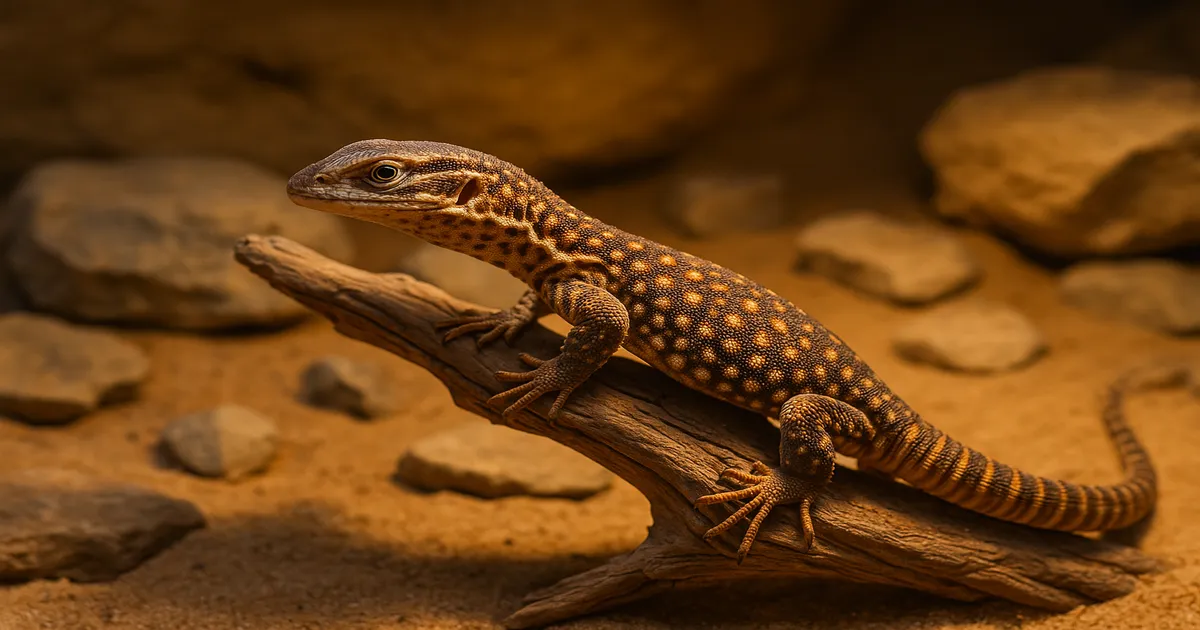
Quick Answer: Hatchlings and juveniles need food every single day. Sub-adults do well at 5–6 times per week. Adults can drop to every other day, though 4–5 times per week is better if your animal is active or breeding. Ackies have unusually fast metabolisms for their size — get the frequency wrong in either direction and you’ll see the consequences quickly.
Knowing how often to feed an ackie monitor is one of the first things to nail down before you bring one home. These aren’t snakes. They’re active, high-energy predators that need consistent, frequent meals to stay in good condition. I’ve seen more underweight juveniles in this hobby than I’d like — almost always from keepers who applied ball python logic to a completely different kind of animal.
Ackie Monitor Feeding Frequency by Life Stage
| Life Stage | Age | Frequency | Meal Size |
|---|---|---|---|
| Hatchling | 0–6 months | Daily, sometimes twice | 5–10 small prey items |
| Juvenile | 6–18 months | Once daily | 8–15 prey items |
| Sub-adult | 18 months–3 years | 5–6x per week | 10–20 prey items |
| Adult | 3+ years | 3–5x per week | 15–25 prey items |
Hatchlings (0–6 Months): Feed Daily or Twice Daily
Hatchlings are tiny but they burn through energy fast. Feed once daily at minimum. If you have a particularly active hatchling that’s cleaning up every meal in under five minutes, a second small feeding isn’t unreasonable. Start with pinhead crickets, fruit flies, and small mealworms — anything that fits within the width of their head.
Don’t let the small meal sizes fool you. These animals are building bone, muscle, and organ tissue simultaneously. Skipping days at this stage has real consequences.
Juveniles (6–18 Months): Once Daily Without Exception
This is where keepers coming from a snake background most often go wrong. A juvenile ackie needs food every single day — not every other day, not “a few times a week.” They have the metabolism of an animal twice their size and they’ll lose condition fast if you underfeed them.
A healthy juvenile should look slightly chunky. The best way to assess body condition isn’t the belly — it’s the tail base, just behind the hind legs. It should look rounded and plump. If you can see ribs or the tail base looks pinched, feed more. Offer as much as they’ll eat in a 15–20 minute window, and keep prey items no wider than the animal’s head.
Sub-Adults (18 Months–3 Years): 5–6 Times Per Week
You can pull back slightly here, but “5–6 times per week” still means you’re feeding almost every day. The animal is still growing and its metabolism hasn’t settled into adult patterns yet. Meal sizes can increase — 10–20 appropriately sized prey items per feeding is a reasonable target.
Adults (3+ Years): Every Other Day to 5 Times Per Week
Adult ackies have more metabolic flexibility, but they still eat far more frequently than most other lizards their size. Every other day is the minimum I’d recommend. If your adult is particularly active or you’re working with a breeding female, bumping up to 4–5 times per week makes sense.
What to Feed an Ackie Monitor
Staple Feeders: Dubia Roaches and Crickets
Dubia roaches are the gold standard. High protein, low fat, easy to gut-load, and they don’t escape into your walls. If you’re serious about keeping ackies long-term, starting a dubia colony is one of the best investments you can make — it cuts feeder costs dramatically and gives you a consistent supply on demand.
Crickets work well as a secondary staple and add variety. Gut-load both for 24–48 hours before feeding using leafy greens, squash, and carrots. Iceberg lettuce is worthless — it’s mostly water. A commercial gut-load like Repashy Bug Burger rounds things out nicely.
Supplemental Feeders: Hornworms, Silkworms, and BSFL
Rotate these in regularly. Black soldier fly larvae (NutriGrubs) have an excellent calcium-to-phosphorus ratio and are worth keeping on hand. Hornworms are high in moisture — great during shedding periods. Silkworms have a genuinely impressive nutritional profile and are worth rotating in every week or two despite the higher price.
Occasional Treats: Superworms and Waxworms
Both are high in fat, so keep them as treats. Waxworms especially — no more than once a week, and only for adults or very active sub-adults. Superworms are fine for adults a couple of times a week, but watch sizing carefully with younger animals since they’re a common impaction culprit.
Mice: How Often Is Too Often?
Fatty liver disease from excess rodent feeding is one of the leading causes of premature death in captive ackies. Mice aren’t a natural staple — they’re an occasional wild food source at best. For adults, limit rodents to once every 2–4 weeks. For juveniles, avoid them entirely. I know it’s tempting when your ackie goes absolutely berserk for a pinky, but it’s not worth the long-term liver damage.
Supplement Schedule for Ackie Monitors
Metabolic bone disease is still showing up in captive ackies, and it’s almost entirely preventable. The fix is consistent supplementation — not occasional, not “when I remember.”
- Juveniles: Calcium + D3 dusted on prey two to three times per week; multivitamin once per week
- Adults: Calcium + D3 once to twice per week; multivitamin once per week
Don’t double up on D3 through your multivitamin and your calcium on the same day — space them out. Repashy Supervite and Zoo Med Reptivite (without D3) are both solid multivitamin options.
Also worth doing: keep a small dish of plain calcium (no D3) in the enclosure so the animal can self-regulate. It’s cheap insurance and some individuals use it regularly.
How Enclosure Temperature Affects How Often Ackies Eat
This is the part that trips up a lot of new keepers. Ackies need a basking spot of 120–150°F (49–66°C) measured directly on the surface. That sounds alarming if you’re used to bearded dragons, but it’s genuinely what they need for proper digestion and immune function. Inadequate basking heat is one of the most common reasons an ackie becomes a “picky eater” — the food just sits in a cold gut and the animal stops wanting more.
You need an infrared temperature gun pointed directly at the basking surface to verify this accurately. Stick-on thermometers and cheap digital probes won’t give you a reliable surface reading. I’ve seen enclosures where the keeper was convinced they had a 130°F basking spot and the gun read 95°F. That’s the difference between a thriving animal and a chronically sick one.
If your ackie hasn’t had access to its basking spot before you offer food, wait. Let the basking area run for at least an hour before the first feeding of the day. Undigested food in a cold gut ferments, leads to bacterial infections, and often comes back up as regurgitation.
Common Feeding Mistakes to Avoid
Overfeeding mice and high-fat prey. Fatty liver disease kills captive ackies. Keep rodents rare and treat waxworms and superworms as occasional additions, not regulars.
Underfeeding juveniles. Visible ribs, a sunken belly, and a narrow tail base all point to underfeeding. A juvenile eating well should look almost a little stocky. If yours looks skinny, feed more — daily, without skipping.
Prey that’s too large. The head-width rule exists for a reason. Oversized prey causes regurgitation at best and intestinal impaction at worst. When in doubt, go smaller.
Skipping gut-loading. A cricket that’s been sitting in a dry cup with cardboard for three days isn’t nutritious — it’s an empty calorie. Gut-load everything 24–48 hours before it goes into the enclosure.
Inconsistent supplementation. Pick a weekly schedule and stick to it. Monday, Wednesday, Friday for calcium + D3; Sunday for multivitamin. Write it on a sticky note on the enclosure if you need to.
Practical Tips for a Better Feeding Routine
Scatter feed when you can. Tossing prey loosely around the enclosure rather than dropping it in a bowl triggers natural foraging behavior and provides real enrichment. Experienced keepers consistently report better body condition in scatter-fed ackies. A bowl is fine for containing roaches, but mix it up.
Feed in the morning or early afternoon. Ackies are diurnal and most active in the first half of the day. Feeding during their natural activity window means better responses and enough time to fully digest before lights-out.
Rotate prey types. An ackie that gets dubia roaches at every single meal will eventually decide that’s the only thing it eats. Rotate between dubias, crickets, BSFL, hornworms, and silkworms throughout the week.
Keep a feeding log. This sounds fussy until the day it saves your animal’s life. A simple note — what was offered, how much was eaten, any refusals — makes it easy to spot seasonal patterns and catch early illness signs before they become serious.
Expect seasonal slowdowns. Some ackies reduce feeding in winter even in captivity, responding to shorter photoperiods and ambient temperature shifts. A 20–30% reduction in winter is normal as long as body condition stays good. Gravid females will often go off feed entirely before egg laying — that’s expected, not a problem.
Hydration and Appetite
Ackies rarely drink from standing water bowls the way a bearded dragon might. In the wild, they get most of their moisture from prey and from licking condensation off rocks and vegetation. Light misting of enclosure walls once or twice a week gives them the chance to drink the same way — many will actively seek out and lick water droplets off the glass.
A humid hide maintained at 70–80% relative humidity isn’t optional. It’s how they stay hydrated and how they shed cleanly. A dehydrated ackie will often refuse food, and stuck shed causes enough stress to trigger a feeding strike on its own. Spot-mist one end of the enclosure or use a deep substrate layer that holds moisture at depth — a mix of topsoil and play sand works well and holds humidity without staying wet.
During shedding periods, rotate in hornworms and silkworms — both are high in moisture and help keep the animal hydrated from the inside. If your ackie suddenly goes off feed and you can’t find an obvious husbandry issue, a 15–20 minute soak in shallow lukewarm water at 85°F (29°C) is worth trying before you panic.
Frequently Asked Questions About Feeding Ackie Monitors
How often should I feed my ackie monitor?
Daily for hatchlings and juveniles, 5–6 times per week for sub-adults, and every other day to 5 times per week for adults. Ackies have fast metabolisms and need more frequent feeding than most other lizards their size.
How many crickets should I feed my ackie monitor per day?
For a juvenile, aim for 8–15 appropriately sized crickets per feeding, offered daily. Adults can handle 15–25 or more. The practical guideline is to offer as much as the animal will eat in a 15–20 minute window — that naturally adjusts for individual variation and life stage.
Can ackie monitors eat mice?
Yes, but sparingly. Adults can have a small mouse once every 2–4 weeks. Juveniles should avoid rodents entirely. Mice are high in fat, and overfeeding them is a well-documented cause of fatty liver disease in captive ackies.
Why has my ackie monitor stopped eating?
The most common causes are inadequate basking temperature, a dry or missing humid hide, stress from an undersized enclosure, or natural seasonal slowdown. Check your basking surface with an infrared thermometer and verify your humid hide before assuming illness. If husbandry checks out and the animal still hasn’t eaten in 2–3 weeks while losing visible condition, see a reptile vet.
Do ackie monitors need supplements with every feeding?
No — and you shouldn’t supplement every feeding. The standard schedule is calcium with D3 dusted two to three times per week for juveniles, once to twice per week for adults, and a multivitamin once per week for both. Over-supplementing D3 carries its own risks, so stick to a consistent schedule rather than dusting every meal.