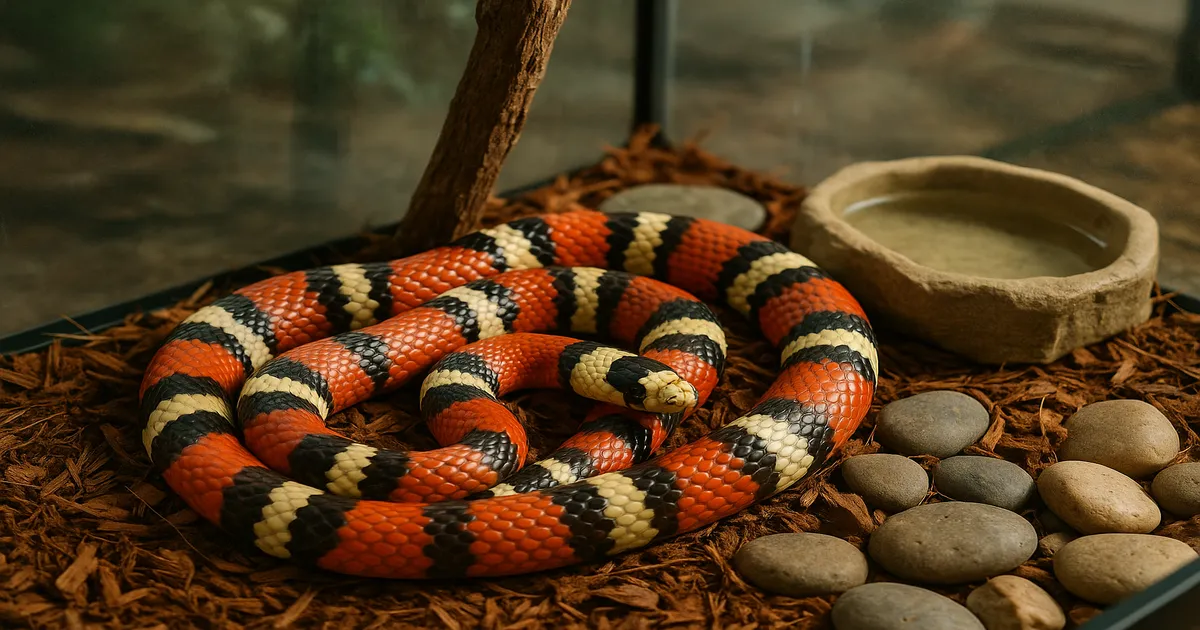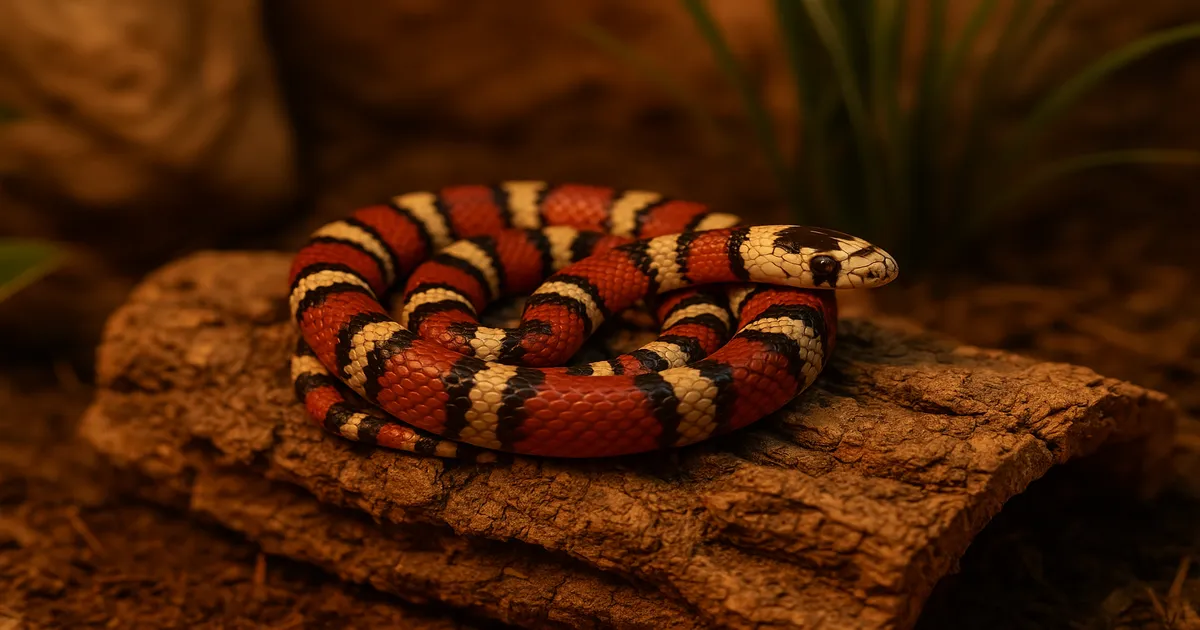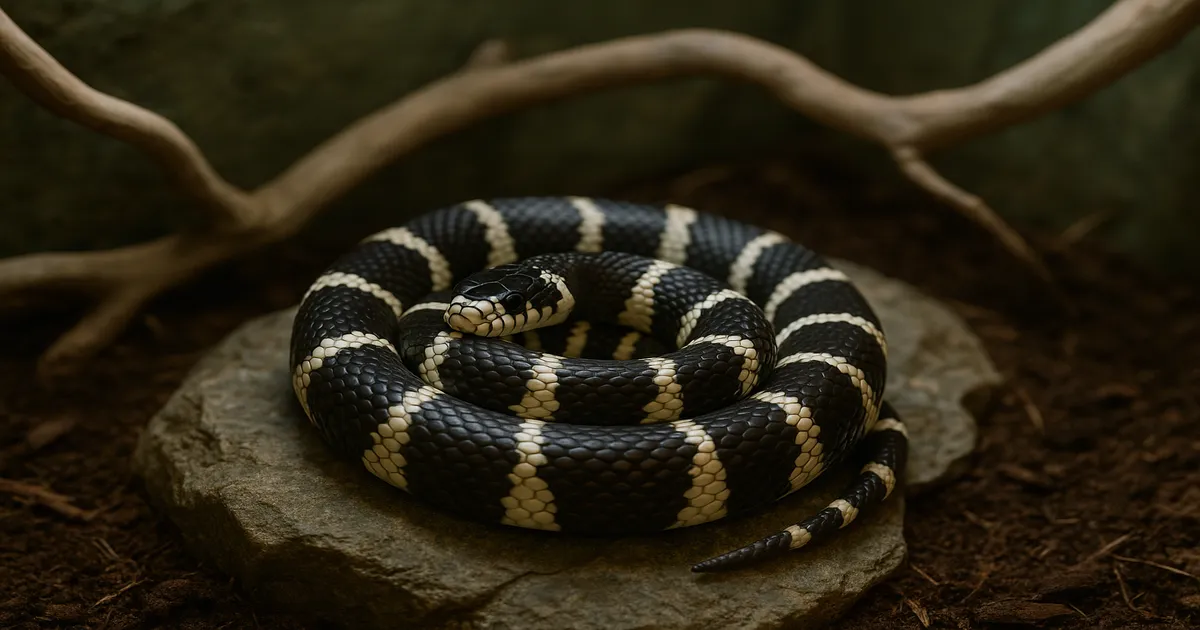
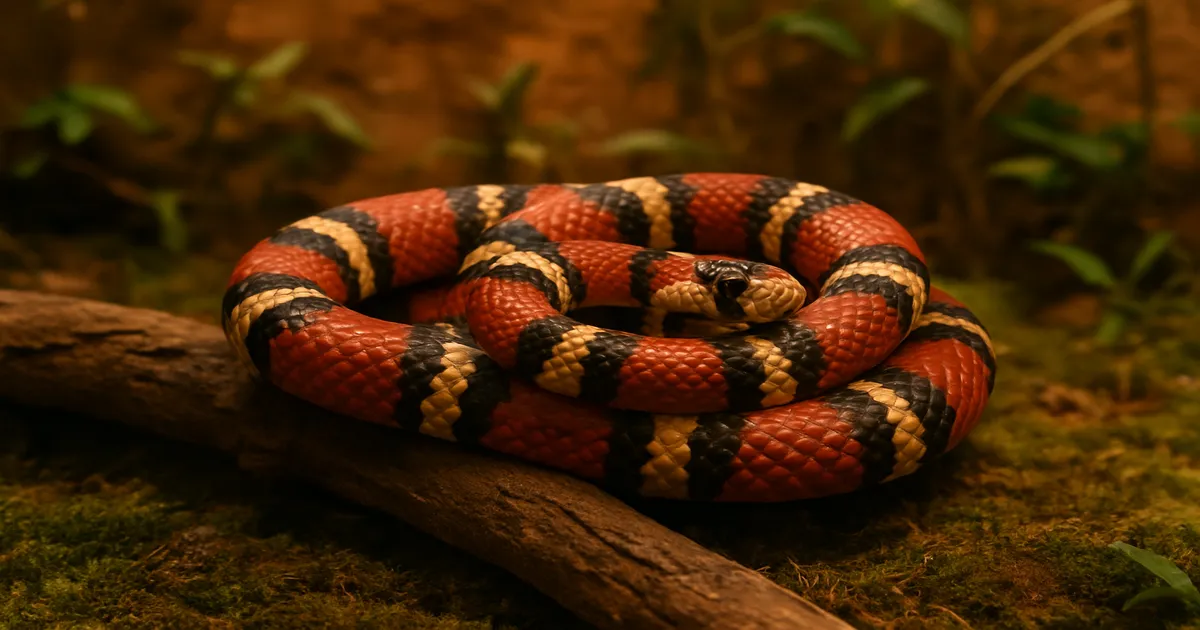
Quick Answer: Feed your milk snake appropriately-sized frozen/thawed mice using long tongs, on a schedule that matches their age — every 5–7 days for hatchlings, every 7 days for juveniles, and every 10–14 days for adults. Always offer food at night when they’re naturally active, and don’t handle them for at least 48–72 hours after a meal. Get your husbandry dialed in first — a snake kept at the wrong temperatures will refuse food no matter what you do.
Knowing how to feed a milk snake correctly is honestly the most important skill you’ll develop as a keeper. Get it right and you’ll have a snake that eats like clockwork for decades. Get it wrong and you’ll spend your evenings troubleshooting refusals, dealing with regurgitation, and second-guessing everything. The good news: milk snakes are not difficult feeders once you understand what they actually need.
What Do Milk Snakes Eat in Captivity?
In the wild, milk snakes are opportunistic. Juveniles go after lizards, frogs, and small snakes; adults shift toward small mammals, birds, and other reptiles. The exact diet varies by subspecies and geography — but none of that matters much in captivity.
A frozen/thawed mouse covers all their nutritional needs. It’s cleaner, safer, and cheaper than live prey when bought in bulk. Live mice bite and scratch, and I’ve seen snakes come away from unsupervised live feedings with eye damage and infected wounds. Beyond the welfare issue, there’s just no upside to live feeding once your snake is eating frozen reliably.
Some keepers insist their snake “only takes live.” In almost every case, that’s a technique problem, not a snake problem. More on that in the troubleshooting section.
Prey Size by Stage
| Snake Size / Stage | Appropriate Prey |
|---|---|
| Hatchling (under 12”) | Pinky mouse |
| Small juvenile (12–18”) | Fuzzy mouse |
| Juvenile (18–30”) | Hopper mouse |
| Sub-adult / adult (30–48”) | Small adult mouse |
| Large adult (48”+) | Adult mouse or rat pup |
Most milk snake subspecies stay on mice their entire lives. The main exception is the Honduran milk snake, which is large enough as an adult to move up to rat pups. Scarlet kingsnakes are the outlier on the other end — notorious lizard specialists as juveniles that can take real effort to convert.
How to Feed a Milk Snake: Step-by-Step
Step 1 — Thaw and Warm the Prey Correctly
Place the frozen mouse in a sealed zip-lock bag and submerge it in warm water until fully thawed — usually 20–30 minutes depending on size. Then move the bag to warmer water and bring the surface temperature up to around 95–100°F (35–38°C). Check it with an infrared thermometer. (Etekcity Lasergrip 774)
This single step fixes a surprising number of refusals. A warm prey item activates the snake’s heat-sensing labial pits far more effectively than a room-temperature thawed mouse. Don’t skip it.
Step 2 — Check That Your Snake Is Ready
Before you open the enclosure, run through this quickly:
- In shed? Cloudy eyes or dull, milky skin means skip this feeding. Try again 3–5 days after the shed completes.
- On the warm side? A cold snake won’t feed reliably and risks regurgitation even if it does eat.
- Alert and moving? A snake completely tucked in its hide may not be in feeding mode.
Step 3 — Use a Feeding Container or Tongs
My preferred method is a dedicated feeding tub — a plain plastic container the snake comes to associate with mealtime. Transfer the snake, add the warmed prey with tongs, close the lid, and check back in 15–20 minutes. This prevents substrate ingestion and keeps your main enclosure undisturbed.
If you feed in the enclosure directly, use long feeding tongs — 12–16 inches is the right length. Never use your hands to present prey. Never. Milk snakes are fast strikers and they don’t always look before they bite.
Step 4 — Present Prey with Realistic Movement
Hold the mouse with tongs and give it a slow, gentle back-and-forth motion — almost like it’s swimming. This “warm and wiggle” technique triggers strikes from snakes that would otherwise ignore a stationary prey item. Slow and deliberate works better than erratic movement.
Step 5 — After the Feed
Return the snake to its enclosure if you used a feeding tub, make sure the warm side is accessible, and leave it alone. The snake needs heat to digest properly. No handling for 48–72 hours minimum — handling too soon is one of the most common causes of regurgitation, and regurgitation is genuinely hard on a snake’s digestive system.
Milk Snake Feeding Schedule: How Often to Feed
This is where a lot of keepers go wrong — usually by feeding too often, not too rarely. Overfeeding causes obesity and fatty liver disease, both of which shorten a snake’s life significantly.
- Hatchlings (under 6 months): Every 5–7 days
- Juveniles (6–18 months): Every 7 days
- Adults (18+ months): Every 10–14 days
Weigh your snake every 2–4 weeks and log it. A juvenile should be gaining steadily; an adult should hold weight with only minor seasonal fluctuation. If your adult is gaining more than 10–15% of its body weight per feeding cycle, dial back the prey size or stretch the interval. A kitchen scale accurate to 1 gram is one of the most useful tools you can own for this hobby.
Prey Size: The Mid-Body Rule
The prey item should be roughly 1.0–1.5× the diameter of the snake’s mid-body — not the head, not the neck, the widest part. A slight lump after swallowing is normal. A dramatically distended body or a regurgitation means you went too big. When in doubt, go slightly smaller.
Seasonal Slowdowns
If your milk snake slows down or stops eating in fall or winter, don’t panic. This is a normal brumation response, especially in snakes kept in rooms that cool naturally with the seasons. You can allow a partial brumation by gradually cooling the enclosure to 55–60°F (13–16°C) for 8–12 weeks, or maintain stable temperatures year-round to suppress it. Both approaches work fine. Brumation tends to improve long-term vigor and breeding success, but it’s not required for a healthy pet.
Husbandry: The Real Reason Your Snake Won’t Eat
Improper husbandry is the number-one reason milk snakes refuse food. Before blaming the snake or the prey, check your setup.
Temperature Requirements
| Zone | Target Temperature |
|---|---|
| Warm side | 85–88°F (29–31°C) |
| Cool side | 72–76°F (22–24°C) |
| Nighttime low | No lower than 65°F (18°C) |
Use an under-tank heater or radiant heat panel controlled by a quality thermostat. (Herpstat 1) An unregulated UTH can exceed 120°F (49°C) — that’s not a typo, and yes, it will kill a snake. Verify temperatures with a digital probe thermometer or infrared gun. The analog dial thermometers bundled with starter kits are notoriously inaccurate; throw them out.
Enclosure Size and Hides
Start small. A hatchling in a 40-gallon breeder tank is a stressed, non-feeding hatchling. Juveniles under 18 inches do best in a 10-gallon equivalent or a snug rack tub. Size up gradually as the snake grows.
Two hides are non-negotiable — one on the warm side, one on the cool. The hide should fit the snake snugly with its body coiled and sides touching the walls. A hide that’s too large provides no security and a snake that feels exposed won’t eat.
Substrate and Humidity
Aspen shavings work well for most North American subspecies — affordable, holds burrow tunnels, easy to spot-clean. For Central American subspecies like the Honduran, coconut fiber or cypress mulch handles the higher humidity requirements (50–70%) better. Most North American subspecies do fine at 40–50% ambient humidity.
Milk snakes don’t need UVB or bright lighting. A 12-hour light/dark cycle from ambient room light is fine. Intense overhead lighting stresses these secretive, nocturnal animals and suppresses feeding.
Troubleshooting: Why Your Milk Snake Won’t Eat
Work through this list before assuming something is seriously wrong:
- Temperatures out of range (most common cause)
- Enclosure too large for the snake’s size
- Snake is in shed
- Recently moved or stressed from handling
- Prey offered too cold
- Feeding during the day instead of evening
- Seasonal brumation response
- Substrate or decor recently changed
Converting from Live to Frozen/Thawed
The most reliable technique is brain-swiping — cut into the skull of the thawed mouse and rub the exposed brain tissue along the body. It sounds unpleasant, but it works consistently. The scent triggers a feeding response in snakes that would otherwise ignore frozen prey entirely.
For confirmed lizard specialists like juvenile scarlet kingsnakes, rub the thawed mouse against a frozen/thawed anole to transfer scent. Over several feedings, gradually reduce the scenting until the snake accepts unscented mice.
The paper bag trick is worth trying for stubborn hatchlings: place the warmed prey and the snake together in a small paper bag, fold the top closed, and leave them in a quiet, dark spot for 15–30 minutes. The confined space and prey scent often do the trick when nothing else will.
Other Techniques for Stubborn Feeders
- Feed after 9–10 PM when the snake is naturally active
- Try a slightly smaller prey item — sometimes going down a size unlocks a refusal
- Offer prey inside a hide rather than in open space
When to See a Vet
A healthy milk snake missing a few meals during a seasonal slowdown is not an emergency. These situations are:
- Consistent weight loss over multiple months
- Repeated regurgitation (more than once or twice)
- Mucus around the mouth or labored breathing
- Visible external parasites (mites, ticks)
- Lethargy combined with appetite loss outside of brumation season
Subspecies-Specific Feeding Notes
Honduran milk snake: The heavyweight of the group — adults regularly hit 5–6 feet and can graduate to rat pups. Hatchlings can be challenging and often need scented pinkies to get started. Once they’re eating reliably, they tend to be confident, aggressive feeders.
Sinaloan and Pueblan milk snakes: Mid-sized (typically 36–48 inches) and among the most reliable feeders in the genus. Stick to appropriately-sized mice throughout their lives. If you’re new to keeping milk snakes, either of these is a great starting point.
Scarlet kingsnake: This is the one subspecies where you’ll need real patience. Juveniles are notorious for refusing anything that doesn’t smell like a lizard. Use the scenting technique consistently, feed at night in a dark paper bag, and don’t give up. Most do convert with time.
Eastern milk snake and smaller North American subspecies: Generally manageable feeders that stay on mice their whole lives. No special tricks required.
One rule applies to every subspecies without exception: house and feed them separately. Milk snakes are ophiophagous — they will eat each other. Never co-feed or house two milk snakes together.
Frequently Asked Questions
How often should I feed my milk snake?
Hatchlings every 5–7 days, juveniles every 7 days, adults every 10–14 days. Overfeeding is a more common problem than underfeeding in captive milk snakes — it leads to obesity and fatty liver disease over time. Weigh your snake every few weeks to make sure you’re hitting the right balance.
How do I get my milk snake to eat frozen mice?
Warm the thawed mouse to 95–100°F (35–38°C) using warm water, then use tongs to give it a gentle wiggling motion. For stubborn cases, try brain-swiping or scenting with a feeder lizard. Offer prey at night in a small, dark paper bag — this combination works for most reluctant feeders.
How big should the prey be?
Roughly 1.0–1.5× the diameter of the snake’s widest body point. A slight lump after swallowing is normal. A dramatically distended body or a regurgitation means the prey was too large. When in doubt, go smaller — it’s better to feed two smaller items than one that comes back up.
Why is my milk snake refusing to eat?
The most common causes are temperatures out of range, an enclosure that’s too large, the snake being in shed, or prey offered at the wrong time of day. Run through the full husbandry checklist first — environmental problems cause the vast majority of refusals. If everything checks out and the snake has been losing weight consistently for several months, see a vet.
Can milk snakes eat anything other than mice?
In the wild, yes — lizards, frogs, birds, other snakes. In captivity, a mouse-based diet is nutritionally complete and the right choice for nearly every keeper. Large subspecies like the Honduran can move up to rat pups as adults. There’s no practical reason to add variety beyond appropriately-sized rodents.