Quick Answer: California kingsnakes are hardy, manageable, and genuinely rewarding snakes that thrive in captivity when their basic needs are met — a 4×2×2 ft enclosure, a thermal gradient running from 72°F on the cool side to 88–92°F at the basking spot, 40–60% humidity, and frozen-thawed prey every 10–14 days. They typically live 15–20+ years and tame down nicely with consistent handling. The one rule you can never break: house them alone. These snakes eat other snakes, full stop.
California Kingsnake Care: The Essentials
At a Glance: Key Care Stats
| Parameter | Value |
|---|---|
| Adult size | 3–4 ft (0.9–1.2 m), occasionally 5 ft |
| Lifespan | 15–20+ years |
| Enclosure (adult) | 4×2×2 ft (120×60×60 cm) minimum |
| Cool side | 72–76°F (22–24°C) |
| Basking surface | 88–92°F (31–33°C) |
| Humidity | 40–60% |
| Feeding (adult) | Frozen-thawed prey every 10–14 days |
| Difficulty | Beginner-friendly |
Is a California Kingsnake Right for You?
If you want a snake that eats reliably, tolerates handling well once established, stays a manageable size, and doesn’t demand the precise humidity control that a ball python or boa requires — this is probably your species. I’ve recommended California kingsnakes to more first-time snake owners than any other, and very few have regretted it.
The one non-negotiable: they must live alone. California kingsnakes are ophiophagous — snake eaters — and will absolutely consume a cage mate, including one of their own species. No exceptions, no workarounds.
Species Overview
Natural Range and Wild Habitat
Lampropeltis californiae ranges across the western United States — California, Oregon, Nevada, Arizona, Utah — and down through Baja California into northwestern Mexico. What’s impressive is how adaptable they are: coastal chaparral, high desert edges, grasslands, riparian corridors, suburban backyards. That ecological flexibility is a big part of why they do so well in captivity.
Size, Lifespan, and Temperament
Adults typically reach 3–4 feet, with occasional individuals hitting 5 feet. Females tend to be slightly heavier-bodied than males. Well-cared-for animals routinely reach 20 years in captivity — a commitment worth thinking hard about before you buy.
Temperament-wise, expect a nippy juvenile and a docile adult. Hatchlings can be defensive little rockets, but consistent calm handling usually produces a relaxed, curious snake within a few weeks to months. Don’t give up on a feisty youngster — it’s almost never permanent.
Color Morphs
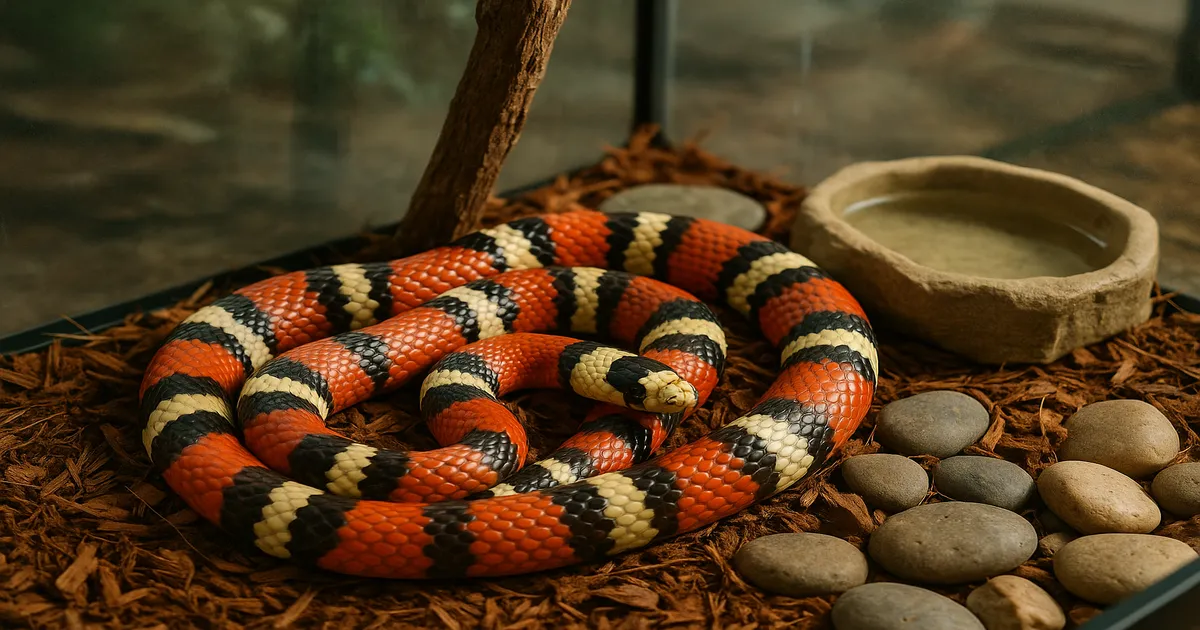
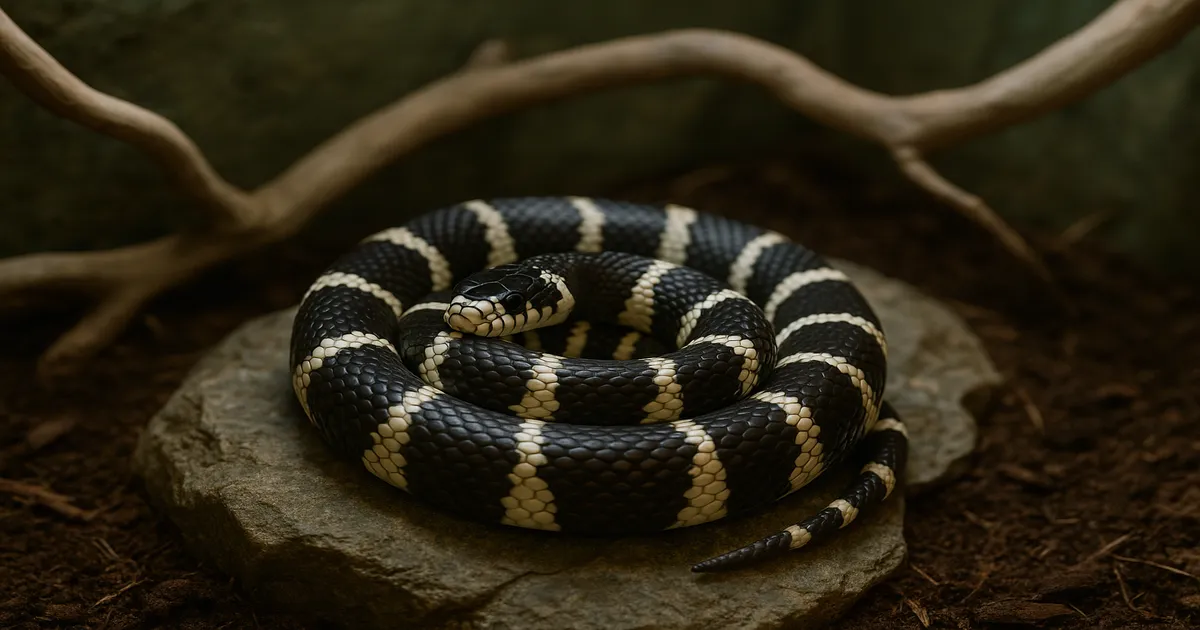
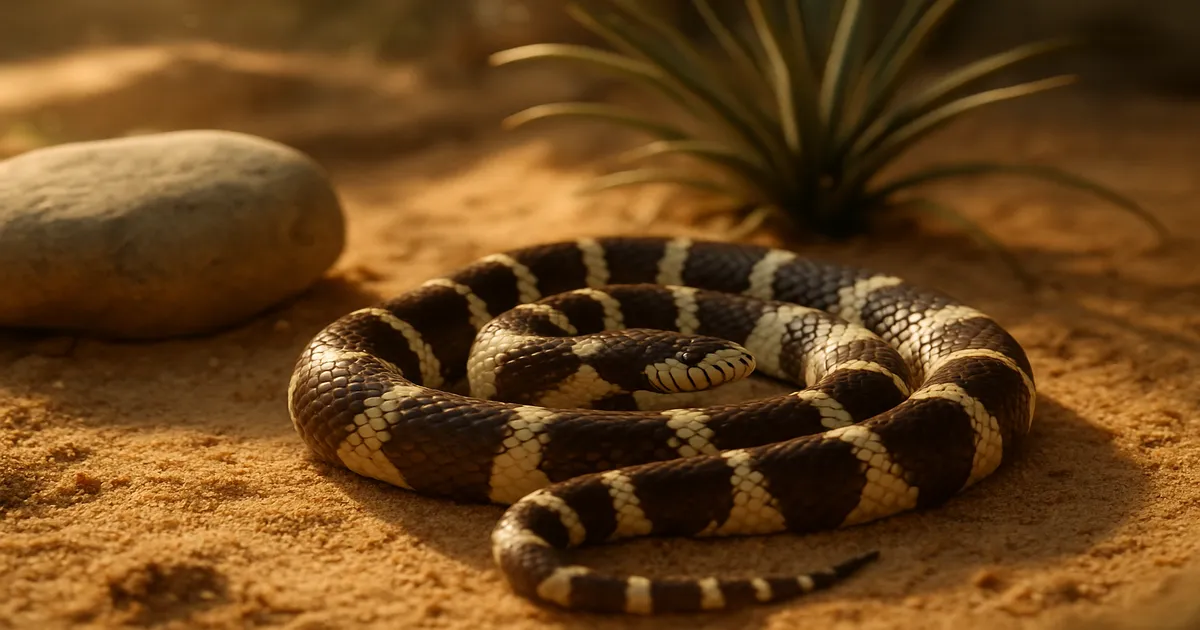
The classic look is bold black-and-white bands, but California kingsnakes naturally occur in banded, striped, and aberrant patterns depending on geographic population. Captive breeding has expanded that dramatically: albino, lavender, banana, chocolate, and many others are readily available. If you want a specific look, there’s almost certainly a captive-bred animal out there for you.
Why They’re Called ‘Kings’
The name isn’t just branding. California kingsnakes actively hunt and eat other snakes in the wild — including rattlesnakes. They have a partial physiological resistance to pit viper venom, which gives them a real edge over prey most predators avoid entirely. It’s a genuinely impressive piece of natural history, and it’s also the exact reason you never house two of them together.
Always buy captive-bred. Wild-caught animals are stressed, often parasite-loaded, and don’t adjust nearly as well. Captive-bred California kingsnakes have been established in the hobby since the 1960s — there’s zero reason to settle for anything else.
How to Take Care of a California Kingsnake: Enclosure Setup
Enclosure Size by Age
- Juveniles (up to ~18 inches): 10-gallon (20”×10”×12”) — smaller spaces help hatchlings feel secure and find food
- Sub-adults (~18–30 inches): 20-gallon long (30”×12”×12”)
- Adults: 4×2×2 ft minimum — this is the floor, not the ideal
Don’t skip the size progression. Dropping a hatchling into a 4-foot enclosure isn’t generous, it’s stressful. They’ll spend all their time hiding and may refuse food.
Enclosure Types
Glass terrariums are the most accessible option and work fine, especially in warmer rooms. The downside is heat retention — screen tops bleed warmth, so your heating equipment has to work harder. Use locking clips on the lid every single time. (Zilla Front Opening Terrarium)
PVC enclosures are what most serious keepers eventually move to. They hold heat and humidity far better than glass, and they look great. Higher upfront cost, but worth it for an adult setup. (Zen Habitats 4x2x2 PVC Reptile Enclosure)
Plastic tub rack systems are what professional breeders use almost universally. Functionally excellent, cheap, easy to maintain — just not pretty. If aesthetics matter, go glass or PVC.
Escape-Proofing
California kingsnakes will find every gap, push every corner, and test every latch. I’ve seen adults escape from enclosures their owners were certain were secure. Locking clips on screen tops, working latches on PVC doors, no gaps around feeding ports. Check the enclosure every time you close it.
Substrate
Good choices:
- Aspen shaving — holds burrows well, easy to spot-clean, widely available; molds quickly if it gets wet, so keep it dry
- Cypress mulch — better moisture retention, great around the humid hide
- Coconut fiber (coco coir) — naturalistic, holds humidity well
- Bioactive mixes (topsoil, sand, coco coir blend) — excellent for advanced keepers
Never use:
- Cedar or pine shavings — the aromatic oils are toxic to snakes
- Sand alone — impaction risk
- Gravel or artificial turf — abrasive and bacteria-prone
Aim for at least 2–3 inches of depth, ideally 4–6 inches. California kingsnakes are semi-fossorial and genuinely enjoy burrowing.
Temperature, Humidity, and Lighting
Thermal Gradient
- Cool side: 72–76°F (22–24°C)
- Warm side ambient: 80–85°F (27–29°C)
- Basking surface: 88–92°F (31–33°C)
- Nighttime low: 65–70°F (18–21°C) is fine; don’t let it drop below 60°F for extended periods
Heating Equipment
Under-tank heaters, radiant heat panels, ceramic heat emitters, and low-wattage halogen bulbs all work — but every single one must be controlled by a thermostat. An unregulated UTH can reach temperatures that cause severe thermal burns through several inches of substrate. This isn’t optional. (Inkbird ITC-306A)
Proportional thermostats hold temperatures more precisely than basic on/off models and are worth the extra cost for an adult setup. (Herpstat 1)
Don’t trust dial thermometers — they’re notoriously inaccurate. Use a digital probe thermometer or an infrared temperature gun, and verify both sides of the enclosure.
Humidity and the Humid Hide
Target 40–60% relative humidity. California kingsnakes come from relatively dry environments and don’t need tropical humidity levels. Sustained humidity above 70% invites respiratory infections and scale rot.
A humid hide — a snug box packed with slightly damp sphagnum moss on the warm side — gives your snake the localized moisture it needs during shedding without raising ambient humidity throughout the enclosure. Keep one in there permanently.
UVB Lighting
Strictly speaking, California kingsnakes have been kept successfully without UVB for decades. That said, the evidence increasingly supports offering low-level UVB — it appears to support immune function and more natural behavior, and there’s no downside to providing it. An Arcadia 6% or Zoo Med Reptisun 5.0 T5 HO on a 12-hour on/off cycle is a solid setup.
One firm rule: never place the enclosure where direct sunlight can hit it. Even on a cool day, a glass enclosure in direct sun can reach lethal temperatures in under an hour.
Feeding Your California Kingsnake
Prey Type and Sizing
Frozen-thawed mice and rats are the gold standard. Live prey should never be used — a live rodent will bite and scratch a snake, sometimes causing serious injuries. There’s no benefit to it.
Prey size should create a small, visible lump when swallowed — roughly 1 to 1.25 times the width of the snake’s widest point. Too large and you risk regurgitation; too small and you’re underfeeding.
Feeding Schedule by Age
- Hatchlings: Every 5–7 days, starting with pinky mice
- Sub-adults: Every 7 days
- Adults: Every 10–14 days
California kingsnakes are famously voracious, which is one of their best traits as pets. An established adult that suddenly refuses food is usually in shed, cycling through breeding season, or flagging a husbandry problem.
Thawing and Offering Prey
Thaw frozen prey in a sealed bag submerged in warm water until the surface temperature reaches around 90–100°F. Never microwave it — hot spots and partial cooking cause regurgitation. Offer prey with long feeding tongs rather than by hand.
Whether you feed in the enclosure or a separate tub is personal preference. I’ve done both without issues, though a separate tub does reduce the chance of your snake striking every time you open the door.
Avoiding Obesity
California kingsnakes will eat every time you offer food, which makes overfeeding easy. Obesity shortens lifespan and causes reproductive problems. Stick to the 10–14 day schedule for adults and size prey appropriately. A healthy adult should have a rounded but not overly thick body — no pronounced fat rolls along the spine.
Hides, Decor, and Water
The Two-Hide Rule
You need at minimum two hides: one on the warm side, one on the cool side. A snake with only one hide has to choose between thermoregulating and feeling secure — and a stressed snake is a less healthy snake. The hide should fit snugly; a cave twice the snake’s size doesn’t provide the same sense of security as one it has to squeeze into slightly.
Add a third hide on the warm side packed with damp sphagnum moss as a dedicated shedding station. A complete, single-piece shed tells you your husbandry is on point. Fragmented sheds usually mean low humidity or dehydration.
Water Bowl
Use a heavy ceramic or stainless bowl large enough for your snake to soak in fully. Place it on the cool side to minimize evaporation and change the water every 2–3 days, or immediately if soiled. Snakes soak before a shed — that’s normal. Persistent soaking outside of shedding in an established adult can signal mites, retained shed, or an enclosure that’s too hot or dry.
Enrichment
California kingsnakes are primarily terrestrial, but they’ll use cork bark rounds, branches, and climbing structures if you provide them. Even a simple setup benefits from a couple of cork bark hides and a branch or two.
Handling and Behavior
How to Pick Up a California Kingsnake
Approach from the side, never from above — coming from above mimics a predator strike and will trigger a defensive response almost every time. Slide your hand under the snake and support its body weight fully as you lift. Most snakes calm down almost immediately once they realize they’re supported and not in danger.
For defensive animals, a snake hook lets you move them without reinforcing bite behavior.
Taming a Nippy Juvenile
Hatchlings can be feisty — some will musk, strike, and writhe every time you pick them up for the first few weeks. This is normal and almost always temporary. Short, frequent sessions of 5–10 minutes daily are far more effective than occasional long ones. Calm, consistent contact teaches the snake that you’re not a threat.
Don’t wear strong-smelling lotions or handle prey animals before picking up your snake, especially when it’s young. Smell matters a lot to these animals.
Reading Body Language
A snake in shed — eyes opaque, skin dull — may be more defensive than usual because its vision is impaired. Don’t mistake this for a personality shift; give it a bit more space and make sure the humid hide is stocked.
The 48-hour post-feeding rule is real. Don’t handle your snake within two days of a meal. Premature handling can cause regurgitation, which is stressful and depletes energy reserves.
Common Mistakes
Running heat sources without a thermostat. Thermal burns from unregulated UTHs are common, painful, and entirely preventable. Buy the thermostat before you buy the heater.
Housing two kingsnakes together. There is no scenario where this is acceptable. It doesn’t result in companionship — it results in one snake and a smaller enclosure.
Feeding errors. Live prey, oversized prey, handling within 48 hours of a meal, and overfeeding adults are the four most common. All are avoidable.
Humidity and substrate mistakes. Over-misting or using a substrate that stays wet without ventilation leads to mold, scale rot, and respiratory infections. Cedar and pine are toxic — never use them regardless of what the pet store stocks.
Enclosure security failures. Screen tops without locking clips, worn PVC latches, gaps around feeding ports — all escape routes. Check your enclosure every time you close it.
Frequently Asked Questions
Are California kingsnakes good pets for beginners?
Yes, genuinely. They’re hardy, eat reliably, stay a manageable size, and don’t require the precise humidity control that many other popular species demand. The main adjustment for new keepers is understanding that juvenile nippiness is normal and temporary — with consistent handling, most California kingsnakes become docile and easy to work with within a few weeks to months.
How often should I feed my California kingsnake?
Hatchlings eat every 5–7 days, sub-adults every 7 days, and adults every 10–14 days. Always use frozen-thawed prey sized to roughly 1–1.25 times the width of the snake’s body. California kingsnakes have a strong feeding response, so it’s easy to overfeed adults — resist the urge to feed more frequently than the schedule calls for.
Can you keep two California kingsnakes together?
No. California kingsnakes eat other snakes, including members of their own species. Co-housing them will almost certainly result in one snake eating the other. They must always be housed alone, with no exceptions.
How long do California kingsnakes live in captivity?
With proper care, 15–20 years is typical, and some individuals live well beyond that. Wild individuals typically live 10–12 years. Captivity, done right, more than doubles that — which is worth factoring in before you bring one home.
Do California kingsnakes need UVB lighting?
They’ve been kept successfully without it for decades, so it’s not strictly required. That said, current evidence suggests low-level UVB supports immune function and more natural behavior. An Arcadia 6% or Zoo Med Reptisun 5.0 T5 HO on a 12-hour cycle is a low-effort addition that’s unlikely to hurt and may genuinely help.