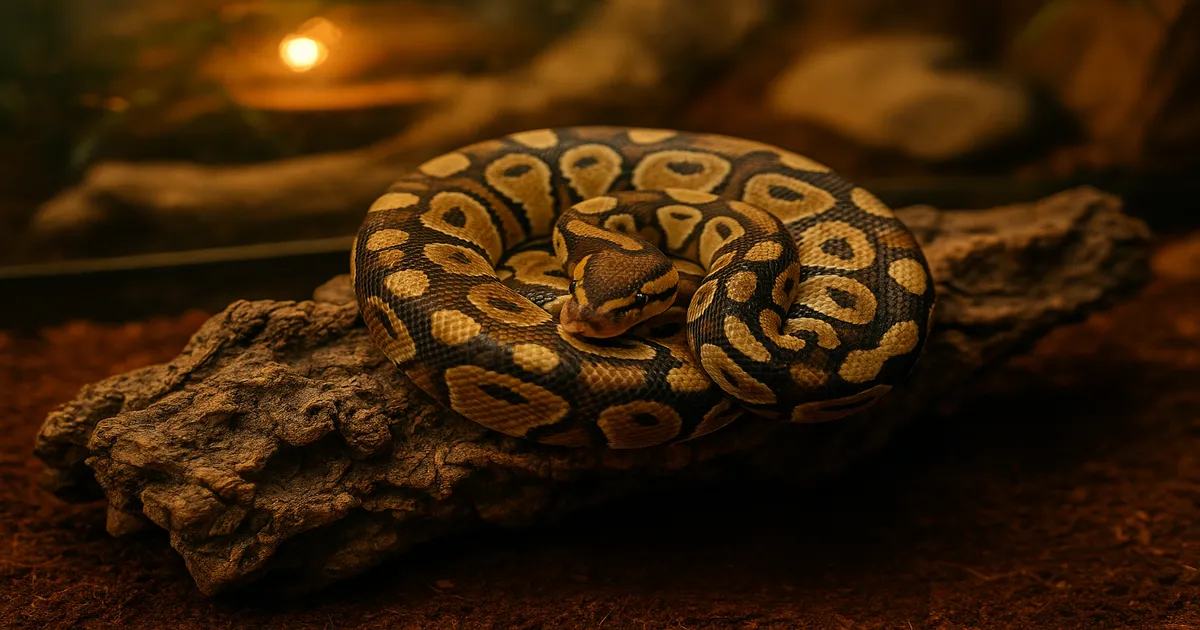
Quick Answer: Don’t feed your ball python within 5–7 days of a short local move, or within 10–14 days of a long-distance drive or air shipment. A snake that’s mid-digestion is highly vulnerable to regurgitation from transport stress — and regurgitation can cause serious, even fatal, damage if it happens repeatedly.
Planning a move with a ball python takes more coordination than most people expect. The feeding schedule is the piece that trips people up most often — and getting it wrong has real consequences. Knowing when to feed a ball python before a move isn’t just a scheduling convenience. It’s the difference between a smooth transition and a weeks-long feeding strike, or worse, a regurgitation event that lands you at the vet.
When to Feed a Ball Python Before a Move: The Basic Rules
The 5–14 Day Rule at a Glance
- Local move (under 1 hour): No feeding within 5–7 days before; wait 7 days after arrival before offering food
- Long-distance drive or cross-country: No feeding within 10–14 days before; wait 10–14 days after
- Air travel or live shipping: 14-day fast minimum before; 14 days acclimation after
That’s it. Simple enough — but understanding why these windows exist will help you make better calls when your situation doesn’t fit neatly into one category.
Why Feeding Timing Matters So Much
After a ball python eats, it enters a physiologically demanding digestive state that lasts 48–72 hours minimum — longer if the prey was large. During that window, the snake needs stable warmth, minimal handling, and zero surprises. Its immune response is partially suppressed, its metabolism is running hot, and it’s genuinely more fragile than usual. Vibration, temperature swings, unfamiliar smells — any of these can trigger regurgitation.
Regurgitation isn’t just gross. It strips protective mucus from the esophageal and stomach lining. One event means a mandatory 10-day fast before you can attempt re-feeding with a smaller prey item. Repeated regurgitation can scar the esophagus and cause gastric ulceration that’s difficult or impossible to treat. I’ve seen keepers lose snakes to this — not because they were negligent, but because nobody told them the timing mattered.
Why Moving a Digesting Ball Python Is Dangerous
Ball pythons are ectotherms. Their digestion is entirely temperature-dependent. They need a warm-side ambient of 80–85°F (27–29°C) and a basking spot of 88–92°F (31–33°C) to process prey efficiently. Drop the temperature below 75°F (24°C) and digestion slows dramatically. Below 70°F (21°C), it essentially halts — and food sitting in a cold gut doesn’t just pause, it starts to decompose.
Transport introduces multiple stressors at once: road vibration, temperature swings inside the container, handling during loading and unloading, and a constant stream of novel smells and sounds. Any one of these can be enough to trigger regurgitation in a digesting snake. Combined, they’re a serious problem.
Feeding Timelines by Move Type
Short Local Move (Under 1 Hour)
This is the scenario most people underestimate. “It’s just across town” doesn’t mean the stress is trivial — a 15-minute car ride can absolutely trigger regurgitation in a mid-digestion snake.
- Fast for at least 5 days before the move (7 is better)
- After arrival, leave the snake alone for 7 full days before offering food
Long-Distance Drive (Multi-Hour or Cross-Country)
The longer the journey, the more cumulative stress your snake experiences. Temperature management also gets harder over several hours.
- Fast for 10–14 days before the move
- After arrival, wait 10–14 days before the first feeding attempt
- Monitor the temperature inside the transport container throughout the trip — aim for 80–85°F (27–29°C)
Air Travel or Live Animal Shipping
Shipping a ball python is the highest-stress scenario. The snake may be in a box for 12–24+ hours with no guarantee of stable temperatures, and there’s nothing you can do about it once it’s in the carrier’s hands.
- Minimum 14-day fast before shipping
- Use FedEx Priority Overnight with a properly ventilated, double-boxed container and a heat pack buffered from direct contact with the snake
- Many states require a health certificate from a licensed vet for interstate transport — check your state’s requirements before you book anything
- After arrival, wait a full 14 days before offering food
Hatchlings, Wild-Caught, and Sensitive Morphs
These animals need the most conservative approach, full stop.
- Hatchlings: Add 3–5 extra days to every window. Don’t move a hatchling that hasn’t established a consistent feeding response — aim for at least 3–5 successful meals before any transport.
- Wild-caught animals: Use 14+ day windows in both directions. Get a fecal exam done before any long-distance transport.
- Spider and Woma morphs: These animals are already prone to feeding irregularity due to neurological issues. Don’t move them unless you’ve seen 2–3 consecutive successful feedings. Adding a move to an already-shaky feeding response is asking for trouble.
How to Transport a Ball Python Safely
Short Moves: The Pillowcase Method
A clean cotton pillowcase knotted at the top is the industry standard for short moves, and it’s hard to improve on. It’s breathable, limits visual stimulation, and the soft fabric is less stressful than hard plastic. Place the pillowcase inside an insulated bag with a heat pack buffered by a layer of newspaper if the weather is cool.
Long Moves: Insulated Containers and Heat Packs
For longer trips, use a styrofoam-lined shipping box (Reptiles) with a 40-hour or 72-hour heat pack. Never place the heat pack directly against the snake. Buffer it with a paper towel or newspaper layer — direct contact causes thermal burns, and that’s a whole separate problem you don’t want.
Keep the transport container on the floor behind a seat rather than on the seat itself. The floor absorbs significantly more road vibration. Keep it covered or inside a dark bag — a ball python that can’t see anything unfamiliar is a calmer ball python.
In summer, don’t leave your snake unattended in a parked car. Ever. A closed vehicle can exceed 140°F (60°C) within minutes.
Setting Up the New Enclosure Before the Move
Get the new enclosure fully dialed in before the snake arrives. Not after. That means:
- Warm side surface temp: 88–92°F (31–33°C)
- Cool side ambient: 76–80°F (24–27°C)
- Humidity: 60–80% RH
Use a digital thermometer/hygrometer combo and an infrared temperature gun (Etekcity Lasergrip 774) to verify both surface and ambient readings before you put the snake in. Guessing isn’t good enough here.
One underused trick: move the old hides, substrate, and decor to the new enclosure without washing them. The snake’s own scent on familiar objects dramatically speeds up acclimation. A snake that smells itself in a new space settles in days faster than one dropped into a sterile, unfamiliar environment.
Once the snake is in, leave it alone. No handling, no checking on it every hour. Most snakes will hide for the first several days — that’s normal and healthy. A 12-hour light/dark cycle helps support circadian rhythm recovery.
When and How to Feed Your Ball Python After the Move
Wait the Full Acclimation Period
I know it’s tempting to try feeding sooner, especially if your snake is usually a reliable eater. Wait anyway. The 7–14 day window isn’t arbitrary — it’s the time the snake needs to stop associating the new enclosure with stress and start treating it as home.
Best Practices for the First Post-Move Feeding
- Offer food at night, in complete darkness, with no foot traffic nearby
- Warm frozen-thawed prey to 100–105°F (38–41°C) surface temperature — use a thermometer, not your hand
- Leave the prey in the enclosure and walk away for 30–60 minutes before checking
- Consider a dedicated feeding tub (Sterilite 6-Quart Latch Box) to condition the snake to associate a specific space with feeding; it also prevents accidental substrate ingestion
What to Do If the Snake Refuses
Two or three missed meals without weight loss isn’t an emergency. Ball pythons fast for weeks without harm. If the snake keeps refusing:
- Try scenting a frozen-thawed rodent by briefly rubbing a live feeder mouse across it
- Try brain-scooping — a small incision to expose brain matter releases olfactory cues that often break a strike
- Weigh the snake every 2–4 weeks on a gram scale; if weight loss exceeds 10% of body weight, call a reptile vet
Common Mistakes That Cause Regurgitation or Feeding Strikes
Feeding too close to moving day. This is the number-one error. A recently fed snake isn’t “good for a while” — it’s at peak vulnerability. Feeding 24–48 hours before a move is genuinely risky.
Re-feeding too soon after arrival. Trying to get the snake back on schedule immediately after a move almost always backfires. Feed too soon and you’re looking at a refusal at best, regurgitation at worst.
Ignoring temperature during transport. Both extremes are dangerous. Cold slows or halts digestion; overheating causes heat stress. Check your container temperature regularly and never leave the snake in a parked car.
Offering prey that’s too large. Size down by one step before and after a move. A slightly smaller meal is worth the trade-off when you’re already managing a stressful situation.
Handling too soon after feeding or moving. Handling within 48–72 hours of feeding is already a regurgitation risk under normal conditions. Add transport stress and that risk multiplies. Keep hands-off for the full acclimation period.
Frequently Asked Questions
How long should I wait to feed my ball python after moving to a new enclosure?
At least 7 days after a local move, and 10–14 days after a long-distance drive or air shipment. Your snake needs time to stop associating the new space with stress before it’ll feel comfortable enough to eat. Rushing this almost always results in refusals or regurgitation.
Can I feed my ball python the day before a move?
No — this is one of the riskiest things you can do. Ball pythons are mid-digestion for 48–72+ hours after eating, and transport stress during that window dramatically increases regurgitation risk. Feed at least 5–7 days before a local move, and 10–14 days before anything longer.
What happens if my ball python regurgitates during transport?
Regurgitation strips the protective lining from the esophagus and stomach. After it happens, the snake must fast for 10 days before you attempt re-feeding — with a prey item sized down from the previous meal. Repeated regurgitation can cause permanent scarring or fatal gastric ulceration. It’s not a minor setback.
How do I get my ball python eating again after a move?
Wait the full acclimation period first. Then offer food at night in complete darkness using properly warmed frozen-thawed prey (100–105°F / 38–41°C surface temp). If the snake refuses, try scenting the prey with a live mouse or brain-scooping to release stronger olfactory cues. Two or three missed meals without weight loss isn’t an emergency — monitor weight every 2–4 weeks and contact a vet if the snake loses more than 10% of its body weight.
Does the length of the move change how long I should wait to feed my ball python?
Yes, significantly. A short local move requires a 5–7 day pre-move fast and a 7-day acclimation window after. A long-distance drive calls for 10–14 days on both ends. For air travel or live shipping, use a 14-day minimum on each side. The longer and more stressful the journey, the more conservative your timing should be.