Quick Answer: Whether you should buy a bigger tank depends almost entirely on the species you’re keeping. Undersizing is one of the most common welfare failures in the hobby, but dropping an animal into a large empty box isn’t an upgrade either — enrichment has to scale with space. Get the right size for your species, furnish it properly, and you’ll have a thriving animal.
If you’ve been asking yourself should I buy a bigger tank, you’re already thinking about this more carefully than most keepers do. The honest answer is that “bigger is better” is true for some species and genuinely harmful for others. Getting this right means understanding what your specific animal actually needs — not just following the instinct to go larger.
Why “Bigger Is Always Better” Is a Myth
Reptiles are ectotherms. Their metabolism, activity levels, and space use are all tied to external temperature, not internal drive the way a mammal’s would be. A dog in a small apartment is genuinely frustrated — it needs to move to burn energy. A ball python in a well-heated, well-furnished enclosure isn’t pacing because it’s bored; it’s sitting in its hide because that’s exactly what ball pythons do.
In the wild, most reptiles aren’t boldly crossing open ground because they enjoy it. They’re doing it because they have to — thermoregulation, hunting, and finding mates all require movement. But that same animal, when it’s not actively doing those things, is wedged under a rock or buried in substrate, because open space means exposure to predators.
Ambush predators like ball pythons and hognose snakes are especially prone to stress in large, open enclosures. I’ve watched keepers jump from a 20-gallon to a 6-foot enclosure overnight and then wonder why their snake stopped eating. The animal feels exposed, not liberated. That’s not an enrichment problem you can solve by adding one more hide.
A wild corn snake might cover several acres over a season. That doesn’t mean it needs acres in captivity. That movement is driven by finding food, finding mates, and thermoregulating across a landscape with no climate control. In a well-designed enclosure, all of those needs are met without the animal having to travel. The range isn’t the point — the reasons for the range are.
Research on captive reptile stress (measured via corticosterone levels) confirms that both undersized and inappropriately oversized enclosures can elevate stress hormones. The goal is an animal that can express normal behavior, feel secure, and thermoregulate properly — not an animal with maximum square footage.
Should I Buy a Bigger Tank? Enclosure Requirements by Species
Small Terrestrial Species: Leopard Geckos, Corn Snakes, and Ball Pythons
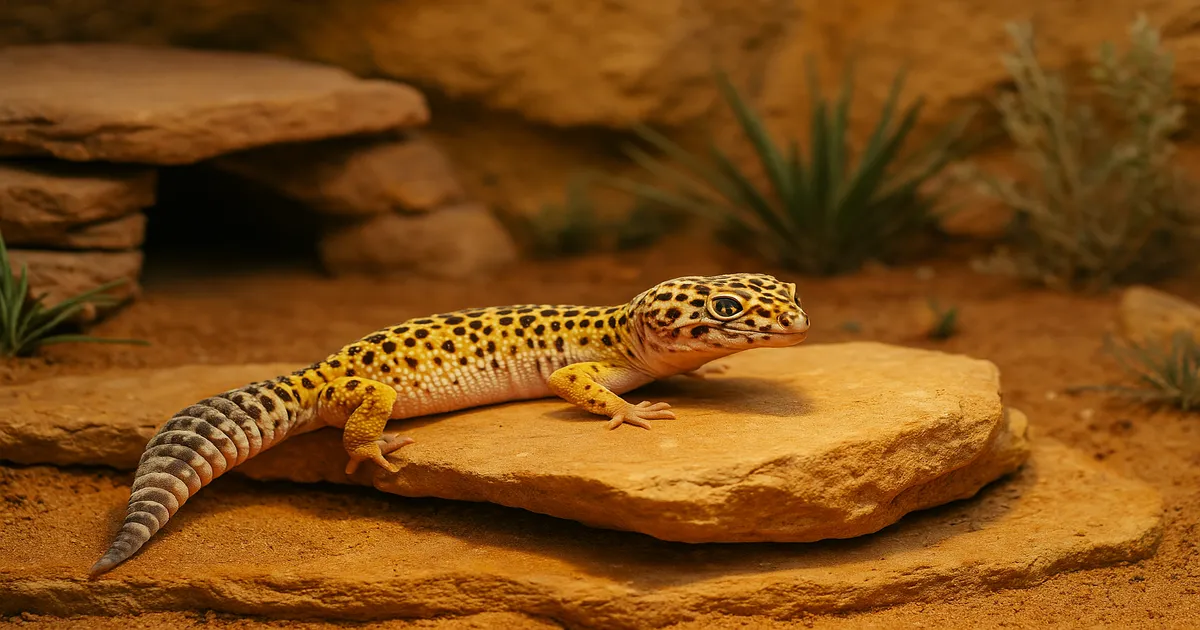
The old 20-gallon standard for leopard geckos has been thoroughly retired, and for good reason. A single adult needs at minimum a 36” × 18” × 18” (91 × 46 × 46 cm) enclosure, with a 4’ × 2’ footprint being genuinely better for activity and enrichment. Warm-side surface temps should hit 88–92°F (31–33°C) via an under-tank heater (Ultratherm UTH) or radiant heat panel, with a cool side around 70–75°F (21–24°C).
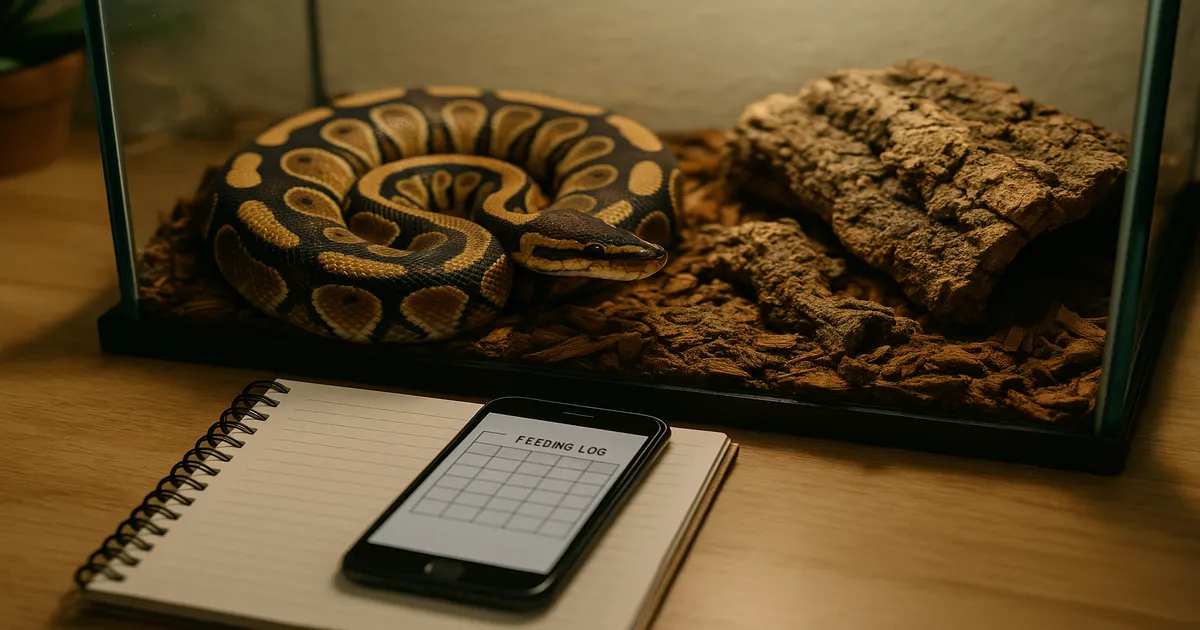
Ball pythons need a minimum 4’ × 2’ × 2’ (120 × 60 × 60 cm) as adults — the old “tank as long as the snake” rule is one of the most persistent pieces of bad advice in the hobby. Large females can hit 4–5 feet and genuinely benefit from a 4’ × 4’ or 6’ × 2’ setup. Humidity should stay at 60–80%, bumping to 90% during shed. The catch is that going bigger without adding hides and cover is a fast track to a hunger strike. Enrichment density matters here more than almost any other commonly kept species.
Corn snakes are more active than ball pythons and actually use larger spaces well. A 4’ × 2’ × 2’ is a solid minimum for adults, with a 6-footer being a genuinely good setup for an active animal.
Medium Lizards: Bearded Dragons and Blue-Tongued Skinks
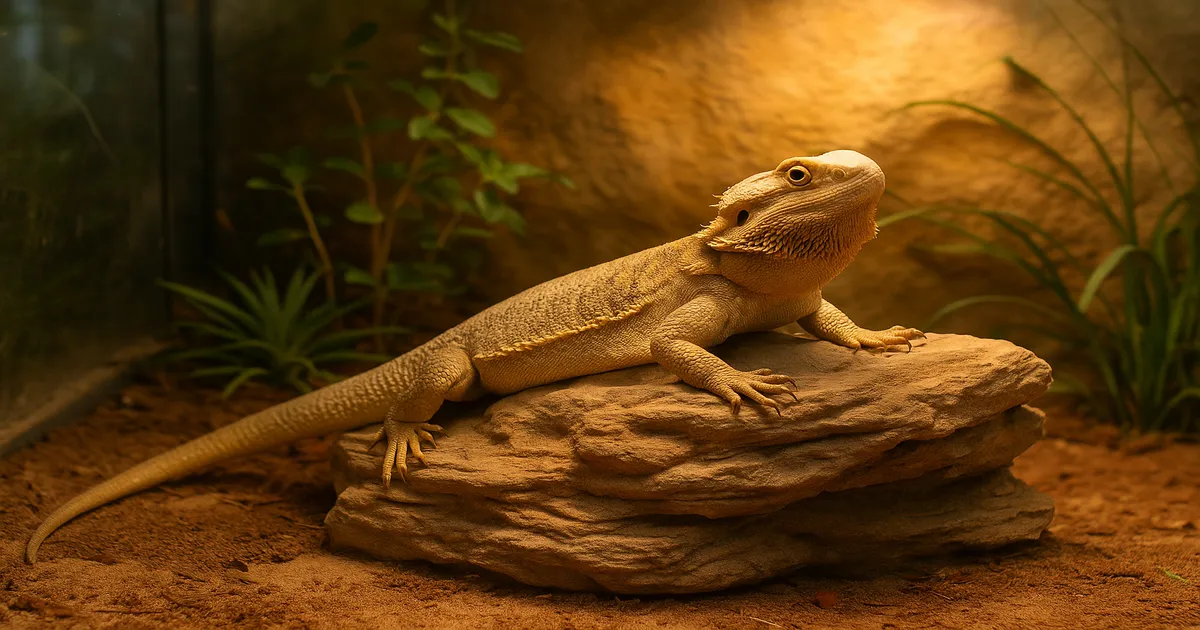
Bearded dragons are one of the few species where bigger is better holds almost without qualification. A 4’ × 2’ × 2’ is a minimum for juveniles over 12 inches; adults really should be in a 6’ × 2’ × 2’, and an 8’ × 4’ × 2’ is an excellent goal for a fully enriched adult setup. Basking spots need to hit 105–115°F (41–46°C) surface temperature — measure with a temperature gun, not a dial thermometer. They also require high-output UVB; a T5 HO 10–12% tube is the current standard. (Arcadia T5 12% Dragon)
Blue-tongued skinks are fossorial, so substrate depth matters more than vertical height. Aim for at least 4–6 inches (10–15 cm) of loose substrate, ideally 8–12 inches (20–30 cm). A 4’ × 2’ × 2’ is the minimum; a 6-footer is better. Humidity requirements vary significantly by subspecies — Northern BTS can tolerate 40–60%, while Indonesian species need 70–80%.
Large Species: Monitors, Tegus, and Tortoises
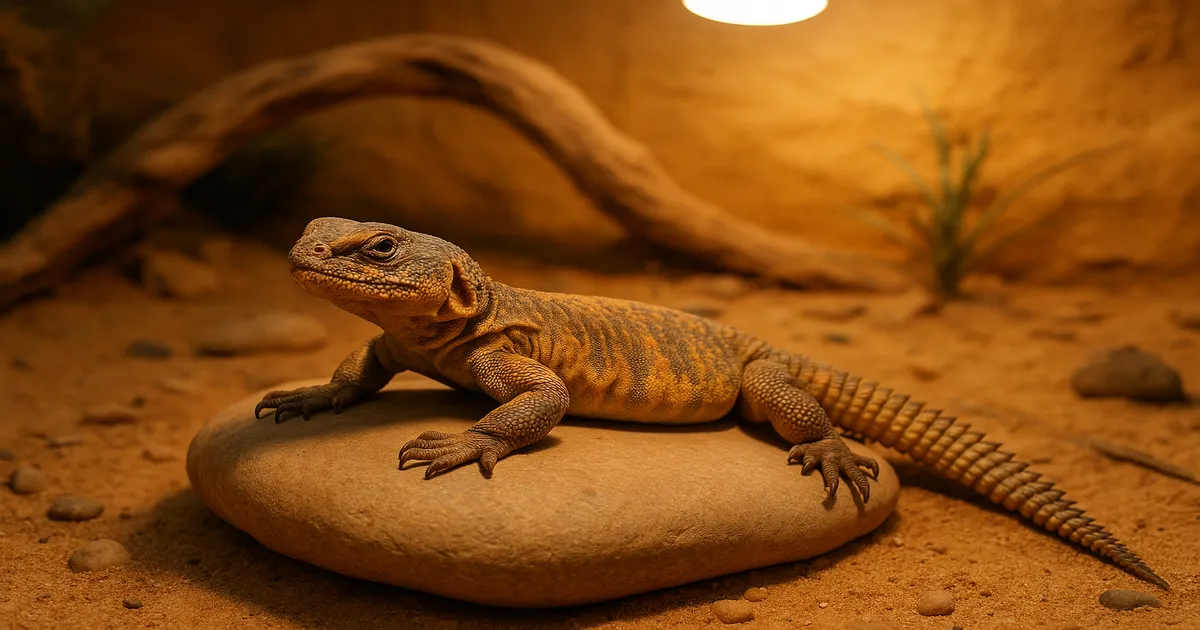
Savannah monitors and Argentine tegus are the two species most consistently and catastrophically undersized in the hobby. An adult savannah monitor needs a minimum 8’ × 4’ × 4’ (240 × 120 × 120 cm) enclosure — most commercially available reptile enclosures don’t come close. Basking spots need to hit 130–150°F (54–66°C), which surprises most new keepers. Substrate depth should be at least 12 inches (30 cm), ideally 24–36 inches (60–90 cm) for burrowing. Many experienced monitor keepers eventually dedicate a whole room, and honestly, that’s often the most practical solution.
Adult sulcata tortoises — which can reach 150+ lbs (68+ kg) — are essentially impractical to keep indoors. They need a minimum 100 sq ft (9.3 sq m) of outdoor space per animal, and 300+ sq ft is genuinely better. If you’re in a climate that can’t support outdoor keeping year-round, a sulcata is probably not the right animal for you.
Arboreal Species: Chameleons and Crested Geckos
For arboreals, height is the metric that matters most. A veiled chameleon needs a minimum 24” × 24” × 48” (60 × 60 × 120 cm) screen enclosure — 24” × 24” × 72” is much better. Chameleons are also highly stressed by visual intrusion, so where you place the enclosure matters as much as how big it is. Keep it off the floor, away from high-traffic areas, and never house two chameleons where they can see each other.
Crested geckos need at minimum an 18” × 18” × 24” (46 × 46 × 60 cm) enclosure, with an 18” × 18” × 36” being a better target. Keep temps between 72–78°F (22–26°C) — heat stress above 85°F (29°C) is genuinely dangerous for this species.
Aquatic and Semi-Aquatic Turtles
Water volume is the number that matters here. The standard rule for red-eared sliders is 10 gallons (38 L) of water per inch (2.5 cm) of shell length. A 10-inch (25 cm) adult needs a minimum 100-gallon (379 L) setup, and a 150–300 gallon (568–1,136 L) stock tank is genuinely better. Water quality degrades fast in undersized setups, and the result is shell rot, respiratory infections, and chronic eye problems. Filtration should be rated for 2–3× the actual water volume — turtles are messy, and a filter rated for your tank size will be overwhelmed within days.
Choosing the Right Enclosure Type
Glass Aquariums
Glass tanks are widely available, reasonably priced, and retain humidity well. The downsides are weight, limited ventilation, and a practical size ceiling around 200 gallons. They work well for aquatic turtles, crested geckos, leopard geckos, and juvenile snakes. Exo Terra’s front-opening glass terrariums are a solid option for smaller setups where front access matters.
PVC and Plastic Enclosures
PVC enclosures are lighter than glass at comparable sizes, insulate heat and humidity exceptionally well, and are easy to clean. They’re the go-to for ball pythons, large pythons, monitors, and tegus. Animal Plastics and Vision Cages are the names most experienced keepers trust for larger builds.
Screen and Mesh Enclosures
If you’re keeping chameleons, screen enclosures aren’t optional — they’re the only practical way to provide the airflow these animals need. Zoo Med’s ReptiBreeze is the most accessible option. The tradeoff is that screen enclosures hold almost no humidity, so they’re a poor match for any species that needs consistent moisture.
Hybrid Aluminum-Frame Enclosures
Zen Habitats and Kages make aluminum-frame enclosures with interchangeable glass and screen panels, which gives you real flexibility in humidity management. These work well for bearded dragons, blue-tongued skinks, and many mid-size lizards.
Custom-Built Enclosures
For savannah monitors, large tegus, and adult sulcatas, nothing off the shelf is going to cut it. PVC foam board is the preferred DIY material — lightweight, waterproof, and easy to work with. Melamine works too but needs thorough sealing. If you’re not confident building your own, a room conversion is often the most practical path for the largest species.
How to Transition Your Reptile to a Bigger Tank
Before you move the animal, the enclosure should be fully set up and at temperature. Every reptile needs at minimum a hide on the warm side and a hide on the cool side. Snakes especially benefit from visual barriers — cork rounds, stacked wood, fake plants — that break up sightlines and create a sense of cover throughout the enclosure.
Moving an animal into a bigger enclosure without adding more hides and structure is one of the most common upgrade mistakes. A ball python that felt secure in a 4-footer with two hides and some cork bark isn’t going to feel secure in a 6-footer with the same setup. If the enclosure gets bigger, the enrichment density needs to match.
Give the animal a week or two before drawing conclusions. Common stress signals to watch for:
- Refusing to eat (especially ball pythons)
- Excessive hiding beyond the normal adjustment period
- Glass surfing or repeated attempts to escape
- Spending all time in one corner without using the full space
If you’re seeing these after two weeks, the enclosure probably needs more enrichment, not less space.
One more thing: a heat lamp that worked in a 40-gallon won’t necessarily maintain the right gradient in a 6-foot enclosure. Larger setups often need a radiant heat panel for ambient temperature maintenance alongside a separate basking source. Always run everything through a quality thermostat (Herpstat 1) — this isn’t optional regardless of enclosure size.
Common Mistakes When Sizing a Reptile Enclosure
Following outdated minimums. Old care sheets are still circulating everywhere — 20-gallons for leopard geckos, 40-gallons for ball pythons, 10-gallons for corn snakes. These were set decades ago and the hobby has moved on. If you’re sourcing care info from a pet store pamphlet or a forum post from 2009, cross-check it against current sources.
Buying a big tank without adequate enrichment. A 6-foot enclosure with nothing but a water bowl and one hide is worse than a properly furnished 4-footer for most species. Buy the bigger enclosure, but budget for the enrichment at the same time.
Ignoring the vertical dimension for arboreal species. A 36” × 18” × 18” terrarium is a worse home for a crested gecko than an 18” × 18” × 36”, even though the floor space is larger. Height is the metric that matters for climbers.
Underestimating juvenile growth rates. Bearded dragons go from hatchling to nearly full size in about a year. Tegus grow fast too. Buying a juvenile-sized enclosure to “save money” usually means buying a second enclosure within 12 months. If you can start with the adult-sized setup, do it — just add extra hides to make it feel smaller and more secure while the animal is young.
Choosing the wrong enclosure type. A screen enclosure for a ball python will tank your humidity no matter how many misters you throw at it. A glass tank for a chameleon will cause respiratory infections from stagnant air. Match the enclosure type to the animal’s needs before you worry about size.
Frequently Asked Questions
Should I buy a bigger tank if my reptile seems healthy?
Not necessarily. If your animal is eating well, maintaining good weight, shedding cleanly, and showing normal behavior, your current setup may be fine. That said, “seems healthy” and “is thriving” aren’t the same thing. Check your current dimensions against current care standards — not pet store minimums — and upgrade if you’re falling short.
Can a reptile enclosure be too big?
Yes, for some species. Ambush predators like ball pythons and hognose snakes can become stressed in large, sparsely furnished enclosures — they rely on feeling enclosed and secure. The fix is enrichment density: if the enclosure is large, the hides, cover, and structure need to scale up too. For active species like bearded dragons and tegus, there’s almost no such thing as too big.
How do I know if my reptile’s tank is too small?
Watch for glass surfing (repeatedly pacing along the walls), inability to complete a full body stretch, failure to establish a proper thermal gradient from one end to the other, and chronic stress behaviors like excessive hiding or aggression. Weight loss and poor shed quality can also indicate that a reptile isn’t thermoregulating properly in its current space.
What happens if a reptile’s tank is too small long-term?
Chronic stress from an undersized enclosure elevates corticosterone levels, suppresses the immune system, and leads to a cascade of health problems — poor appetite, increased susceptibility to infection, and failure to thermoregulate properly. Behaviorally, you’ll see glass surfing, aggression, and stereotypic movement. Long-term, an undersized enclosure shortens lifespan significantly.
Do I need to upgrade if I’m already meeting the minimum requirements?
Minimums are floors, not goals. If you can provide more space with appropriate enrichment, do it. The exception is species that genuinely prefer tighter quarters — in those cases, hitting the recommended size and furnishing it well is more important than going bigger.