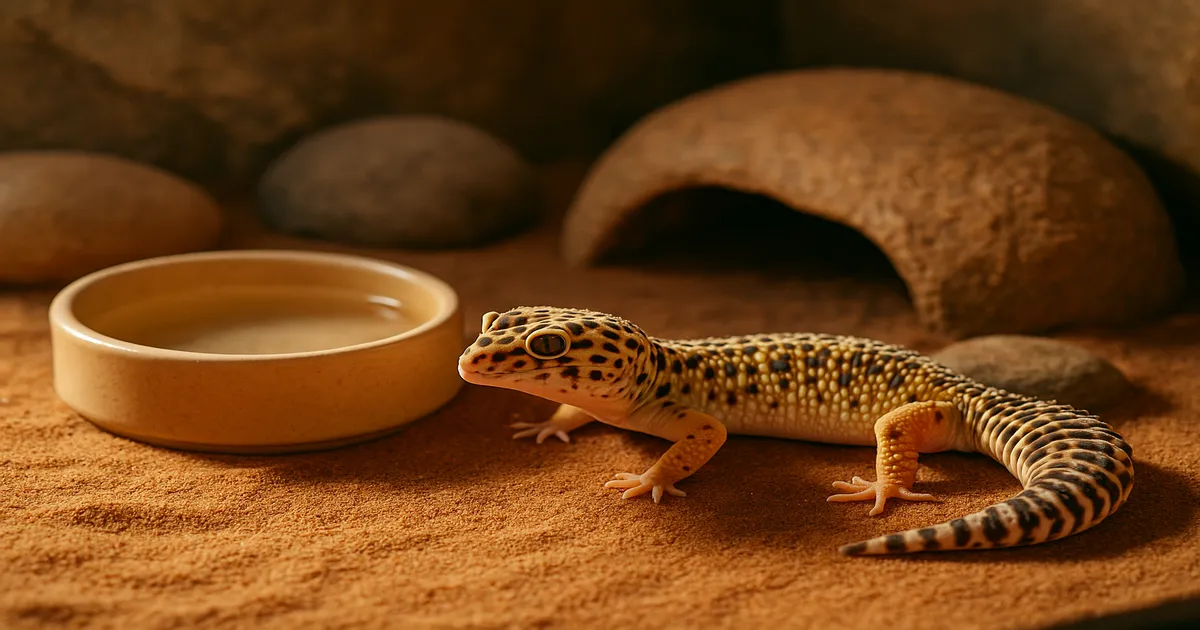
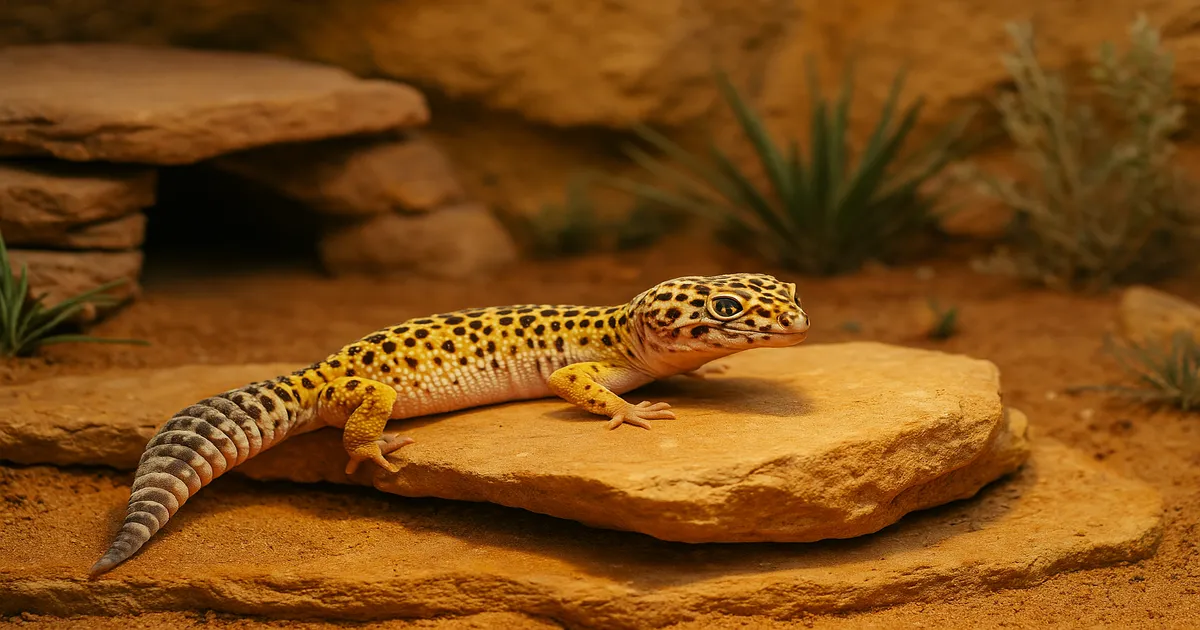
Quick Answer: The best enclosure setup for a leopard gecko starts with a 40-gallon breeder (36×18×18 inches / 91×46×46 cm) at minimum, an under-tank heater on a thermostat targeting 88–92°F (31–33°C) at the surface, and three snug hides including a moist one. Add low-output UVB, keep ambient humidity at 30–40%, and you’ve got a setup that actually matches what this species needs.
Getting the best enclosure setup for a leopard gecko right isn’t complicated — but there’s a lot of outdated advice still floating around. Ten-gallon tanks, unregulated heat mats, calcium sand. It gets people into trouble. Leopard geckos are hardy animals that’ll survive a lot of mediocre husbandry, but surviving and thriving are different things. These animals can live 15–20 years in captivity. It’s worth doing it right from day one.
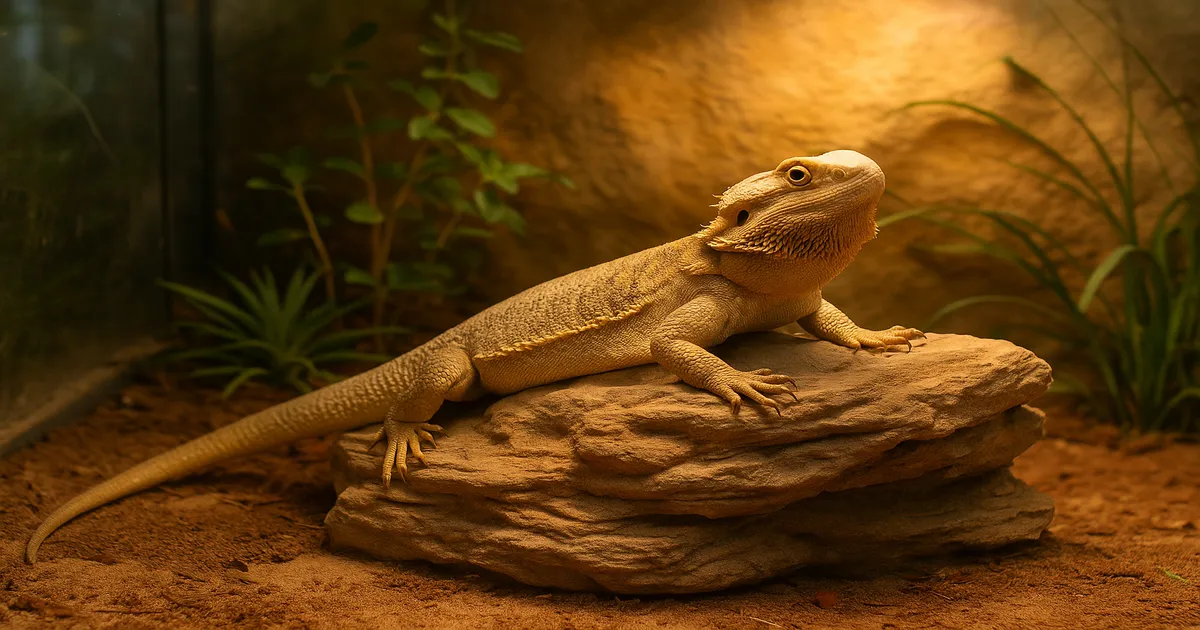
The single most important thing to understand before you buy anything: leopard geckos are thigmothermic. They absorb heat through their bellies by lying on warm surfaces — they don’t bask under a lamp the way a bearded dragon does. That one fact shapes every decision you’ll make about heating, substrate, and hide placement.
Enclosure Size and Type
Minimum Dimensions
The current community standard is a 36×18×18 inch (91×46×46 cm) footprint — what most people call a 40-gallon breeder — as the bare minimum for one adult. If you can go bigger, a 48×18×18 inch (122×46×46 cm) enclosure is the smarter choice. More floor space means a more stable thermal gradient and actual room for enrichment.
The old 20-gallon long recommendation is dead. A 30×12 inch floor doesn’t give you enough room to run a proper warm-to-cool gradient. You can keep a juvenile in one temporarily, but plan to upgrade before they hit six months.
Height matters less than floor space for this terrestrial species. Some individuals will climb low rocks or cork bark, but what your gecko actually needs is square footage, not vertical real estate.
Glass vs. PVC vs. Wood
Glass terrariums (Exo Terra, Zoo Med) are the most accessible option and work fine. Front-opening doors are a big quality-of-life upgrade over top-opening tanks. The main downside is that screen tops bleed heat and humidity — you’ll often need to partially cover the screen with aluminum foil or a towel to hit your target temps.
PVC enclosures are what I’d recommend if you’re willing to spend a bit more upfront. They hold heat and humidity far better than glass, they’re lightweight, and they’re built for exactly this kind of use. Serious keepers tend to end up here eventually. (Zen Habitats 4x2x2 Reptile Enclosure)
Wooden vivariums look great in a bioactive build, but they need to be thoroughly sealed against moisture and are harder to disinfect if something goes wrong.
Tub and rack systems are a breeder tool. Efficient for large collections, not appropriate as a default recommendation for someone keeping a pet.
Cohabitation
Don’t. Even among females — the only combination that has any real chance of working — cohabitation is a common source of chronic stress, competition over resources, and injury that owners miss because the signs are subtle. If you’re committed to trying it anyway, you need a minimum 48×24×18 inch (122×61×46 cm) enclosure, duplicate everything (hides, water dishes, heat zones), and weekly weigh-ins for both animals. Two males together is never acceptable, full stop.
Temperature, Heating, and Thermostats
Target Temperature Zones
- Warm-side surface temp: 88–92°F (31–33°C) — measured on the substrate with a temp gun, not the air
- Warm-side ambient air: 80–84°F (27–29°C)
- Cool-side ambient air: 72–76°F (22–24°C)
- Nighttime low: 65–68°F (18–20°C) is fine; don’t let it stay below 60°F (15°C) for extended periods
- Absolute surface max: 95°F (35°C) — above this, you risk thermal burns
Under-Tank Heaters and Thermostats
An under-tank heater (UTH) placed under one end of the enclosure — covering roughly one-third of the floor — is still the most common and effective primary heat source for leopard geckos. The Ultratherm and Zoo Med ReptiTherm are both reliable.
A thermostat is not optional. An unregulated UTH can hit 120°F (49°C) or higher and cause thermal burns on the belly that you won’t see until serious damage is already done. For a UTH, an on/off thermostat like the Inkbird ITC-306T does the job at a reasonable price. If you’re running a radiant heat panel or deep heat projector, step up to a dimming thermostat — a Herpstat or Vivarium Electronics unit is worth the investment.
Place the thermostat probe directly on the floor of the warm hide. That’s the surface your gecko will actually be resting on — that’s what you want to control.
The Deep Heat Projector
The Arcadia Deep Heat Projector is worth considering as a primary or supplemental heat source. It produces infrared-A and infrared-B radiation that penetrates deeper into tissue than a standard UTH, more closely mimicking solar heating. It needs a dimming thermostat, but the results are genuinely good — especially for animals that seem to prefer overhead warmth.
Ceramic heat emitters are useful for maintaining nighttime temps in a cold room, but they’re supplemental — not a primary heat source for this species.
Measuring Temperature Correctly
Use an infrared temperature gun, not a stick-on dial thermometer. Dial thermometers measure air temperature and are notoriously inaccurate for what actually matters here: the surface your gecko is sitting on. A temp gun runs $15–20 and tells you what’s actually happening in the enclosure. (Etekcity Lasergrip 774)
Lighting and Photoperiod
Do Leopard Geckos Need UVB?
The old answer was “no, they’re nocturnal.” The current, more honest answer is yes — they benefit from it. Wild leopard geckos receive incidental UV exposure at dawn and dusk. UVB supports D3 synthesis and calcium metabolism, and there’s growing evidence it contributes to behavioral wellbeing. You can keep a leo alive without it if you’re supplementing D3, but providing UVB is simply better husbandry.
Use a low-output bulb — an Arcadia 6% or Zoo Med Reptisun 5.0 T5 HO — mounted 12–15 inches (30–38 cm) above the gecko’s back, run 10–12 hours per day.
Photoperiod and Night Lighting
Mimic seasonal variation: 12–14 hours of light in summer, 10–12 in winter. A basic outlet timer handles this automatically.
At night, turn everything off. Red bulbs, blue “moonlight” bulbs — none of it is necessary, and geckos can actually see red light, which means it disrupts their natural activity patterns. True darkness is what they’re adapted to.
Substrate
Slate tile is my go-to for most keepers. It conducts heat evenly from the UTH, cleans easily, and naturally wears down nails. Have it cut to fit at a hardware store for a few dollars. Not glamorous, but it works.
Paper towels belong in any quarantine setup, any sick animal’s enclosure, and any new keeper’s first few weeks. Easy to monitor feces and feeding, eliminates variables.
For a naturalistic setup, a mix of 60–70% organic topsoil and 30–40% play sand works well — just make sure the topsoil has no fertilizers, perlite, or additives. Excavator clay is excellent if you want burrows that actually hold their shape. Bioactive builds need a minimum 4-inch (10 cm) substrate depth and a cleanup crew of isopods and springtails.
Avoid calcium sand — it clumps when wet, including inside the digestive tract, and fatal impactions are well-documented. Reptile carpet catches toenails and harbors bacteria even after cleaning. Neither belongs in a leopard gecko enclosure.
Hides, Décor, and the Best Enclosure Setup for Leopard Gecko Enrichment
The Three-Hide Rule
Every setup needs at least three hides:
- Warm hide — directly over the heat source; small and snug
- Cool hide — opposite end; same sizing
- Moist hide — middle-to-warm zone, lined with damp sphagnum moss; maintains 70–80% internal humidity for shedding
Hide size matters more than most people realize. The hide should be just large enough for the gecko to fit inside and turn around. An oversized hide won’t trigger the security response — the gecko needs to feel the walls. A gecko that’s chronically stressed from a too-large hide will stay hidden constantly, and owners usually assume the animal is just shy.
Décor and Enrichment
Cork bark flats and tubes are excellent additions — natural, lightweight, easy to clean. Stable rocks and slate pieces add thermal mass and give the gecko something to climb. Just make sure anything stacked is secure and can’t topple.
For bioactive setups, pothos, snake plants, and aloe are all gecko-safe and handle low humidity reasonably well. A 3D foam background or cork tile on the back wall helps with the gecko’s sense of security — it reduces the “exposed on all sides” feeling that a bare glass enclosure creates.
Common Mistakes to Avoid
- Running a UTH without a thermostat. The most dangerous mistake in the hobby. Thermal burns from unregulated mats are often fatal and aren’t visible until it’s too late.
- Measuring air temperature instead of surface temperature. Stick-on dial thermometers are nearly useless for this species. Get a temp gun.
- Using a 10- or 20-gallon tank for an adult. You can’t run a proper thermal gradient in that footprint.
- Calcium sand or reptile carpet. Both cause real harm. Neither should be in a leopard gecko enclosure.
- Oversized hides. Bigger is worse here. Snug hides reduce stress.
- Cohabitation. Even “peaceful” cohabitation usually involves one animal suppressing another’s behavior. Separate enclosures are always the right call.
- Colored night bulbs. Skip the red and blue bulbs. Add UVB instead.
Step-by-Step Leopard Gecko Enclosure Setup
- Position your enclosure. Place it on a stable surface away from drafts, direct sunlight, and high-traffic areas. A wall without windows is ideal.
- Install heating and thermostat. Attach the UTH under one end. Connect it to your thermostat and tape the probe to where the warm hide floor will sit. Set your target to 90°F (32°C) and let it run.
- Add substrate. Lay slate tile, add your topsoil-sand mix, or set up your bioactive base. If using tile over a UTH, confirm heat is transferring to the surface with your temp gun.
- Place hides and décor. Warm hide over the heat source, cool hide on the opposite end, moist hide in the middle filled with damp sphagnum moss. Add cork bark, rocks, and any plants.
- Install UVB and visible lighting. Mount your UVB bulb 12–15 inches above the enclosure floor. Add a low-wattage LED for visible light. Put both on a timer.
- Set up monitoring. Place digital thermometer/hygrometer sensors on both sides. Bluetooth sensors like the Govee or Inkbird let you check temps remotely.
- Run the enclosure empty for 1–2 weeks. Most people skip this. Don’t. Let temperatures and humidity stabilize, then check surface temps at different times of day. The paper towel test works well: lay a piece of paper towel over the warm hide for 24 hours, then measure its surface temp — that’s what your gecko’s belly will experience. Only introduce your gecko once everything is dialed in.
Once your gecko is in, weigh them weekly on a kitchen gram scale. Weight is one of the most reliable early indicators that something’s wrong.
Frequently Asked Questions
What size enclosure does a leopard gecko need?
The minimum for one adult is a 40-gallon breeder with a 36×18×18 inch (91×46×46 cm) footprint. A 48×18×18 inch (122×46×46 cm) enclosure is the better choice if you have the space. The old 20-gallon long recommendation doesn’t provide enough room for a proper thermal gradient.
Do leopard geckos need UVB lighting?
Yes — current best practice says provide it. Wild leopard geckos receive incidental UV exposure at dawn and dusk, and UVB supports calcium metabolism and overall health. Use a low-output bulb like an Arcadia 6% or Zoo Med Reptisun 5.0 T5 HO, run 10–12 hours per day.
What’s the best substrate for a leopard gecko?
Slate tile is the most reliable choice for most keepers — it conducts heat evenly, cleans easily, and wears nails naturally. For naturalistic setups, a 60–70% organic topsoil and 30–40% play sand mix works well. Avoid calcium sand and reptile carpet entirely.
How many hides does a leopard gecko need?
Three, minimum: a warm hide over the heat source, a cool hide on the opposite end, and a moist hide filled with damp sphagnum moss in the middle-to-warm zone. All three should be snug — just large enough for the gecko to fit inside and turn around.
What temperature should a leopard gecko tank be?
The warm-side surface temperature should be 88–92°F (31–33°C), measured with an infrared temp gun directly on the substrate. The cool side ambient should be 72–76°F (22–24°C). Nighttime temps can drop to 65–68°F (18–20°C) without issue.