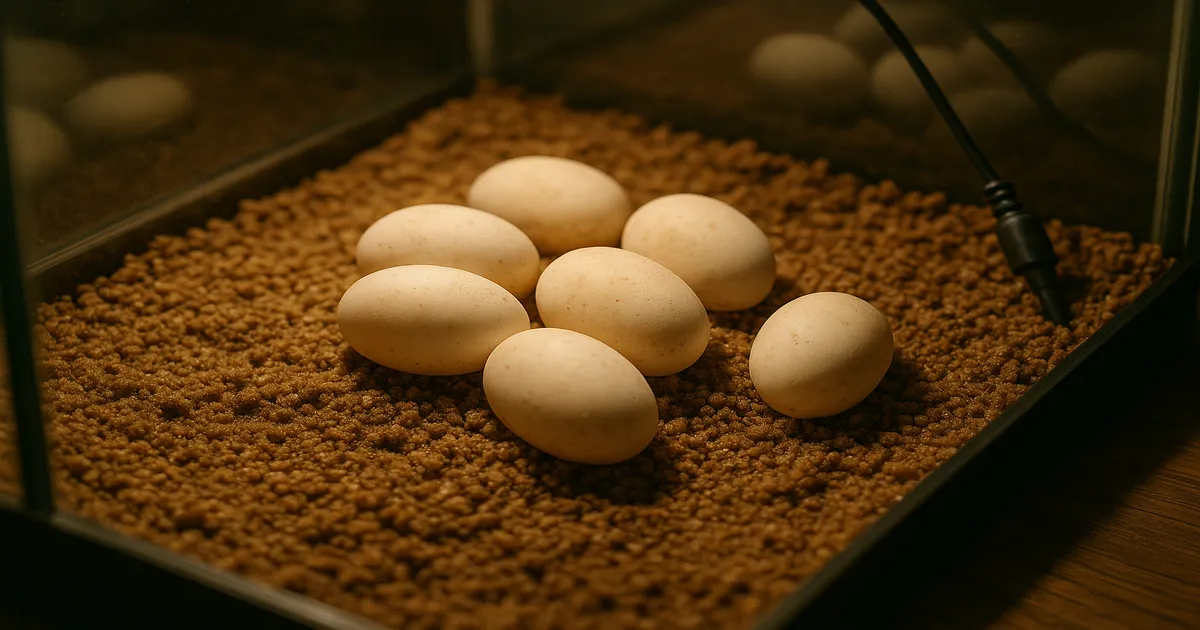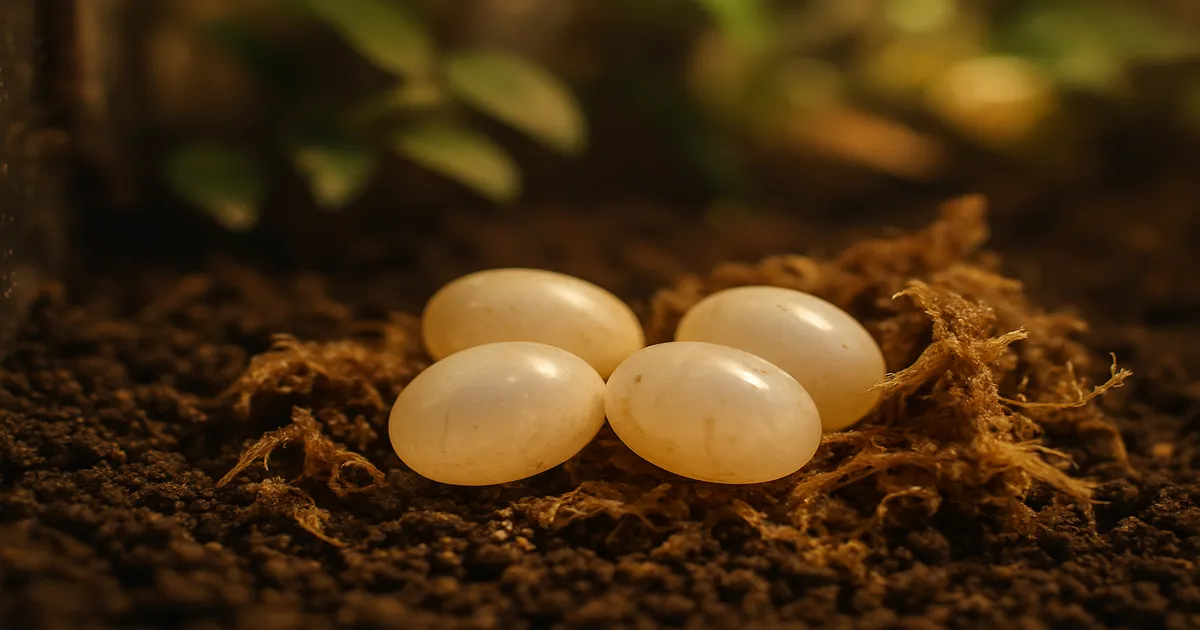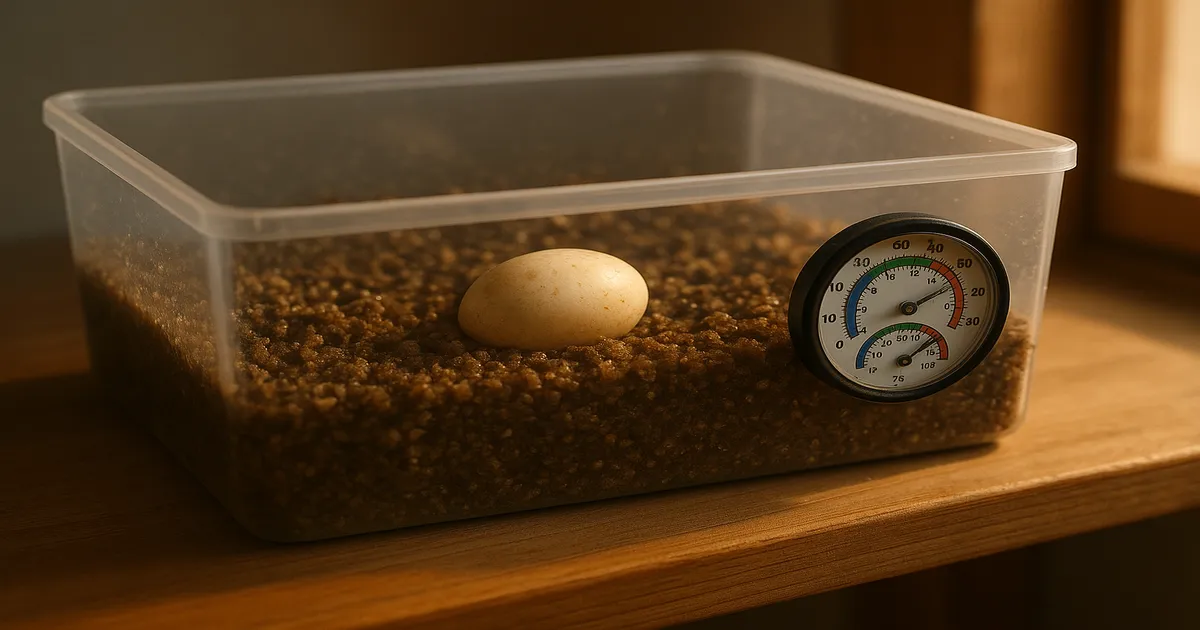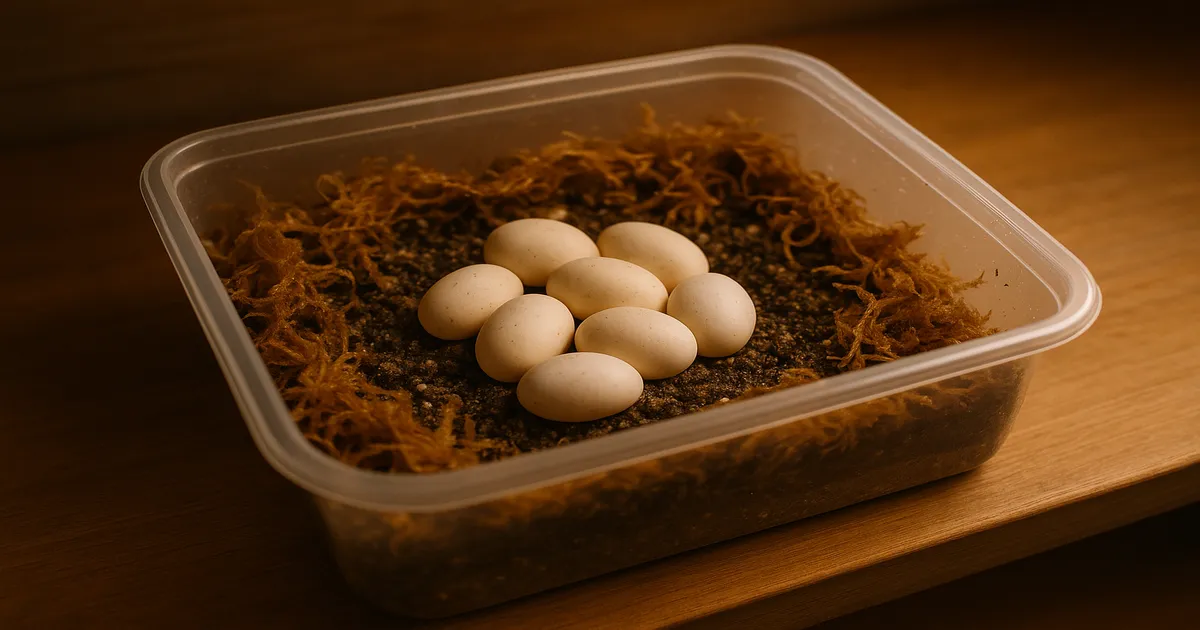
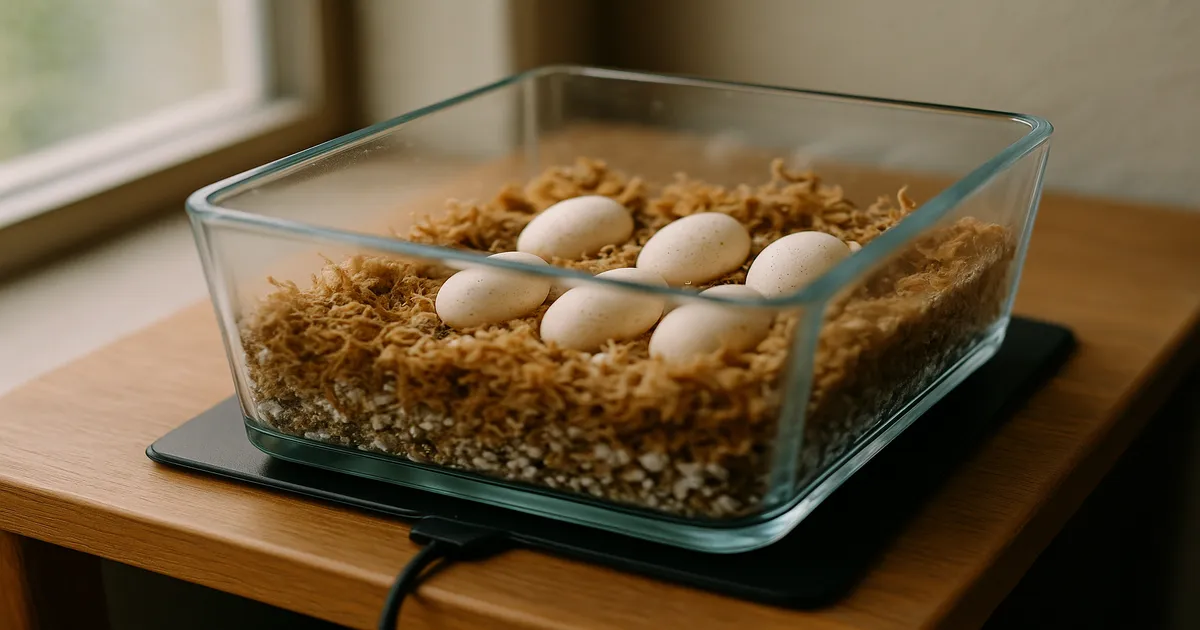
Quick Answer: Yes, you can absolutely incubate leopard gecko eggs without a commercial incubator — it’s a legitimate method that works well in climate-controlled homes. The three things you cannot compromise on are stable temperature (80–88°F / 27–31°C), correct substrate moisture, and never rotating the eggs after they’re laid. Get those right, and a deli cup on a warm shelf will do the job.
Figuring out how to care for leopard gecko eggs without an incubator is one of those things that sounds more complicated than it actually is. Plenty of experienced breeders have hatched dozens of clutches using nothing more than a 32-oz deli cup, some vermiculite, and a warm spot in the house. A commercial incubator is convenient, but it’s not required — especially if you’re only running a few clutches a season.
That said, “room temperature incubation” doesn’t mean benign neglect. You still need to manage temperature, moisture, and egg orientation carefully. This article walks you through all of it.
Understanding Leopard Gecko Eggs Before You Start
Leopard geckos are oviparous and typically lay two eggs per clutch, every three to six weeks during breeding season. A healthy female can produce four to five clutches in a single season. The eggs come out soft and leathery, then firm up over the first 24–48 hours as the shell absorbs moisture from the surrounding substrate. If you find eggs that still look a little deflated right after laying, don’t panic — that’s completely normal.
How Temperature Determines Sex (TSD)
Leopard geckos have temperature-dependent sex determination. Incubation temperature doesn’t just affect hatch rate — it determines whether your hatchlings are male or female. Worth understanding before you decide where to stash your eggs, because “wherever it’s warm enough” might produce an outcome you didn’t intend.
| Temperature | Expected Sex | Incubation Time |
|---|---|---|
| 80–82°F (27–28°C) | Mostly females | 60–90+ days |
| 85–87°F (29–31°C) | Mixed / ~50-50 | 45–60 days |
| 88–90°F (31–32°C) | Mostly males | 35–45 days |
| 90°F+ (32°C+) | Males / “hot females” | 30–40 days |
“Hot females” are females produced at high temperatures that display male-typical aggressive behaviour — a known and undesirable outcome. It’s one reason I’d steer beginners toward the 82–85°F range rather than pushing temps to speed up hatching.
Equipment You Need to Incubate Without a Commercial Incubator
Incubation Containers
A 32-oz plastic deli cup with a lid is the standard for good reason — right size for one to two eggs, cheap, and seals well. Gladware or Ziploc food storage containers work fine too. Poke two to four small ventilation holes (about 1–2mm) in the lid using a hot pin. You want minimal gas exchange, not a draft.
One practical tip: label the bottom of the cup, not the lid. Lids get swapped. Bottoms don’t.
Best Substrates for Leopard Gecko Eggs
- Hatchrite — Pre-hydrated and ready to use straight from the package. Best option for beginners who don’t want to mess with ratios.
- Vermiculite — The most widely used substrate among experienced breeders. Mix at 1:1 by weight (100g vermiculite to 100g distilled water). Fine or medium grade works best.