Quick Answer: For topsoil, Timberline (Oldcastle) is the community gold standard — it’s consistently fertilizer-free and perlite-free, which are the two things that matter most. For playsand, Quikrete Premium Play Sand wins on availability, fine grain size, and low dust. Blend them 60/40 and you’ve got a DIY substrate that rivals anything sold in a pet store at a fraction of the cost.
If you’ve spent any time researching the generally recommended brands for topsoil and playsand in the reptile hobby, you’ve probably noticed the same names coming up over and over. There’s a reason for that. The community has spent years testing these materials through genuine trial and error — some of it painful — and the consensus is pretty solid at this point. This article pulls that knowledge together so you’re not digging through three-year-old forum threads trying to figure out which bag of dirt is safe to put in your beardie’s enclosure.
What to Look For in Reptile-Safe Topsoil and Playsand
Before we get into individual products, here’s what actually matters when you’re standing in the garden aisle staring at three nearly identical bags.
No Fertilizers or Slow-Release Plant Food
Non-negotiable. Fertilized topsoil can cause chemical burns and toxicity in reptiles — this isn’t theoretical, it’s something that has actually harmed animals. Miracle-Gro, Scotts with “Continuous Feed,” anything labeled “feeds plants for X months” — none of it belongs in a reptile enclosure. Read every bag before you buy. If it mentions fertilizer, plant food, or feeding anywhere on the label, put it back.
Perlite and Vermiculite
Perlite (those little white styrofoam-looking pellets) and vermiculite are inert and not acutely toxic, but you don’t want a reptile ingesting them regularly. Some keepers sift them out; I’d rather just choose a product that doesn’t have them. It’s a secondary concern compared to fertilizers, but worth checking.
Grain Size and Dust (Playsand)
Not all sand is the same:
- Playsand: washed, fine-grained (~0.2mm), relatively low dust — what you want for most species
- Masonry/all-purpose sand: coarser, dustier, higher silica dust risk — skip it
- Pool filter sand: rounded and safe, but coarser (0.45–0.55mm) — better for dedicated burrowing species
- Calcium sand: fine grain but dissolves in moisture and can clump in a reptile’s gut — avoid as a primary substrate
Organic Content and Texture (Topsoil)
Good reptile topsoil should have decent organic content (supports microfauna in bioactive builds), a loamy texture that holds shape when moist, and a natural dark color. Avoid anything labeled “garden soil” — that’s a heavily amended product with moisture-retaining polymers and fertilizer baked in.
Cost vs. Reptile-Branded Alternatives
A 40-gallon bioactive build might need 60–80 lbs of substrate. At reptile-store prices, that’s genuinely painful. Hardware store topsoil and playsand run 10–20x cheaper per pound than pet-store products. At that scale, brand selection matters.
Recommended Topsoil and Playsand Brands at a Glance
| Product | Type | Best For | Key Feature | Fertilizer-Free | Price |
|---|---|---|---|---|---|
| Timberline Topsoil (Oldcastle) | Topsoil | Bioactive builds, most terrestrial species | Reliably perlite-free and fertilizer-free | ✅ Yes | $ |
| Vigoro Topsoil (unfertilized) | Topsoil | Arid species, Timberline backup | Slightly sandier texture | ✅ Unfertilized version only | $ |
| Oldcastle Lawn & Garden 40 lb Topsoil | Topsoil | Large builds, bulk use | Same manufacturer as Timberline | ✅ Yes | $ |
| Quikrete Premium Play Sand | Playsand | Most terrestrial species | Near-universal availability, fine grain | ✅ Yes | $ |
| Sakrete Natural Play Sand | Playsand | Burrowing species (sand boas, hognose) | Slightly coarser grain aids burrowing | ✅ Yes | $ |
| Zoo Med ReptiSoil | Reptile-branded mix | Beginners, small enclosures | No label-reading required | ✅ Yes | $$$ |
Timberline Topsoil (Oldcastle)
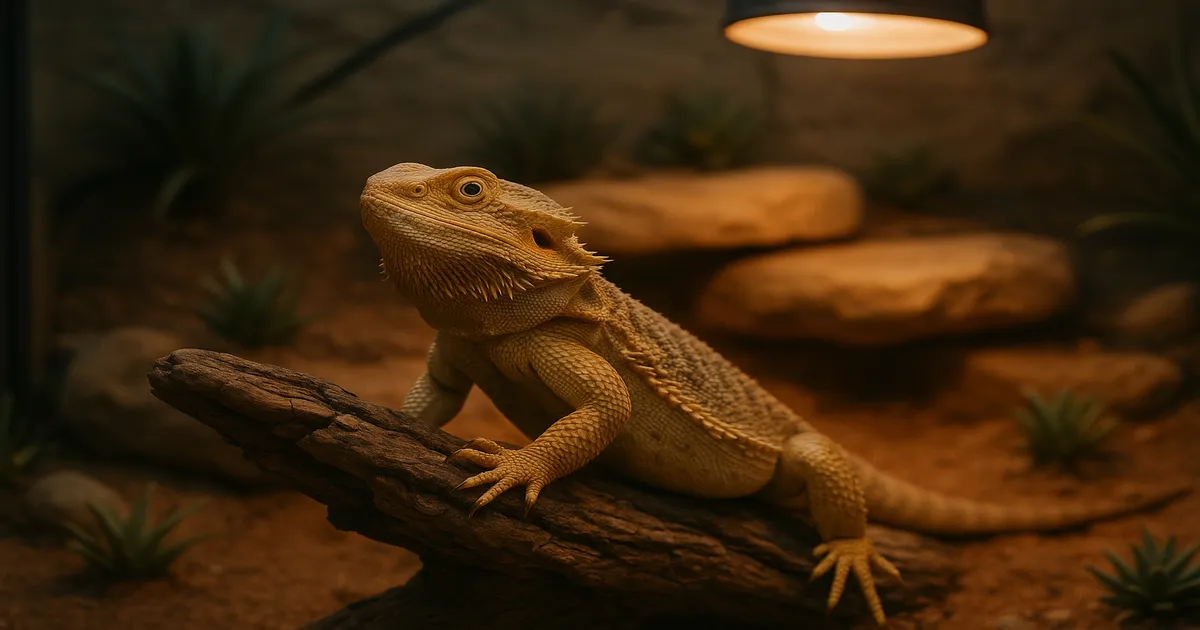
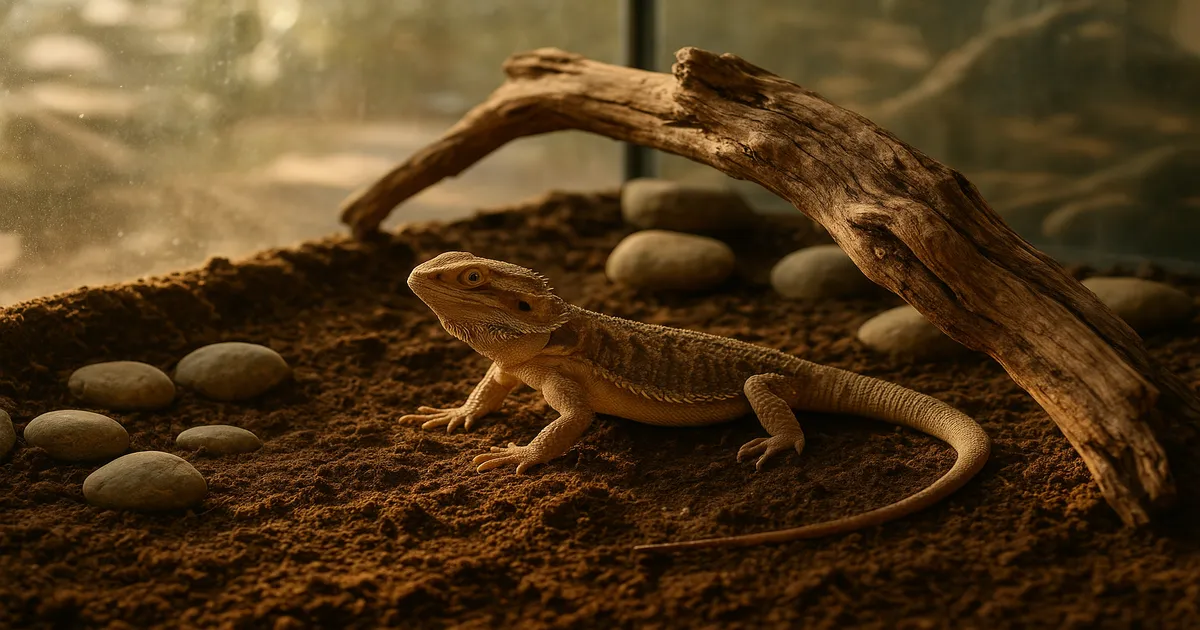
Timberline is the product that comes up every single time someone asks about topsoil in a reptile forum, bioactive Facebook group, or Discord server — and it’s earned that. It’s consistently fertilizer-free and perlite-free, so you’re not playing label-reading roulette every time you buy a bag. The dark loamy texture looks natural and actually supports microfauna in bioactive builds. For a 40-gallon bearded dragon setup running a basking spot of 100–110°F (38–43°C) and a cool side around 80–85°F (27–29°C), this is the topsoil I’d use without hesitation.
Key specs: 0.75 cu ft bags | Home Depot, Lowe’s
Pros
- Reliably fertilizer-free and perlite-free across most regions
- Good organic content supports isopod and springtail colonies
- Natural dark color works well in naturalistic setups
- Long-standing community trust — widely verified by experienced keepers
Cons
- Regional availability can be inconsistent; some stores don’t carry it year-round
- Clay content varies by batch, which can affect drainage in arid setups
- Occasional small wood debris — worth running through a ¼-inch sifting screen before use
Best for: Bioactive builds, bearded dragons, blue-tongued skinks, box turtles, and tortoises. Basically the default topsoil for most terrestrial reptile setups.
Vigoro Topsoil (Home Depot House Brand)
Vigoro is everywhere, which is both its biggest strength and its biggest complication. Home Depot stocks it reliably nationwide, it’s priced right, and the unfertilized version is genuinely community-approved. The problem is that Vigoro sells fertilized and unfertilized versions in packaging that looks nearly identical. I cannot stress this enough: read the label before every single purchase, not just the first time. Keepers have been caught out by this more than once.
Key specs: 0.75 cu ft bags | Home Depot exclusive
Pros
- Extremely wide availability — easier to find than Timberline in many areas
- Unfertilized version is safe and community-verified
- Slightly sandier texture suits arid species with drainage needs
- Same price point as Timberline
Cons
- Serious packaging confusion between fertilized and unfertilized versions — a genuine hazard
- Some batches report higher perlite content than Timberline
- Quality varies more noticeably by region
Best for: A solid backup when Timberline is unavailable. Verify the label every time — no exceptions.
Oldcastle Lawn & Garden 40 lb Topsoil
Oldcastle is the parent company behind Timberline, and this 40 lb bag is essentially the same product in different packaging. It’s worth knowing about when Timberline-branded bags are out of stock and you still want the same safety track record. The larger format is also genuinely convenient for big builds — fewer trips to the store when you’re filling a 4×8 tortoise table or a deep-substrate ackie enclosure.
Key specs: 40 lb bags | Availability varies by region and retailer
Pros
- Same trusted manufacturer as Timberline — same fertilizer-free, perlite-free profile
- Larger bag format is practical for deep substrate builds
- Good organic content, consistent with Timberline quality
Cons
- Less consistently stocked than Timberline-branded bags
- Label verification still required — don’t assume just because it says Oldcastle
- Slightly higher price per cubic foot than the 0.75 cu ft Timberline bags in some markets
Best for: Large bioactive builds, or any keeper who wants Timberline quality when the Timberline bags are sold out.
Quikrete Premium Play Sand
This is the playsand recommendation you’ll see from virtually every experienced keeper, and the reason is simple: it’s at almost every Home Depot, Lowe’s, and Walmart in the US, it’s washed and fine-grained at around 0.2mm, and it runs low-dust compared to masonry or all-purpose sand. The natural tan/buff color looks right in desert and semi-arid setups without the artificial brightness you get from some brands.
Rinse it before use regardless. Even “washed” sand can carry fine dust that only shows up when you add water. Takes 20 minutes and your animals’ respiratory tracts will thank you — especially relevant for species like leopard geckos and bearded dragons that spend time with their faces close to the substrate surface.
Key specs: 50 lb bags | Home Depot, Lowe’s, Walmart
Pros
- Near-universal availability across the US
- Fine grain size (~0.2mm) appropriate for most terrestrial species
- Low dust relative to alternatives; rinsing makes it even cleaner
- Natural tan color works well in naturalistic setups
Cons
- Dust levels vary between batches — rinsing is recommended regardless
- Not ideal as a standalone substrate; performs best blended with topsoil
- Some regional batches run paler/whiter, which looks less natural
Best for: The default playsand for the vast majority of reptile setups. Pair it with Timberline topsoil and you’ve got a complete DIY substrate for most terrestrial species.
Sakrete Natural Play Sand
Sakrete is the playsand you reach for when Quikrete isn’t available, or when you’re building for a species that actually benefits from a slightly coarser grain. It’s washed, it’s safe, and in most regions it’s stocked at Lowe’s and independent hardware stores. The grain runs a bit heavier than Quikrete — I’ve found this works particularly well for sand boas and hognose snakes. They move through it more naturally, and burrows hold their shape better. For a sand boa setup, you want at least 6–8 inches (15–20 cm) of substrate depth regardless of which sand you use, but Sakrete’s grain makes that depth feel more functional.
Key specs: 50 lb bags | Lowe’s and independent hardware stores
Pros
- Widely available as a regional Quikrete alternative
- Washed and relatively dust-free — comparable safety profile to Quikrete
- Slightly coarser grain is a genuine advantage for burrowing species
- Affordable, similar price point to Quikrete
Cons
- Coarser texture is less ideal for species requiring very fine substrate
- More regional in distribution than Quikrete
- Color can vary slightly by batch
Best for: Sand boas, hognose snakes, and other dedicated burrowing species where a heavier grain aids natural movement and burrow stability.
Zoo Med ReptiSoil (Reptile-Branded Benchmark)
ReptiSoil isn’t here because it competes on value — it doesn’t. It’s here because it’s the honest answer for beginners who don’t want to read bag labels in a garden center. It’s a pre-formulated blend of peat moss, sand, carbon, and natural topsoil. It’s safe, it’s consistent, and it’s at PetSmart and Petco. No guesswork. The tradeoff is price: at roughly 10–20x the cost per pound of hardware store alternatives, it becomes impractical fast once you’re filling anything larger than a 20-gallon. Use it to get started, then switch to the DIY blend once you’re comfortable.
Key specs: 10 qt bags | PetSmart, Petco, and online
Pros
- Guaranteed reptile-safe formulation — no label anxiety
- Consistent quality batch to batch
- Convenient for small enclosures or one-time setups
- Good starter option before transitioning to DIY mixes
Cons
- Dramatically more expensive than hardware store alternatives at scale
- Peat-based formula can acidify substrate over time, which isn’t ideal for all bioactive microfauna setups
- Completely impractical for large enclosures or deep substrate builds
Best for: Beginners setting up their first enclosure, or anyone who needs a small amount of substrate without the hassle of sourcing and verifying hardware store products.
Our Verdict: Best Topsoil and Playsand by Use Case
Best Overall Topsoil: Timberline (Oldcastle)
The community consensus exists for a reason. Timberline is fertilizer-free, perlite-free, and reliably available at major hardware stores. It’s the first thing I’d reach for regardless of species.
Best Overall Playsand: Quikrete Premium Play Sand
Widely available, fine-grained, low-dust, and community-trusted. If you can only stock one playsand, this is it.
Best for Bioactive Builds: Timberline + Quikrete Blend
A 60% Timberline / 40% Quikrete mix at 4–6 inches (10–15 cm) depth is the community standard for bearded dragons and works well for most terrestrial bioactive setups. For blue-tongued skinks or tortoises, add coco coir as a third component — something like 40% topsoil / 30% coco coir / 30% sand — to improve moisture retention and texture.
Best for Burrowing Species (Sand Boas, Hognose): Sakrete or Quikrete at Higher Sand Ratio
Go 70–80% playsand / 20–30% topsoil, and consider Sakrete over Quikrete if you want that slightly heavier grain. Depth matters here — sand boas need at least 6–8 inches (15–20 cm) to exhibit natural burrowing behavior.
Best for Beginners: Zoo Med ReptiSoil
It costs more, but it removes all the guesswork. Once you’re comfortable with the hobby and building larger setups, switch to the DIY blend and put those savings toward better lighting or feeders.
Best Budget Large-Scale Build: Timberline + Quikrete DIY Mix
For ackie monitors, large tortoise enclosures, or any build requiring 12+ inches of substrate depth, this combination is the only practical choice. Mix a large batch in a Rubbermaid stock tank, moisten it to squeeze-test consistency (holds shape when squeezed, crumbles when tapped), and layer it in.
Frequently Asked Questions
Is Quikrete playsand safe for reptiles?
Yes. Quikrete Premium Play Sand is widely considered safe for reptile enclosures. It’s washed, fine-grained (~0.2mm), and lower-dust than masonry or all-purpose alternatives. Rinse it before use to clear residual fine particles — especially worth doing for respiratory-sensitive species like crested geckos or young bearded dragons.
Is Miracle-Gro topsoil safe for reptile enclosures?
No. Miracle-Gro topsoil contains fertilizers and should never be used in a reptile enclosure. Fertilized soil can cause chemical burns and toxicity — this isn’t a minor concern. If the bag mentions feeding plants, continuous feed, or slow-release nutrients, it doesn’t belong anywhere near your animals.
What topsoil and playsand ratio works best for a bearded dragon bioactive setup?
A 60% topsoil / 40% playsand blend at 4–6 inches (10–15 cm) depth is the community standard. Use Timberline for the topsoil and Quikrete for the sand. If you’re going fully bioactive with live plants and a microfauna cleanup crew, err toward the deeper end of that range to give isopods and springtails enough room to work.
How do I tell if topsoil is fertilizer-free before using it?
Read the bag label first — avoid anything mentioning fertilizer, plant food, slow-release nutrients, or continuous feed. As a secondary check, mix a small amount with water and smell it: fertilized soil often has a chemical or faint ammonia-like odor when wet. It’s not a perfect test, but combined with label-reading it catches most problem products.
Can I use pool filter sand instead of playsand?
Pool filter sand is safe but coarser — typically 0.45–0.55mm compared to playsand’s ~0.2mm. It’s not a direct substitute for species that need fine-grained substrate. That said, it works well for sand boas and hognose snakes where a heavier, rounded grain actually aids natural burrowing. Don’t swap it into a bearded dragon or leopard gecko setup expecting the same result.