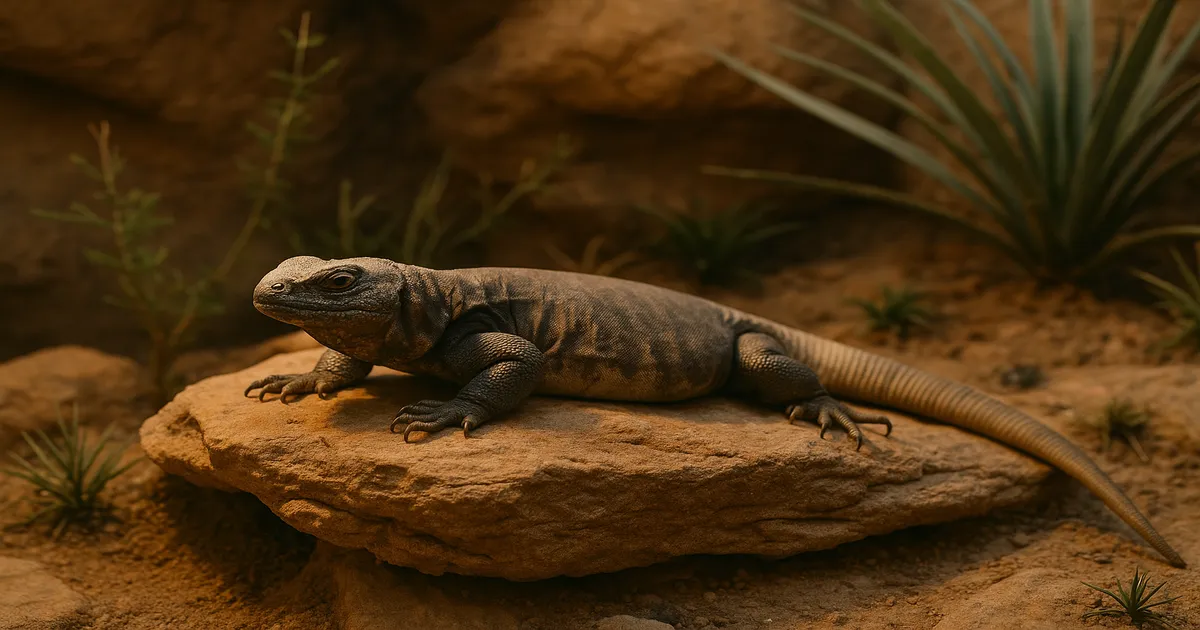
Quick Answer: Yes, you can absolutely make Sally your bestie — but she earns trust through patience and consistency, not cuddles. Chuckwallas (Sauromalus ater) can become remarkably tame: hand-feeding voluntarily, approaching you at the glass, tolerating calm handling. It takes weeks to months of deliberate work, and it starts with getting her enclosure right.
Can You Really Make Sally Your Bestie?
If you’ve been Googling “how to make Sally my bestie,” you’re already thinking about this the right way — as a relationship you have to earn. “Sally” is a nickname that’s caught on in Chuckwalla keeper communities for Sauromalus ater, the Common Chuckwalla, and honestly, it suits them. These are big, personable desert lizards with genuine individual personalities.
Here’s the honest framing though: what you’re building isn’t mammalian friendship. Reptiles don’t have the neurological hardware for oxytocin-driven attachment the way dogs do. What they can do is habituate — learn that your presence means safety, warmth, and food — and that conditioned trust looks a lot like friendship from where you’re standing.
A well-tamed Chuckwalla will come to the front of her enclosure when she sees you. She’ll eat hibiscus flowers from your fingers. She’ll sit on your arm without trying to escape. With a lifespan of 25+ years, you’ve got plenty of time to build it. So let’s get into it.
Meet Sally: What Is a Chuckwalla?
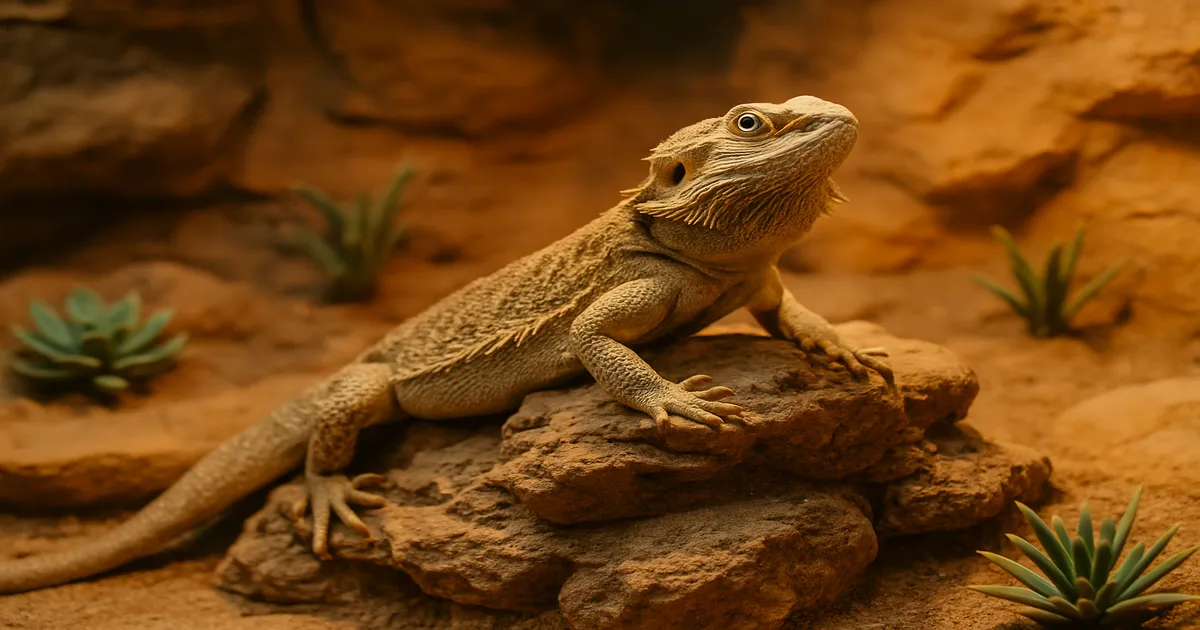
The Common Chuckwalla (Sauromalus ater) is a member of family Iguanidae, native to the rocky desert outcrops of the Mojave and Sonoran Deserts across California, Nevada, Utah, Arizona, and northwestern Mexico. Adults reach 16–18 inches (40–46 cm). Their larger cousins, the Island Chuckwallas (S. hispidus), push up to 24 inches (61 cm) and are increasingly available in the hobby — and worth considering if you want a more impressive-looking animal.
Males develop striking red, orange, or yellow coloration on the torso as they mature. Females and juveniles stay a banded gray-brown. Both sexes can become excellent companions given proper care.
In the wild, Chuckwallas live among boulders and lava flows. When threatened, they wedge themselves into rock crevices and inflate their bodies — making extraction nearly impossible. Understanding this defense mechanism explains everything about why taming has to be slow. You’re working against millions of years of “large thing approaching = danger” programming.
One thing I can’t stress enough: only buy captive-bred. Wild-caught Chuckwallas are legally protected in California, and beyond the legal issue, they’re a nightmare to tame. A wild adult that’s spent years successfully evading predators is not going to unlearn that fear response in your living room. They suffer chronic stress in captivity and rarely, if ever, fully habituate. A captive-bred animal raised around human activity is a completely different starting point.
Nail the Habitat First
A stressed, too-cold, or improperly lit Chuckwalla cannot be tamed. Full stop. Welfare is the prerequisite — everything else follows from that.
Temperature Gradients
Chuckwallas are obligate thermoregulators. They need to reach high basking temperatures to digest food, mount immune responses, and behave normally. If your basking spot is sitting at 85°F (29°C), your Sally is cold, stressed, and defensive — and no amount of patient hand-feeding will fix that.
| Zone | Temperature |
|---|---|
| Basking spot | 105–115°F (40–46°C) |
| Warm side ambient | 90–95°F (32–35°C) |
| Cool side ambient | 75–85°F (24–29°C) |
| Nighttime low | 65–70°F (18–21°C) minimum |
Always verify surface temps with an infrared temperature gun — dial thermometers are notoriously inaccurate and will lie to you. (Etekcity Lasergrip 774)
Enclosure Size
- Juveniles (under 8 inches): 40-gallon breeder minimum — 36” × 18” × 18” (90 × 45 × 45 cm)
- Sub-adults: 4’ × 2’ × 2’ (120 × 60 × 60 cm) minimum
- Adults: 6’ × 3’ × 3’ (180 × 90 × 90 cm) absolute minimum; 8’ × 4’ is genuinely better
Vertical space matters too — Chuckwallas climb and bask at elevation in the wild. A cramped animal is a stressed animal, and stress and tameness don’t coexist.
For adults, you’re almost certainly looking at a custom PVC or wood build — commercial glass tanks almost never come in adequate sizes. Front-opening doors are non-negotiable for taming. Approaching from above triggers a hardwired predator response; you’ll undo weeks of progress every time you reach in from the top. Brands like Animal Plastics, Zen Habitats, and Carolina Custom Cages all make solid options.
UVB Lighting
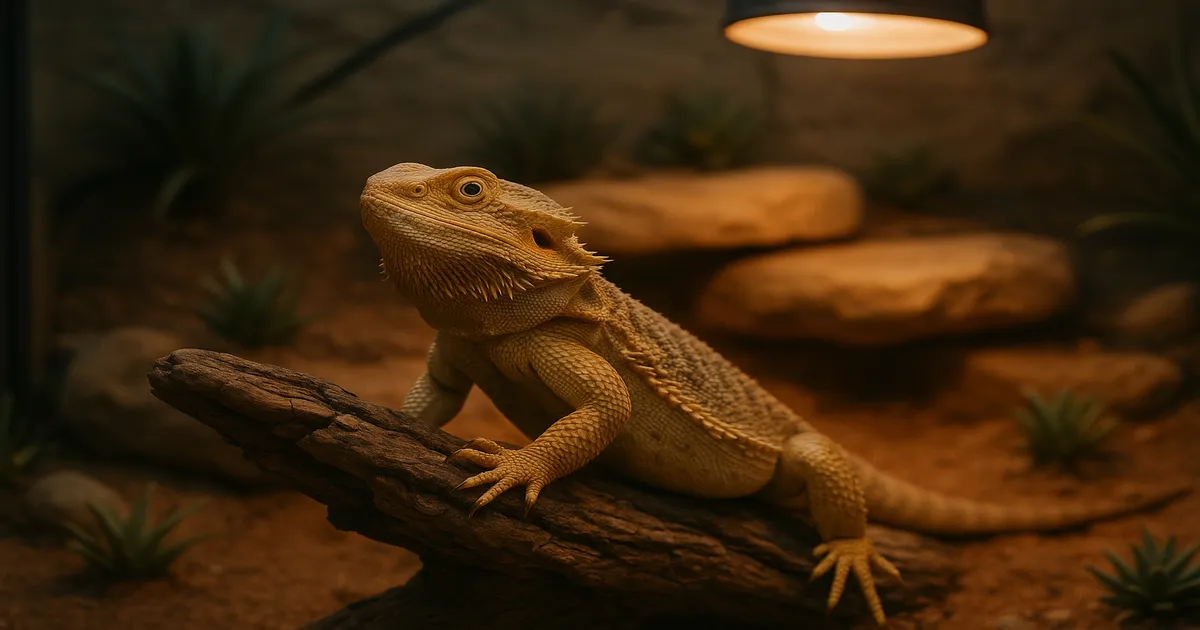
No UVB, no healthy Chuckwalla. Metabolic bone disease is a real and painful outcome of skipping this. Use a T5 HO 12% UVB bulb positioned 10–12 inches (25–30 cm) from the basking surface, and replace it every 12 months — UVB output degrades long before the bulb stops glowing.
Humidity and Substrate
Keep humidity between 20–35%. These are desert animals; chronic dampness causes respiratory infections and scale rot.
For substrate, a mix of 60–70% play sand and 30–40% organic topsoil works well — 3–4 inches deep so she can dig. Flat basking rocks (slate or flagstone) directly under the heat source mimic lava rock habitat and matter more than most people realize. Critically, include at least one tight crevice-style hide. A Chuckwalla that can’t wedge herself in somewhere when she wants to is a Chuckwalla that never fully relaxes — and a Chuckwalla that never fully relaxes won’t tame.
Heating Equipment
- Basking bulb: Halogen flood (PAR38, 75–150W depending on enclosure size) on a dimming thermostat
- Deep heat projector (DHP): Excellent supplemental heat for a species that thermoregulates through belly contact with warm rocks
- Ceramic heat emitter (CHE): For overnight ambient maintenance if your room drops below 65°F (18°C)
How to Make Sally Your Bestie: Step-by-Step Taming
Phase 1 — Scent and Presence (Week 1–2)
Don’t open the enclosure at all for the first week. Just exist near it. Work at a desk next to her tank, watch TV in the same room, talk normally. She’s learning that your scent and presence aren’t a threat. This passive phase is the one most people skip because it feels like doing nothing — but it’s doing a lot.
Phase 2 — The Dead Hand Technique (Week 2–4)
Open the enclosure and place your hand flat on the substrate. Don’t move it. Don’t reach for her. Just let it sit there for 5–10 minutes while she does whatever she wants. A motionless hand is far less threatening than a moving one, and you’re letting her investigate on her own terms.
A useful trick here: before direct contact, try laying a sheet of newspaper lightly across her back while she basks. It gets her used to something touching her without the threat of being grabbed. After a week of this, your hand is significantly less alarming.
Phase 3 — Hand-Feeding
Once she’s comfortable with your hand in the enclosure, start offering hibiscus flowers and dandelion blooms from your fingertips. Hand-feeding creates a direct positive association: you = good things appear. Use feeding tongs at first if she’s still skittish, then transition to bare fingers as her confidence grows. This is genuinely the single most effective taming technique — Chuckwallas find hibiscus flowers nearly irresistible, and that food motivation is powerful.
Phase 4 — The Warm Rock Transfer
Don’t just grab her. Instead, warm a flat slate tile under her basking light, then slide it gently under her body and lift the rock. She stays on a warm, familiar surface — you’re not grabbing her, she’s just on a rock that happens to be moving. Over several sessions, transition to your warm, flat palm being the “warm surface” she rides.
Phase 5 — Routine Out-of-Enclosure Time
Once she’s tolerating the warm rock transfer without inflating or gaping, start brief handling sessions of 5–10 minutes. Schedule them at the same time each day, 2–3 hours after her feeding window — never immediately post-feeding, and wait at least 48–72 hours after a large meal. Extend duration gradually. Consistency is everything here; predictability equals safety in a prey animal’s brain.
Island Chuckwallas (S. hispidus) tend to move through these phases faster than Commons despite their larger size. They’re often more curious and less reactive once captive-bred.
Reading Sally’s Body Language
Signs she’s relaxed and trusting:
- Cylindrical body posture (not flattened)
- Calm basking with eyes half-closed
- Voluntary approach to the front of the enclosure when she sees you
- Accepting food from your hand without retreating
Warning signals — in order of escalation:
- Lateral compression — she flattens herself to look wider. Early-stage stress.
- Dewlap extension — she’s telling you to back off.
- Open-mouth gaping — back off now.
- Body inflation — you’ve pushed too far. End the session.
If she bites, stay calm, don’t flinch or pull away sharply, and calmly end the session. Bites are communication, not aggression. Figure out what triggered it — were you approaching from above? Was she not fully warmed up? Did you smell like your cat? Identify the trigger, adjust, and come back the next day with a reset attitude. Never punish defensive behavior; it poisons your entire association with her.
I’d also strongly recommend keeping a taming journal. Note what triggered defensive responses, what her body language looked like at the start of each session, what worked. Patterns emerge that you’d never catch session-to-session, and you’ll start to understand her individual personality — because they genuinely do have them.
Common Mistakes That’ll Slow You Down
- Basking temps too low — the single most common mistake. Verify with a temp gun, not a dial thermometer.
- Enclosure too small — a cramped Chuckwalla is a stressed Chuckwalla.
- No UVB — a sick animal cannot be tamed.
- Feeding animal protein — Chuckwallas are strict herbivores. Insects can cause gout and organ damage. This isn’t a preference, it’s a health issue.
- Approaching from above — always come in through the front.
- Handling a cold, shedding, or recently-fed animal — wait 48–72 hours after a large meal, skip handling during shed.
- Inconsistent sessions — sporadic handling dramatically slows habituation. Daily short sessions beat occasional long ones every time.
- Expecting mammalian affection — this is the fastest road to disappointment. The goal is trust, not love. A Chuckwalla that voluntarily sits on your arm and eats from your hand is giving you something real — it’s just expressed differently than a dog wagging its tail.
Frequently Asked Questions
How long does it take to tame a Chuckwalla?
Most captive-bred Chuckwallas show significant improvement within 4–8 weeks of consistent work. Full tameness — voluntary approach, calm handling — typically takes 3–6 months. Wild-caught animals may never fully tame.
Do Chuckwallas recognize their owners?
They almost certainly recognize familiar scents and visual cues associated with you. A well-habituated Chuckwalla behaves noticeably differently around familiar keepers versus strangers — calmer, more willing to approach, less defensive. Whether that counts as “recognition” is partly philosophical, but the behavioral difference is real.
How often should I handle my Chuckwalla?
Daily sessions are ideal during the taming process — consistency accelerates habituation. Keep sessions to 10–15 minutes initially and make sure she’s fully warmed up first. Skip handling if she’s in shed, recently fed, or showing any signs of illness.
What’s the best treat for taming a Chuckwalla?
Hibiscus flowers are the gold standard — most Chuckwallas find them nearly irresistible. Dandelion flowers are a close second. Use these specifically for taming sessions rather than as regular diet staples so they keep their high-value status.
Can a wild-caught Chuckwalla ever become tame?
Rarely, and it’s a long road with no guarantees. Some wild-caught individuals do habituate over years, but many never fully lose their defensive responses and live in chronic stress. It’s also illegal to collect wild Chuckwallas in California. If you’ve inherited a wild-caught animal, prioritize minimizing stress over taming attempts, and give it a lot of time before pushing any handling.