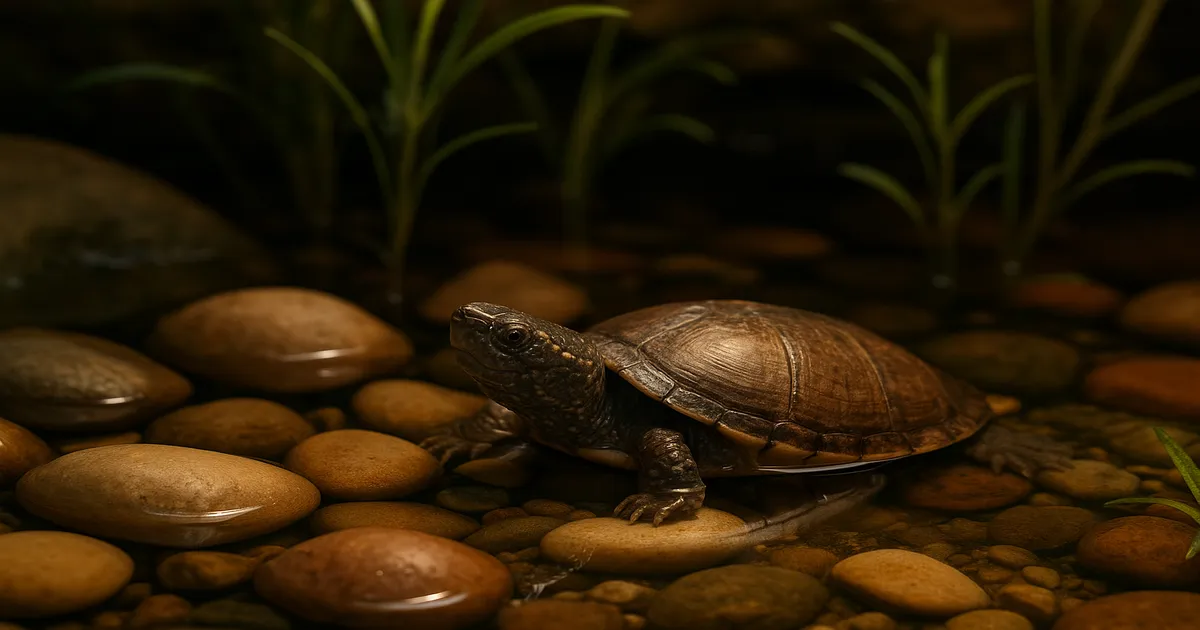
Quick Answer: Mud turtles (Kinosternon spp.) are small, long-lived semi-aquatic turtles that need shallow warm water, a proper land area with deep substrate, UVB lighting, and heavy-duty filtration. Get those four things right and you’ll have a healthy animal for 20–30+ years. Miss any one of them and you’ll be troubleshooting health problems within months.
Knowing how to take care of a mud turtle properly starts with understanding what these animals actually are. They’re not just small aquatic turtles you can drop in a fish tank — they’re semi-terrestrial reptiles with specific needs that most beginner care sheets completely miss. In my experience, more mud turtles fail in captivity from water that’s too deep and no land area than from any other cause combined. This guide will help you avoid those mistakes from day one.
Mud Turtle Care at a Glance
Key Facts for New Keepers
- Adult size: 3–5 inches (7.5–12.7 cm)
- Lifespan: 20–30+ years in captivity
- Water temperature: 72–78°F (22–26°C)
- Water depth: No more than 1.5–2x the turtle’s shell length
- Basking temperature: 88–95°F (31–35°C)
- Land area: 25–40% of total enclosure footprint
- Terrestrial substrate depth: Minimum 4–6 inches (10–15 cm)
- Feeding frequency (adults): 3–4 times per week
Species Covered in This Guide
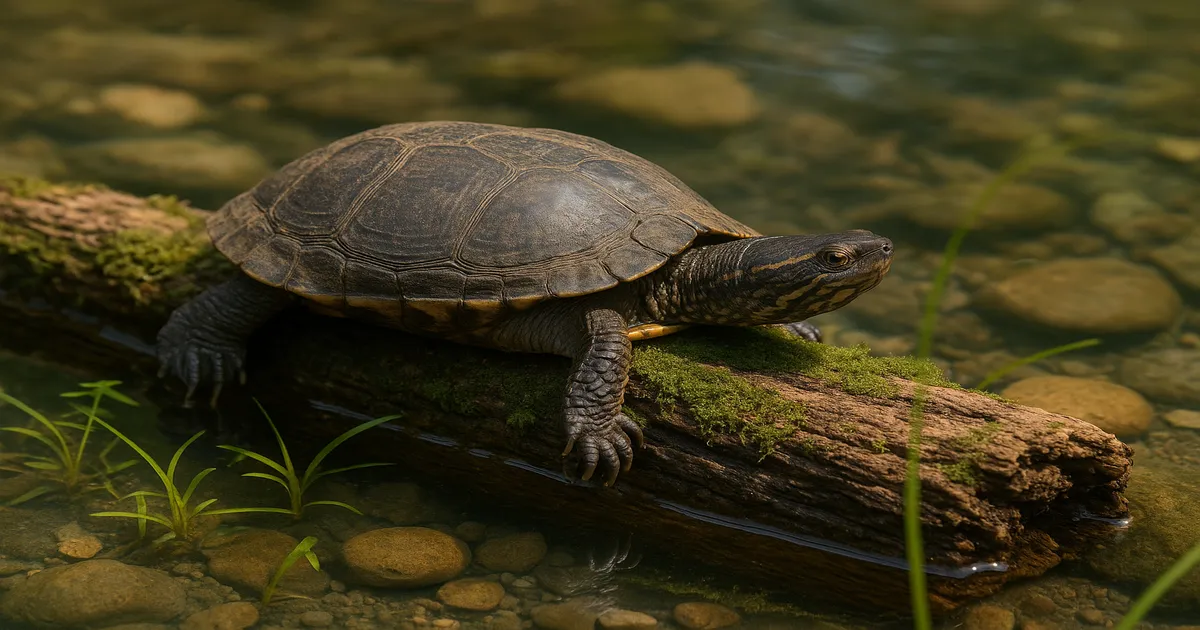
The four species you’re most likely to encounter in the hobby are the Eastern Mud Turtle (K. subrubrum — the most beginner-friendly), the Striped Mud Turtle (K. baurii, a Florida native with distinctive pale head stripes), the Yellow Mud Turtle (K. flavescens, notably more terrestrial than the others), and the Sonoran Mud Turtle (K. sonoriense, the most specialized of the group and best left to experienced keepers).
Always buy captive-bred animals from a reputable breeder. Wild collection is regulated or outright prohibited in many states, and wild-caught turtles typically arrive stressed and loaded with parasites that take months to clear.
One more thing worth setting straight early: mud turtles are display animals, not handling pets. Accept that now and you’ll enjoy them a lot more.
Understanding Mud Turtle Behavior and Natural History
Natural Habitat and Wild Lifestyle
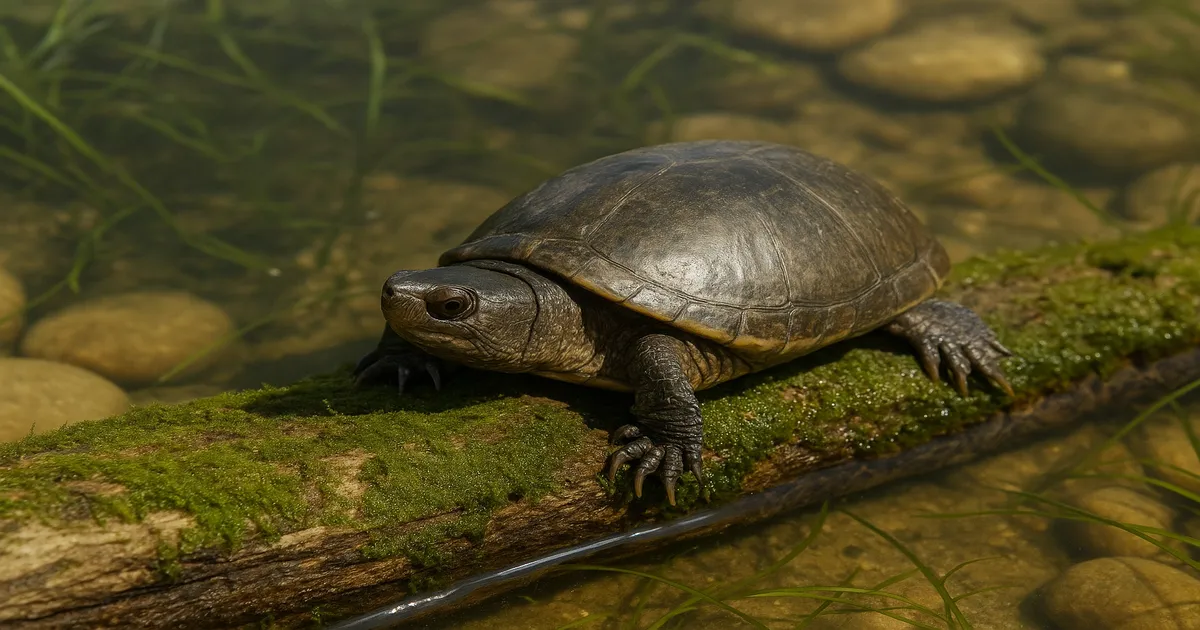
Mud turtles live in shallow, slow-moving or stagnant water across the eastern and central US — ponds, marshes, flooded ditches, swamp edges. They’re built for murky, low-oxygen environments and are genuinely tolerant of poor conditions in the wild. That tolerance does not mean they thrive in dirty captive setups. Chronic fouled water causes shell rot and respiratory infections even in species that can handle it briefly outdoors.
More Terrestrial Than You’d Expect
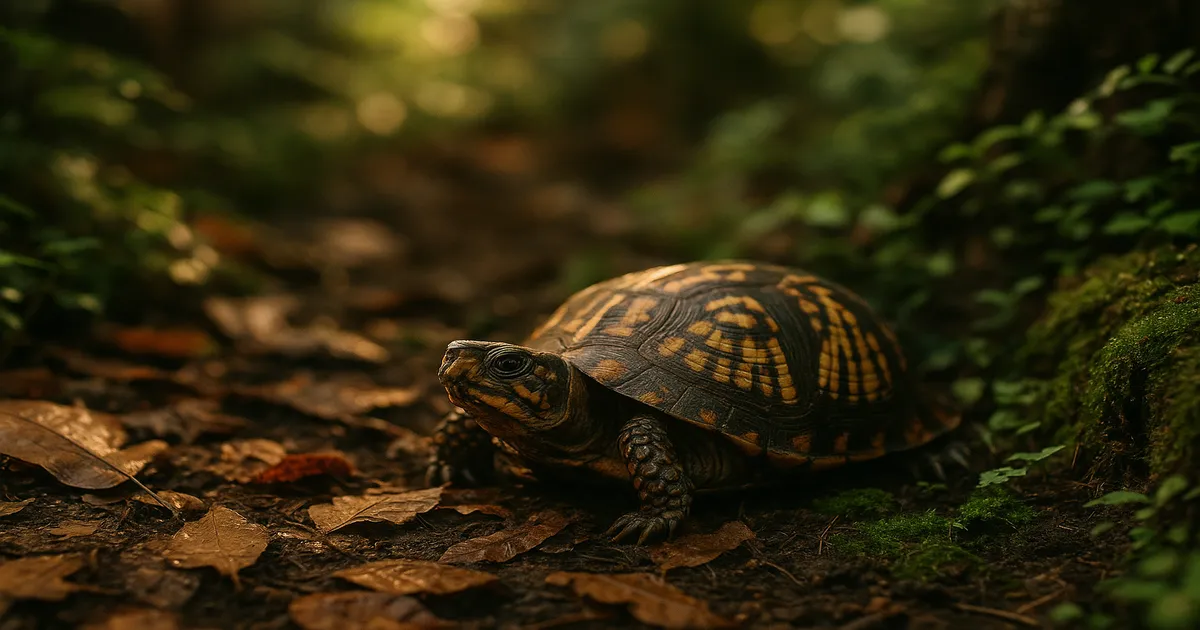
This surprises almost every new keeper. Mud turtles regularly leave the water to bask, forage, and travel overland — sometimes hundreds of meters from the nearest water source. They’re considerably more terrestrial than musk turtles (Sternotherus spp.), which most people compare them to. A mud turtle that can’t fully haul out of the water is a stressed mud turtle, and chronic stress shows up fast in their health.
Aestivation and Hibernation
Mud turtles aestivate — they bury themselves and go dormant during hot, dry periods — on top of hibernating in cold weather. In captivity, a turtle that suddenly disappears into the substrate for a few weeks isn’t necessarily sick. Check that temperatures are in range, look for active signs of illness (discharge, swelling, labored breathing, unusual posture), and if everything looks normal, leave it alone. Misreading aestivation as illness and digging the animal out causes more harm than good.
The Double-Hinged Plastron
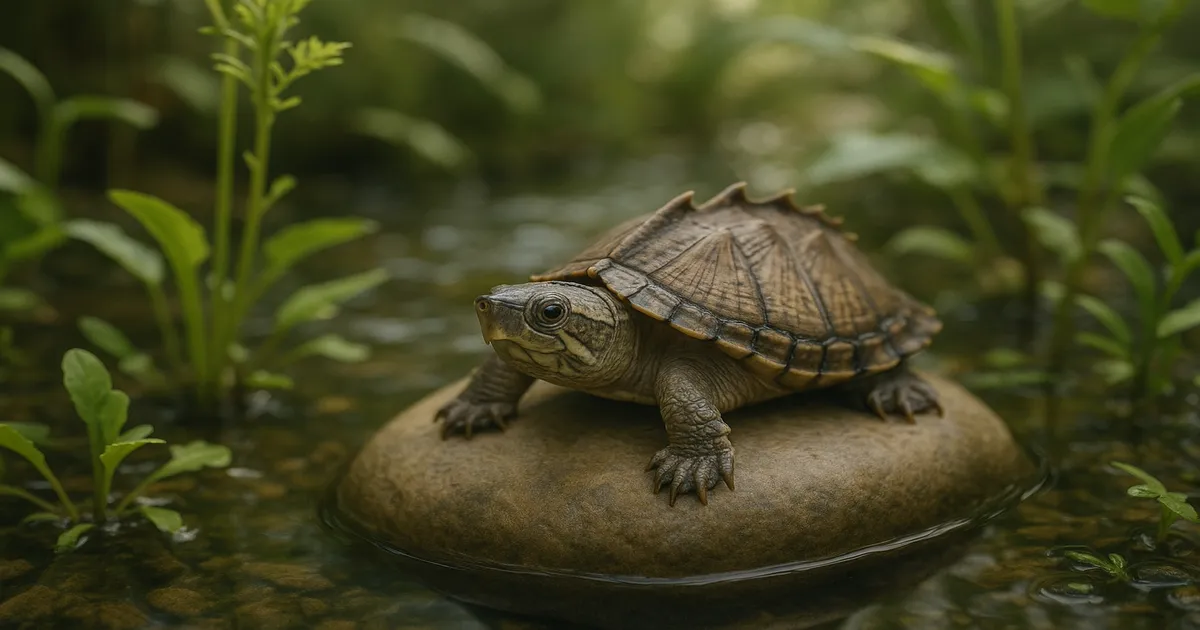
The key ID feature separating Kinosternon from Sternotherus is the double-hinged plastron — both the front and rear lobes of the bottom shell can close up tight, giving these small turtles solid protection against predators. They also have functional musk glands and will use them when handled. And they bite. Not aggressively, but firmly enough that you’ll notice. Handle only when necessary.
How to Take Care of a Mud Turtle: Enclosure Setup
Enclosure Size and Type
A 40-gallon breeder (36” × 18” × 16”) is the minimum I’d recommend for a single adult. Floor space matters far more than height. Rubbermaid stock tanks in the 50–100 gallon range are excellent — easy to clean, cheap, and sturdy enough to handle the weight of wet substrate. A custom paludarium with a water section on one side and a deep-substrate land section on the other is the ideal setup. Outdoor ponds (50+ gallons with a secure, predator-proof lid) are genuinely transformative for animals in USDA zones 7 and above.
Water Section: Depth, Temperature, and Quality
Water depth is where most beginners go wrong. Keep it at no more than 1.5–2x your turtle’s shell length. A 4-inch turtle does fine in 5–7 inches of water — that’s it. These aren’t strong swimmers, and deep water is a real drowning risk.
Target water parameters:
- Temperature: 72–78°F (22–26°C)
- pH: 6.5–7.5
- Ammonia: 0 ppm
- Nitrite: 0 ppm
- Nitrate: Under 20 ppm
Land Area: Non-Negotiable
At least 25–40% of your total enclosure footprint needs to be dry land. Mud turtles that can’t fully emerge from the water develop chronic stress, immune suppression, and — in females — egg binding. If your current setup doesn’t have a proper land section, that’s the first thing to fix, before anything else.
Terrestrial Substrate
The land area needs a minimum of 4–6 inches (10–15 cm) of substrate for burrowing. A roughly 60/20/20 mix of organic topsoil, coconut coir, and play sand holds moisture well without becoming waterlogged. The coir is worth including — it stays damp longer than straight topsoil, which mud turtles strongly prefer for burrowing. If you’re keeping females, bump that depth to 6–8 inches (15–20 cm) for nesting.
Decor, Hides, and Plants
Mud turtles are shy. Without cover they’ll pace and stress constantly. Cork bark tubes, half-logs, or cave-style hides on the land area are essential. In the water, Anubias, Java fern, hornwort, and duckweed all hold up well and help with water quality. Pothos and spider plant are solid low-maintenance options for the land section. Put visual barriers on 2–3 sides of the enclosure — turtles that can see out through glass on all sides often never settle down.
Lighting and Heating
UVB Lighting
Older care sheets often list UVB as optional for mud turtles. That advice is outdated. Current reptile veterinary consensus is that UVB is essential for calcium metabolism and long-term shell health. Skipping it might not cause visible problems in year one, but metabolic bone disease develops slowly and is much harder to reverse than it is to prevent.
Use a T5 HO 5.0 or 6% UVB tube positioned 8–12 inches (20–30 cm) above the basking area. Replace it every 12 months — UV output degrades well before the bulb stops producing visible light.
Basking Spot and Ambient Temperatures
The basking spot should reach 88–95°F (31–35°C). Ambient air on the warm side should sit at 75–82°F (24–28°C), with a cool side of 68–72°F (20–22°C). A 50–75W halogen flood works well for this and runs cooler than incandescent bulbs of the same output.
One thing most guides skip: keep your basking platform slope at 30–35 degrees or less. Mud turtles aren’t strong climbers, and a steep dock is a dock they won’t use.
Water Heating
Use a submersible titanium or stainless-steel heater — always paired with a thermostat. (Inkbird ITC-306) Glass heaters get broken by turtles. It’s not a matter of if, it’s when.
Photoperiod
Run 12–14 hours of light in summer, dropping to 10–11 hours in winter. This seasonal cycling is the most reliable breeding trigger in captivity and supports long-term hormonal health even in animals you’re not trying to breed. An outlet timer makes this completely effortless.
Filtration and Water Quality
Mud turtles produce a disproportionate amount of waste for their size. A filter that would handle a fish tank of the same volume will be overwhelmed within days. Size up — significantly.
Canister filters rated for 2–3x your actual tank volume are the gold standard. Hang-on-back filters work for smaller setups if they’re rated for at least double the tank volume. Sponge filters are fine as supplemental biological filtration but not as a primary filter. Avoid undergravel filters entirely — they trap waste and become impossible to clean properly once turtles are in the tank.
Feed in a separate container. I can’t overstate how much this one habit improves water quality. Fill a small plastic tub with tank water, drop the turtle in, let it eat, return it to the enclosure. Takes 60 seconds and eliminates most of the organic load that would otherwise hit your filter.
Maintenance schedule:
- Weekly: 25–30% water change
- Monthly: Full parameter test (ammonia, nitrite, nitrate, pH)
- Monthly: Filter media rinse in old tank water — never tap water
- Annually: Replace UVB bulb
Feeding Your Mud Turtle
In the wild, mud turtles eat whatever’s available — aquatic invertebrates, small fish, worms, snails, carrion, aquatic plants, fallen fruit. They’re opportunistic and not remotely picky. In captivity, build the diet around quality commercial pellets — Mazuri Freshwater Turtle Diet or ReptoMin are both solid choices — and supplement with earthworms, feeder fish, bloodworms, snails, and leafy greens. Dust food with a calcium supplement 2–3 times per week.
Adults get fed 3–4 times per week. That’s it. Mud turtles will eat every time food appears and have no off switch. Obesity leads to fatty liver disease and, in severe cases, an inability to fully retract into the shell. Both are serious and both are completely preventable.
Juveniles can be fed daily in small amounts — they’re growing fast and need the calories. Once they approach 2.5–3 inches, start transitioning to the adult schedule.
Common Mud Turtle Care Mistakes
Water too deep. The number one beginner error. A mud turtle that can’t easily reach the surface will exhaust itself and can drown. The 1.5–2x shell length rule isn’t a suggestion.
No land area, or inadequate substrate depth. If you’re keeping a mud turtle in a purely aquatic setup, you’re keeping it wrong. An inch of gravel on a floating dock doesn’t count as a land area.
Skipping UVB. Won’t kill your turtle in year one. Sets up a slow decline that’s hard to reverse. Don’t skip it.
Overfeeding and inadequate filtration. These two problems feed each other and create a cascade — dirty water, shell rot, respiratory infections, obesity. Feed less, filter more.
Misreading aestivation as illness. Check temperatures, look for actual disease signs, and if everything looks normal, leave the animal alone.
Housing males together. Males are aggressive toward each other, especially during breeding season. Keep them separate.
Pro Tips for Long-Term Success
Monthly weight tracking is one of the most useful health metrics you have. A kitchen scale and a small container of water is all you need. Consistent weight loss over 2–3 months warrants a vet visit even if the animal looks fine from the outside.
Duckweed is underrated. It absorbs nitrates, provides natural cover that reduces stress, gets eaten occasionally as a dietary supplement, and costs almost nothing. There’s genuinely no downside.
Quarantine new animals for 90 days in a simple, separate setup before introducing them to an established collection. Get a fecal test done by a reptile vet during that window. Wild-caught or unknown-history animals frequently carry Salmonella, internal parasites, and respiratory infections that aren’t visible to the naked eye.
Outdoor keeping from May through September is transformative. Mud turtles kept outside even seasonally show dramatically better activity, feeding response, and breeding behavior. Natural UV and temperature cycling do things no artificial setup can fully replicate.
Species-Specific Adjustments
| Species | Key Difference | Beginner Rating |
|---|---|---|
| Eastern (K. subrubrum) | Most adaptable; tolerates wider temp range | ⭐⭐⭐ Best for beginners |
| Striped (K. baurii) | Slightly more aquatic; prefers 76–80°F water | ⭐⭐⭐ Good for beginners |
| Yellow (K. flavescens) | More terrestrial; needs 50%+ land area | ⭐⭐ Intermediate |
| Sonoran (K. sonoriense) | Most specialized; requires careful attention to conditions | ⭐ Experienced keepers |
Frequently Asked Questions About Mud Turtle Care
How deep should the water be in a mud turtle tank?
No more than 1.5–2x the turtle’s shell length. For a 4-inch adult, that’s 5–7 inches of water. Mud turtles are poor swimmers compared to fully aquatic species, and deep water is a drowning risk, not a benefit.
Do mud turtles need UVB light?
Yes — despite what older care sheets say, UVB is considered essential by current reptile veterinary consensus. It supports calcium metabolism and long-term shell integrity. Use a T5 HO 5.0 or 6% UVB tube positioned 8–12 inches above the basking area and replace it every 12 months.
How long do mud turtles live in captivity?
With proper care, 20–30 years is a realistic expectation. Wild individuals have been documented living 40+ years. This is a long-term commitment — the care decisions you make in year one set the trajectory for everything that follows.
Why is my mud turtle burying itself in the substrate?
Almost certainly aestivation — a normal seasonal dormancy behavior mud turtles exhibit during hot or dry periods, separate from winter hibernation. Before you intervene, verify that enclosure temperatures are appropriate and check for visible signs of illness. If everything looks normal, leave it alone.
Can mud turtles be kept in a fully aquatic setup?
No. Mud turtles need a dry land area with deep burrowing substrate — at least 25–40% of the enclosure footprint. A fully aquatic setup causes chronic stress, immune suppression, and egg binding in females. A proper semi-aquatic or paludarium configuration is the only appropriate option.