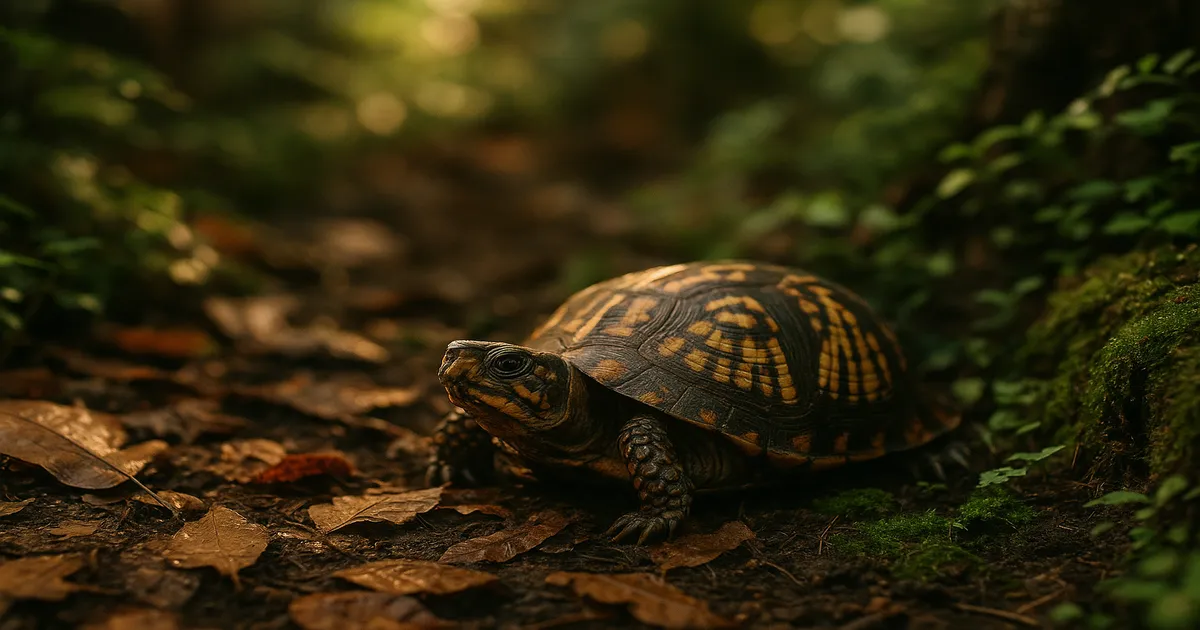
Quick Answer: Box turtles are long-lived, semi-terrestrial omnivores that need spacious enclosures (minimum 4×4 ft indoors), strong UVB lighting, 60–80% humidity depending on species, and a genuinely varied diet. They can live 50–100+ years, so this isn’t a casual commitment — but with the right setup, they’re endlessly rewarding animals to keep.
If you’re researching how to care for box turtles, the first thing you need to understand is that these animals are nothing like the “beginner reptile” reputation they sometimes get. They’re demanding in specific ways — humidity, space, diet variety — and their extraordinary lifespan means mistakes made in year one can show up as health problems a decade later.
A well-kept box turtle is one of the most personable reptiles you can own, though. They recognize their keepers, develop distinct personalities, and given the right environment, they genuinely thrive.
Box Turtle Care at a Glance
What Kind of Pet Is a Box Turtle?
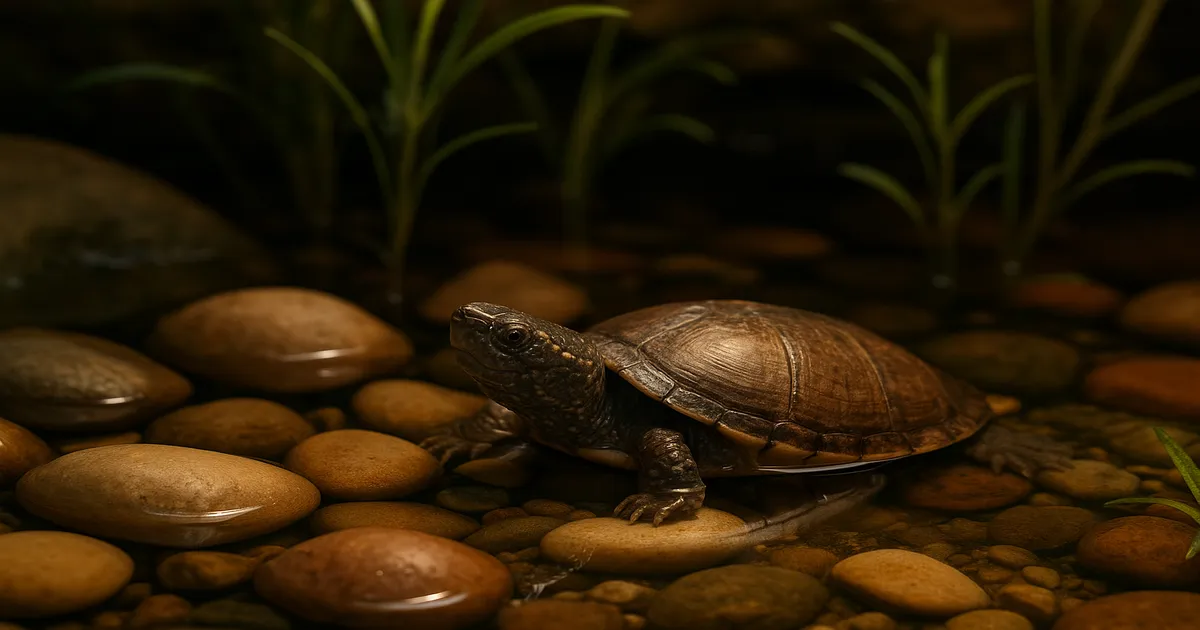
Box turtles belong to the genus Terrapene — semi-terrestrial members of the family Emydidae, not true tortoises, despite spending most of their lives on land. Their signature feature is a hinged plastron (bottom shell) that lets them seal themselves up completely. It’s a genuinely impressive defense mechanism, and one of the things that makes them so distinctive.
They’re omnivores with wide-ranging diets in the wild: earthworms, beetles, berries, mushrooms, leafy plants, even carrion. Replicating that variety in captivity is one of the keys to keeping them healthy long-term.
Key Care Requirements Summary
| Parameter | Requirement |
|---|---|
| Enclosure (indoor minimum) | 4×4 ft (48×48 inches) floor space |
| Basking temperature | 85–90°F (29–32°C) |
| Ambient temperature | 70–80°F (21–27°C) |
| Cool retreat temperature | 65–70°F (18–21°C) |
| Nighttime minimum | 60°F (15°C) |
| Humidity (Eastern) | 60–80% |
| Humidity (Ornate) | 40–60% |
| UVB | T5 HO 10.0 or 12% |
| Substrate depth | 4–6 inches minimum |
| Lifespan | 50–100+ years |
Understanding Box Turtles: Species and Natural History
The Four Main Species Kept in Captivity
- Terrapene carolina — the Eastern Box Turtle, with six subspecies; the most commonly kept and the most forgiving for beginners
- Terrapene ornata — the Ornate Box Turtle; more arid-adapted, lower humidity needs, found in grasslands and prairies
- Terrapene coahuila — the Coahuilan Box Turtle; semi-aquatic, rare in the hobby, requires specialized care
- Terrapene nelsoni — the Spotted Box Turtle; a Mexican species, rarely kept outside specialist collections
For most people starting out, a captive-bred Eastern box turtle from a reputable breeder is the right call. The Ornate is a solid second choice if you’re in a drier climate or the Pacific Southwest.
Natural Habitat and Why Enclosure Size Matters
Wild box turtles occupy home ranges of 1–5 acres and have remarkable site fidelity — the same individual may use the same patch of forest for decades. They can cover a quarter mile in a single day when motivated. That context matters when you’re sizing an enclosure. A 20-gallon tank isn’t just too small; it’s chronically stressful in a way that suppresses immune function over time. You’ll see it eventually in repeated illness.
Lifespan and Long-Term Commitment
Verified wild specimens have exceeded 100 years. Well-cared-for captives routinely hit 50–80. This is a multi-generational commitment — box turtles often outlive their owners, and responsible keepers make arrangements for their animals accordingly. Don’t take that lightly before you acquire one.
Legal Considerations and Sourcing
Box turtles are legally protected in most U.S. states. Collecting them from the wild is illegal or heavily restricted almost everywhere, and for good reason — wild populations have declined significantly from habitat loss and road mortality. Always buy captive-bred animals from a reputable breeder.
Wild-caught adults are also a practical nightmare: heavily parasitized, chronically stressed, and often refusing to eat in captivity for months. A captive-bred hatchling or juvenile is a far better starting point in every way.
Sexing your turtle: Males have concave plastrons, longer thicker tails, and (in Eastern box turtles) red or orange eyes. Females have flat plastrons and typically brown or yellow-brown eyes.
Box Turtle Enclosure Setup
Indoor vs. Outdoor: Which Is Better?
Outdoor, every time — if your climate allows it. Natural sunlight, real soil, live insects, and fresh air produce a noticeably healthier turtle than even the best indoor setup. Most keepers need an indoor enclosure for at least part of the year, though, so both are worth understanding.
Enclosure Sizes
- Indoor minimum: 4×4 ft (48×48 inches) of floor space
- Indoor recommended: 4×8 ft or larger
- Outdoor recommended: 8×8 ft or larger for one or two adults
Wall height indoors should be at least 12–18 inches above the substrate surface. Box turtles are better climbers than most people expect.
Best Indoor Enclosure Types
- Tortoise table / open-top enclosure — better airflow than glass, easy to DIY from plywood at a fraction of retail cost
- Large stock tanks (Rubbermaid 100–300 gallon) — durable, holds substrate depth well, easy to clean
- Glass terrariums — only acceptable in very large sizes (75–125+ gallon); poor ventilation in smaller glass enclosures leads to respiratory infections
Outdoor Pen Construction
A wood-framed pen with hardware cloth sides works well. The non-negotiable detail: bury the footer at least 12 inches (30 cm) into the ground. Box turtles are persistent diggers and will find any gap. Add a partial roof for shade and predator protection — raccoons and crows are a real threat.
Substrate
Minimum depth is 4–6 inches (10–15 cm), and deeper is genuinely better. Box turtles burrow to thermoregulate, hide, and brumate — shallow substrate prevents all three.
Good options:
- Topsoil/play sand mix (60/40 or 70/30) — retains moisture, easy to burrow in
- Coconut coir — excellent humidity retention
- Organic topsoil alone — cheap, widely available, works well
- Sphagnum moss as a top layer or in a dedicated humid hide
Avoid: cedar or pine shavings (toxic), gravel (impaction risk), reptile carpet (traps bacteria, causes abrasion), and sand alone (dries out too fast).
Throw some dried oak or magnolia leaf litter on top. Turtles will forage through it for hours, and it helps retain moisture in the substrate below.
Temperature and Lighting for Box Turtles
Thermal Gradient
Box turtles need to move between warm and cool zones throughout the day. A single temperature throughout the enclosure is one of the most common setup mistakes.
- Basking spot: 85–90°F (29–32°C)
- Ambient: 70–80°F (21–27°C)
- Cool retreat: 65–70°F (18–21°C)
- Nighttime minimum: 60°F (15°C)
Don’t let any part of the enclosure exceed 95°F (35°C). Box turtles are far more heat-sensitive than most desert reptiles — heat stress above that threshold can kill within hours.
A 50–100W halogen or incandescent PAR38 flood bulb positioned over one end of the enclosure creates the basking spot. For overnight heat when your room drops below 60°F, a ceramic heat emitter (CHE) works well. Skip under-tank heaters — turtles can’t feel substrate heat effectively and risk plastron burns. Always run heat sources through a thermostat; an Inkbird ITC-306A or a Herpstat 1 will prevent the overheating accidents that happen when a basking bulb runs unregulated on a warm day.
UVB Lighting
Without UVB, box turtles can’t synthesize vitamin D3, which means they can’t metabolize calcium properly. Metabolic bone disease (MBD) is the result — and the insidious thing about MBD is that it accumulates silently. Your turtle may look fine for a year or two before the damage becomes obvious. “My turtle seems fine without UVB” is not a reliable data point.
Use a T5 HO linear UVB bulb — specifically an Arcadia 12% or Zoo Med Reptisun 10.0 T5 HO. The bulb should span at least 50–75% of the enclosure length and sit 10–12 inches above the turtle’s shell for correct UV Index exposure. Replace it every 6–12 months even if it’s still producing visible light — UVB output degrades well before the bulb burns out.
For larger enclosures, a mercury vapor bulb like the Zoo Med PowerSun 100W provides both heat and UVB in one unit. Compact coil UVB bulbs are not adequate — output is too weak and too uneven.
Run lights 12–14 hours in summer, dropping to 10–11 hours in winter. If you can give your turtle even a few hours of outdoor access per week in a secure pen, do it — unfiltered natural sunlight beats any artificial UVB source.
Humidity and Hydration
Humidity by Species
Eastern box turtles need 60–80% relative humidity. They come from humid woodlands and meadows, and chronic low humidity is a slow killer — sunken eyes, dry flaky skin, and kidney damage over time. Ornate box turtles are more tolerant of drier conditions, doing fine at 40–60%.
Substrate moisture matters as much as air humidity. The substrate should be damp several inches down even if the surface varies. A dry substrate throughout is a problem regardless of what your hygrometer reads.
Maintaining Humidity Indoors
Daily misting with a pressure sprayer works for most setups. An automatic misting system like a MistKing Starter is worth the investment if you’re keeping Eastern box turtles long-term. Foggers can supplement humidity but shouldn’t be your only moisture source — overused, they create stagnant wet conditions that invite respiratory infections.
Weekly Soaking
Soak your turtle for 15–20 minutes weekly in shallow water at 80–85°F (27–29°C). Water depth should sit at or below the chin line — roughly ½–1 inch for most adults. Many box turtles drink primarily during soaks rather than from standing water, so this isn’t optional even if you mist daily. A dehydrated turtle will drink enthusiastically the moment it hits the water, which is a quick and reliable hydration check.
Provide a shallow dish large enough for the turtle to turn around in — a terracotta plant saucer works perfectly. Keep water depth at or below chin level and change it daily, because turtles will defecate in it without fail.
Feeding Box Turtles
Diet Variety Is Non-Negotiable
In the wild, box turtles eat an enormous variety of foods — earthworms, beetles, slugs, snails, berries, mushrooms, leafy plants, and carrion. They’ll even eat Amanita mushrooms that would kill a human. Variety isn’t optional; it’s fundamental to their biology. A monotonous diet causes deficiencies that show up slowly but seriously.
Protein Sources
Earthworms are the single best staple food — palatable to almost every individual, nutritionally solid, and completely natural. Setting up a small worm bin with red wigglers in compost is easy, nearly free after the initial setup, and gives you a year-round supply. Turtles that refuse everything else almost always accept live earthworms.
Other good protein sources: dubia roaches, crickets, and slugs or snails from pesticide-free areas.
Plants and Fruits
- Leafy greens: Collard greens, dandelion greens, mustard greens — these should make up a significant portion of the plant component
- Vegetables: Butternut or acorn squash, red bell pepper, shredded carrot
- Fruits: Strawberries, blueberries, raspberries — excellent treats and nearly universally accepted
- Mushrooms: White button, oyster, and other edible varieties are fine and enthusiastically eaten
Skip iceberg lettuce. It’s nutritionally empty and causes loose stools.
Supplements
Dust food with a calcium powder 2–3 times per week — Repashy Supercal NoD or Zoo Med Repti Calcium without D3 are both solid options. Add a multivitamin once weekly.
One important warning: don’t use supplements with preformed vitamin A. Hypervitaminosis A causes serious health problems in box turtles. Provide beta-carotene through whole foods instead — carrots, squash, and red bell pepper cover it well.
Feeding Frequency
Juveniles should eat daily. Adults do well with feeding every other day or 4–5 times per week. Offer an amount roughly the size of the turtle’s head at each feeding. Vary the offerings — don’t fall into the trap of feeding the same two or three foods because the turtle seems to prefer them.
Brumation
What It Is and Whether Captive Turtles Need It
Brumation is the reptilian equivalent of hibernation — a period of metabolic slowdown typically from October through April, during which box turtles bury themselves below the frost line and become largely inactive. Healthy adult captive turtles should be allowed to brumate. Keeping them artificially active year-round disrupts hormonal cycles and, over the long term, can shorten lifespan.
Preparation and Safe Conditions
Before allowing brumation, get a vet check to confirm the turtle is healthy and at a good weight. Then fast for 2–3 weeks to allow the gut to clear — food left in the digestive tract during cold temperatures can rot and cause fatal infections. Reduce temperatures and photoperiod gradually through autumn rather than making abrupt changes.
Safe brumation temperatures are 50–55°F (10–13°C). Outdoors, a turtle with sufficient substrate depth will find its own level. Indoors, an unheated garage or basement often works well if temperatures stay consistently in that range.
Check on your turtle every 2–3 weeks. A brumating turtle should be still but responsive to touch, and weight loss should be minimal. Any unusual activity, discharge, or significant weight loss warrants bringing the turtle inside for a vet visit.
When to Skip Brumation
Don’t attempt to brumate a sick turtle, an underweight turtle, or a newly acquired animal that hasn’t settled in and eaten well through a full season. Keep these animals warm and active through winter, and try brumation the following year once they’re established.
Frequently Asked Questions About Box Turtle Care
Can box turtles be kept together? It’s possible but not recommended for beginners. Males will fight, and even mixed-sex groups can result in stress and overbreeding of females. If you do keep multiple turtles, provide enough space that each animal can get completely out of sight of the others — at minimum, double the floor space per additional turtle.
How often do box turtles eat? Juveniles should eat daily. Adults do well at every other day or 4–5 times per week. Appetite naturally drops in autumn as brumation approaches — that’s normal, not a cause for alarm.
Do box turtles need a water dish? Yes. Provide a shallow dish at or below chin level at all times, and soak your turtle separately for 15–20 minutes weekly. Many individuals drink primarily during soaks, so the weekly soak isn’t optional even if you see them using the dish.
How do I know if my box turtle is sick? Key warning signs: sunken or closed eyes, nasal or oral discharge, wheezing or open-mouth breathing, refusal to eat for more than 3–4 weeks outside of brumation season, significant weight loss, soft or pitted shell, and lethargy that persists even at proper temperatures. Any of these warrants a vet visit with a reptile-experienced veterinarian.
Can I keep a wild box turtle I found? In most U.S. states, no — it’s illegal. If you find a box turtle crossing a road, move it to the nearest safe area in the direction it was already heading. Don’t relocate it to a different area; box turtles have strong site fidelity and will often travel long distances trying to return home, crossing roads repeatedly in the process.