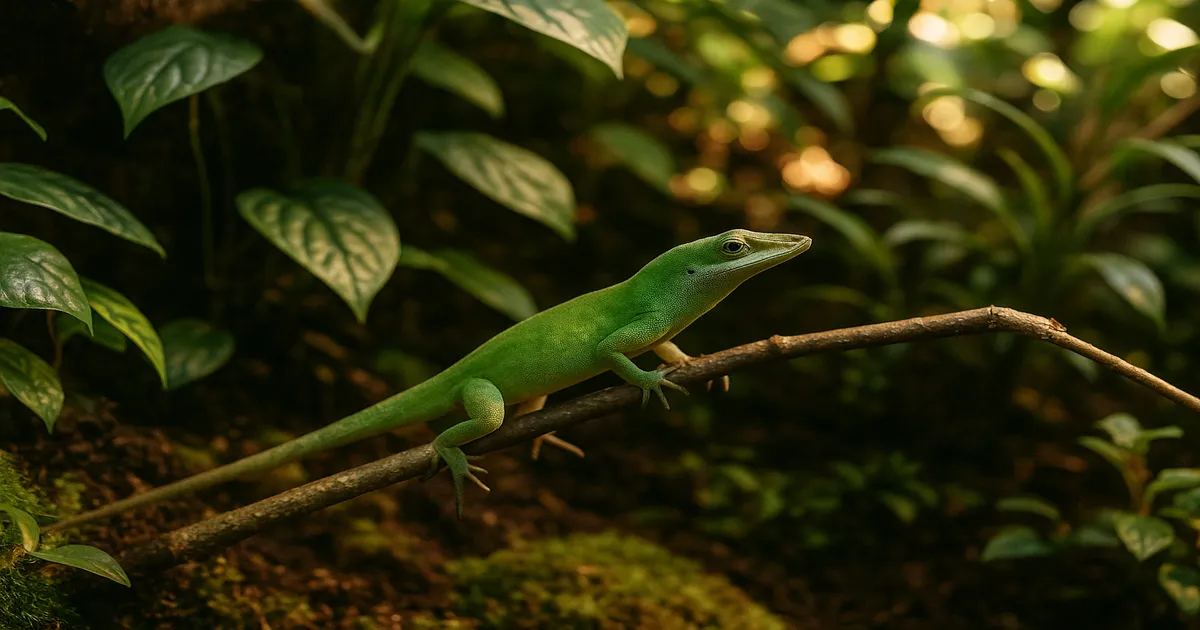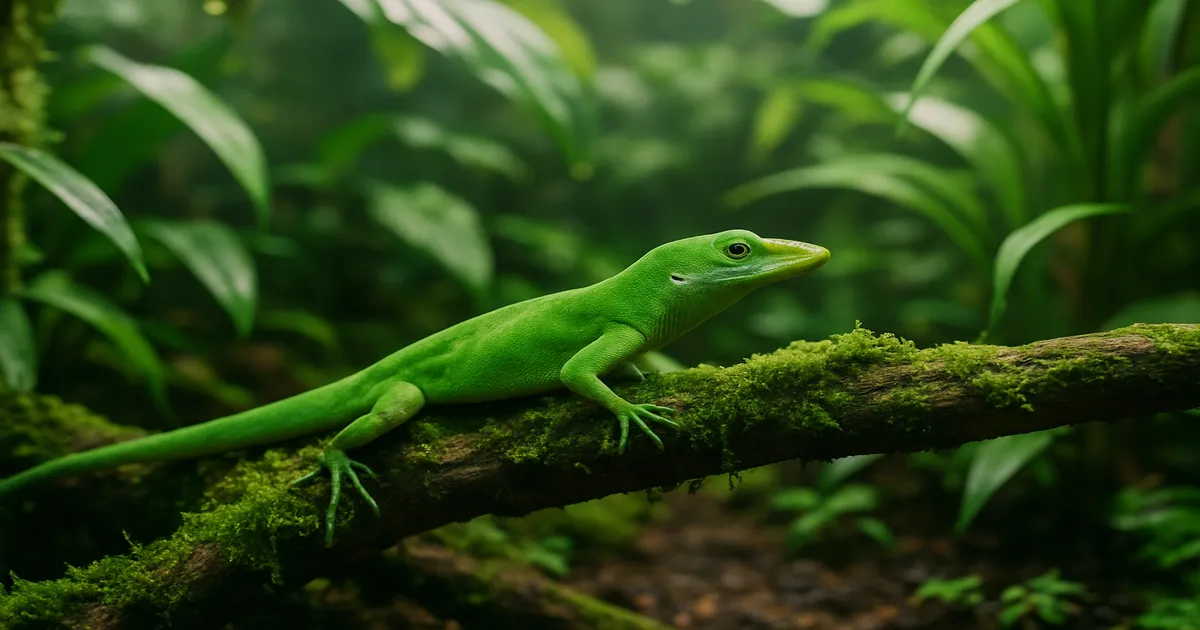
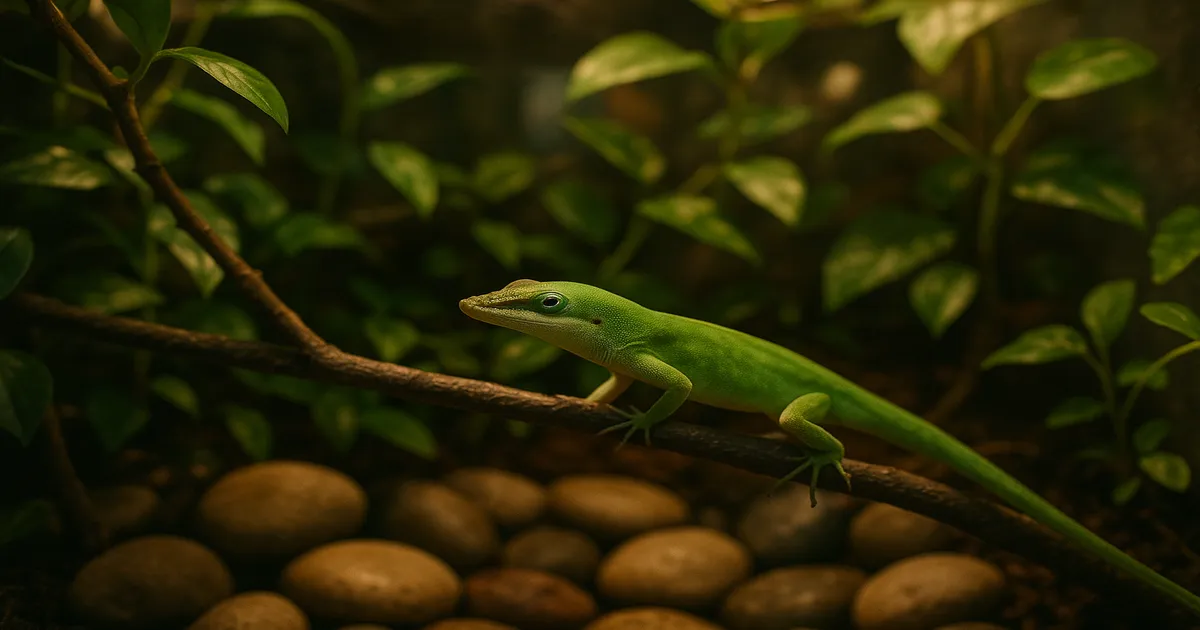
Quick Answer: If your green anole isn’t eating, the most likely culprits are temperatures that are too low, missing or degraded UVB lighting, chronic stress, or low humidity — all of which are fixable husbandry problems. Green anoles weigh 3–8 grams as adults. There’s almost no metabolic reserve there, so a week or two of complete feeding refusal in a bad environment can genuinely threaten their life. Diagnose this quickly rather than waiting it out.
If you’re asking why is my green anole not eating, here’s the honest answer: it’s almost certainly something in the enclosure, not the animal. Green anoles are scrappy little hunters when their environment is right. But they’re also extremely sensitive to husbandry gaps — more so than most beginner-friendly reptiles. The good news is that most cases of feeding refusal resolve once you track down and fix the underlying problem.
Why Your Green Anole Has Stopped Eating: The Most Common Causes
- Temperatures too low — the single most common cause, by a wide margin
- No UVB or a degraded UVB bulb — more impactful than most keepers realize
- Stress — from cohousing, handling, barren enclosures, or high-traffic placement
- Low humidity or dehydration
- Prey issues — wrong size, not moving, or nutritionally depleted feeders
- Illness or parasites — especially in wild-caught animals
Temperature Problems: The #1 Reason Green Anoles Stop Eating
Green anoles are ectotherms. They rely entirely on external heat to power their metabolism, and without a warm enough basking spot, they literally cannot digest food. Offering crickets to a cold anole is like trying to start a car with a dead battery — the hunting instinct shuts down, the gut stops moving, and the animal drops into a kind of low-power mode.
Room temperature — even a comfortable 70°F (21°C) — is not enough. I see this mistake constantly with green anole setups, especially ones using only LED lighting with no real heat source.
Correct temperature ranges:
- Basking spot: 85–90°F (29–32°C), measured at the actual surface
- Warm side ambient: 80–85°F (27–29°C)
- Cool side ambient: 72–78°F (22–26°C)
- Nighttime low: 65°F (18°C) minimum — don’t let it drop below this
- Critical threshold: Below 60°F (15.5°C), the animal enters a torpor-like state and won’t eat under any circumstances
- Too hot is also a problem: Above 95°F (35°C) in the basking zone causes heat stress and refusal
Don’t rely only on ambient thermometers — they’ll lie to you. A basking surface can run 10–15°F hotter than the air temperature right next to it. An infrared temperature gun is one of the best $15–20 investments you can make for reptile keeping. Just point it at the exact spot your anole basks. (Etekcity Lasergrip 774)
A cold anole will be sluggish, persistently brown during the day, and completely uninterested in prey. An overheated anole will gape, retreat to the coolest corner, and also refuse food. If your anole is basking normally but still not eating, temperature probably isn’t the issue — keep reading.
UVB Deficiency and Appetite Loss in Green Anoles
UVB radiation drives vitamin D3 synthesis, which regulates calcium metabolism — and calcium is involved in nearly every physiological process, including muscle function, nerve signaling, and digestion. An anole without adequate UVB isn’t just at risk for metabolic bone disease somewhere down the road; it’s likely already feeling lousy in ways that suppress appetite right now.
There’s also something more direct: green anoles use UV vision to detect and evaluate prey. Poor lighting doesn’t just make the enclosure dim — it actually reduces their ability to perceive and respond to moving insects.
Go with a linear T5 HO bulb. The Arcadia 6% and the Zoo Med Reptisun 5.0 T5 HO are both solid choices. Avoid compact or coil UVB bulbs — they don’t produce sufficient UV output at the distances that matter, and some have been linked to eye problems in reptiles.
The bulb should span at least 50–75% of the enclosure length, and your anole needs to be able to bask within 6–12 inches of it. Replace every 12 months regardless of whether it still looks lit — UV output degrades long before visible light fails, and most keepers have no idea their “working” bulb stopped producing UVB months ago.
One more thing: mesh lids filter out a significant percentage of UVB. If your bulb is sitting on top of a fine mesh screen, either move it inside the enclosure or step up to a higher-output bulb to compensate. UVB also doesn’t travel through glass or most plastic, so if there’s any barrier between your anole and the bulb, they’re getting far less than you think.
Run your lights on a timer and vary the photoperiod seasonally — 12–14 hours in summer, 10–11 hours in winter. This regulates hormonal cycles that influence appetite. It’s a small thing that adds up over time.
Stress: The Hidden Reason Your Green Anole Won’t Eat
A relaxed, warm green anole is bright green during the day. Persistent brown coloration during warm daylight hours — especially combined with hiding, flattening against surfaces, or frantic glass-surfing — is a stressed anole. And a stressed anole doesn’t eat.
Two males in one enclosure is the most common stress scenario I see. Even if there’s no visible fighting, the subordinate male is under constant psychological pressure. He’ll stop eating, lose weight, and eventually die — often while the keeper thinks things look fine because there’s no blood. The dewlap displays and chasing aren’t play. They’re warfare. One male per enclosure, full stop.
Handling is another big one. Green anoles are display animals, not handling animals. Most of them never fully habituate to being picked up, and if you’re handling yours daily and wondering why it won’t eat, that’s your answer. Limit it to necessary health checks.
Enclosure placement matters more than people think. A tank next to a slamming door, a vibrating TV, or a busy hallway keeps your anole in a state of low-level alert all day. That’s exhausting and appetite-suppressing. Find a quieter spot.
Barren enclosures are genuinely stressful for arboreal prey animals. In the wild, green anoles are never far from cover. An empty tank with a paper towel substrate and one plastic vine is frightening to them. Live pothos (Epipremnum aureum) is the single best addition you can make — nearly indestructible, tolerates the heat and humidity, and provides the dense cover that makes anoles feel secure. Bromeliads are excellent too; they hold water in their cups, which doubles as a natural drinking spot.
If your anole is newly acquired, give it at least two full weeks of minimal disturbance before expecting consistent feeding. Cover three sides of the enclosure with paper, don’t handle, don’t tap the glass. Just mist, offer food, and let the animal settle. Most keepers skip this step entirely and then wonder why their new anole won’t eat.
Humidity and Hydration
Green anoles need 60–80% relative humidity. Drop below 50% chronically and you’ll see dehydration, shedding problems, and feeding refusal. A dehydrated animal simply doesn’t have the energy or physiological state to hunt.
Anoles drink water droplets from leaves and glass — not from bowls. Mist the enclosure once or twice daily and let it partially dry between sessions. That wet-dry cycle mimics natural conditions and is healthier than keeping everything constantly saturated. A light misting 20–30 minutes before feeding often triggers activity and hunting behavior, mimicking the post-rain burst you’d see in the wild.
Screen enclosures are notoriously hard to keep humid. If you’re in a dry climate, partially cover the screen with plastic wrap, add more live plants, or switch to a front-opening glass enclosure with only a screened top. A cool-mist humidifier on a timer near the enclosure also works well. (Exo Terra Monsoon Solo)
Prey and Feeding Technique Mistakes
Size matters. Nothing bigger than the width of your anole’s head. An adult cricket offered to a juvenile isn’t a meal — it’s a threat. I’ve watched anoles flee from oversized prey. Get the size right and you’ll see a completely different response.
Motion matters. Green anoles are motion-triggered hunters. A dead cricket on the substrate might as well be a pebble. Always offer live, active insects — and if your crickets are sluggish from being kept cold, warm them up before feeding.
Best feeder insects for green anoles:
- Crickets: The staple. Good nutritional profile when gut-loaded.
- Small dubia roaches: Excellent alternative, easier to maintain than crickets.
- Fruit flies (Drosophila hydei): Perfect for juveniles and a great reset for picky eaters. Most anoles go absolutely nuts for them.
- Small bottle flies: Highly stimulating — the movement triggers strong predatory responses.
- Waxworms: Occasional treat only. Anoles love them too much, which is exactly the problem.
Gut-load your feeders 24–48 hours before offering them — fresh vegetables like collard greens, squash, and carrots, plus a commercial gut-load formula. (Repashy Bug Burger) An insect that’s been living on cardboard passes almost nothing of nutritional value to your anole.
For dusting: calcium without D3 at every feeding if your UVB setup is solid. A multivitamin supplement 1–2 times per month. Don’t overdo the multivitamin — vitamin A toxicity is real and causes its own set of problems.
The feeding container method works well for reluctant eaters. Put your anole in a small deli cup with 3–5 appropriately sized crickets for 15–20 minutes. The confined space eliminates hiding spots for the crickets and encourages hunting. Remove the anole and any uneaten prey afterward — never leave crickets loose in the enclosure overnight. They’ll stress and sometimes bite your anole while it sleeps.
Feed in the morning. Green anoles are diurnal and most motivated to hunt in the first few hours after lights come on.
Seasonal and Natural Causes of Reduced Appetite
Male green anoles often reduce feeding during breeding season in spring and early summer — they’re focused on displaying and patrolling, not eating. This is normal, but it’s only an acceptable explanation after you’ve ruled out environmental problems.
Cooler months can also trigger a natural slowdown. If your temperatures are correct but your anole is eating less in November than in July, that may simply be normal seasonal behavior. Monitor weight — as long as the animal isn’t losing significant mass, a modest winter reduction in appetite isn’t a crisis.
Most anoles also go off food for a few days before and during a shed. You’ll notice the skin turning dull and grayish. This is completely normal and usually resolves within a day or two after the shed completes. Keep humidity up during this time to ensure a clean shed.
When to See a Vet
If your anole has been refusing food for more than 2–3 weeks despite genuinely corrected husbandry, it’s time for a fecal exam from a reptile-experienced vet. Wild-caught green anoles — still common in the pet trade — frequently carry internal parasites: pinworms, coccidia, and others. This isn’t optional at that point.
Watch for signs of metabolic bone disease: swollen joints, a curved or kinked spine, a soft or rubbery jaw. An anole with MBD is in pain and won’t eat. This requires veterinary intervention — supplements alone won’t fix it.
Wheezing, open-mouth breathing, or visible mucus around the mouth or nostrils alongside feeding refusal points to a respiratory infection, which requires antibiotic treatment from a vet.
Get to a reptile vet immediately if you see:
- Rapid, visible weight loss
- Sunken eyes or severely wrinkled skin
- Inability to grip surfaces or hold position on branches
- Complete lethargy — not moving even when disturbed
Weigh your anole monthly on a digital scale accurate to 0.1g. Catching a downward trend early is the difference between a routine vet visit and an emergency.
Frequently Asked Questions
How long can a green anole go without eating before it becomes dangerous?
A healthy adult in a properly set-up enclosure can go 1–2 weeks without eating without immediate danger. In a cold, dry, or stressful environment, decline can happen much faster. If your anole hasn’t eaten in more than two weeks and you’ve already corrected the husbandry, see a vet.
Why is my green anole brown and not eating?
Persistent brown coloration during warm daylight hours almost always signals stress, cold temperatures, or illness — not just a color mood. Check basking temperatures first, then look at stress factors: enclosure placement, cohousing, lack of cover. A warm, relaxed green anole should be spending most of its day green.
How do I get my green anole to eat again?
Try the feeding container method — a small deli cup with 3–5 appropriately sized crickets for 15–20 minutes, done in the morning after a light misting. If that doesn’t work, switch temporarily to fruit flies (Drosophila hydei). They’re nearly irresistible to most anoles and can restart the feeding response when nothing else will.
Can low humidity cause a green anole to stop eating?
Yes. Chronic low humidity leads to dehydration, which suppresses appetite and makes the anole feel genuinely unwell. Aim for 60–80% relative humidity, mist once or twice daily, and make sure your anole has access to water droplets on leaves and glass — they rarely drink from standing water.
Do green anoles stop eating when they’re about to shed?
Yes, it’s common for anoles to go off food for a few days before and during a shed. The skin will look dull or grayish. Appetite typically returns within a day or two after the shed is complete. Keep humidity adequate to help the process go smoothly.