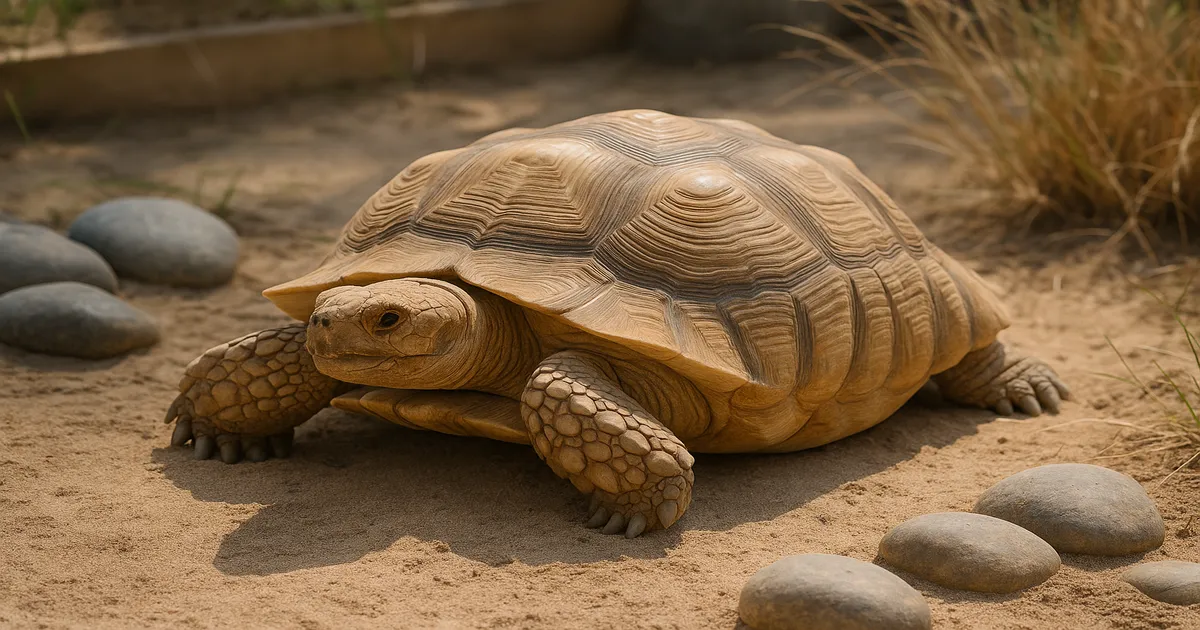
Quick Answer: A healthy sulcata tortoise has bright, clear eyes, a hard shell that sounds solid when tapped, steady weight gain, and moves purposefully in the morning. Sunken eyes, open-mouth breathing, or a hollow sound when you knock on the shell aren’t “wait and see” situations — they’re same-day veterinary emergencies.
Asking “does my sulcata tortoise look healthy?” is one of the smartest things you can do as a keeper. These animals are remarkably good at hiding illness, and by the time a sulcata looks sick, the problem has usually been brewing for weeks. A regular, systematic health check is what separates keepers who catch problems early from those who end up with a serious — and expensive — crisis on their hands.
Does My Sulcata Tortoise Look Healthy? The Five-Second Visual Check
When you walk past the enclosure during active hours, you should see:
- Eyes: Fully open, bright, and tracking movement
- Shell: Hard, smooth, no soft spots or strong odor
- Posture: Head and limbs extended, not tucked
- Movement: Purposeful, not stumbling or dragging
- Feces: Dark green-brown and firm, white or off-white urates
That’s your baseline. If something looks off, the sections below will help you figure out how serious it is.
When to Act Immediately vs. Monitor Closely
Some things warrant a vet call today. Others you can watch for 24–48 hours while you improve husbandry.
Call a reptile vet immediately if you see:
- Open-mouth breathing
- Sunken eyes combined with lethargy
- A hollow sound when you knock on the shell
- Blood in the feces
- The tortoise can’t right itself after being placed on its back
Monitor closely and reassess in 24 hours:
- Slightly reduced appetite with no other symptoms
- Mild nasal discharge immediately after soaking
- Less activity than usual on a single day
Head-to-Tail Health Assessment
Eyes
A healthy sulcata’s eyes are open, bright, and reactive — the animal should notice you approaching and respond. Closed eyes during morning or afternoon active periods are a red flag, not a personality quirk. Sunken eyes specifically suggest dehydration, and combined with lethargy, they’re urgent.
A tiny bit of clear fluid after soaking is normal. Persistent bubbling, thick discharge, or anything yellow or green from the nostrils means respiratory infection.
Nose
The nostrils should be clean and dry between soaks. Clear moisture right after a soak isn’t concerning. Bubbles at rest, or any colored discharge, is respiratory trouble. Sulcatas are prone to respiratory infections when kept too cool or too humid — and by the time you see nasal discharge, the infection is usually already established.
Shell: The Knock Test, Pyramiding, and Soft Spots
Knock on the carapace with a knuckle. A healthy shell sounds dense and solid — almost like knocking on hardwood. A hollow or thudding sound in a localized area can indicate shell rot beneath the surface or an abscess, even when the exterior looks fine.
Pyramiding — the raised, peaked appearance of individual scutes — isn’t an acute emergency, but it’s a record of past husbandry mistakes, usually excess protein, overfeeding, or low humidity during growth. It can’t be reversed, but it can be stopped. If your tortoise is still growing and pyramiding is getting worse, something in the current setup needs to change.
Soft spots anywhere on the shell are serious. Combined with rubbery limbs, they point strongly to metabolic bone disease (MBD).
Limbs, Neck, and the Righting Reflex
When your sulcata is active, its legs should look firm and muscular. Flaccid or rubbery limbs are a major warning sign for MBD or severe dehydration. Touch the head gently — the neck should retract with noticeable resistance. A weak, slow retraction means the animal doesn’t have the muscle tone it should.
The righting reflex test is simple and reliable: place your tortoise on its back on a flat surface. A healthy sulcata rights itself within 30–60 seconds using strong, deliberate leg and neck movements. A sick or weakened animal will struggle or fail entirely. I use this whenever I’m not sure if an animal is off — it tells you a lot about overall strength and neurological function in under a minute.
Feces and Urates
Healthy feces from a grass-fed sulcata are firm, well-formed, and dark green to brown. Runny, pale, mucus-coated, or blood-tinged stool all warrant veterinary attention.
The urates — the white chalky portion of the urine — should be white to off-white. Yellow or orange urates signal dehydration or kidney stress. They’re easy to miss if you’re not actively looking, so make a habit of checking every time you soak.
Behavioral Health Indicators
The Morning Walk
This is the observation most keepers skip, and it’s the most valuable one. Spend 10 minutes watching your tortoise in the first hour after lights come on or after sunrise. A healthy sulcata should be moving — heading toward food, toward the basking spot, or actively exploring.
An animal still huddled in its hide, eyes half-closed, showing no interest in food or basking during its most active window? Pay attention to that.
Normal Activity vs. Concerning Lethargy
Sulcatas are most active in the morning and late afternoon and genuinely do rest during the hottest part of the day. Midday inactivity in a warm enclosure is completely normal. Extended inactivity in cool conditions is not. A torpid, non-eating sulcata in a cool enclosure isn’t resting — it’s in distress.
Open-Mouth Breathing
Open-mouth breathing in a sulcata, outside of brief panting right after intense activity, is a veterinary emergency. It means the animal is struggling to get enough oxygen — typically a sign of serious respiratory infection. Don’t wait to see if it improves. Call your vet today.
Sulcatas Don’t Hibernate — Ever
Sulcatas do not brumate. They’re not physiologically built for it. They come from the Sahel, a region that doesn’t get cold enough to trigger brumation. If your sulcata slows down dramatically or stops eating in cooler months, the enclosure temperature has dropped too low. That’s a husbandry emergency, not natural behavior. Get the animal warm immediately.
Tracking Growth and Weight
Weigh juveniles weekly and adults monthly using a digital kitchen or postal scale. Place the tortoise in a clean plastic container, zero out the container weight, and log the number. It takes 90 seconds and it’s one of the most useful health tools you have.
What you’re watching for is the trend, not any single number. Consistent gains are good. A plateau over several weeks is worth investigating. A loss of more than 5–10% of body weight without a clear explanation means it’s time to call your vet.
Rapid weight gain isn’t automatically good news either. If a juvenile is gaining fast and you’re also seeing pyramiding develop, the diet is almost certainly too rich. Pull back on greens and protein, lean into grass and hay, and slow the growth down. A sulcata that grows a little slower with a smooth shell is in far better shape long-term than one that rockets up in weight with a lumpy carapace.
Husbandry Foundations That Directly Affect Health
Temperature
For indoor setups, you need:
- Basking spot (at shell level): 95–100°F (35–38°C)
- Ambient warm side: 85–90°F (29–32°C)
- Cool side: 75–80°F (24–27°C)
- Nighttime minimum: 65–70°F (18–21°C) for juveniles; adults can handle brief dips to 60°F (15°C) but it shouldn’t be routine
Verify these with a temperature gun rather than relying on ambient thermometers, which routinely miss what’s actually happening at shell level. (Etekcity Lasergrip 774)
UVB Lighting
Inadequate UVB is the single most common cause of MBD in captive sulcatas. A hardware store “reptile bulb” produces no meaningful UVB — it’s a regular bulb with a colored coating. You need a dedicated reptile UVB fixture. For most indoor setups, a T5 HO 12% UVB tube is the standard. Replace bulbs every 6–12 months even if they’re still producing visible light, because UVB output degrades long before the bulb burns out.
Humidity
Sulcatas are arid animals. Ambient enclosure humidity should sit at 30–50%. But they still need a humid hide at 50–70%, because in the wild they dig burrows where the microclimate is much more humid. Arid ambient conditions with a humid retreat available — that’s the goal.
Chronic high ambient humidity causes respiratory infections and shell rot. If you’re in a naturally humid climate, this is something to actively manage.
Diet
The diet should be 80–90% grasses and hays — Bermuda grass, Timothy hay, orchard grass. Outdoor grazing on safe grass is genuinely the best thing you can feed a sulcata. Opuntia cactus pads are an excellent supplement: high in fiber, moisture, and calcium.
High-protein feeding — even from sources that seem natural, like legumes or excessive leafy greens — causes pyramiding, kidney damage, and eventually gout. Fruit is high in sugar and should be avoided almost entirely. Commercial tortoise pellets as a dietary staple aren’t appropriate for this species.
Soaking
Soak juveniles 2–3 times per week in shallow lukewarm water (85°F / 29°C) for 20–30 minutes. Adults benefit from weekly soaks or access to a shallow wading pool. Soaking supports urate production, shell hydration, and gut motility — you’ll often see feces and urates expelled during or right after a soak, which makes it a good time to assess both.
Enclosure
Glass aquariums cause poor airflow, create stress through reflections (sulcatas will pace the glass endlessly), and are outgrown faster than most people expect. An open-top tortoise table or a PVC panel enclosure is a far better choice from the start.
Does My Sulcata Tortoise Look Healthy? Common Problems to Know
Metabolic Bone Disease (MBD): Caused by inadequate UVB, calcium deficiency, or both. Signs include a soft or flexible shell, rubbery limbs, deformed shell growth, and difficulty walking. In juveniles it can cause permanent skeletal damage within months. Prevention is straightforward — proper UVB and calcium supplementation. Treatment requires a vet.
Respiratory Infections: Usually caused by chronic cold temperatures or excessive humidity. By the time you see nasal discharge, wheezing, or open-mouth breathing, the infection is established. These don’t resolve on their own.
Shell Rot: Often starts beneath the surface before you can see it. The knock test is your early warning system. Visible signs include soft spots, discoloration, and a foul smell. Caught early, it’s manageable. Caught late, it’s a serious problem.
Dehydration: More common than most keepers realize, especially in animals kept indoors without regular soaking. Watch for sunken eyes, dry wrinkled skin around the neck and limbs, and yellow or orange urates. Regular soaking prevents most cases before they start.
When to See a Reptile Vet
Symptoms That Require Same-Day Contact
- Open-mouth breathing
- Persistent colored or bubbly nasal discharge
- Failure to right itself during the righting reflex test
- Hollow sound when knocking on the shell
- Blood-tinged feces
- Orange or yellow urates combined with lethargy
- Complete refusal to eat for more than 2–3 weeks
- Sudden or significant unexplained weight loss
Find a vet who is a member of the Association of Reptile and Amphibian Veterinarians (ARAV) or who specifically lists chelonians in their specialties. General practice vets often have limited reptile experience — it’s worth the extra drive to see someone who actually knows tortoises.
Before the appointment, soak your tortoise for 30 minutes in lukewarm water. It aids hydration, stimulates urination so the vet can assess urate color, and makes blood draws easier. Bring photos or video of any concerning behavior — stress often suppresses symptoms in a clinical setting, and documentation helps.
Frequently Asked Questions
What does a healthy sulcata tortoise shell look like?
Hard, smooth, and evenly colored with no soft spots, unusual odor, or significant discoloration. Minor variation between scutes is normal. Pyramiding — raised, peaked scutes — indicates a history of protein excess or low humidity during growth. It’s not an acute emergency, but it means something in the husbandry was off.
Why are my sulcata tortoise’s eyes closed during the day?
Closed eyes during midday rest in a warm enclosure can be normal. Closed eyes during morning or afternoon active periods — especially combined with lethargy or a sunken appearance — are a red flag. The most common causes are dehydration, infection, or vitamin A deficiency. If your tortoise isn’t perking up within a day of improved hydration and temperatures, see a vet.
Is pyramiding on a sulcata tortoise a sign of illness?
Not an acute illness, but not purely cosmetic either. Pyramiding is a physical record of past husbandry problems — typically excess dietary protein, overfeeding, or chronically low humidity during growth. It can’t be reversed, but correcting the husbandry stops it from progressing. If a young tortoise is actively pyramiding, something in the current setup needs to change.
How do I know if my sulcata tortoise is dehydrated?
The most reliable signs are sunken eyes, dry and wrinkled skin around the neck and front limbs, and yellow or orange urates instead of the normal white. A dehydrated sulcata will also often be less active and may refuse food. Increase soak frequency immediately and contact a vet if signs don’t resolve within a few days.
How often should I weigh my sulcata tortoise to monitor health?
Weekly for juveniles, monthly for adults. Use a digital scale, log every reading, and watch the trend over time. A loss of more than 5–10% of body weight without a clear explanation is a vet call.