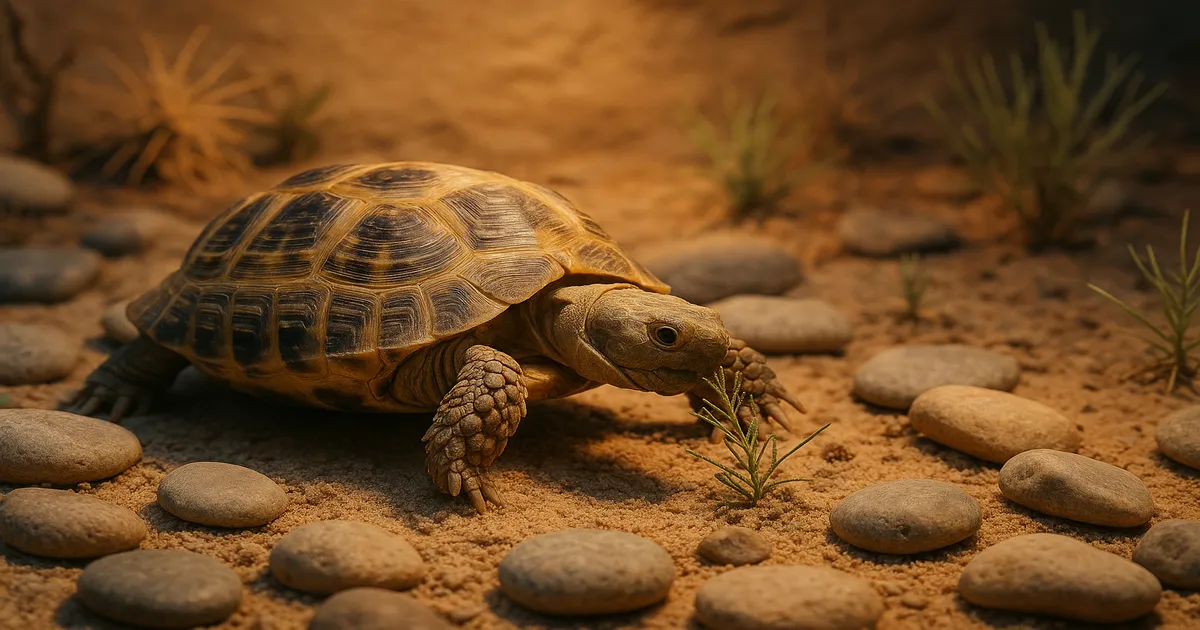
Quick Answer: Russian tortoises need a 4×4 ft minimum enclosure with a 95–105°F basking spot, a T5 HO 10–12% UVB bulb, and a high-fiber diet of grasses and leafy weeds. They’re hardy, forgiving of beginner mistakes, and genuinely rewarding to keep — but with a lifespan pushing 75–100 years, they’ll outlast most pets you’ll ever own.
Russian tortoises (Testudo horsfieldii) are one of the most popular tortoise species in the hobby, and it’s easy to see why. They’re small enough to keep indoors, tough enough to survive a new keeper’s learning curve, and packed with personality for an animal that can’t wag a tail. But knowing how to care for a Russian tortoise properly is a different thing from keeping one alive. There’s a real gap between “surviving” and “thriving,” and this guide is about closing it.
Russian Tortoise Care at a Glance
Species Snapshot
| Feature | Detail |
|---|---|
| Scientific name | Testudo horsfieldii |
| Adult size | 6–10 inches (15–25 cm); females larger |
| Lifespan | 40–100+ years |
| IUCN status | Vulnerable |
| Unique ID feature | Four toes (most tortoises have five) |
| Native range | Afghanistan, Kazakhstan, Uzbekistan, Iran, and surrounding arid steppes |
Always source captive-bred animals. Wild-caught Russian tortoises are still available in some markets, but they typically arrive with heavy parasite loads and the stress of capture — and given their Vulnerable conservation status, there’s no good reason to go that route when captive-bred animals are easy to find.
Essential Care Requirements
- Enclosure: 4×4 ft minimum for one adult; 4×8 ft recommended
- Basking temp: 95–105°F (35–40°C) surface temperature
- UVB: T5 HO 10–12% bulb (Arcadia 12% or Zoo Med Reptisun 10.0)
- Humidity: 30–50% ambient; slightly higher inside hides
- Diet: High-fiber grasses, weeds, and leafy greens — no fruit, no protein
- Lifespan: Plan for decades, not years
Understanding the Russian Tortoise: Natural History and Why It Matters
These animals come from genuinely harsh places — rocky hillsides and arid steppes across Central Asia where summers are scorching and winters are brutal. That context makes captive care decisions a lot easier to reason through. Low humidity? That’s home. Deep substrate? In the wild they dig burrow systems up to 6–8 feet long. High basking temperatures? They need them to digest food and run their immune system.
One thing that surprises a lot of new keepers: Russian tortoises may only be actively foraging for 3–4 months per year in the wild. They brumate (hibernate) through winter cold and aestivate (go dormant) through peak summer heat. This dual dormancy is hardwired, and it has real implications for captive management — particularly around hibernation, which I cover in the FAQ.
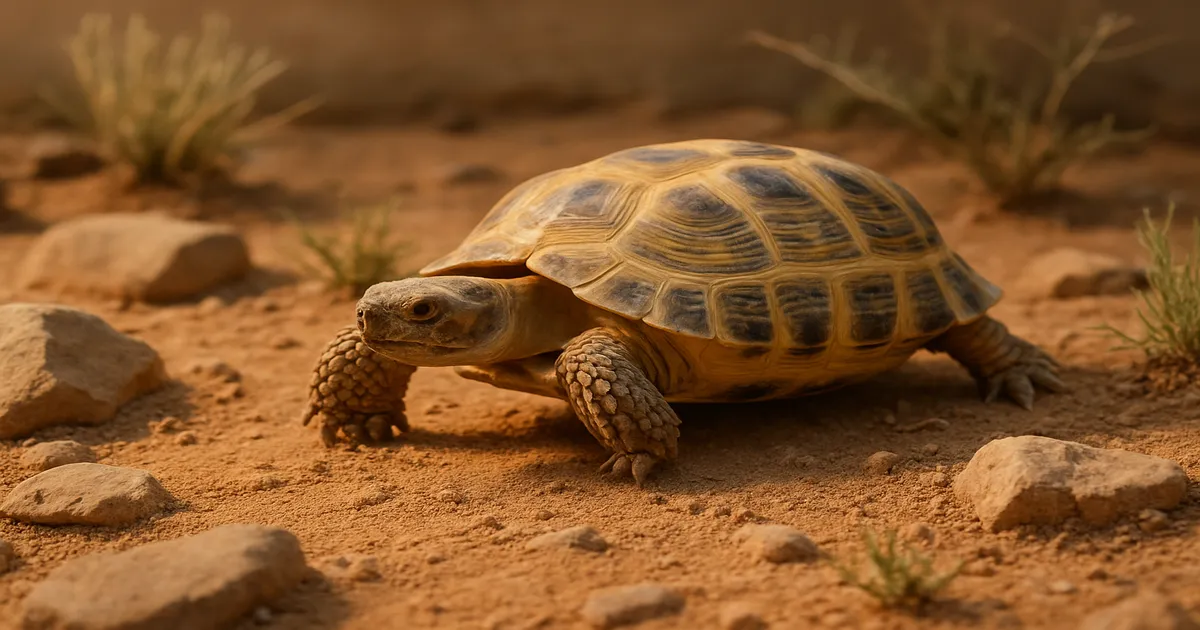
Sexing: Females typically run 8–10 inches and are noticeably larger than males, which stay closer to 6–8 inches. Males have longer tails with the cloacal opening farther from the body. Shell color ranges from olive-brown to tan, often with dark markings that fade with age. The four-toed feet are your quick field ID — most tortoise species have five.
Setting Up a Russian Tortoise Enclosure
Enclosure Types
For indoor keeping, a tortoise table is the right call — an open-top wooden enclosure that provides proper airflow, prevents the glass-surfing stress response you see with aquariums, and gives you easy top-down access. Build one from untreated pine or plywood (seal the interior with a non-toxic waterproof sealant) or buy one commercially.
100–150 gallon stock tanks from farm supply stores are a solid, affordable alternative. Glass aquariums work for hatchlings in a pinch, but move an adult out as soon as you can — the transparent walls create a frustrating loop where the tortoise can see out but can’t escape, and they’ll pace until you fix it.
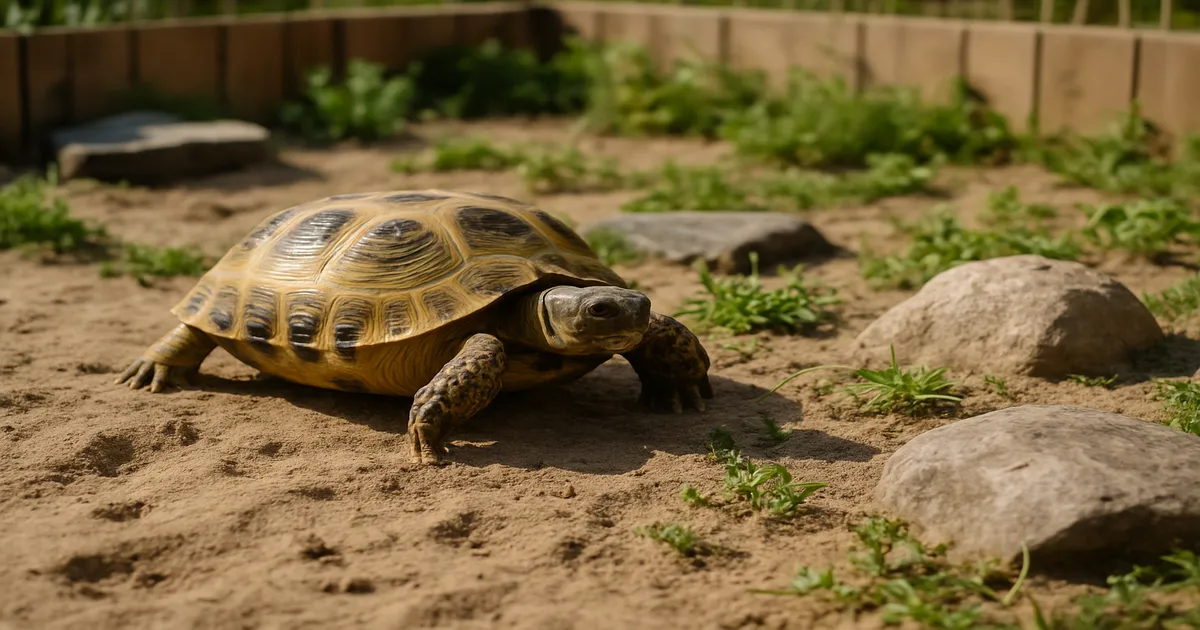
For keepers in USDA zones 6–10, an outdoor enclosure during warm months is genuinely the best thing you can do for an adult Russian tortoise. Use solid walls — wood, concrete block, or brick — at least 16 inches above ground and 6–12 inches below to prevent escapes, with hardware cloth overhead to keep predators out.
Dimensions
- Minimum for one adult: 4×4 ft (roughly 16 sq ft)
- Recommended: 4×8 ft or larger
- Wall height: 12–16 inches minimum — these animals climb better than they look
Substrate
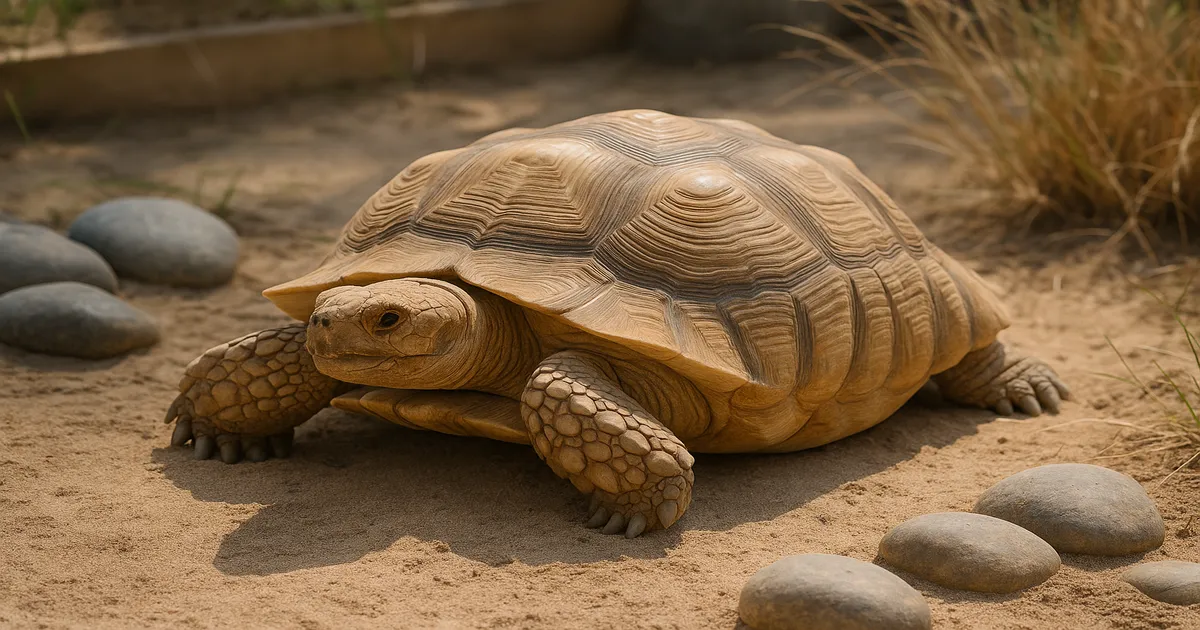
Get this right and you’ll head off a lot of problems before they start. The best mix is 60–70% plain topsoil combined with 30–40% play sand, at a depth of at least 4–6 inches (6–8 inches is better). It holds a burrow shape, drains reasonably well, and lets the tortoise do what tortoises do.
Avoid: pure sand (impaction risk, won’t hold a burrow), calcium sand (dangerous if ingested), cedar or pine shavings (toxic), and reptile carpet (bacteria trap, prevents burrowing, causes abrasions). Coco coir mixed with sand works well in dry climates where you want slightly more moisture retention.
Hides and Decor
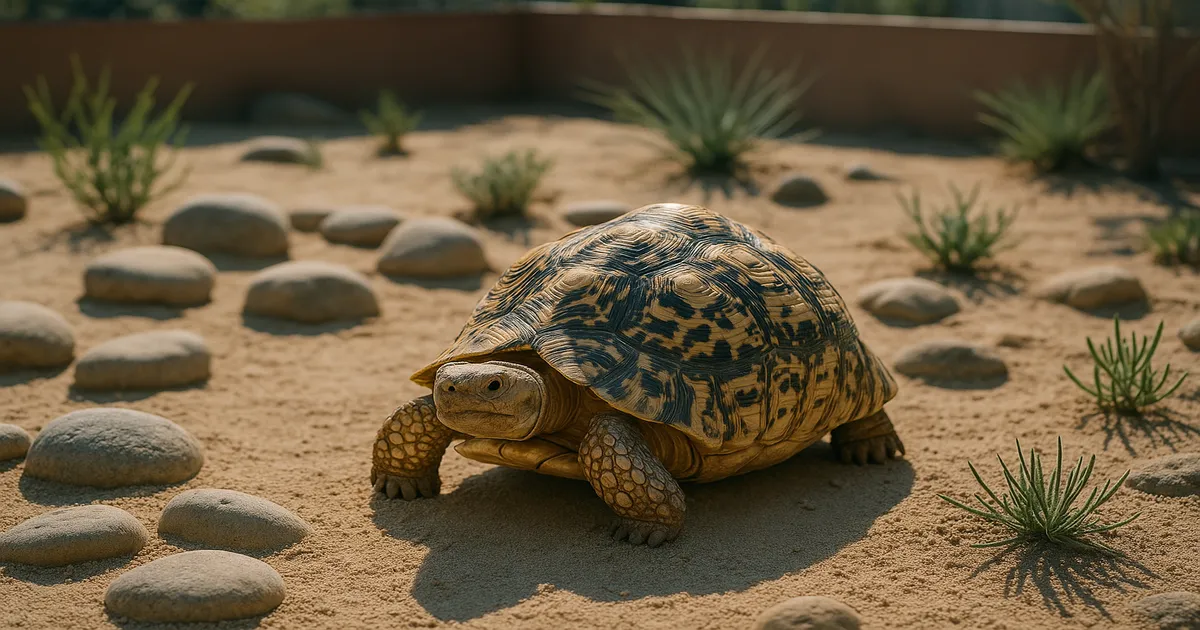
Provide at least two hides — one on the warm side, one on the cool. A snug fit is better than a cavernous one; the tortoise should just be able to turn around. Cork bark flats double as hides and basking platforms. Flat slate or sandstone rocks under the basking lamp absorb heat and help naturally wear down the beak and nails over time.
Keep a shallow, heavy ceramic water dish at the cool end. If you can, plant edible species directly in the enclosure — dandelion, clover, and plantain are easy to grow and give the tortoise something meaningful to do besides pace.
Temperature, Lighting, and Humidity
Thermal Gradient
Russian tortoises shuttle between warm and cool zones all day to manage body temperature, digestion, and immune function. A single uniform temperature doesn’t work. Here’s what you’re aiming for:
| Zone | Target Temperature |
|---|---|
| Basking surface | 95–105°F (35–40°C) |
| Warm side ambient | 80–90°F (27–32°C) |
| Cool side ambient | 70–75°F (21–24°C) |
| Nighttime low | 60–65°F (15–18°C) |
Always measure basking temps with an infrared temperature gun aimed at the substrate surface — that’s what the tortoise is actually sitting on. Air temperature readings are nearly meaningless here.
UVB Lighting
No UVB means no vitamin D3 synthesis, no calcium metabolism, and eventually metabolic bone disease. I’ve seen it happen to tortoises that were otherwise well cared for, just because the keeper assumed a regular bulb was enough. It isn’t.
Russian tortoises are Ferguson Zone 3 animals, which means they need meaningful UV exposure. Use a T5 HO bulb rated at 10–12% UVB. Mount it 10–14 inches from the shell surface, span it across at least 50–75% of the enclosure length, and replace it every 6–12 months regardless of whether it still glows — UV output degrades long before visible light fails. The Zoo Med Reptisun 10.0 T5 HO is a solid alternative if the Arcadia isn’t available.
One critical point: UVB does not penetrate glass. A bulb shining through a glass lid is essentially decorative.
Basking Lamp
Halogen PAR38 flood bulbs (75–150W depending on your setup) are the keeper community’s current preferred option — broad-spectrum output, easy to find, cheap to replace. A standard GE or Philips PAR38 halogen flood works perfectly. Mercury vapor bulbs like the Zoo Med PowerSun combine UVB and heat in one unit, but I find the separate-bulb setup easier to dial in and replace independently.
Humidity and Photoperiod
Keep ambient humidity between 30–50%. Chronic high humidity leads to respiratory infections and shell rot — these are desert animals. A slightly damp hide (50–60%) mimics the moisture that wild burrows retain, which is fine. Don’t mist the enclosure.
Run 12–14 hours of light in summer and 10–12 hours in winter. A simple outlet timer handles this automatically and supports natural behavioral cycling.
Feeding Your Russian Tortoise
What to Feed
The wild diet is almost entirely high-fiber, low-protein, low-sugar plants — and that should guide everything you offer in captivity. The bulk of the diet (80–90%) should come from:
- Timothy hay and orchard grass (excellent for fiber and beak wear)
- Dandelion leaves and flowers
- Plantain (Plantago spp. — not the banana relative)
- Clover
- Endive and escarole
- Mustard greens
Round things out with dark leafy greens for variety (10–20%): collard greens, turnip greens, kale in moderation, spring mix without spinach.
What to Avoid
- Fruit — the strawberry-feeding photos you see everywhere are doing real harm; fruit causes gut dysbiosis, obesity, and is linked to pyramiding
- Animal protein (dog food, cat food, mealworms) — causes kidney damage over time
- Spinach, beet greens, chard — high oxalates bind calcium and block absorption
- Iceberg lettuce — no nutritional value, just displaces better food
- Commercial pellets as a staple — too high in protein; fine as an occasional supplement, not a primary food
Supplements and Hydration
Dust food with calcium carbonate (without D3 — your UVB is handling that) two to three times per week. Keep a cuttlebone in the enclosure for self-supplementing. A multivitamin every two to four weeks covers any gaps.
Feed adults every one to two days; hatchlings daily. Offer what they’ll eat in about 20–30 minutes, then remove the rest.
Soak adults once or twice a week and hatchlings two to three times a week in lukewarm water (85–90°F), no deeper than the tortoise’s chin, for 15–20 minutes. Tortoises absorb water through their cloaca, and regular soaking is one of the most underrated parts of proper care.
Common Russian Tortoise Care Mistakes
Enclosure too small. A 10-gallon tank is never appropriate, even for a hatchling past its first few months. Inadequate space causes chronic stress, pacing, and suppressed immune function. If your tortoise is glass-surfing constantly, it’s telling you something.
UVB errors. The three most common: no UVB at all, using an underpowered T8 6% bulb, and shining UVB through a glass lid. Any one of these leads to metabolic bone disease over time. Set a calendar reminder to replace your bulb every six months — don’t wait for it to burn out.
Feeding fruit. Stop. I know the photos look wholesome, but it genuinely causes problems. Excess high-water-content vegetables like romaine and cucumber aren’t toxic, but they dilute fiber intake and cause loose stools.
Over-handling. Limit handling to 10–15 minutes a few times a week. Russian tortoises aren’t social animals and don’t enjoy being picked up — chronic handling suppresses their immune system. They’ll tolerate you. That’s not the same as enjoying it.
Skipping brumation. Keeping a Russian tortoise warm and active year-round is an easy mistake with slow consequences. Skipping brumation may negatively affect long-term health and reproductive cycling. If you haven’t researched the process yet, do it before your tortoise’s first winter — it requires a proper cool-down protocol, not just sticking the animal in a cold garage.
Never house two males together. The aggression is serious and injuries happen fast.
Frequently Asked Questions About Russian Tortoise Care
How long do Russian tortoises live?
Commonly 40–50 years in captivity, and well-cared-for individuals can reach 75–100 years or more. This is one of the most important things to understand before getting one — you’re making a multi-decade commitment, and you should have a plan for what happens to the animal if your circumstances change.
Do Russian tortoises need to hibernate?
They don’t absolutely require it to survive, but skipping brumation entirely may affect long-term health and reproductive cycling. If you plan to attempt it, research the proper cool-down and warm-up protocol carefully — done incorrectly, it can be fatal.
What do Russian tortoises eat?
The core diet is high-fiber grasses and weeds: timothy hay, dandelion, plantain, clover, endive, escarole, and mustard greens. Dark leafy greens like collard and turnip greens round things out. Avoid fruit, animal protein, spinach, and commercial pellets as a staple. The wild diet is low-sugar and low-protein — captive feeding should reflect that.
How big does a Russian tortoise enclosure need to be?
Minimum 4×4 ft for one adult, but 4×8 ft is a much better target. These animals are more active than most people expect and need room to thermoregulate properly. There’s no such thing as an enclosure that’s too large.
Can Russian tortoises live outside?
Yes, and in warm climates it’s genuinely the best option for their health. Natural sunlight is still the best UVB source available, and the behavioral enrichment of a real outdoor environment is hard to replicate inside. If you’re in USDA zones 6–10, an outdoor enclosure during warm months is worth building. Just make sure the walls extend underground — these animals will dig out if you give them the chance.