Quick Answer: Eastern mud turtles need a 40-gallon breeder tank with shallow water (4–8 inches), a moist land area for burrowing, UVB lighting, and strong filtration. They’re small but incredibly long-lived — we’re talking 30–50+ years — so this is a serious commitment. Get the setup right from day one and they’re rewarding, fascinating little turtles.
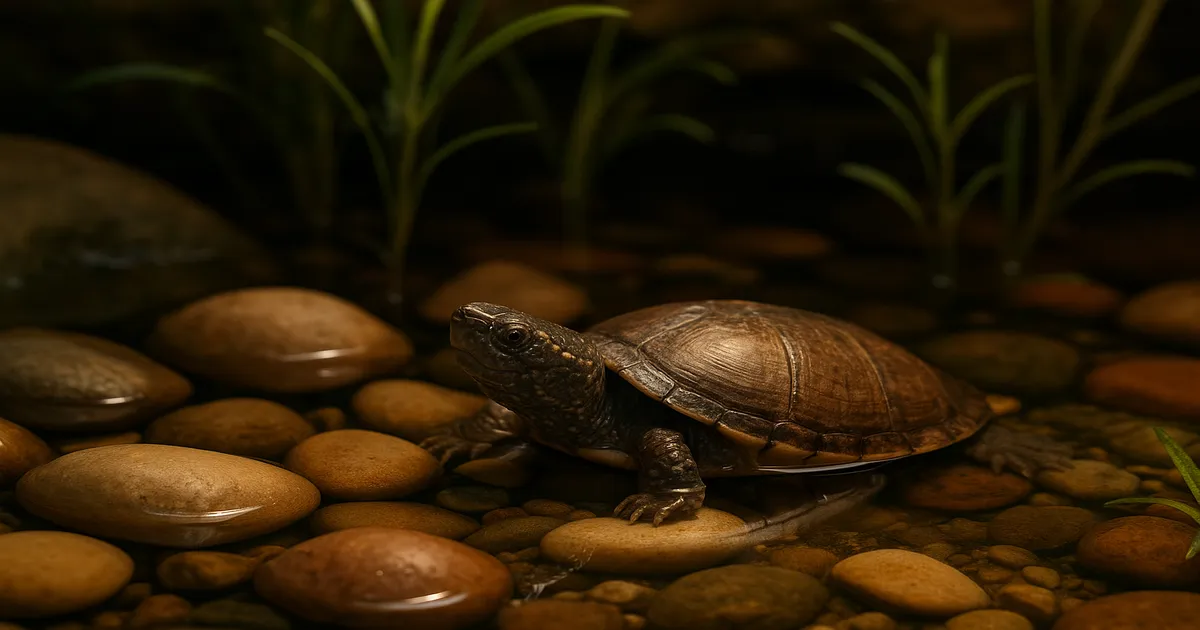
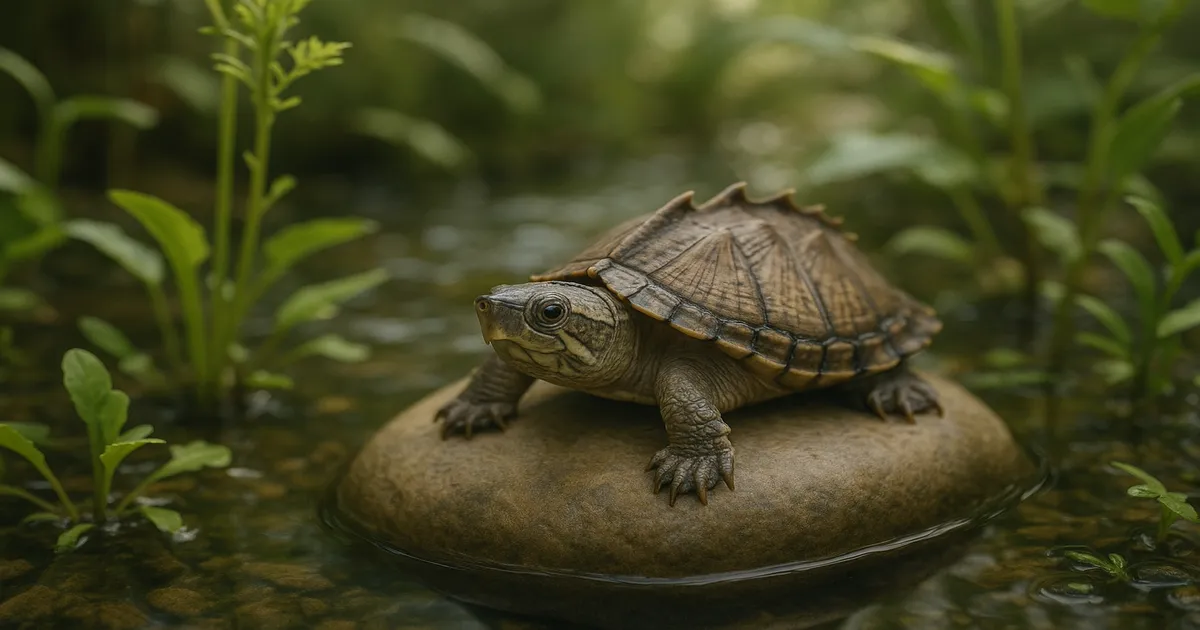
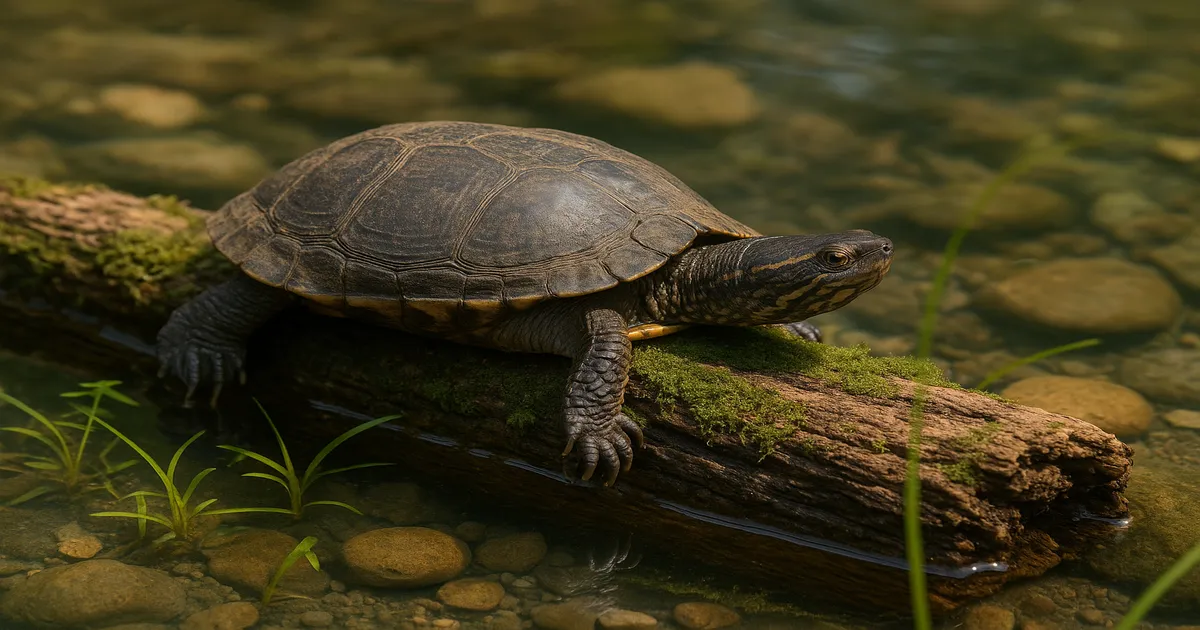
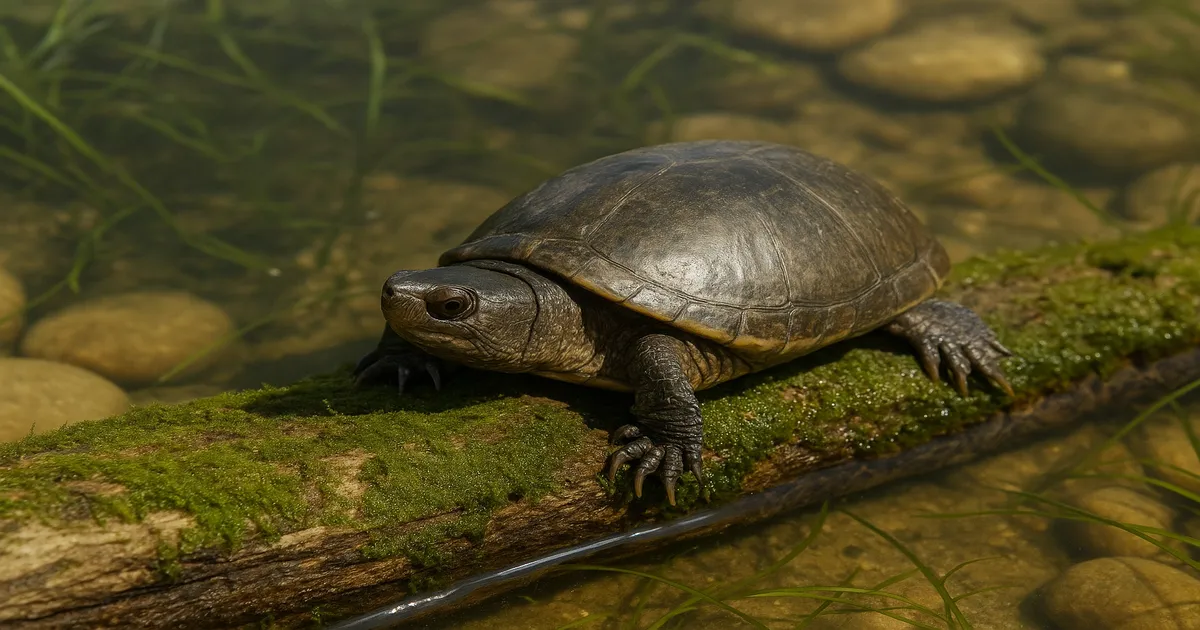
If you’re researching how to care for eastern mud turtles (Kinosternon subrubrum), you’ve landed on one of North America’s most underrated pet turtles. They max out around 4.5 inches, have a double-hinged plastron that lets them close up like a little box, and they’re far more terrestrial than most people expect. That last part trips up a lot of new keepers — these aren’t fill-the-tank-with-water turtles like red-eared sliders.
One thing to sort out before you buy: eastern mud turtles are listed as Species of Greatest Conservation Need in several states. They’re legal to keep in most places, but check your local regulations first.
Eastern Mud Turtle Care at a Glance
Eastern mud turtles are small — adults typically reach 3–4.5 inches (7.6–11.4 cm) — but don’t let that fool you into thinking they’re low-maintenance starter pets. They regularly live 30–50+ years in captivity. That’s a longer commitment than most dogs.
In the wild, they inhabit shallow, slow-moving water across the southeastern U.S.: marshes, swamps, flooded ditches, muddy ponds. They rarely venture into water deeper than 24 inches, which tells you something important about enclosure setup. They’re also surprisingly terrestrial — wild individuals wander hundreds of yards from water, especially on warm rainy nights.
Are they right for you? They’re not the most handleable turtle, and they’re not going to swim laps for your entertainment. What they will do is burrow, forage, and occasionally turn up on the land side of the enclosure at 2 a.m. doing something you can’t explain. If you find that genuinely interesting rather than disappointing, they’re a great fit.
How to Care for Eastern Mud Turtles: Enclosure Setup
Tank Size by Age and Group Size
- Hatchlings: A 10-gallon (38L) works to start, but plan to upgrade within the first year
- Single adult: A 40-gallon breeder (36” × 18” × 16”) is the sweet spot — a 20-gallon long is a functional minimum, but you’ll fight water quality constantly
- Pair or trio: 75-gallon (284L) minimum; males get aggressive during breeding season and need space and visual barriers
Water Depth: The Most Important Thing to Get Right
Eastern mud turtles are poor swimmers. They can and do drown in deep water if they can’t surface easily.
- Adults: 4–8 inches (10–20 cm)
- Hatchlings: Shell height plus 1 inch — that’s it
I’ve seen people set these up like slider tanks with a foot of water and wonder why their turtle is stressed or refusing to eat. Keep it shallow.
Land Area and Burrowing Space
At least 25–30% of the total floor space should be a true land area — not a floating dock, but actual ground they can walk on, dig into, and fully dry off on. This is non-negotiable for long-term health.
The terrestrial substrate needs to be moist enough to hold a burrow shape but not waterlogged. A depth of 3–4 inches (7.6–10 cm) gives them room to actually bury themselves, which they absolutely will.
Substrate
Aquatic zone: Fine aquarium sand, 2–3 inches deep. Bare-bottom tanks stress these turtles out — they’re natural burrowers.
Terrestrial zone: Coconut fiber (coir), organic topsoil, or a 50/50 topsoil and play sand mix. Keep it moist, not wet.
Avoid: Gravel in the 3–15mm range (impaction risk), cedar or pine substrates (toxic), and calcium sand (causes impaction and throws off water chemistry).
Hides and Enrichment
Eastern mud turtles are secretive. A stressed mud turtle is one with nowhere to hide. Give them options on both sides of the enclosure — terra cotta pot halves, cork bark tubes, PVC pipe sections, driftwood. (Zoo Med Habba Hut) Live plants like hornwort and anacharis provide cover and help buffer water quality. Driftwood makes great visual barriers and partial basking surfaces — boil or bake it before adding it to the tank.
Temperature and Lighting
Water Temperature
Optimal water temperature is 72–78°F (22–26°C). Below 65°F (18°C) they’ll stop eating and go lethargic; above 85°F (29°C) you’re looking at heat stress and elevated infection risk.
Use a quality submersible heater and verify with a separate thermometer — never trust the heater’s dial alone. Titanium heaters are worth the extra cost because turtles can and do crack glass heaters.
Basking and Ambient Air Temperatures
- Basking spot: 88–95°F (31–35°C)
- Ambient air: 75–82°F (24–28°C)
A 50–75W halogen flood bulb in a ceramic dome fixture does the job well. Halogen produces better heat penetration than standard incandescent and a more natural light spectrum.
Worth knowing: mud turtles are less dedicated baskers than sliders or map turtles. Don’t panic if yours spends more time sitting in shallow warm water than climbing out to bask. That’s normal for this species.
UVB Lighting
Some people assume that because mud turtles live in murky, shaded water, they don’t need UVB. They’re wrong. Wild turtles get incidental UV exposure even in shaded environments, and captive turtles without it will develop metabolic bone disease — soft shells, skeletal deformities, shortened lifespan.
Use a T5 HO UVB 5.0 or 10.0 bulb covering at least half the enclosure length, positioned 10–15 inches (25–38 cm) from the basking surface. Replace it every 6–12 months — UV output degrades long before the bulb stops producing visible light.
Photoperiod
Run 12–14 hours of light in summer, dropping to 10–11 hours in winter. Seasonal variation matters for feeding regularity, long-term metabolic health, and reproductive cycling. It’s easy to skip and you won’t see the consequences for years — by which point real damage is done.
Water Quality and Filtration
Over-Filter Everything
Turtles produce dramatically more waste than fish. A filter rated for your actual water volume will be overwhelmed within days. The standard recommendation is a filter rated for 2–3× your actual water volume — lean toward the higher end.
Canister filters are the best option for turtle setups: equipment stays outside the tank, and they provide excellent mechanical, biological, and chemical filtration. A hang-on-back like an AquaClear 70 works in a pinch but won’t match canister performance long-term.
Water Parameters
- Ammonia: 0 ppm — always
- Nitrite: 0 ppm — always
- Nitrate: Below 20 ppm ideally; below 40 ppm acceptable
- pH: 6.5–7.8
Use a liquid test kit, not strips. Strips are notoriously inaccurate. And cycle your tank before adding the turtle — putting a turtle into an uncycled tank is one of the fastest ways to end up with a sick animal.
Water Changes and Dechlorination
Do a 25–30% water change weekly at minimum. If nitrates are climbing faster, change more. Always dechlorinate tap water before it goes in — Seachem Prime is the go-to because it also temporarily detoxifies ammonia and nitrite in emergencies.
Feeding Your Eastern Mud Turtle
Diet
Eastern mud turtles are opportunistic omnivores. In the wild they eat snails, worms, aquatic insects, small fish, tadpoles, carrion, and plant matter. In captivity, a quality commercial turtle pellet should form the base of the diet, supplemented with aquatic invertebrates (snails, bloodworms, earthworms), leafy greens, and the occasional small fish or tadpole.
Go easy on high-protein items. Feeder fish and mealworms are fine occasionally, but they shouldn’t be the main event.
Feeding Frequency
- Hatchlings and juveniles: Every other day
- Adults: 2–3 times per week
- Portion size: Roughly the volume of the turtle’s head
Overfeeding is one of the most common problems with captive mud turtles. Obesity leads to shell pyramiding, fatty liver disease, and degraded water quality. When in doubt, feed less.
The Separate Feeding Tub
This is the single biggest quality-of-life upgrade for keeping any kinosternid. Fill a plastic bin with 2–3 inches of warm water, drop the turtle in, let it eat, then return it to the main enclosure. Your filter will last longer and your water change schedule becomes much more manageable.
Calcium and Vitamin Supplementation
Dust food items with a calcium supplement a few times per week. Rep-Cal Calcium with D3 or Repashy Calcium Plus both work well. If your UVB setup is solid, you can ease off the D3 somewhat, but I wouldn’t skip it entirely for turtles kept indoors.
Common Eastern Mud Turtle Care Mistakes
Filling the tank too deep. Deep water is a drowning risk. Adults at 4–8 inches, hatchlings at shell height plus 1 inch.
Under-filtering. A filter rated for your actual tank volume isn’t enough. Go 2–3× and test your water weekly until the tank is fully cycled.
Skipping UVB. MBD develops slowly and silently. By the time you see soft shell or skeletal issues, the damage is already done.
No real land area. A floating dock isn’t a land area. Chronic inability to emerge leads to shell rot and ongoing stress.
Overfeeding. Adults 2–3 times per week, not daily. Pyramiding and fatty liver disease are common in overfed captive turtles and almost entirely preventable.
Ignoring seasonal cycling. Same temperature and photoperiod year-round leads to reproductive problems and irregular feeding over time.
Housing with larger species. Red-eared sliders, painted turtles, cooters — all of them will outcompete and injure mud turtles. Keep eastern mud turtles with same-species tankmates or similarly-sized kinosternids only.
Handling, Behavior, and Dormancy
Temperament
These are secretive, somewhat shy turtles. They’re not aggressive like snapping turtles, but they can bite if they feel threatened, and they’re strong for their size. Support the full body when handling — don’t dangle them by the shell. Keep sessions short and wash your hands before and after. Some individuals mellow out with regular gentle handling. Others never really do. Don’t take it personally.
Aestivation and Winter Dormancy
This is one of the most interesting things about this species. Wild eastern mud turtles don’t just hibernate in winter — they also aestivate, entering dormancy during hot, dry summer periods. Wild individuals can spend 4–6 months per year buried in soil or leaf litter, sometimes far from any water.
In captivity, you can allow a supervised cool-down in winter by gradually reducing temperatures and photoperiod over several weeks. It’s not strictly required for survival, but it supports long-term metabolic health. Don’t attempt hibernation with a turtle that hasn’t been eating well or shows any signs of illness.
Signs of Stress or Illness
Watch for wheezing or open-mouth breathing (respiratory infection), swollen or closed eyes, soft or foul-smelling shell patches (shell rot), lethargy outside of seasonal dormancy, or refusal to eat for more than 3–4 weeks outside of a planned cool-down. Any of these warrants a visit to a reptile-experienced vet. Small turtles decline fast when something is wrong.
Frequently Asked Questions About Eastern Mud Turtle Care
How deep should the water be for an eastern mud turtle?
Adults do best in 4–8 inches (10–20 cm). Hatchlings should have water no deeper than the height of their shell plus 1 inch. Eastern mud turtles are poor swimmers and can drown in deeper water — this is one of the most common and preventable causes of death in captive mud turtles.
Do eastern mud turtles need UVB lighting?
Yes, absolutely. Without UVB, captive eastern mud turtles can’t synthesize vitamin D3, which leads to metabolic bone disease, soft shells, and skeletal deformities over time. Use a T5 HO 5.0 or 10.0 UVB bulb and replace it every 6–12 months even if it’s still producing visible light.
How long do eastern mud turtles live in captivity?
With proper care, eastern mud turtles regularly live 30–50 years, and some individuals exceed that. Wild turtles have been documented past 40 years. This is a multi-decade commitment — worth taking seriously before you acquire one.
How often should I feed an eastern mud turtle?
Juveniles every other day; adults 2–3 times per week. Portion size should roughly equal the volume of the turtle’s head. Overfeeding is a very common problem and leads to obesity, shell pyramiding, and fatty liver disease.
Can eastern mud turtles live with other turtle species?
Generally, no. They shouldn’t be housed with larger species like red-eared sliders or painted turtles — they’ll be outcompeted for food and basking spots and are at real risk of being bitten. If you want to keep multiple turtles together, stick to same-species groups or other similarly-sized kinosternids, and always provide ample space and hiding spots.