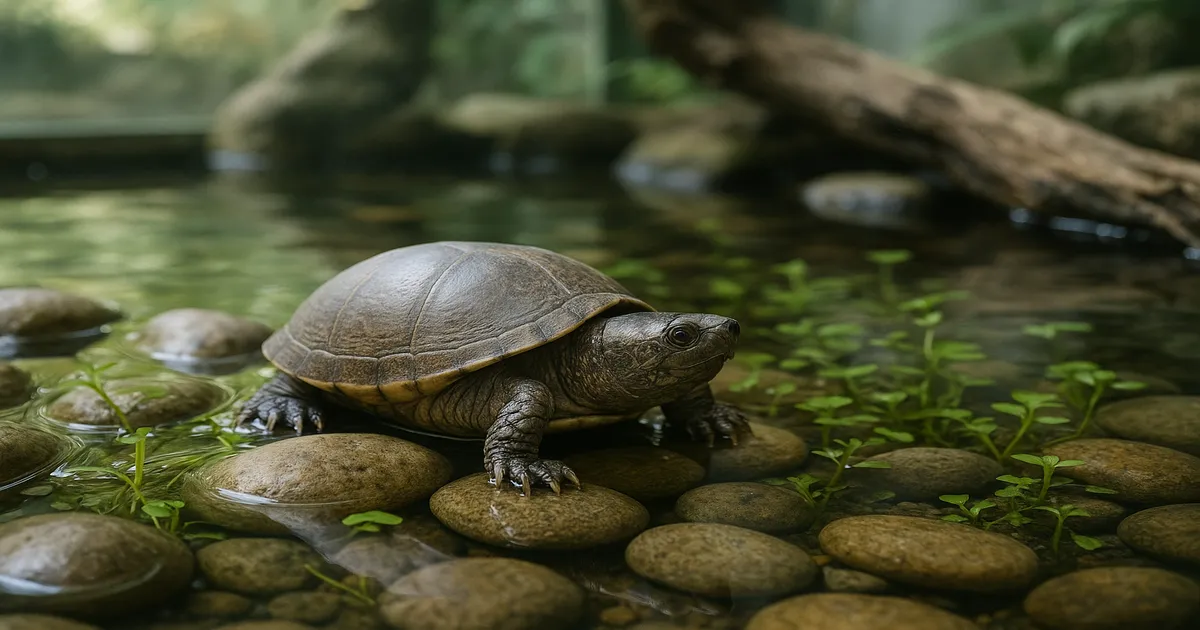
Quick Answer: Mud turtles are opportunistic omnivores that thrive on a rotating diet of commercial pellets, earthworms, snails, and frozen invertebrates. Feed juveniles daily or every other day; adults every 2–3 days. Always feed in a separate container with water warmed to 72–78°F (22–26°C), dust food with calcium supplement regularly, and don’t overfeed — that’s the mistake that trips up most keepers.
Figuring out how to feed a mud turtle is honestly one of the more enjoyable parts of keeping these little guys. They’re enthusiastic, almost comically aggressive eaters, and once you understand what drives their behavior in the wild, the whole thing clicks pretty fast. That said, a handful of mistakes are nearly universal among new keepers — and some of them cause real harm. Here’s everything you need to get it right from day one.
Understanding the Mud Turtle’s Natural Diet
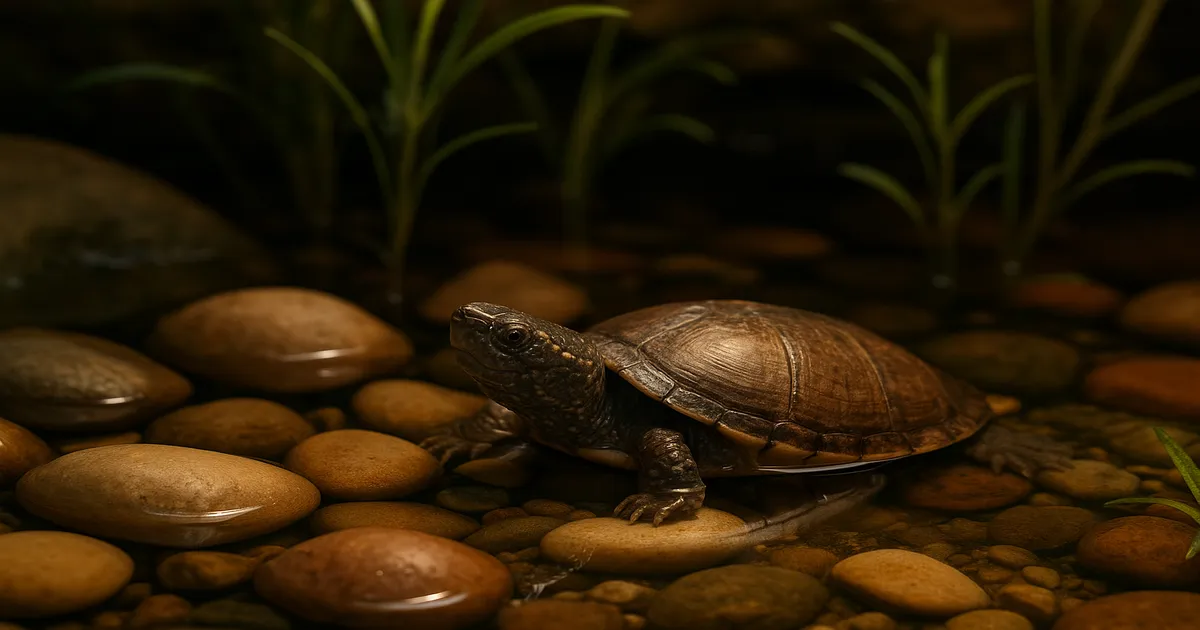
Wild mud turtles (Kinosternon spp.) are bottom-dwelling opportunists. They cruise muddy substrates in shallow ponds, marshes, and roadside ditches, using their excellent sense of smell to track down snails, crayfish, aquatic insects, small fish, carrion, algae — basically whatever’s available. They’re not hunters so much as slow, methodical scavengers with a surprisingly strong bite.
That reliance on chemoreception is worth keeping in mind at feeding time. Scent cues matter far more to mud turtles than visual ones, which is why a dead earthworm will get a faster response than a brightly colored pellet.
How diet shifts with age: Juveniles are highly carnivorous — they need dense protein to fuel rapid growth. As they mature, they naturally incorporate more plant material. Mirror this in captivity: lean heavily on protein for young turtles and introduce more variety as they grow.
Seasonal appetite changes: Mud turtles aestivate in summer and brumate in winter. Even captive animals often retain these instincts, so don’t be alarmed if appetite drops sharply in midsummer or late fall. A healthy adult can go weeks without eating during a natural dormancy period. Don’t force-feed.
How to Feed a Mud Turtle: Best Foods
Commercial Pellets
Pellets are a solid foundation, not the whole diet. I’d aim for them making up 40–60% of meals. Mazuri Aquatic Turtle Diet is my top pick — nutritionally complete and most turtles take to it readily. ReptoMin and Zoo Med Natural Aquatic Turtle Food are solid alternatives.
Earthworms and Live Invertebrates
If I had to pick one single best food for mud turtles, it’s earthworms — red wigglers and nightcrawlers specifically. Nutritionally excellent, cheap, and they trigger an immediate feeding response in almost every turtle. Chop them for juveniles, offer whole to adults. Crickets and Dubia roaches are good additions too, especially for encouraging terrestrial foraging behavior.
Snails and Crayfish
Snails are genuinely a superfood for this species. Ramshorn, mystery, and pond snails deliver live prey, feeding enrichment, and natural calcium from their shells all in one shot. Setting up a small ramshorn colony in a spare 10-gallon is one of the best things you can do for your turtle’s long-term health — they’re nearly free to maintain and reproduce fast enough to keep up with demand. Small crayfish are equally excellent when you can source them.
Frozen and Freeze-Dried Foods
Frozen bloodworms, brine shrimp, mysis shrimp, krill, and silversides are all good options and easy to keep on hand. Thaw them in a small cup of tank water before offering. Freeze-dried versions work in a pinch, but feed them heavily and you’ll likely see digestive issues — treat them as an occasional supplement, not a staple.
Feeder Fish
Fine occasionally, but feeder goldfish from pet stores are notorious parasite vectors. If you want live fish, quarantine them for 2–4 weeks first, or better yet, breed your own guppies. Easy to culture, nutritious, and you know exactly what they’ve been exposed to.
Vegetables and Aquatic Plants
Adults will nibble dark leafy greens — romaine, red leaf lettuce, dandelion greens. Floating duckweed or water hyacinth in the enclosure works well for grazing. Skip iceberg lettuce entirely; it’s nutritionally worthless.
Foods to Avoid
- Processed human food
- High-fat meats (beef, pork)
- Wild-caught fish or invertebrates without quarantine
- Anything too large for the turtle to safely manipulate
Mud Turtle Feeding Schedule and Portions
By age:
- Hatchlings and juveniles under 2 inches (5 cm): daily or every other day
- Subadults and adults: every 2–3 days
That’s it. The temptation to feed more often is real because mud turtles beg with complete conviction — they will pace the glass and stare at you like they haven’t eaten in a month, five minutes after a full meal. Don’t fall for it.
How much: Use the 5–10 minute rule. Offer what the turtle can eat in that window, then remove leftovers. For item size, nothing larger than the gap between the turtle’s eyes — a guideline that scales naturally as the animal grows.
Seasonally: In late fall and midsummer, scale back to once every 3–4 days rather than forcing the usual schedule. Monthly weigh-ins on a digital kitchen scale accurate to 1 gram will tell you whether your turtle is holding weight through slower periods.
How to Feed a Mud Turtle: The Feeding Routine
Use a Separate Feeding Container
Experienced keepers treat this as non-negotiable, and I agree. Even excellent filtration can’t fully compensate for the bioload of regular feeding in the main tank. A separate container also lets you monitor exactly how much each turtle is eating — invaluable in multi-turtle setups or when something seems off.
The process:
- Fill a plain plastic storage tub with a few inches of dechlorinated water warmed to 72–78°F (22–26°C).
- Transfer the turtle using a net or your hands.
- Offer food via tongs or scatter it in the container.
- Allow 5–10 minutes of feeding time.
- Remove uneaten food.
- Return the turtle to the main enclosure.
Takes maybe 15 minutes once you’re in the habit.
Feeding Tools
Stainless steel feeding tongs at 10–12 inches (25–30 cm) are worth having — mud turtles have a surprisingly strong bite and a longer neck than you’d expect. In multi-turtle setups, tong-feeding ensures every animal is actually eating rather than one dominant turtle hogging everything.
Species-Specific Notes
- Eastern Mud Turtle: The most straightforward feeder. Rarely refuses food once settled.
- Yellow Mud Turtle: More terrestrial; try offering food in a shallow dish on the land area rather than in water.
- Sonoran Mud Turtle: Expect pronounced seasonal swings — heavy feeding in spring and fall, significant slowdown in summer.
- Striped Mud Turtle: Generally adaptable; similar to Eastern in feeding behavior.
If a turtle is being picky, try rubbing a piece of earthworm on a pellet before offering it. Their chemoreception is so acute that this almost always triggers a response in reluctant eaters.
Calcium, Vitamins, and UVB
Metabolic bone disease (MBD) is a real risk, especially in juveniles, and it’s almost entirely preventable. A turtle with MBD develops soft, deformed bones and shell — painful, and often fatal if untreated.
Dusting schedule:
- Juveniles: calcium powder 2–3 times per week
- Adults: once per week
Which supplement: If you’re not providing UVB lighting, use calcium with D3. If UVB is present, plain calcium carbonate is better — excess supplemental D3 can cause toxicity over time. Rep-Cal Calcium with D3 is reliable and widely available. Rotate in Rep-Cal Herptivite for a complete vitamin program.
On UVB: Without it, a turtle can’t synthesize D3 naturally, which means it can’t properly metabolize calcium no matter how much you’re dusting. An Arcadia T5 6% HO or Zoo Med Reptisun 5.0 T5 HO makes a measurable difference in appetite, activity, and long-term health. Replace bulbs every 12 months — UVB output degrades well before the visible light does.
Feeding whole prey like snails and crayfish regularly also provides natural dietary calcium through shells and exoskeletons, which lets you ease back slightly on dusting frequency for adults.
Common Feeding Mistakes
Overfeeding is the number one problem, full stop. Mud turtles will always act hungry. Overfeeding leads to obesity, shell pyramiding, and organ stress. Stick to the schedule.
Feeding cold turtles is genuinely dangerous. Below 65°F (18°C), a turtle can’t digest properly. Food sits in the gut, bacteria proliferate, and you can end up with a serious infection. Always check water temperature before feeding — especially after a heater failure or power outage.
Relying solely on pellets will get you by short-term but causes nutritional deficiencies that won’t show up for months or years. Rotate through at least 4–5 food types weekly.
Misreading dormancy as illness. A turtle that stops eating in midsummer or late fall may just be following its instincts. Check temperature and lighting, look for other symptoms (swollen eyes, wheezing, lethargy), and consider the season. If everything else looks fine, give it time.
Frequently Asked Questions About Feeding Mud Turtles
How often should I feed my mud turtle?
Juveniles under 2 inches should eat daily or every other day. Adults do well on every 2–3 days. Scale back slightly during late fall and midsummer when dormancy instincts kick in.
What is the best food for mud turtles?
Earthworms are the single best staple — nutritionally complete, accepted by virtually every individual, and appropriate for all ages. Round out the diet with high-quality pellets, live snails, frozen invertebrates like bloodworms and krill, and occasional dark leafy greens.
Why has my mud turtle stopped eating?
Most likely causes: water temperature below 68°F (20°C), stress from a recent move, natural seasonal dormancy, or illness. Newly acquired turtles often refuse food for 1–4 weeks — this is normal, and force-feeding makes it worse. If temperature is correct and there are no other symptoms, wait it out.
Do mud turtles need calcium supplements?
Yes, especially juveniles. Without adequate calcium and UVB lighting to metabolize it, mud turtles can develop metabolic bone disease. Dust food 2–3 times per week for juveniles, once weekly for adults. Feeding whole prey like snails and crayfish adds natural dietary calcium on top of that.
Can mud turtles eat earthworms?
Absolutely — they’re one of the best foods you can offer. Red wigglers and nightcrawlers are both excellent. Chop for hatchlings and juveniles, offer whole to adults. Most mud turtles will take earthworms eagerly even when refusing everything else, which also makes them useful for coaxing picky eaters.