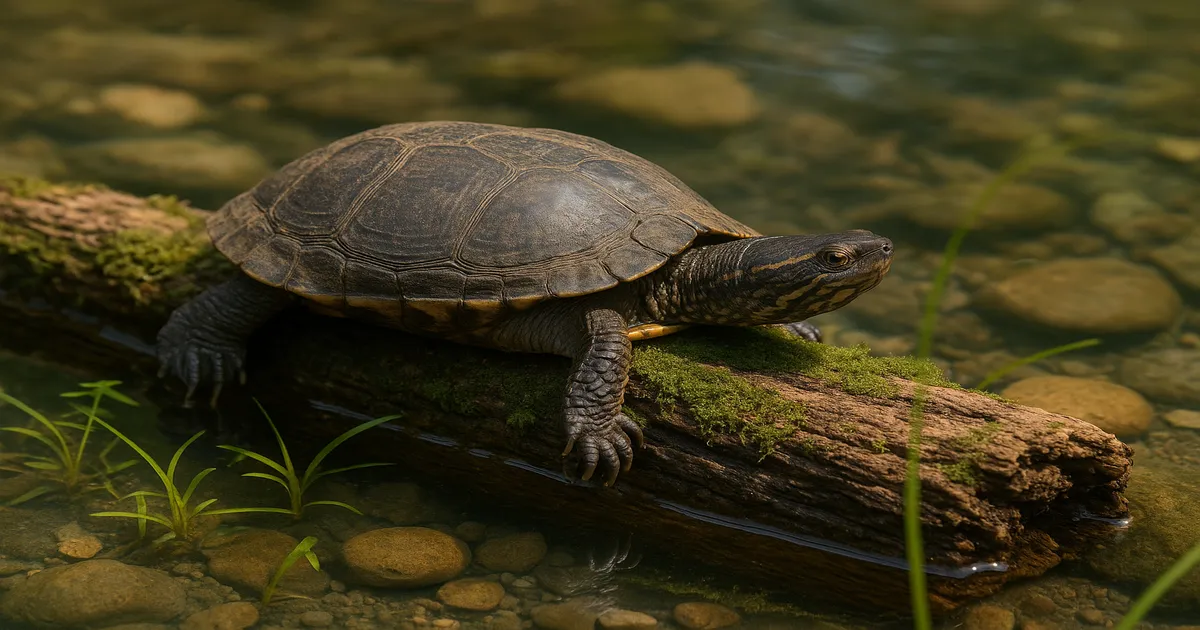
Quick Answer: Mississippi mud turtles are small, long-lived semi-aquatic turtles that top out at 3–4 inches and can live 30–50+ years with proper care. They need shallow water (4–8 inches for adults), a dedicated land area, UVB lighting, and robust filtration — get those four things right and you’ll have one of the most rewarding turtles in the hobby.
Knowing how to care for a Mississippi mud turtle properly comes down to understanding one thing most people miss: these aren’t deep-water turtles. They’re shallow-water, semi-terrestrial animals that spend a surprising amount of time on land, and setting them up like a standard aquatic turtle is the fastest way to stress them out. Get past that misconception and the rest of the care falls into place pretty naturally.
Mississippi Mud Turtle Care at a Glance
Species Snapshot
- Scientific name: Kinosternon subrubrum hippocrepis
- Adult size: 3–4 inches (7.5–10 cm)
- Lifespan: 30–50+ years in captivity
- Native range: Southeastern US — Mississippi River Valley from southern Illinois south through Louisiana, east into Alabama and Mississippi
- Temperament: Generally docile; shy at first, curious once settled
Key Care Requirements
| Parameter | Recommendation |
|---|---|
| Minimum tank (single adult) | 40-gallon (150L) breeder |
| Water depth (adults) | 4–8 inches (10–20 cm) |
| Water temperature | 72–78°F (22–26°C) |
| Basking spot | 88–95°F (31–35°C) |
| UVB | 5.0 or 6% T5 HO |
| Land area | 25–30% of enclosure footprint |
| Diet | Omnivore — pellets, worms, invertebrates, greens |
Understanding the Mississippi Mud Turtle
Natural Habitat and Behavior
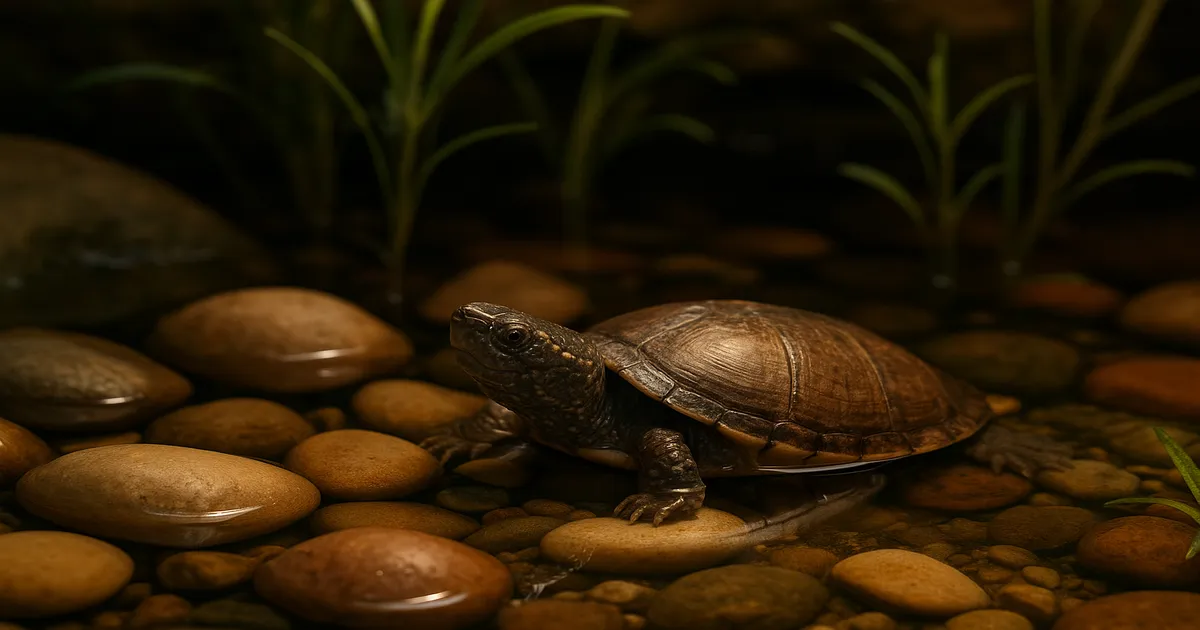
In the wild, Mississippi mud turtles live in slow-moving, shallow, heavily vegetated water — swamps, oxbow lakes, drainage ditches, and flooded fields with soft muddy bottoms. The water is often dark with tannins. That blackwater, shallow-water context matters a lot when you’re designing a captive setup.
They’re more docile than their cousins the common musk turtles, though individual personalities vary. Some are bold and curious within a few weeks of acquisition; others stay shy for months. Don’t rush it. I’ve had individuals that wouldn’t eat in front of me for six weeks and then became total food hogs once they felt secure.
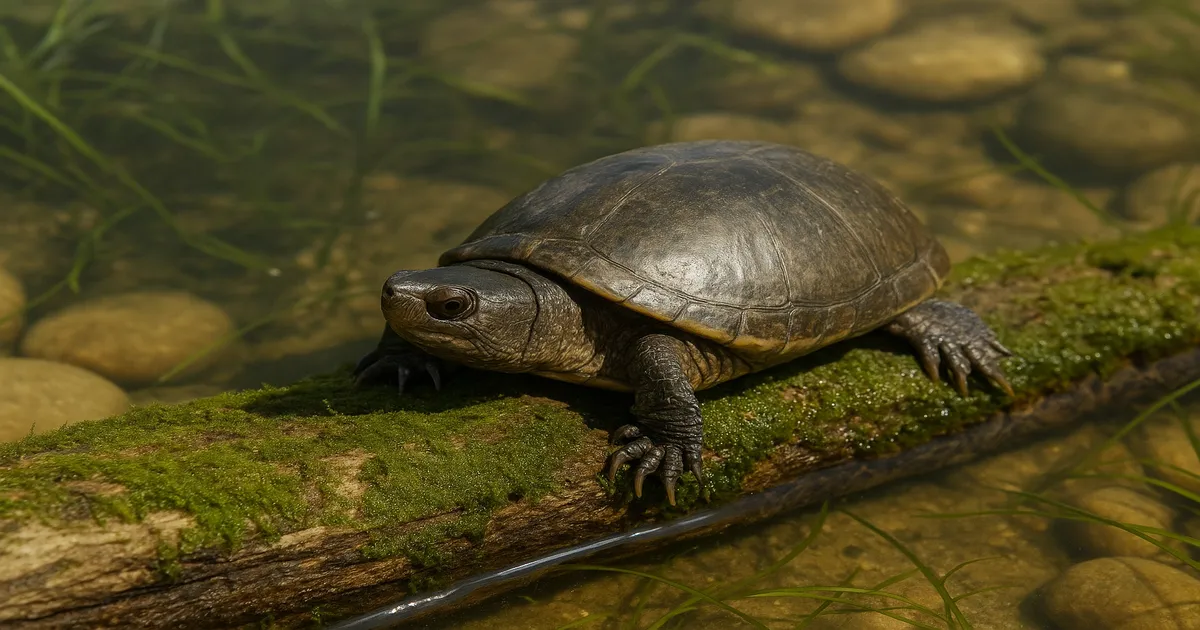
One thing that surprises a lot of new keepers: these turtles are genuinely terrestrial. They’ll wander on land for extended periods, and in the wild they’ve been documented hundreds of meters from water. In captivity, you’ll sometimes find yours spending entire days on the land area. That’s completely normal — don’t panic and assume something is wrong.
Double-Hinged Plastron and Musk Glands
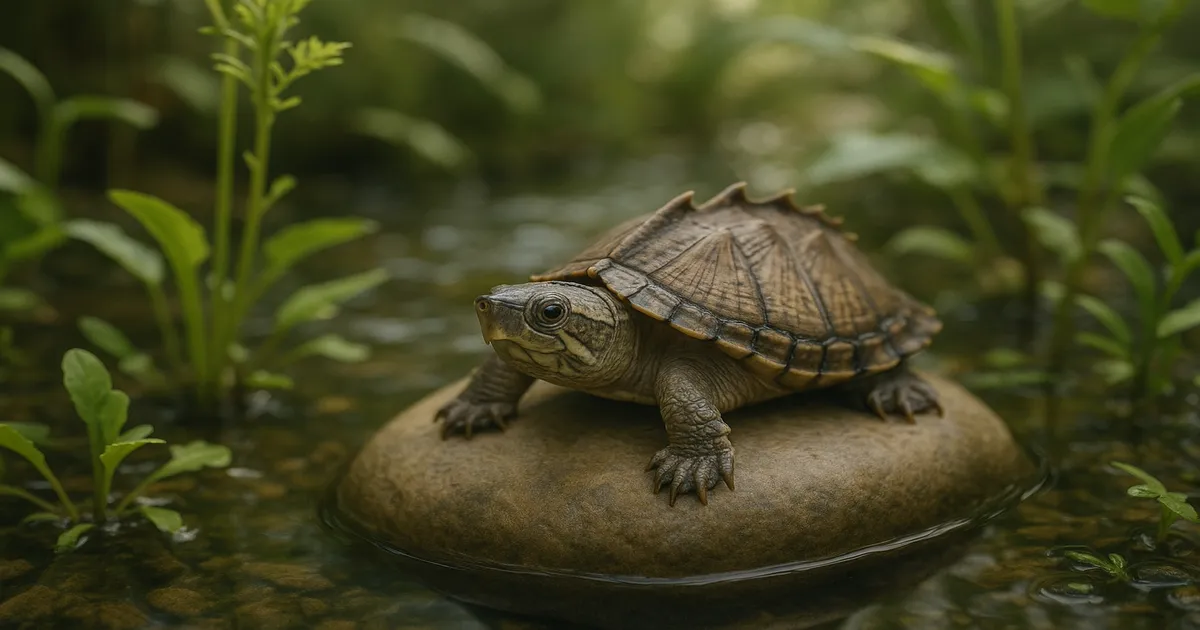
Mississippi mud turtles have a distinctive double-hinged plastron — the bottom shell can partially close, offering better protection than most aquatic species. Like all kinosternids, they have musk glands and can release a pungent odor when stressed, but they tend to musk less aggressively than common musk turtles. Handle them calmly and consistently and it’s rarely an issue.
In hot, dry summers, wild specimens aestivate by burying into mud or leaf litter. Captive animals kept at stable temperatures rarely do this, but it explains why your turtle might burrow into the land substrate occasionally — it’s instinct, not a problem.
How to Care for a Mississippi Mud Turtle: Enclosure Setup
Tank Size and Layout
A 40-gallon (150L) breeder is the right minimum for a single adult — the footprint (36” × 18” / 91 × 46 cm) gives them room to move and makes it easier to create a proper thermal gradient. A 20-gallon long technically works but produces a less healthy, less behaviorally active animal. For a pair, go straight to a 75-gallon (280L). Hatchlings can start in a 10-gallon and move to a 20-gallon long around six months of age.
Prioritize floor space over tank height. A tall “show” aquarium is nearly useless for this species — the extra vertical space just makes lighting placement awkward and doesn’t benefit the turtle at all.
Water Depth: The Most Critical Parameter
Adults need 4–8 inches (10–20 cm) of water — shallow enough that they can reach the surface by simply extending their neck. Juveniles need 2–4 inches (5–10 cm). Deep water causes chronic stress, exhaustion, and genuine drowning risk, especially in juveniles and newly acquired animals. If you’ve been keeping red-eared sliders or map turtles in deeper water, retrain yourself. Mississippi mud turtles are a different animal entirely.
Building a Proper Land Area
At least 25–30% of the enclosure footprint should be dry land — not a floating dock, but actual land with substrate deep enough to burrow in. Use a gentle ramp or sloped substrate transition; they’re not great climbers and a steep incline will put them off using it entirely.
The terrestrial substrate should be coconut fiber or organic topsoil (pesticide-free), or a 50/50 mix of both, at a minimum depth of 3–4 inches (7.5–10 cm). Zoo Med Eco Earth works well here. Keep it slightly moist but not waterlogged — you want it to hold a burrow shape, not drain instantly.
For the aquatic side, fine-grain sand at 1–2 inches (2.5–5 cm) depth is the best choice. Play sand or pool filter sand both work. It allows natural foraging behavior — you’ll see them sifting through it constantly — and it looks far more natural than gravel. Avoid sharp gravel; it can abrade the plastron over time.
Temperature, Lighting, and UVB
Thermal Gradient
| Zone | Temperature |
|---|---|
| Basking spot | 88–95°F (31–35°C) |
| Warm water side | 76–78°F (24–26°C) |
| Cool water side | 72–74°F (22–23°C) |
| Ambient air | 75–82°F (24–28°C) |
| Nighttime minimum | 65°F (18°C) |
Use a submersible heater for water temperature — the Eheim Jager is reliable and easy to dial in. Position it horizontally near the bottom or use a heater guard; direct contact with the plastron can cause burns.
A 50–75W halogen or incandescent spot bulb positioned over one end of the enclosure creates the basking zone. Don’t guess at the temperature — verify it with an infrared temperature gun. The actual surface temperature of the basking area is almost always different from what you’d estimate based on ambient readings, sometimes by 10°F or more.
UVB Lighting
Some older care sheets claim mud turtles don’t need UVB. That advice is outdated — ignore it. Animals kept under quality UVB consistently show better shell development, stronger immune function, and more natural behavior. The target UVI at the basking spot is 2.0–3.0, which you can achieve with a 5.0 or 6% T5 HO bulb mounted 8–12 inches above the basking area. The Arcadia T5 HO 6% Forest/Swamp bulb is my first choice for this species.
Replace UVB bulbs every 6–12 months even if they’re still producing visible light — UVB output degrades long before the bulb burns out.
Run a 12–14 hour photoperiod in summer and drop to 10 hours in winter. Automate it with a timer. Seasonal cycling isn’t just for breeders — even animals you have no intention of breeding benefit from the hormonal reset that comes with a shorter winter photoperiod.
Filtration and Water Quality
Mississippi mud turtles are messy. They’re messy feeders, they defecate frequently, and shallow water means waste concentrates fast. You need filtration rated for at least 2–3× your actual tank volume.
- Canister filters (Fluval 207/307, Eheim Classic 250): Best overall — consistent mechanical and biological filtration, easy to hide, runs quietly
- Hang-on-back filters (AquaClear 50/70): Solid for smaller setups, simpler maintenance
- Sponge filters: Great as supplemental biological filtration, especially in juvenile tanks
The shallow water depth creates a specific challenge — standard filter intakes may need to be repositioned or modified to avoid running dry. Check this when you first set up the tank.
Water Parameters
- pH: 6.5–7.5
- Ammonia: 0 ppm
- Nitrite: 0 ppm
- Nitrate: below 20 ppm
Use Seachem Prime as your dechlorinator at every water change. It temporarily detoxifies ammonia and nitrite, which gives you a small buffer if your cycle gets disrupted.
Weekly maintenance:
- Change 25–30% of the water volume and dose with Seachem Prime
- Rinse filter media in old tank water (never tap water)
- Spot-clean the terrestrial area as needed
- Check water temperature
The Separate Feeding Tub Method
This is the single most effective thing you can do for water quality. Fill a plain plastic tub with a few inches of tank water, put your turtle in, let it eat, then return it to the enclosure. It takes five minutes and dramatically reduces ammonia spikes. Most turtles learn the routine within a week or two and get visibly excited when they see the tub come out.
Feeding Your Mississippi Mud Turtle
They’re opportunistic omnivores in the wild — aquatic invertebrates, snails, crayfish, worms, carrion, aquatic vegetation, algae, fallen fruit. The variety matters. A captive diet that mimics that range produces a healthier animal than one based almost entirely on pellets.
Recommended diet:
- High-quality commercial turtle pellets (Mazuri Aquatic Turtle Diet or Zoo Med Natural Aquatic Turtle Food) as the base
- Live or frozen bloodworms, earthworms, and blackworms
- Feeder snails — a genuine favorite; they’ll crush the shells with obvious enthusiasm
- Small crickets, dubia roaches
- Dark leafy greens: romaine, dandelion greens, red leaf lettuce
- Occasional fruit (berries, mango) as a treat
A meal should be roughly the size of the turtle’s head. Juveniles get fed daily; adults every 2–3 days. These turtles will beg constantly regardless of whether they’re actually hungry, so don’t let that fool you. Chronic overfeeding leads to obesity, fatty liver disease, and pyramiding scutes.
Supplementation: Dust food with calcium + D3 two to three times per week for juveniles, once or twice weekly for adults. Add a multivitamin once weekly for all ages. If you’re providing quality UVB, you can back off slightly on D3 — but I wouldn’t eliminate it entirely.
Common Mistakes in Mississippi Mud Turtle Care
Water too deep. If you take nothing else from this article, remember this. Deep water stresses them, exhausts them, and can kill juveniles. Keep adults at 4–8 inches, juveniles at 2–4 inches.
No real land area. A floating dock is not a land area. These turtles need substrate they can walk on, rest in, and burrow into. If your turtle seems stressed or won’t eat, check whether it has adequate terrestrial space.
Overfeeding. They will beg. Feed them on a schedule anyway.
Skipping UVB. The older advice is wrong. Provide it.
Poor filtration. Ammonia spikes cause respiratory infections, shell rot, and eye infections. Oversize your filter, use the feeding tub method, and change water weekly without exception.
Rushing acclimation. New animals need a 2–4 week hands-off period. Observe from a distance and interact only during feeding. Rushing this sets back the whole process.
Ignoring shell health. Inspect the shell monthly. Soft spots, pitting, discoloration, or unusual pyramiding all warrant a vet visit. Dry-docking the turtle for 30–60 minutes after inspection lets you assess shell texture more accurately. Don’t dismiss shell issues as cosmetic — they rarely are.
Pro Tips for a Thriving Mississippi Mud Turtle
Add blackwater tannins. Drop a few Indian almond leaves or dried oak leaves into the water. The tannins lower pH slightly, have mild antibacterial properties, and — most visibly — make shy animals noticeably bolder within a week or two. The darker water mimics their natural habitat and seems to make them feel less exposed.
Use an infrared temperature gun. Ambient thermometers tell you the air temperature; they don’t tell you what the basking surface actually is. Measure the surface your turtle is sitting on. You’ll almost certainly find it’s different from what you expected.
Allow seasonal cooling. Even if you’re not breeding, letting water temperature drop to 65–68°F (18–21°C) and reducing photoperiod to 10 hours for 6–8 weeks in winter pays dividends. Animals that go through a cool period typically emerge in spring with better appetite, more vivid coloration, and higher activity levels.
Keep a feeding log. A simple notebook or phone note tracking feeding dates and approximate food consumed is more useful than it sounds. Mississippi mud turtles can go off food for weeks seasonally — that’s normal — but distinguishing seasonal appetite changes from illness is much easier when you have a baseline to compare against.
Watch males during breeding season. From March through May, males can be relentless toward females. Even in a 75-gallon setup, a female that can’t escape persistent harassment will stop eating and can sustain physical injuries. Have a plan to separate them if you see repeated chasing or biting.
Hatchlings need extra attention. They dehydrate much faster than adults. Keep their terrestrial substrate consistently moist and mist it lightly every day or two. A hatchling that desiccates can decline within 24–48 hours — it’s not something that creeps up slowly.
Frequently Asked Questions
How deep should the water be for a Mississippi mud turtle?
Adults do best in 4–8 inches (10–20 cm) — shallow enough to reach the surface by simply extending their neck. Juveniles need 2–4 inches (5–10 cm). Deep water is one of the most common and dangerous mistakes in Mississippi mud turtle care, causing chronic stress and real drowning risk.
Do Mississippi mud turtles need UVB light?
Yes. While they can technically survive without it if calcium and D3 supplementation is meticulous, animals kept under quality UVB consistently develop better shells, stronger immune systems, and more natural behavior. A 5.0 or 6% T5 HO bulb targeting a UVI of 2.0–3.0 at the basking spot is the standard recommendation.
How long do Mississippi mud turtles live in captivity?
With proper care, 30–50 years is a realistic expectation — and some individuals exceed that. Wild specimens have been documented living past 40 years. These are genuinely long-lived animals for their size, which is worth thinking hard about before you acquire one.
How often should I feed a Mississippi mud turtle?
Juveniles daily in small portions; adults every 2–3 days. Each meal should be roughly the size of the turtle’s head. They’ll beg aggressively regardless of hunger, so stick to a schedule rather than feeding on demand.
Can Mississippi mud turtles be kept together?
A single turtle is always the simplest option. Same-sex pairs or groups can work in a large enough enclosure (75+ gallons for two adults), but males housed together will fight, and mixed-sex pairs require close monitoring during breeding season. If you see persistent chasing, biting, or a turtle that’s stopped eating, separate them immediately.