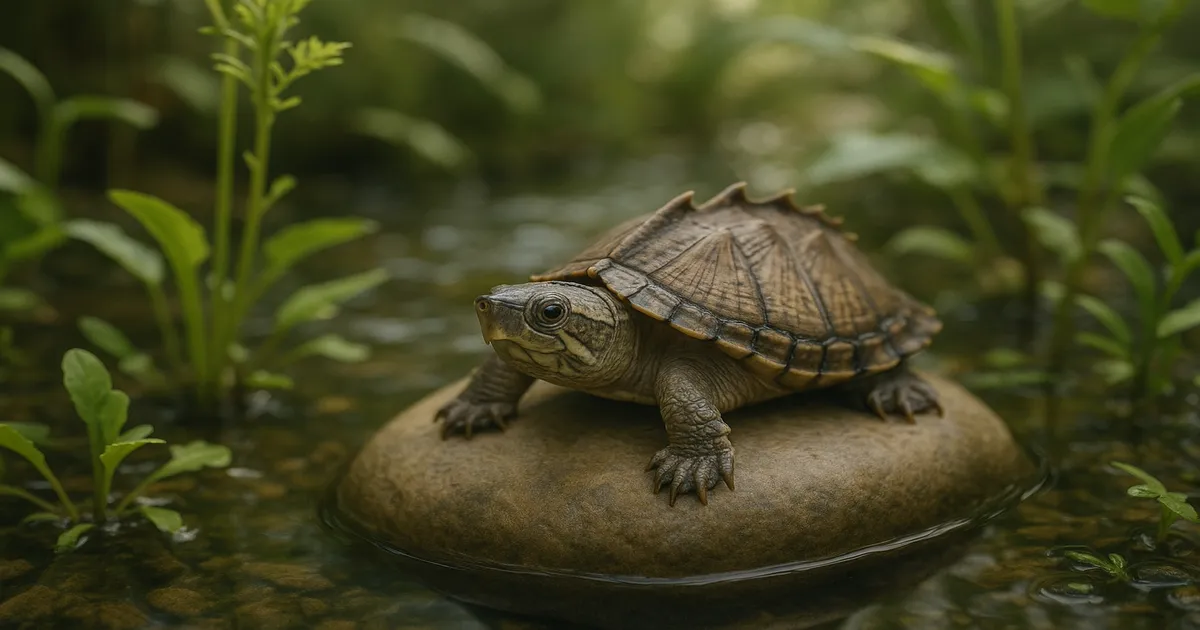
Quick Answer: Razorback musk turtles are small, hardy, and genuinely entertaining aquatic turtles that thrive in captivity with the right setup. They need clean, filtered water at 72–78°F (22–26°C), a proper basking area with UVB lighting, and a carnivore-heavy diet. Nail those three things and you’ve got a turtle that can easily live 30 years or more.
Razorback musk turtles (Sternotherus carinatus) punch well above their weight in the personality department. For a turtle that maxes out around 6 inches, they’re surprisingly bold, endlessly curious, and occasionally a little feisty — which honestly makes them more interesting to keep than half the larger species out there. If you’re researching how to care for a razorback musk turtle, the good news is that their needs are pretty straightforward once you understand them. The bad news is that a lot of older care sheets get a few key things wrong, and those mistakes compound badly over a 20-plus year lifespan.
Razorback Musk Turtle Care at a Glance
Species Snapshot
| Feature | Details |
|---|---|
| Scientific name | Sternotherus carinatus |
| Adult size | 3–6 inches (7.6–15 cm) |
| Lifespan | 20–30+ years |
| Activity pattern | Crepuscular/nocturnal (adapts in captivity) |
| IUCN status | Least Concern |
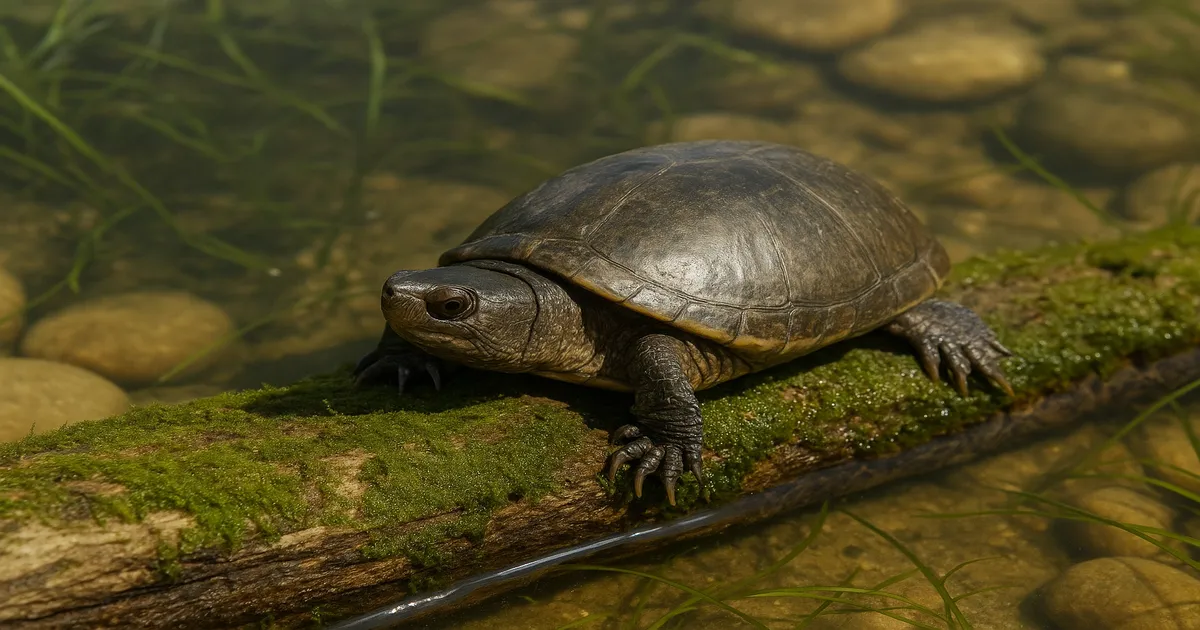
The name “razorback” comes from the sharp, tent-like keel running down the center of the carapace. It’s most dramatic in juveniles and tends to flatten with age, but it’s unmistakable and immediately distinguishes this species from the common musk turtle (Sternotherus odoratus).
Key Care Requirements
- Minimum tank size: 20-gallon long; 40-gallon breeder strongly preferred
- Water temperature: 72–78°F (22–26°C)
- Basking spot temperature: 88–95°F (31–35°C) at the surface
- UVB: Required — T5 HO 5.0–6% bulb, replaced every 6–12 months
- Diet: Carnivore-leaning; quality pellets, invertebrates, snails
- Temperament: Defensive when new; tames down with consistent, gentle handling
Species Overview: Natural Habitat and Behavior
S. carinatus is native to the south-central United States — the Mississippi River drainage basin, covering southern Arkansas, Oklahoma, Louisiana, Mississippi, and into the Florida Panhandle. In the wild they live in slow-moving rivers, bayous, oxbow lakes, and swamps with soft muddy bottoms, submerged logs, and plenty of aquatic vegetation. They’re rarely found in deep water; shallow areas where they can surface for air without much effort are their preferred haunts.
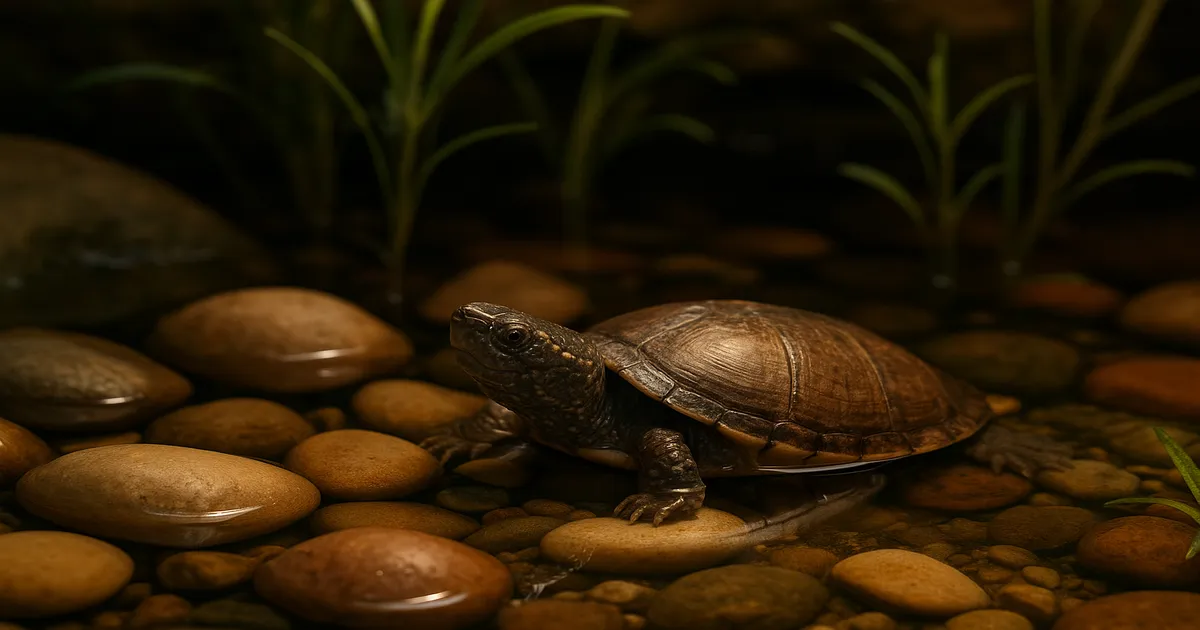
Beyond the keel, razorbacks have a fairly typical musk turtle build — domed shell, small plastron, and a head that looks slightly oversized for the body. Males tend to run a bit larger and have a longer, thicker tail with a blunt spine at the tip. Like all musk turtles, they have Rathke’s glands along the sides of the body that produce a pungent musk when threatened — hence the “stinkpot” nickname applied to the group. Captive-bred individuals musk far less readily than wild-caught ones once they settle in, in my experience.
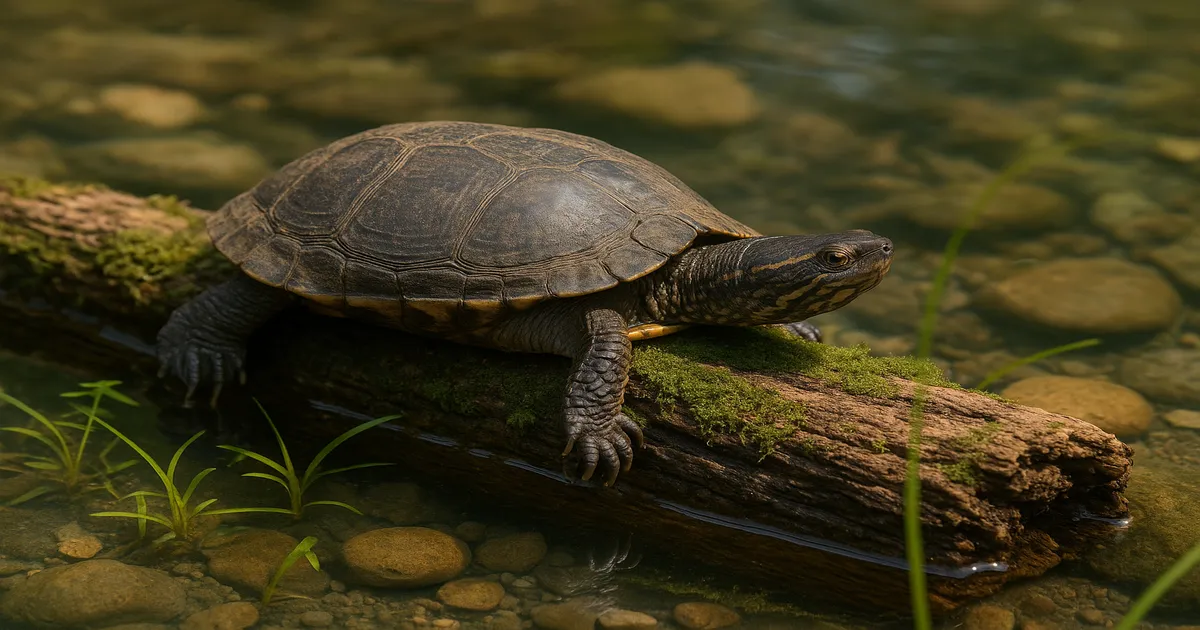
These turtles are highly aquatic but they do bask — regularly and enthusiastically. Don’t let anyone tell you musk turtles don’t need a basking area. They absolutely do. They’re also surprisingly capable climbers and will use elevated branch perches above the waterline just like they would in the wild.
Enclosure Setup
Tank Size and Layout
A single adult razorback needs at minimum a 20-gallon long (30” × 12”), but go straight to a 40-gallon breeder (36” × 18”) if you can swing it. The extra water volume makes a real difference in how stable your parameters stay between water changes, and these turtles are messier than they look. For a pair, start at 40 gallons and aim for 55–75. Footprint matters far more than height — a tall, narrow tank is a worse choice than a shallower tank with more floor space.
Rubbermaid stock tanks in the 50–100 gallon range are worth considering if you want more space without the cost of a large glass aquarium. They’re durable, easy to clean, and a lot of experienced keepers swear by them.
Water Depth
Aim for 6–12 inches for adults. A useful rule of thumb: water depth should be at least 1.5 times the length of the turtle’s shell — deep enough to swim and fully submerge, shallow enough to reach the surface without effort.
Basking Area
The haul-out needs to support the turtle’s full body weight and let it dry off completely. A perpetually damp basking platform is a fast track to shell rot. Good options:
- Cork bark platforms or tubes (lightweight, naturalistic, easy to reposition)
- Commercial floating turtle docks
- Stacked flat slate or river rocks (heavy but very stable)
If you can add an elevated branch or cork tube above the waterline, do it. Razorbacks are agile little climbers and they’ll use it constantly.
Substrate
Bare bottom is the easiest to keep clean and the best choice for beginners — you can spot waste immediately and remove it before it tanks your water quality. Fine pool filter sand at 1–2 inches looks more natural and allows foraging behavior; rinse it thoroughly before adding. Smooth river pebbles work if the pieces are too large to swallow (bigger than the turtle’s head). Avoid small gravel — ingestion risk is real.
Water Quality and Filtration
Poor water quality kills more captive musk turtles than anything else. Ammonia and nitrite spikes cause chronic stress, shell rot, respiratory infections, and eventually death — and they build up faster than you’d expect because turtles produce vastly more waste than fish of equivalent size. This is the part most beginners underestimate.
Canister filters are the gold standard for turtle tanks. They offer high flow rates and large media capacity, and they handle the waste load far better than hang-on-back filters. (Fluval 307) If you go with a HOB, size it for 2–3× your actual tank volume — a 40-gallon tank needs a filter rated for 80–120 gallons. A pre-filter sponge on the intake is worth adding to any setup; it catches debris before it reaches the media and extends time between cleanings. (AquaClear 110)
Target Water Parameters
- Ammonia: 0 ppm
- Nitrite: 0 ppm
- Nitrate: under 20 ppm (under 10 ppm is better)
- pH: 6.8–7.8
Test with a liquid test kit, not strips. Strips are notoriously inaccurate and will give you false confidence right up until something goes wrong.
Cycle your tank before adding the turtle — establish your beneficial bacterial colonies first, exactly as you would for a fish tank. Once the turtle is in, do 25–50% water changes weekly regardless of how clean the water looks. A good filter slows how fast things go wrong; it doesn’t replace water changes.
Water Temperature
Keep water between 72–78°F (22–26°C). Use a reliable submersible heater and always verify with a separate thermometer — heater thermostats drift. (Eheim Jager 150W) Titanium heaters are worth the extra cost because they’re bite-resistant. Add a heater guard to prevent burns if the turtle presses against it.
Lighting: UVB, Basking Lamps, and Photoperiod
The old advice that aquatic turtles don’t need UVB is outdated and has caused real harm. UVB drives D3 synthesis, which drives calcium metabolism — skip it and you’re looking at metabolic bone disease and soft shell syndrome over time, especially in juveniles. Provide UVB for all aquatic turtles. Full stop.
Use a T5 HO 5.0 or 6% UVB bulb positioned 10–12 inches above the basking area. The Arcadia 6% Forest and Zoo Med Reptisun 5.0 T5 HO are both solid choices. Replace T5 HO bulbs every 6–12 months — UVB output degrades well before the visible light goes out.
For the basking lamp, a 60–100W halogen or incandescent flood bulb works well. Target 88–95°F (31–35°C) at the basking surface and check it with an infrared temperature gun rather than guessing. Combo fixtures that hold both a basking bulb and a UVB tube keep the setup tidy.
Aim for 12–14 hours of light in summer and 10–12 hours in winter. A basic digital outlet timer is one of the cheapest and most useful things you can add — consistent photoperiod matters for long-term health and natural behavior cycles.
Feeding Your Razorback Musk Turtle
In the wild, razorbacks eat aquatic invertebrates, snails, clams, crayfish, small fish, and the occasional bit of plant matter. Snails are a particularly big part of their diet — they’re built to crush them — and replicating that in captivity pays real dividends.
High-quality commercial pellets should make up roughly half the diet. Mazuri Aquatic Turtle Diet, Reptomin, and Zoo Med Natural Aquatic Turtle Food are all reliable options. Feed in the water — razorbacks almost never accept food on land.
Protein supplements a few times a week round things out:
- Earthworms (excellent all-around; highly nutritious)
- Frozen or live bloodworms and blackworms
- Ghost shrimp
- Feeder fish — use guppies or mosquitofish, not goldfish or rosy reds
That last point matters. Goldfish and rosy red minnows contain thiaminase, an enzyme that destroys vitamin B1. Fed regularly, they’ll cause neurological problems over time. It’s an easy thing to avoid, so just avoid it.
Snails deserve their own mention. Mystery snails, pond snails, and bladder snails are all excellent. The crushing action exercises jaw muscles and the shells provide a direct calcium hit. I keep a small bladder snail colony specifically to feed my musk turtles — it’s one of the easiest and most enriching things you can do for them.
Calcium supplementation: dust food items with calcium carbonate powder 2–3 times per week. If you’re running UVB, use calcium without D3. A chunk of cuttlebone floated in the tank gives a free-choice calcium source and is worth adding regardless.
Feeding frequency:
- Juveniles: daily or every other day
- Adults: every 2–3 days
Feeding in a separate container — a plastic bin with a few inches of tank water — keeps your main tank cleaner and makes it much easier to monitor intake. Small habit, noticeable difference.
Common Mistakes to Avoid
Neglecting water quality. Ammonia and nitrite spikes are the top cause of death in captive musk turtles. Oversize your filter, test regularly, don’t skip water changes.
Skipping or undersizing the basking area. A platform that’s too small, too slippery, or too hard to climb onto will go unused. A turtle that can’t fully dry off periodically is more susceptible to shell rot and fungal infections.
Omitting UVB lighting. Not optional for long-term health. Install a quality T5 HO bulb, position it correctly, replace it on schedule.
Wrong water temperature. Water below 65°F (18°C) suppresses immunity and appetite. Water above 84°F (29°C) stresses the turtle and depletes dissolved oxygen. Don’t assume room temperature is adequate — in air-conditioned homes, it often isn’t.
Male aggression. Males are aggressive toward each other and will cause serious bite injuries in a tank that’s too small. Unless you’re working with a very large setup, house males separately and always provide multiple basking spots.
Feeding goldfish as a staple. Cheap and easy to find, yes. Worth the thiaminase risk, no. Stick to earthworms, snails, and quality pellets.
Over-handling before acclimation. Give a new turtle 2–4 weeks of hands-off time before you start handling regularly. A turtle that’s being picked up constantly before it’s comfortable will musk constantly, refuse food, and stay stressed. Let it settle first.
Frequently Asked Questions
How big do razorback musk turtles get?
Adults typically reach 3–6 inches (7.6–15 cm) in carapace length, with males tending slightly larger. They’re one of the smaller aquatic turtle species in the hobby, which makes them a good fit for keepers with limited space — though “small turtle” doesn’t mean “small commitment.”
Do razorback musk turtles need UVB lighting?
Yes, and this isn’t up for debate anymore. Without UVB, razorback musk turtles can’t synthesize vitamin D3 efficiently, which leads to calcium metabolism problems, metabolic bone disease, and soft shell syndrome over time. A T5 HO 5.0 or 6% UVB bulb positioned 10–12 inches above the basking area is the correct setup.
How often should I feed a razorback musk turtle?
Juveniles daily or every other day; adults every 2–3 days. Overfeeding is a common mistake — offer an amount the turtle can consume in about 5 minutes and remove uneaten food promptly to protect water quality.
Can razorback musk turtles live with other turtles?
It’s possible with careful planning. Males are aggressive toward other males and will fight, so housing two males together is a bad idea unless the enclosure is very large with multiple basking spots. Mixed-sex pairs or groups can work in a 55-gallon or larger setup, but watch for aggression and be prepared to separate animals if needed.
How long do razorback musk turtles live in captivity?
With proper care, 20–30 years is typical, and some individuals exceed 30. They’re a genuine long-term commitment — not a starter pet you’ll outgrow in a few years. Getting the husbandry right from the beginning pays off over decades.