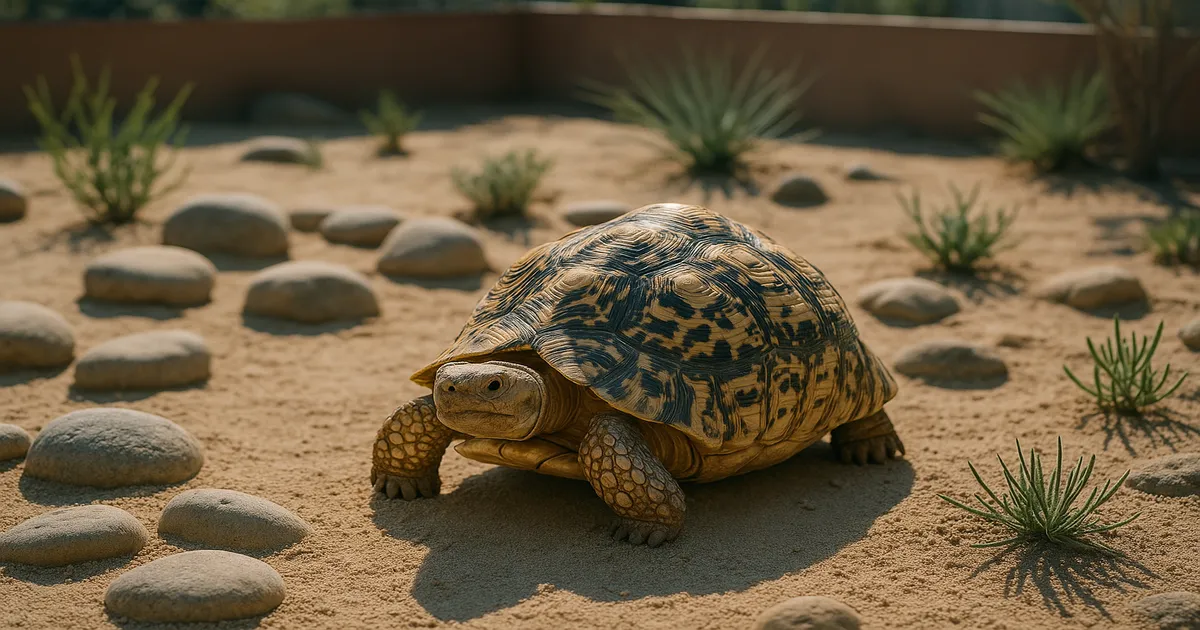
Quick Answer: Leopard tortoises are large, long-lived African tortoises that need spacious enclosures, strong UVB lighting, warm temperatures year-round, and a diet built almost entirely around grasses and hay. They can live 80–100+ years, grow to 16–24 inches and 40–70 lbs, and don’t hibernate — so this is a serious, multi-decade commitment. Most owners should genuinely plan to include their tortoise in their will.
Knowing how to take care of a leopard tortoise properly takes real effort upfront — but once the setup is dialed in, these animals are genuinely rewarding to keep. They’re bold, personable, and visually stunning. They’re also one of the most demanding tortoise species in terms of space, heat, and UVB. Get those three things right and you’re most of the way there.
Leopard Tortoise Care at a Glance
Species Overview
Leopard tortoises (Stigmochelys pardalis) are native to the savannas and thornbush of sub-Saharan Africa, where they spend their days grazing on grasses, basking in intense sun, and covering surprising amounts of ground. Wild individuals can walk several miles a day — which tells you everything you need to know about why enclosure size matters so much.
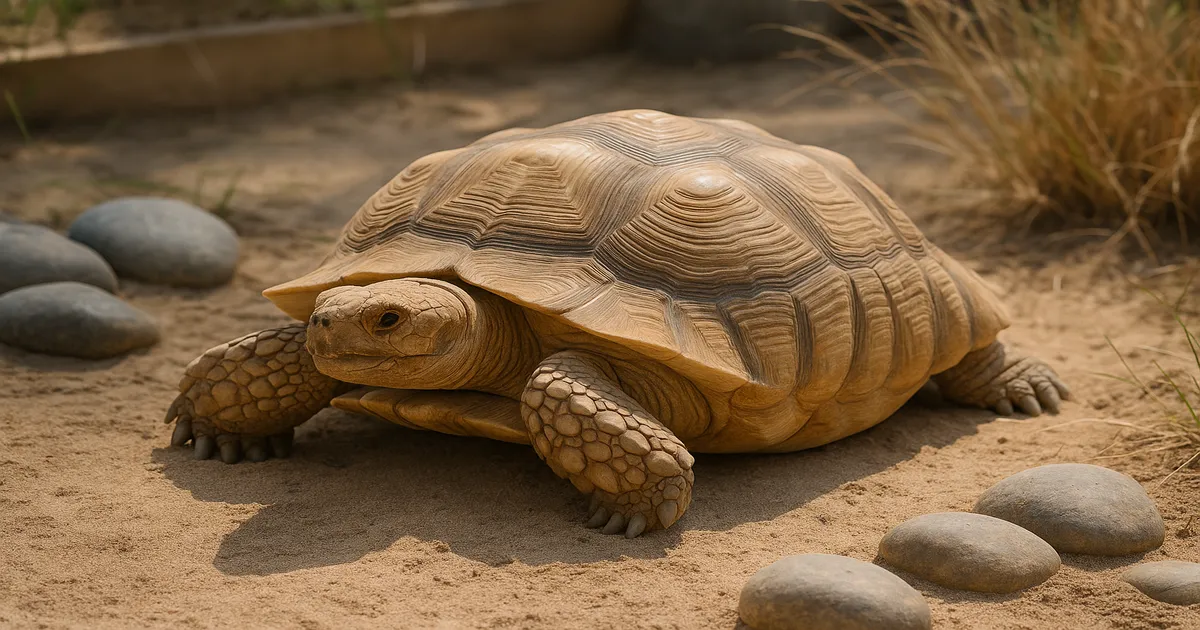
Two subspecies show up in captivity. S. p. babcocki is by far the most commonly kept and tends to run slightly smaller. S. p. pardalis, the South African leopard tortoise, is chunkier and can push the upper end of the size range. Most captive adults land between 16–24 inches (41–61 cm) and 40–70 lbs (18–32 kg), though large males sometimes exceed that. Lifespan is 80–100+ years with proper care. That’s not a typo — genuinely multi-generational.
They’re listed on CITES Appendix II, so they’re legal to keep in most U.S. states with proper documentation. Always check your local regulations before acquiring one.
Is a Leopard Tortoise Right for You?
Honestly, most people underestimate the commitment. This animal will almost certainly outlive you. It needs more space than most people expect, won’t tolerate cold, and requires a diet you can’t buy at the grocery store. If you’re prepared for that — great, they’re wonderful animals. If you want something low-maintenance, look elsewhere.
Enclosure Setup for Leopard Tortoises
Indoor Enclosure Sizes by Age
Leopard tortoises are among the most space-demanding tortoises commonly kept as pets. These are minimums — not targets:
- Hatchlings (0–2 years): 4 ft × 2 ft (1.2 m × 0.6 m)
- Juveniles (2–5 years): 6 ft × 4 ft (1.8 m × 1.2 m)
- Adults (indoors): 8 ft × 4 ft (2.4 m × 1.2 m) at minimum; 10 ft × 6 ft is better
Don’t start small and plan to upgrade later. These tortoises grow faster than most people expect — a hatchling can hit 6–8 inches within a few years.
For hatchlings and juveniles, open-top tortoise tables are the best indoor option — good airflow, easy access, and UVB penetrates without interference. DIY plywood builds work well for adults and are easy to customize. Avoid glass terrariums for any age past hatchling: ventilation is poor, space is inadequate, and you’ll see constant glass-surfing — that repetitive wall-pacing is a stress response, not curiosity.
Outdoor Enclosure Requirements
Outdoor keeping is ideal when climate allows. Adults need at least a 10 ft × 10 ft (3 m × 3 m) pen; 20 ft × 20 ft or more is strongly preferred. Use solid walls — block, wood, or concrete — rather than chain-link. Leopard tortoises pace mesh and it stresses them out. Walls should be at least 18–24 inches (46–61 cm) tall with the foundation buried 6–12 inches (15–30 cm) underground. They will dig if they’re motivated.
Substrate
The best substrate is 60–70% plain topsoil (no fertilizers or pesticides) mixed with 30–40% play sand. For adults, aim for 4–6 inches (10–15 cm) of depth so they can dig. Coconut coir or additive-free organic potting mix works as an alternative or addition.
Avoid pure sand (impaction risk, doesn’t hold moisture), cedar or pine shavings (toxic oils), and reptile carpet (bacteria trap and a claw injury waiting to happen).
Temperature and Heating
Temperature Targets
Cold temperatures are the number one killer of captive leopard tortoises. Full stop. Here’s what you need:
- Basking spot: 95–105°F (35–40.5°C); 100°F is the sweet spot
- Warm side ambient: 85–90°F (29–32°C)
- Cool side ambient: 75–80°F (24–27°C)
- Nighttime low: No lower than 65°F (18°C) for adults; 70°F (21°C) for hatchlings and juveniles
That comfortable 68–72°F most of us keep our homes at? Dangerously cold for a leopard tortoise over the long term. Respiratory infections develop fast when temps drop and stay down.
Creating a Thermal Gradient
Heat one end of the enclosure only. The tortoise needs to move between warm and cool zones to regulate its own body temperature — that’s how thermoregulation works. If the heat source is in the middle, you’ve eliminated the gradient and left the animal with nowhere to cool down.
Heating Equipment
For the basking spot, use a ceramic dome fixture with a halogen PAR38 flood bulb positioned 12–18 inches (30–46 cm) above the basking surface. For ambient warmth, deep heat projectors are excellent — they penetrate shell and muscle more effectively than surface heat alone.
Any overnight heat source needs a proportional thermostat — temperature spikes are just as dangerous as cold drops. (Herpstat 1) For outdoor setups in temperate climates, the shelter needs a weatherproof, thermostatically controlled heat source for any night that dips below 65°F (18°C).
UVB Lighting and Photoperiod
Why UVB Is Non-Negotiable
Leopard tortoises are Ferguson Zone 3–4 animals, meaning they need a UVI of 2.9–7.4 in the basking zone — one of the highest UV requirements of any commonly kept reptile. Without adequate UVB, they can’t synthesize vitamin D3, calcium metabolism breaks down, and you end up with metabolic bone disease, soft shells, and pyramiding. There’s no workaround here.
Choosing the Right UVB Bulb
Stick with T5 HO linear tubes. The Arcadia 12% Desert T5 HO is my top pick for leopard tortoises — it reliably hits the UVI levels this species needs. The Zoo Med ReptiSun 10.0 T5 HO is a solid alternative. The tube should span at least 50% of the enclosure length. Replace it every 6–12 months — UV output degrades well before the visible light goes out.
Don’t use coil or CFL UVB bulbs. Inconsistent output, potential eye problems, and simply not adequate for a high-UV species.
Photoperiod and Natural Sunlight
Run lights 12–14 hours per day in summer, dropping to 10–12 hours in winter. The seasonal variation supports natural behavioral rhythms and can factor into breeding activity. A programmable outlet timer makes this effortless.
No artificial bulb fully replicates unfiltered natural sunlight. Even a few hours outdoors on warm days provides UVB that significantly outperforms indoor setups. If your climate allows it, outdoor time should be a regular part of your husbandry. To verify your actual UVI output, the Solarmeter 6.5 is the gold standard tool.
Feeding and Nutrition
Core Diet: Grasses and Hay
The foundation of a leopard tortoise’s diet — 80–90% of it — should be grasses and hay. Timothy hay, orchard grass, Bermuda grass, and fresh untreated lawn grasses are all excellent. Keepers who nail the grass-based diet consistently have healthier, better-proportioned tortoises than those relying heavily on grocery store greens. It’s one of the clearest patterns in this hobby.
Acceptable Supplemental Greens
The remaining 10–20% of the diet can include dandelion greens and flowers, hibiscus leaves and flowers, mulberry leaves, grape leaves, opuntia cactus pads, and endive or escarole. Spring mix is fine occasionally. Romaine and iceberg lettuce are nutritionally empty — filler, not food.
Foods to Avoid
- All animal protein — cat food, dog food, insects, meat of any kind. Leopard tortoise kidneys cannot process animal protein. Fed regularly, it causes fatal gout and kidney failure. This is not a gray area.
- Spinach, kale, broccoli, and cabbage in large amounts (high oxalates and goitrogens)
- Legumes
- Fruit — very occasional treat only; the sugar disrupts gut flora and causes digestive problems if fed regularly
Calcium and Hydration
Dust food with calcium carbonate 3–5 times per week for juveniles, 2–3 times per week for adults. If UVB lighting is adequate, you don’t need D3 in the supplement. Keep a piece of cuttlebone in the enclosure at all times — tortoises will self-regulate their intake from it.
Soak juveniles 2–3 times per week for 20–30 minutes in shallow 85–90°F (29–32°C) water. Adults need soaking 1–2 times per week. It stimulates drinking and defecation and is one of the easiest ways to keep younger animals well-hydrated.
Humidity, Hides, and Enrichment
Every tortoise needs at least two hides — one on the warm side, one on the cool side. The cool-side hide should double as a humid hide: fill it with damp sphagnum moss or coconut coir and maintain 60–80% RH inside it. This is especially important for hatchlings and juveniles — that humid microclimate is what prevents pyramiding and supports healthy shell development.
Ambient humidity targets:
- Adults: 40–60% RH
- Hatchlings and juveniles: 50–70% RH ambient, with the humid hide at 60–80%
Don’t let the whole enclosure stay wet. Sustained high humidity across the entire setup promotes respiratory infections and shell rot. The humid hide gives them the microclimate they need without soaking everything.
Slate tiles or flagstone under the basking lamp retain heat well and help naturally wear down nails. If you can grow edible plants — dandelion, hibiscus, mulberry — directly in the enclosure, that’s ideal for both enrichment and supplemental food. Keep a shallow, heavy ceramic water dish in the enclosure and clean it daily.
Common Leopard Tortoise Care Mistakes
The biggest one is keeping them too cold. Room temperature is not warm enough. Many keepers get daytime temps right and then let the enclosure drop to 60°F (15.5°C) overnight — that swing is a direct pathway to respiratory infections.
Don’t start with a 40-gallon tank. Don’t use glass for adults. Don’t house multiple males together — adult males fight viciously and can cause serious shell and limb injuries.
On the diet side: the two worst mistakes are offering animal protein and not supplementing calcium consistently. Both have serious long-term consequences. Over-relying on grocery store greens is a distant third — it won’t kill them quickly, but a grass-based diet produces noticeably healthier animals.
On pyramiding: those raised, pyramid-shaped scutes are not genetic. They’re caused by low humidity during growth, excessive protein, and rapid growth rates. Maintain appropriate humidity, provide a humid hide for hatchlings, and keep protein low — and you can largely prevent it. A pyramided adult can’t be fixed, but you can stop it from progressing.
Health Monitoring and Veterinary Care
Weigh your tortoise every month and keep a log. Weight loss is almost always the first sign something is wrong — often weeks before any visible symptoms appear. A simple spreadsheet with monthly weights is genuinely the most useful health monitoring tool you have.
Watch for: wheezing or nasal discharge, lethargy or appetite loss, swollen or closed eyes, soft shell, and abnormal feces. Any of these warrants a vet call, not a wait-and-see approach.
Find an experienced reptile or exotic vet before there’s an emergency. Call around, ask about their tortoise experience, and establish a relationship. When your tortoise is wheezing at 10pm on a Saturday, you don’t want to be Googling vets from scratch.
Respiratory infections are triggered by cold temperatures, drafts, and temperature fluctuations — which is exactly why stable heat is so non-negotiable. Treatment requires injectable antibiotics (typically enrofloxacin or ceftazidime) prescribed by a vet. Over-the-counter treatments are ineffective. Don’t waste time on them.
Frequently Asked Questions About Leopard Tortoise Care
How big do leopard tortoises get?
Most captive leopard tortoises reach 16–24 inches (41–61 cm) in shell length and 40–70 lbs (18–32 kg) at full adult size. Males are typically larger than females. Giant East African specimens can exceed 100 lbs, though these are uncommon in typical collections.
Do leopard tortoises hibernate?
No. Leopard tortoises don’t hibernate or brumate — they’re active year-round in their native range and should be kept active in captivity. Attempting to hibernate a leopard tortoise is unnecessary and can be dangerous.
How often should I soak my leopard tortoise?
Juveniles should be soaked 2–3 times per week for 20–30 minutes in shallow 85–90°F (29–32°C) water. Adults need soaking 1–2 times per week. It helps with hydration and encourages defecation — especially important for hatchlings and young juveniles.
What causes pyramiding and can it be prevented?
Pyramiding is caused by low humidity during growth, excessive dietary protein, and overly rapid growth rates — not genetics. Maintain appropriate humidity, provide a humid hide for hatchlings and juveniles, and feed a proper grass-based diet. Existing pyramiding in a fully grown tortoise can’t be reversed, but progression can be slowed.
Can leopard tortoises live outdoors year-round?
In warm climates where nighttime temperatures consistently stay above 65°F (18°C), outdoor keeping is excellent for adults. In temperate climates, they can spend warmer months outside but need to come indoors — or have access to a heated shelter — whenever temperatures drop. Never expose them to temperatures below 60°F (15.5°C), even briefly.