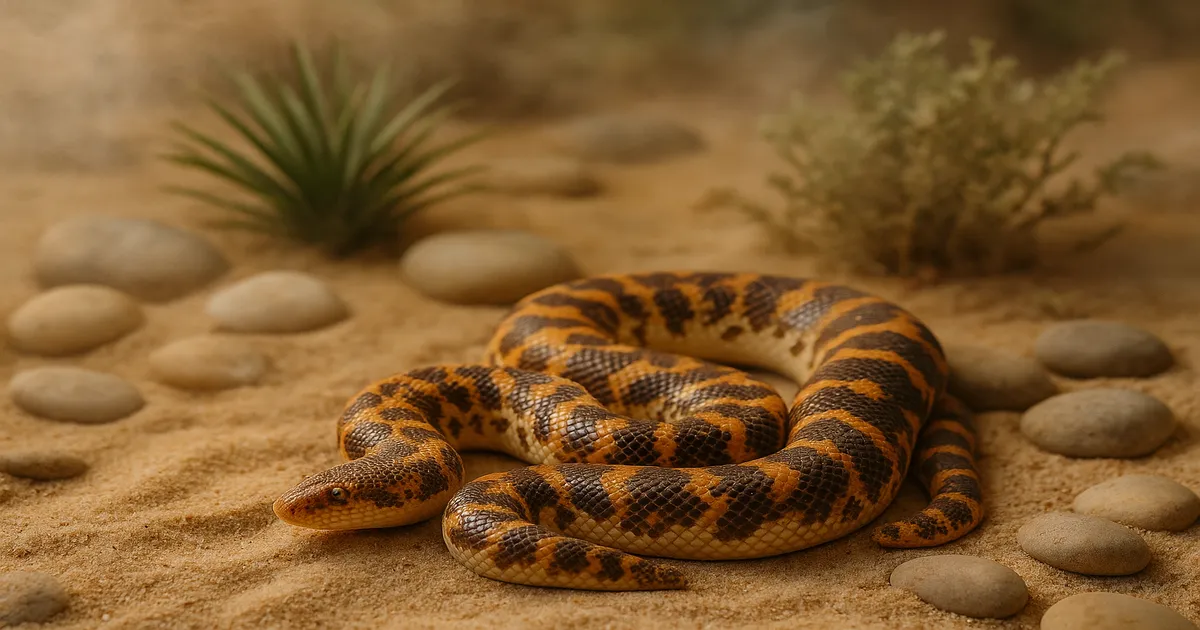
Quick Answer: To help a Kenyan Sand Boa shed cleanly, provide at least 6 inches of dry sand substrate so the snake can burrow and use friction to strip old skin, add a humid hide packed with damp sphagnum moss during pre-shed, and temporarily raise enclosure humidity to 50–60% RH. Incomplete sheds are almost always a husbandry issue — fix the substrate depth and the humid hide, and you’ll fix most shedding problems.
Kenyan Sand Boas are genuinely one of the easiest snakes to keep, but knowing how to help a Kenyan Sand Boa shed is something a lot of new keepers get wrong — usually because generic snake advice doesn’t account for how fossorial this species actually is. These aren’t snakes that pace around looking for a rough surface to rub against. They burrow, and they rely on pushing through substrate to mechanically strip old skin. Get that part right and you’re most of the way there.
Understanding the Kenyan Sand Boa Shedding Cycle
What Triggers Shedding
Shedding — ecdysis — is driven by thyroid hormones and kicks off whenever the new skin layer beneath the old one is ready. Growth, healing, and regular skin renewal all trigger it throughout a snake’s life. The spectacle (the transparent scale covering each eye) is part of the shed skin, which is why the eyes are the first and most obvious indicator that a shed is coming.
How Long Does It Take?
From the moment a KSB goes blue to the completed shed, expect 7–14 days. You can’t rush it, and honestly, most of it happens underground where you won’t see it anyway.
Recognising Pre-Shed: Going Blue and Beyond
The classic sign is blue-gray cloudiness in the eyes — the spectacles go opaque as fluid builds up between the old and new skin layers. You’ll also typically notice:
- More burrowing than usual (which is saying something for this species)
- Food refusal
- Extra time near or in the water dish
- Dull, matte skin instead of the usual sheen
Because KSBs spend most of their time buried anyway, you can easily miss the blue phase entirely. I’ve had snakes surface post-shed and had no idea they’d even gone blue.
The ‘Return to Clear’ Phase — Don’t Be Fooled
Here’s something that trips up a lot of keepers: the eyes go cloudy, then briefly clear again about 1–3 days before the actual shed. This is completely normal. It’s not a sign that pre-shed is over — the shed is actually imminent at this point. Don’t pull the humid hide or stop monitoring just because the eyes look normal again.
Why Kenyan Sand Boas Are Prone to Shedding Problems
The Fossorial Factor: Burrowing Is a Shedding Tool
This is the part most care guides skip. KSBs don’t just burrow for comfort — they need the physical resistance of substrate to loosen and strip old skin. A snake pushing through 6 inches of sand is essentially peeling its own shed from the outside in. Without adequate depth, that mechanism breaks down and you end up with stuck pieces.
Insufficient substrate depth is the single most common cause of incomplete sheds in this species. Not low humidity. Not temperature. Substrate depth.
Small Size Makes Retained Eye Caps Easy to Miss
Adult males top out at 15–20 inches, and juveniles are tiny. Retained eye caps on a small snake are genuinely hard to spot without good lighting and close attention. A magnifying loupe near the enclosure is worth having if you’re working with small animals.
Sexual Dimorphism and Enclosure Size
Female KSBs reach 24–36 inches and need more space and substrate volume than males. A 20-gallon long works well for adult males; adult females need a 40-gallon breeder minimum. The substrate depth principles are the same for both sexes — just scaled up.
How to Help a Kenyan Sand Boa Shed: Humidity
Maintenance Humidity vs Pre-Shed Humidity
This is a desert species. Day-to-day, keep enclosure humidity at 30–40% RH. During a shed cycle, bump it to 50–60% RH — but only temporarily and only in a targeted way. Keeping the whole enclosure wet long-term is a reliable way to give your snake scale rot or a respiratory infection.
Setting Up a Humid Hide
A humid hide is simple: take any small plastic container with a lid, cut an entry hole just big enough for the snake, and fill it with one of the following:
- Damp sphagnum moss — my go-to; it holds moisture well and resists mold
- Damp coconut fiber (Eco Earth)
- Damp paper towels — less elegant but completely functional and easy to swap out
The filler should be damp, not soaking. Squeeze out excess water before adding it. Replace every few days during shedding season.
The Moisture Pocket Technique
Instead of misting the enclosure surface, use a turkey baster to inject a small amount of water 3–4 inches deep into the substrate on the cool side. This creates a buried humid zone the snake can seek out while the surface stays dry — which is exactly how moisture gradients work in their natural habitat. Small trick, works surprisingly well.
Monitoring Humidity Accurately
Ditch the analog dial hygrometers. They’re notoriously inaccurate — sometimes off by 15–20% RH — which makes them nearly useless for this kind of precision. Go digital. Govee, Inkbird, and ThermoPro all make reliable probes for under $20. Place the probe at mid-enclosure level, not right next to the water dish.
Substrate Setup for Shedding Success
Minimum Substrate Depth by Snake Size
- Males: 4 inches minimum, 6 inches ideal
- Females: 6 inches minimum, 8 inches ideal
- Juveniles: 4 inches minimum
When in doubt, go deeper. There’s genuinely no such thing as too much substrate for this species.
Best Substrate Types
- Dry play sand — The gold standard. Fine-grained, washed, chemical-free play sand (Quikrete or Pavestone from any hardware store) is exactly what these snakes evolved to live in. Bake it at 250°F for 30 minutes before use to sterilize.
- 50/50 sand and coconut coir mix — Great for beginners. It packs well for burrowing, retains a slight amount of moisture, and is more forgiving if humidity dips.
- Aspen shavings — Functional and provides some friction, but tends to stick to the snake during a shed and doesn’t behave like natural habitat the way sand does.
Substrates to Avoid
- Cedar or pine — Toxic. Non-negotiable.
- Calcium sand — Impaction risk, especially in juveniles.
- Paper towels or reptile carpet as a permanent substrate — Fine for quarantine, useless for shedding. No friction, no burrowing.
Adding Friction Surfaces
Flat rocks and rough cork bark on the substrate surface give the snake additional rubbing surfaces during a shed — especially useful for the tail tip, which is one of the most commonly retained pieces. A cork bark flat costs a few dollars and can save you a lot of post-shed stress.
Temperature Setup That Supports Healthy Shedding
Correct Temperatures
- Warm side substrate surface: 90–95°F
- Ambient warm side air: 80–85°F
- Cool side: 75–80°F
- Nighttime minimum: 70°F
Why Under-Tank Heaters Matter
KSBs thermoregulate by pressing their bellies against warm substrate — a heat lamp alone won’t cut it. An under-tank heater or heat tape on the warm side delivers the belly heat they actually need. A snake that can’t thermoregulate properly will have compromised skin health, and poor skin health means poor sheds.
A thermostat is non-negotiable. An Inkbird ITC-306T is the minimum acceptable option; a proportional thermostat like a Herpstat 1 is better for long-term stability. Never run a UTH without one.
How to Remove a Stuck Shed from a Kenyan Sand Boa
Warm Water Soak
Fill a small escape-proof container with water at 85–90°F — warm but not hot. Let the snake soak for 15–20 minutes. The water softens retained shed considerably, and most stuck pieces will slide off with minimal encouragement afterward.
Damp Pillowcase Method
Place the snake in a slightly damp cloth pillowcase, tie it loosely, and leave it somewhere warm for 20–30 minutes. The humidity and fabric friction work together to loosen retained shed. This is a good alternative if the snake is particularly stressed by open-water soaking.
Manual Removal
After soaking, use damp fingers or a damp paper towel to gently roll retained shed off the snake. Always work toward the tail — with the direction of scale growth, never against it. If something isn’t moving easily, soak again rather than pulling harder.
Retained Eye Caps
Retained eye caps are the most dangerous retained shed, full stop. Never attempt dry removal. Soak first, then use a damp cotton swab to very gently work around the edge of the cap — loosening, not pulling. If eye caps have been retained across multiple consecutive sheds, stop trying to handle it yourself and see a reptile vet. Forcing dry eye caps off can permanently damage the spectacle.
When to See a Vet
- Eye caps retained after two or more consecutive sheds
- Visible damage or swelling around the eye area
- Large sections of shed consistently stuck despite correct husbandry
- Signs of infection (swelling, discharge, discoloration) around retained shed areas
Common Mistakes That Cause Shedding Problems
Shallow substrate. Using 1–2 inches of substrate is probably the most widespread mistake in KSB keeping. Paper towels and reptile carpet are fine for quarantine — they’re not a permanent solution for a burrowing snake that relies on substrate friction to shed.
Humidity extremes. Too dry with no humid hide almost guarantees retained pieces. But misting the entire enclosure heavily creates conditions for scale rot and respiratory infections. Targeted humidity — a humid hide, a moisture pocket — is always better than soaking the whole setup.
Handling during pre-shed. Leave the snake alone from the time it goes blue until the shed is complete. It’s visually impaired, potentially defensive, and there’s nothing you can accomplish by handling it that’s worth the disruption.
Feeding at the wrong time. Don’t offer prey during the blue phase. After the shed, wait at least 48–72 hours before feeding — longer if you had to manually assist. The snake needs time to settle.
Panicking about food refusal. A dull, gray, food-refusing KSB is almost certainly in pre-shed, not sick. Check the eyes for cloudiness, add the humid hide, and give it a week. If the snake is still refusing food and looking dull after 14 days with no shed, then it’s worth investigating further.
Pro Tips for Preventing Shedding Problems Long-Term
Keep a shedding log. Track the date of every shed. Juveniles typically shed every 6–10 weeks; adults every 8–14 weeks. Once you have a few data points, you’ll know when to add the humid hide before the snake even goes blue.
Permanent humid hide for beginners. If you’re new to the hobby, just keep a humid hide in the enclosure all the time. Refresh the moss every week or two. The snake will use it when it needs to and ignore it when it doesn’t. This single addition eliminates most shedding problems before they start.
Post-shed inspection routine. After every shed: examine the shed skin under good light and look for two eye caps (they’ll have a goggle shape), a complete tail tip, and no large missing sections. Then check the snake itself around the eyes, tail tip, and any labial pits. If something looks retained, address it before the next feeding.
Frequently Asked Questions
How do I know if my Kenyan Sand Boa is about to shed?
The clearest sign is blue-gray cloudiness in the eyes — the spectacles go opaque as fluid builds between the old and new skin layers. You’ll also typically see food refusal, more burrowing than usual, and extra time near the water dish. Because KSBs spend so much time underground, you may not notice until the eyes clear again (the “return to clear” phase), which actually means the shed is 1–3 days away.
Why is my Kenyan Sand Boa’s shed coming off in pieces?
Incomplete sheds almost always come down to two things: insufficient substrate depth and/or no humid hide. KSBs need at least 6 inches of sand to burrow through and generate the friction required to strip old skin. Add a humid hide with damp sphagnum moss during pre-shed and temporarily raise humidity to 50–60% RH.
How do I remove retained eye caps from a Kenyan Sand Boa?
Soak the snake in 85–90°F water for 15–20 minutes first — never attempt dry removal. After soaking, use a damp cotton swab to gently work around the edge of the retained cap. If eye caps have been retained across multiple consecutive sheds, see a reptile vet rather than forcing removal yourself, as dry or forced removal can permanently damage the spectacle.
Should I soak my Kenyan Sand Boa to help it shed?
A soak isn’t necessary if husbandry is correct — a humid hide and adequate substrate depth should handle it. But if pieces are stuck after a shed, a 15–20 minute warm water soak at 85–90°F is the safest way to soften retained skin before gentle manual removal. Don’t make soaking a routine part of every shed cycle; fix the underlying husbandry instead.
How often do Kenyan Sand Boas shed?
Juveniles shed roughly every 6–10 weeks due to rapid growth. Adults slow down to every 8–14 weeks, though this varies by individual, season, and feeding schedule. Keeping a shedding log after the first few sheds lets you predict when the next one is coming and add your humid hide proactively.