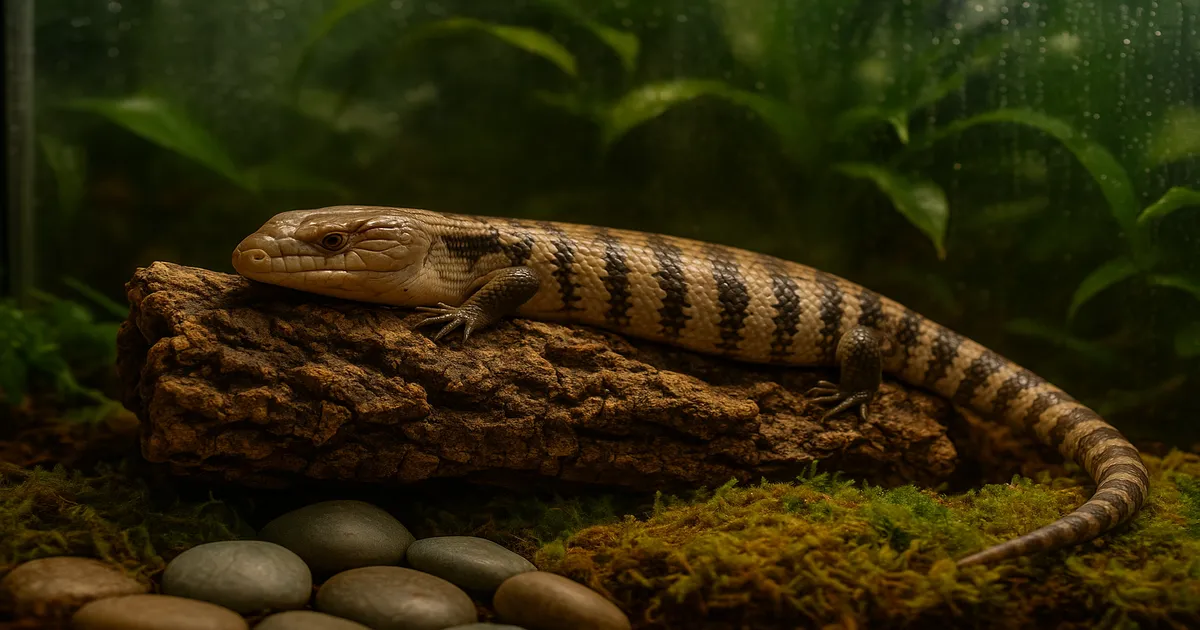
Quick Answer: Blue tongue skinks shed in patches — that’s completely normal, not a problem. The three things that prevent retained shed are correct humidity for your species, a humid hide available at all times, and a moisture-retaining substrate. If your skink already has stuck shed, start with a 15–20 minute warm soak. Retained shed on the toes or tail tip needs attention within 24–48 hours — don’t wait on that one.
Knowing how to help your blue tongue skink shed is one of the most practical skills you’ll develop as a keeper. Retained shed is one of the most common health issues in captive BTS, and nearly every case traces back to a husbandry problem you can actually fix. Get the environment right and most skinks handle shedding entirely on their own.
Understanding How Blue Tongue Skinks Shed
What Is Ecdysis and Why Does It Happen?
Shedding — technically ecdysis — is how reptiles replace the outermost skin layer, the stratum corneum. Unlike our skin, a skink’s doesn’t grow continuously with the animal. As your skink grows and old skin wears out, a new layer forms underneath and the old one separates and sloughs off.
New keepers are often surprised that blue tongue skinks don’t shed in one clean piece the way snakes do. They shed in sections — face, body, legs, tail — sometimes over several days. Finding multiple pieces of shed in the enclosure across a week is completely normal.
How Often Do Blue Tongue Skinks Shed?
Juveniles shed roughly every 4–6 weeks because they’re growing fast. Adults slow down to every 6–12 weeks, varying with season, individual growth rate, and health. Keep a shed log and you’ll quickly learn your skink’s personal rhythm — which makes it much easier to stay ahead of problems.
Signs Your Skink Is About to Shed
The obvious signs: dull or milky eyes, faded coloration, more time in the hide, reduced appetite, and sometimes genuine grumpiness. What experienced keepers notice first, though, is the behavioral shift — a skink that’s suddenly defensive or hiding more, even before the skin visibly dulls. That window, roughly 3–5 days before the dullness appears, is the best time to proactively bump humidity.
Humidity: The Single Biggest Factor in a Healthy Shed
Low humidity causes retained shed. That’s it. If your skink is consistently having shedding problems, check your RH levels before you do anything else.
Correct Humidity Ranges by Species
This is where a lot of keepers go wrong, because different species have genuinely different requirements:
- Northern/Eastern BTS (T. scincoides scincoides, T. s. intermedia): 40–60% RH daily, raised to 60–70% during active shed
- Indonesian species (T. gigas, Halmahera BTS): 60–80% RH daily, raised to 75–85% during shed — these are tropical rainforest animals and they need it
- Western BTS (T. occipitalis): 35–50% RH — the most arid-adapted of the commonly kept species; consistently pushing above 55% can cause respiratory issues
A lot of old care sheets recommend 30–40% RH for all blue tongue skinks. That’s dangerously dry for Indonesian species and too low for most Australians. If you’re following advice from a care sheet that doesn’t distinguish between species, find better sources.
Get a reliable digital hygrometer — the cheap dial gauges are notoriously inaccurate.
How to Raise Humidity During an Active Shed
Mist the enclosure walls and substrate, not directly on the animal. Cold water sprayed on a skink mid-shed stresses them and drops their body temperature at exactly the wrong time. A pressure sprayer makes this much easier than a standard spray bottle. (Exo Terra Misting Pump)
For Indonesian species especially, an automatic mister on a timer is worth every penny. Use distilled or RO water to avoid mineral buildup on the glass and decor.
Substrate Matters More Than Most Keepers Realize
Your substrate is managing humidity 24 hours a day. The best options for moisture retention:
- Topsoil/organic potting mix (no perlite, no fertilizer) — excellent retention, allows burrowing
- Coconut fiber (Eco Earth) — good retention, easy to spot clean
- Cypress mulch — holds humidity well, looks natural
- Bioactive mix (topsoil + play sand + coconut fiber) — the most stable option long-term
Paper towels and reptile carpet are fine for quarantine setups. As permanent substrates they’re useless — zero moisture retention, nothing to rub against. If your skink is on reptile carpet and having chronic shed problems, that’s probably a big part of why.
Setting Up the Right Shedding Environment
The Humid Hide: Non-Negotiable
I’ve seen keepers skip the humid hide and then be genuinely baffled by chronic retained shed. It’s almost always the missing piece. The setup is simple: a plastic container with a hole cut in the side or lid, filled with damp sphagnum moss, coconut fiber, or damp paper towels.
Moisture level matters. Do the squeeze test: grab a handful of the substrate, squeeze it firmly, and you should get 2–3 drops at most. Dripping freely means it’s too wet; nothing means it’s too dry.
The humid hide needs to be in the enclosure permanently — not just when you notice your skink is in shed. By the time you’ve spotted the shed, your skink may have needed that hide for days already.
Rough Surfaces Help Skinks Shed
In the wild, blue tongue skinks rub against rocks, bark, and rough terrain to pull old skin off. Give them the same options. Cork bark flats, slate tiles, rough stone hides, and driftwood all provide abrasive surfaces to work with. Flat rocks positioned under the basking spot are especially useful — they absorb and radiate heat and double as rubbing surfaces right where your skink spends the most time.
Temperature Requirements During Shedding
Ecdysis is a metabolic process. Your skink needs to thermoregulate properly to drive it.
- Basking spot: 100–105°F (38–40°C)
- Warm side: 85–90°F (29–32°C)
- Cool side: 70–75°F (21–24°C)
A basking spot consistently below 95°F (35°C) can slow or disrupt the shedding cycle. Temperature problems and shedding problems often show up together for exactly this reason.
How to Help Your Blue Tongue Skink With Retained Shed
The Warm Soak: Your First Move
This works remarkably well and should always be your first intervention.
- Fill a shallow container with lukewarm water at 85–90°F (29–32°C) — warm bath temperature, not hot
- Water depth should reach your skink’s belly but stay shallow enough that it can hold its head up without effort
- Soak for 15–20 minutes
- After soaking, use a soft damp washcloth to gently rub retained areas — the skin should come off with minimal pressure if the soak did its job
- If it doesn’t come off easily, soak again. Never pull dry retained shed — you’ll tear the new skin underneath it, which opens the door to infection
The Pillowcase Trick for Stubborn Toe Shed
This sounds strange but it genuinely works. After a warm soak, place your skink in a slightly damp pillowcase and let it move around in there for 10–15 minutes. The fabric texture combined with the skink’s own movement dislodges stubborn toe shed without any manual picking. I’ve used this on skinks where hand removal wasn’t working, and it’s solved the problem cleanly every time.
Coconut Oil for Persistent Stuck Patches
For stuck shed on toes or tail tip that won’t budge after soaking, apply a very thin layer of pure unrefined coconut oil, let it sit for a few minutes, then gently work the skin free. Wipe off any excess afterward — a greasy skink tracking oil through its substrate isn’t ideal.
Retained Eye Caps: When to Call a Vet
Retained spectacles appear as a slightly opaque, wrinkled layer over the eye. They’re easy to miss and genuinely dangerous — left in place, they cause eye infections and can eventually lead to blindness.
If you spot them, soak the animal first, then try to gently roll the eye cap off using a damp cotton swab. The emphasis is on gently. Never use tweezers on eye caps. If it doesn’t come free easily, stop and see a vet. The eye is not worth the risk.
Toes and Tail Tip: The Areas That Can’t Wait
Retained shed on the toes and tail tip isn’t cosmetic. The old skin constricts like a tourniquet, cutting off circulation, and necrosis can set in within days. Permanent loss of digits or tail tip is a real outcome if this isn’t addressed promptly.
After every shed, do a full body check: toes, tail tip, eye caps, vent area. Don’t assume the shed is complete just because you found a large piece of skin in the enclosure.
Species-Specific Notes
Northern BTS (T. s. scincoides) is the most forgiving species for humidity management. It handles 40–60% RH without much complaint and gives you more margin for error than most.
Indonesian species (T. gigas, Halmahera) are a different story entirely. Keeping them at “Australian” humidity levels is one of the most common mistakes keepers make, and retained shed is the predictable result. If you have an Indonesian species, an automatic mister and a bioactive setup aren’t luxuries — they’re just the right way to keep this animal. (MistKing Starter Misting System v4.0)
Western BTS (T. occipitalis) are the most arid-adapted of the commonly kept species. Their sweet spot is 35–50% RH. They still need a humid hide, but keep it on the drier end compared to what you’d offer a Northern or Indonesian.
Blotched BTS (T. nigrolutea) come from cooler parts of southeastern Australia and Tasmania. They run at lower temperatures, have a slower metabolism, and shed less frequently. Don’t skip the humid hide just because they’re a cooler-climate animal.
Pro Tips for Cleaner Sheds
Bioactive setups almost universally reduce retained shed problems. A living substrate self-regulates humidity, provides naturalistic rubbing surfaces, and creates a more stable environment overall. More work upfront, less intervention long-term.
Don’t rush to remove shed pieces from the enclosure. Leave them for a day or two — skinks actively use old shed as grip points to pull off remaining sections. It’s natural behavior and it works.
Keep a shed log. Photograph every shed and note the date. After a few cycles you’ll know your skink’s rhythm well enough to boost humidity proactively before the next one. You’ll also catch it quickly if the cycle changes, which can be an early signal of a health issue.
If shedding problems persist despite correct husbandry, that’s worth a vet visit. Chronic dysecdysis can indicate a vitamin A deficiency, and no amount of humidity adjustment will fix a nutritional problem.
Frequently Asked Questions
Why is my blue tongue skink not shedding completely?
Incomplete sheds almost always come down to low humidity, no humid hide, or an inadequate substrate. Check your RH with a reliable digital hygrometer and make sure your skink has permanent access to a humid hide filled with damp sphagnum moss or coconut fiber. If the husbandry is correct and incomplete sheds keep happening, see a vet — nutritional deficiencies, particularly vitamin A, can cause chronic dysecdysis.
How do I remove stuck shed from my blue tongue skink’s toes?
Start with a 15–20 minute warm soak at 85–90°F (29–32°C). Then try the pillowcase trick — place the skink in a slightly damp pillowcase for 10–15 minutes and let its own movement do the work. Still stuck? A thin application of pure coconut oil can help loosen it. Never pull dry stuck shed without soaking first.
Should I soak my blue tongue skink while it’s shedding?
Not if everything’s going normally. With correct humidity and a humid hide available, most skinks handle shedding on their own without any help from you. Soaking is your intervention tool when shed is retained after the process should be complete — not a routine step.
How long does a blue tongue skink take to finish shedding?
From the first behavioral changes to a complete shed, expect 1–2 weeks. The actual skin loss often happens over a few days, and because BTS shed in patches, you’ll typically find pieces on different days. If shed is still stuck more than a week after it started coming off, it’s time to intervene.
Is it normal for blue tongue skinks to eat their shed skin?
Yes, completely normal. Skinks — and many other reptiles — will eat their shed skin, and there’s nothing wrong with letting them. It’s thought to recover some nutrients. Don’t be alarmed if you find no shed in the enclosure at all; your skink may have eaten it.