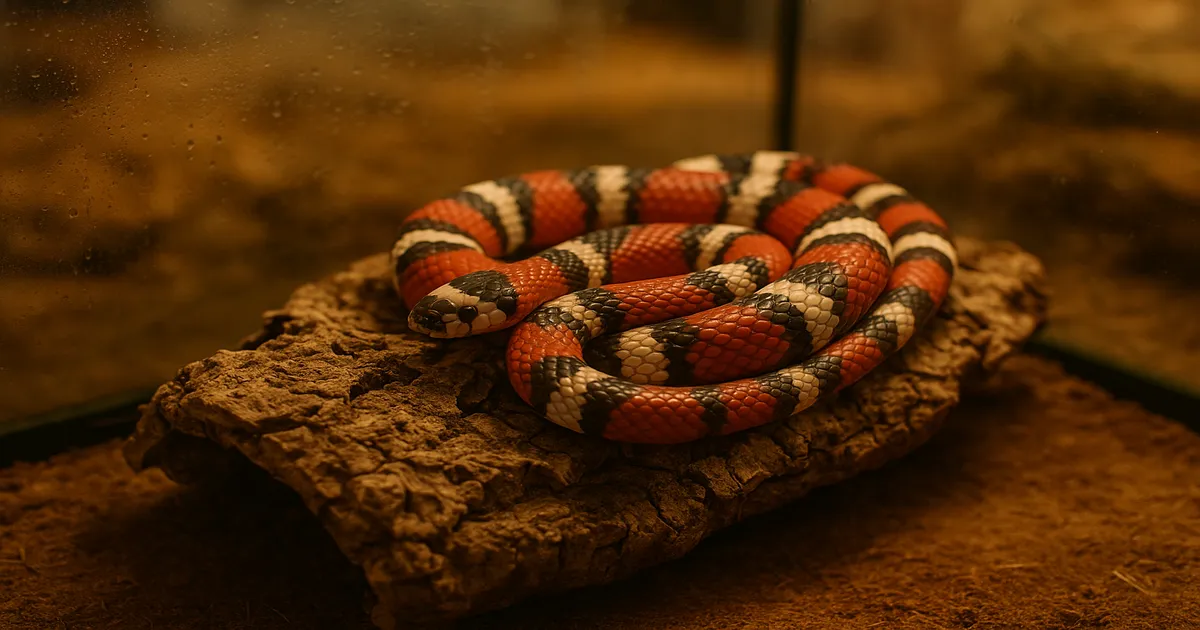
Quick Answer: To help a corn snake with stuck shed, soak it in 85–90°F (29–32°C) water for 20–30 minutes, then gently roll the loosened skin backward toward the tail with damp fingers. Check the shed afterward for missing eye caps and tail tip skin. One incident handled promptly is rarely serious — but if it keeps happening, your setup needs to change.
Stuck shed is one of the most common problems corn snake keepers run into, and honestly, it’s almost always a husbandry issue. If you catch it early and handle it right, you can usually fix it at home with no lasting harm to the snake. The mistake most people make is either pulling dry skin before soaking — which tears the new skin underneath and causes scarring — or treating it as bad luck when it’s actually the enclosure telling you something is wrong.
This guide covers how to help a corn snake with stuck shed safely, what’s causing it, and how to stop it from happening again.
What Is Stuck Shed (Dysecdysis)?
Dysecdysis just means the shed didn’t complete normally. A healthy shed peels off in one inside-out piece — like removing a sock — including the eye caps (the clear spectacles covering each eye) and the very tip of the tail. When pieces stay behind, that’s dysecdysis.
Corn snakes shed every 4–8 weeks as juveniles and every 6–12 weeks as adults. The process starts when the eyes go cloudy and blue-gray — the “blue phase,” which lasts roughly 3–5 days. The eyes then clear up, and the actual shed usually follows 3–7 days later. If the skin doesn’t slide off cleanly during that window, you’ve got something to address.
Why Corn Snakes Get Stuck Shed
Low Humidity Is the #1 Cause
The vast majority of dysecdysis cases come down to humidity. Corn snakes need 40–60% RH under normal conditions, rising to 60–70% during a shed cycle. In dry climates, a screen-top glass tank can drop to 20–30% RH — I’ve measured this myself, and it’s genuinely shocking how fast moisture disappears through mesh. At those levels, stuck shed is almost inevitable.
Dehydration and a Too-Small Water Bowl
A dehydrated snake is going to have a hard shed. The water bowl needs to be large enough for the snake to actually soak in — at least 6–8 inches (15–20 cm) in diameter for an adult. Snakes will often self-soak before a difficult shed if you give them the option, so don’t underestimate how much that bowl matters.
Mites, Injury, and Illness
Mites are an underdiagnosed cause of chronic dysecdysis. They physically disrupt the separation between old and new skin, and they’re easy to miss — look for tiny red or black dots around the eyes, labial pits, and near the vent. Old scars also cause problems, since damaged tissue doesn’t shed cleanly. Respiratory infections, Vitamin A deficiency, and other systemic illness can all show up as shedding issues too.
Stress and Smooth Enclosures
During blue phase, a corn snake is nearly blind and on edge. Handling during this period stresses the animal and can disrupt the shed. Smooth enclosure surfaces are another overlooked factor — snakes need rough anchor points like cork bark or branches to grip and pull against. A bare plastic tub with no texture makes the whole process harder.
Humidity and Temperature: What You Actually Need
Humidity Targets
- Normal maintenance: 40–60% RH
- Blue phase through shed completion: 60–70% RH in the main enclosure
- Inside the humid hide: 80–90% RH
Don’t try to push the whole enclosure above 70–75% RH without good ventilation. Sustained high humidity in a poorly ventilated space leads to scale rot and respiratory infections — you’re trading one problem for another.
Temperature Gradient
- Warm side ambient: 80–85°F (27–29°C)
- Cool side ambient: 72–75°F (22–24°C)
- Nighttime low: No lower than 65°F (18°C)
Temperatures below 70°F (21°C) during a shed cycle slow the metabolic processes involved in skin separation. Cold snakes shed poorly — it’s that simple.
Ditch the Analog Hygrometer
Throw it out. Analog dial hygrometers can read 15–20% off actual humidity levels, which makes them worse than useless — they’ll tell you everything is fine when it isn’t. Get a digital unit like a Govee or Inkbird (Govee Temperature Humidity Sensor H5179) and place it on the warm side of the enclosure at mid-height.
Setting Up a Humid Hide
If I had to pick one single piece of equipment that prevents dysecdysis, it’s the humid hide. It gives the snake a microenvironment with 80–90% RH that it can enter voluntarily — mimicking the humid retreats under bark and rotting logs that corn snakes use in the wild when they’re ready to shed.
You don’t need to buy anything fancy. Take any plastic container — a Tupperware or Glad storage box works perfectly — cut an entrance hole in the lid or side just large enough for the snake to enter, and fill the bottom with damp sphagnum moss. The moss should be moist but not dripping — if you squeeze it and water runs out, it’s too wet. Coco coir works as a cheaper alternative.
Place the hide on the warm side. The snake needs heat and humidity simultaneously when preparing to shed, and a humid hide on the cool side defeats the purpose. Set it up proactively — before or at the first sign of blue phase, not after the shed is already stuck. Re-moisten the moss every 2–3 days; it dries out faster than you’d expect.
How to Remove Stuck Shed Safely: Step by Step
Step 1 — Confirm What’s Actually Stuck
Lay the shed out flat and compare it to the snake. Look for gaps — patches where skin didn’t come off. Pay close attention to the eyes (retained caps look dull or have a faint layered appearance) and the tail tip. A magnifying glass helps here.
Step 2 — Warm Water Soak
Fill a plastic tub with water at 85–90°F (29–32°C) — warm but not hot. Drop in a piece of cork bark or a rough rock so the snake has something to rub against. Many snakes will finish their own shed during the soak if you give them that option. Cover the container loosely — corn snakes are excellent escape artists — and leave them in for the full 20–30 minutes. Resist the urge to check every five minutes.
Step 3 — The Pillowcase and Moss Method (My Preferred Approach)
Put a generous amount of damp sphagnum moss inside a pillowcase, place the snake inside, and loosely close the top. The snake can move freely, the moss provides sustained humidity against the skin, and the fabric gives something to rub against. Twenty to thirty minutes in there does a remarkable job of loosening stuck shed — often better than a plain water soak.
Step 4 — Gentle Manual Removal
Wet your hands first. Dry fingers on dry shed creates friction and tears. Start at the neck or snout, find an edge of the old skin, and gently roll it backward toward the tail — like removing a sock inside-out. Never pull perpendicular to the body. For stubborn patches, wrap the area loosely in a warm damp cloth and apply gentle pressure as you work along the body. The cloth grips the shed without pulling on the new skin underneath.
Step 5 — Check the Eyes and Tail Tip
After removal, go over the snake carefully. Eyes should be clear and glossy. Check the tail tip for any constricting rings of old skin — retained tail tip shed can act like a tourniquet and cause necrosis surprisingly quickly. Don’t skip this step.
Retained Eye Caps: A Special Case
A healthy corn snake eye is clear, smooth, and glossy. A retained eye cap looks slightly dull, has a faint layered appearance, or looks like there’s a second “skin” sitting on top. Compare both eyes — asymmetry is a red flag.
After a full soak, you can try gently rolling a damp cotton swab across the surface of the eye. If the cap is loose, it may adhere to the swab and come off cleanly. This requires a steady hand. If it doesn’t release with light contact — stop. Don’t push harder. Don’t use tweezers.
If the cap doesn’t come off easily, leave it and focus on improving conditions for the next shed. After two or three cycles of retained caps stacking up, get to a vet — they can remove them safely without risking corneal damage. Multiple retained caps left untreated can cause permanent eye damage or blindness. That’s not a situation to monitor indefinitely.
Mistakes That Make Stuck Shed Worse
Pulling shed before soaking. Dry, stuck shed pulled off forcibly tears the new skin underneath, leaving scars — and scarred skin sheds poorly forever. Always soak first.
Handling during blue phase. The snake is stressed, nearly blind, and more likely to bite. The handling itself can disrupt the process. Leave them alone until the eyes clear.
Trusting an analog hygrometer. Already covered, but worth repeating — they’re unreliable enough that you genuinely can’t trust the readings.
Ignoring the tail tip. Retained shed there can cause necrosis within days. Always check it.
Treating stuck shed as a one-off. One stuck shed might be bad luck. Two or three in a row means something is wrong with your setup — humidity, temperatures, substrate, water access, or possibly mites. Find the cause.
Long-Term Prevention
Switch enclosures if needed. PVC enclosures retain humidity dramatically better than screen-top glass tanks. (Zen Habitats 4x2x2 PVC Reptile Enclosure) If you’re committed to glass, cover a significant portion of the screen top with aluminum foil or a glass panel to trap moisture.
Use a moisture-retaining substrate. Coco coir, cypress mulch, and bioactive topsoil mixes all hold humidity far better than aspen alone. Corn snakes in naturalistic bioactive setups with a deep soil substrate almost never have dysecdysis.
Add rough decor. Cork bark, rough branches, and textured hides give the snake anchor points to grip and pull against when shedding. Don’t underestimate how much this matters.
Keep a shedding log. Corn snakes are fairly predictable once you know their individual cycle. When a shed is coming due, raise humidity 1–2 weeks in advance and freshen the humid hide. Being proactive eliminates most problems before they start.
Check for mites if the problem persists. Chronic dysecdysis despite good humidity is a red flag for mites or nutritional deficiency. For the latter, offer prey gut-loaded with beta-carotene-rich foods or use an occasional reptile multivitamin.
See a vet if stuck shed keeps recurring despite husbandry corrections, retained eye caps are present after multiple cycles, or the snake shows signs of illness — wheezing, mucus, or unusual lethargy.
Frequently Asked Questions
How long should I soak my corn snake for stuck shed?
Soak for 20–30 minutes in water at 85–90°F (29–32°C). Shorter soaks often don’t give the skin enough time to fully hydrate and loosen. Adding a piece of cork bark to the container gives the snake something to rub against, and many will shed on their own during that window.
Can retained eye caps cause permanent damage?
Yes. Multiple retained eye caps stacking up over successive sheds can cause permanent eye damage or blindness. A single retained cap addressed promptly is less likely to cause lasting harm, but don’t leave it indefinitely — if it doesn’t resolve in the next shed cycle with improved husbandry, see a vet.
What humidity does a corn snake need to shed properly?
Maintain 40–60% RH normally, raise it to 60–70% RH during the shed cycle, and provide a humid hide with 80–90% RH inside. The humid hide is the most important piece — it lets the snake access high humidity on demand without saturating the whole enclosure.
Why does my corn snake keep having stuck sheds even with good humidity?
First, double-check you’re using a digital hygrometer — analog models can read significantly off. Beyond that, look for mites, check whether the water bowl is large enough to soak in, make sure there are rough surfaces in the enclosure, and confirm temperatures aren’t dropping too low at night. Chronic dysecdysis despite genuinely good humidity can also indicate nutritional deficiency or an underlying health issue that warrants a vet visit.
Is it safe to help a corn snake shed at home, or should I go to a vet?
A single stuck shed is almost always safe to handle at home using the soak-and-roll method described above. Go to a vet if the shed won’t release after soaking, if you suspect retained eye caps that won’t budge, if you see any signs of skin damage or infection, or if stuck sheds keep recurring despite fixing your husbandry.