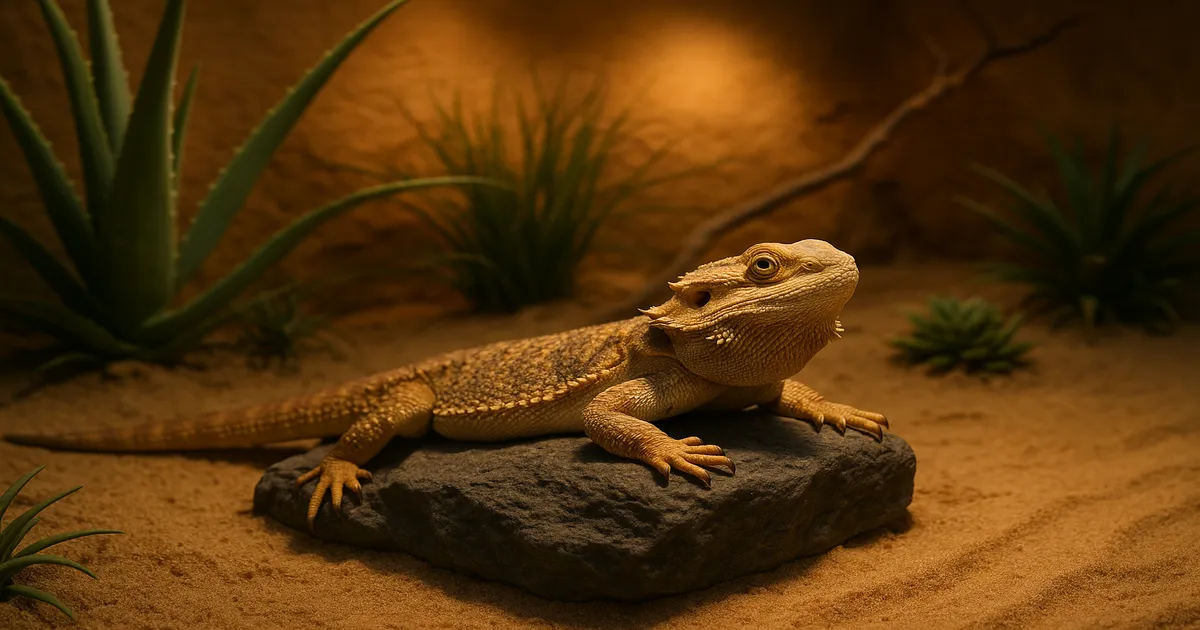
Quick Answer: A healthy adult bearded dragon can manage up to 48 hours alone with equipment running and fresh water available — but anything beyond that needs a knowledgeable caretaker checking in daily. Bearded dragons have real daily requirements around feeding, UVB, and temperature that make them genuinely high-maintenance during owner absences. Planning ahead isn’t optional; it’s part of responsible ownership.
Figuring out how to care for a bearded dragon while on vacation is one of those things that catches new owners completely off guard. You book the flights, pack the bags, and then it hits you: your dragon eats every day, needs 10–13 hours of UVB, and will be in serious trouble if the thermostat dies while you’re on a beach somewhere. These are diurnal, obligate heliotherms — their digestion, immune function, and overall health depend on a consistent light/dark cycle and reliable external heat. A week of neglect that a ball python might shrug off can genuinely harm a beardie. So let’s talk about how to actually handle this.
Why Bearded Dragons Need More Vacation Planning Than Most Pets
Daily Care Needs That Can’t Be Skipped
Adult dragons need fresh greens every single day and insects several times a week. Juveniles are more demanding — they need insects two to three times daily to support rapid growth. Skip that for a few days and you’re not just dealing with a hungry lizard; you’re risking real metabolic consequences.
UVB is non-negotiable too. Even a few days without proper UV exposure starts affecting calcium metabolism, particularly in younger animals. It’s not something you can catch up on when you get home.
Equipment Failure Is a Real Risk
A basking bulb that burns out at noon on a Tuesday becomes a crisis if nobody’s checking the enclosure. Temperatures can crash or spike within hours depending on your home’s ambient climate. A dragon that’s been sitting at 60°F (15°C) for two days will be in rough shape. Thermostats fail. Timers reset after power blips. These aren’t rare edge cases — they’re exactly why you need eyes on the enclosure every day.
Life Stage Changes Everything
Juveniles are the hardest to leave. Their feeding schedule is intense and they’re more fragile. Adults are more forgiving, especially if they’re naturally sliding into brumation in winter — a brumating adult may not eat for weeks and needs only minimal check-ins. If you can time a longer trip to coincide with your adult dragon’s natural brumation window, that’s genuinely worth considering.
How to Care for a Bearded Dragon While on Vacation: Choosing the Right Option
Weekend Trip (1–2 Days): Minimal Intervention
This is the one scenario where leaving a healthy adult alone is arguably acceptable. Make sure everything is running perfectly before you leave, put fresh water in a spill-proof dish, and have a neighbor do one quick visual check. Don’t push this to 72 hours — 48 is the ceiling.
Short Vacation (3–7 Days): In-Home Pet Sitter
An in-home sitter is the gold standard here. Your dragon stays in their familiar environment, stress stays low, and daily care actually gets done. The key word is daily — someone needs to come every single day, not every other day.
Extended Trip (1–4 Weeks): Professional Reptile Sitter or Boarding
For anything over a week, go with either a professional reptile sitter or boarding at a reputable exotic vet clinic or reptile specialty store. Reptile boarding is genuinely underutilized — the animal stays in a professionally monitored environment with people who actually know what they’re looking at. It’s worth paying for.
Long-Term Absence (1+ Month): Temporary Rehoming
At this point, temporary rehoming with an experienced keeper you trust is worth serious consideration. Make sure they have your dragon’s full vet history and your vet’s contact information. This isn’t abandonment — it’s making a responsible call.
Where to Find a Reptile-Experienced Sitter
Don’t just grab a generic pet sitter off Rover. Look for:
- Local herpetological societies — members often sit for each other
- Reptile-focused Facebook groups in your area
- University biology departments — students who work with reptiles are often excellent sitters
- Your exotic vet’s office — they frequently have referrals or staff who sit on the side
Preparing Your Enclosure Before You Leave
Temperature Zones to Verify
Before departure, confirm these with an infrared temperature gun — not just an ambient thermometer:
- Basking spot: 100–110°F (38–43°C) for adults; 105–115°F (40–46°C) for juveniles
- Cool side: 80–85°F (27–29°C)
- Nighttime low: No lower than 65°F (18°C) — if your home drops below that, you need a ceramic heat emitter or deep heat projector on a thermostat running overnight
Ambient humidity should sit between 30–40%. Higher than that in a warm enclosure invites respiratory issues.
Lighting Timers and UVB Setup
Set digital outlet timers with battery backup for your UVB and basking lights — 10–13 hours of UVB daily is the target. The battery backup matters more than people think. A standard mechanical timer resets to midnight after any power interruption and your dragon’s whole schedule gets thrown off.
Replace any UVB bulb that’s more than six months old before you leave. The visible light might look fine, but UVB output degrades well before the bulb burns out. Arcadia T5 HO 12% and Zoo Med Reptisun T5 HO 10.0 are the two I’d trust.
Switch to Tile Substrate
If you’re running loose particle substrate, switch to tile before you leave. It’s dramatically easier for a sitter to spot-clean, eliminates impaction risk if they accidentally overfeed, and doesn’t require any expertise to maintain. Ceramic or slate tile retains heat well and looks good too.
Smart Tech Worth Setting Up
For under $100 total, you can have genuine peace of mind:
- WiFi thermometer/hygrometer (Govee or Inkbird) — sends phone alerts if temps go out of range
- IP camera (Wyze Cam or Blink) — lets you visually check the enclosure and confirm your sitter actually showed up
- Smart plugs (Kasa or TP-Link) — remote control of lights and supplemental heat if something goes wrong
- UPS unit — provides 1–4 hours of backup power during outages to keep critical equipment running
Feeding and Supplement Prep for Your Sitter
Keep It Simple and Written Down
Tell your sitter exactly what to do — not what’s theoretically possible. For adults: fresh greens every morning, insects 3–5 times per week. For juveniles: insects twice daily, greens every morning. Write it down. Put it on the care sheet. Don’t assume they’ll remember what you told them verbally.
Use Dubia Roaches, Not Crickets
Crickets are a nightmare for pet sitters. They escape, they’re loud, they smell, and they’ll bite your dragon if left in the enclosure too long. Dubia roaches are the opposite: they can’t climb smooth surfaces, they’re quiet, they’re more nutritious, and they’ll sit in a feeder dish without causing chaos. Pre-load a secure feeder dish so your sitter just drops them in and walks away.
Pre-Portion Salads and Supplements
Batch-prepare your dragon’s salads before you leave — collard greens, mustard greens, dandelion greens, turnip greens — and store them in daily portions in the fridge, labeled by day. This removes any chance of your sitter feeding the wrong greens or skipping vegetables because they’re not sure what to buy.
Do the same with supplements. A weekly pill organizer labeled by day works perfectly: calcium without D3 on most days, calcium with D3 twice a week, multivitamin once a week. Your sitter doesn’t need to understand the rationale — they just need to open the right compartment.
Hydration: Baths and Fresh Water
Fresh water in the enclosure daily. Lukewarm baths at 85–90°F (29–32°C), two to three times per week, help with hydration and support healthy shedding. Show your sitter how to do this before you leave — it takes five minutes and it helps to see it once.
Building a Care Sheet Your Sitter Will Actually Use
Print it out, laminate it if you can, and put it somewhere impossible to miss. Include:
- Exact feeding amounts and schedule
- Supplement routine (the pill organizer makes this easy to reference)
- Warning signs: gaping mouth, prolonged lethargy, dark beard, retained shed around toes or tail tip
- Your vet’s name and phone number
- Your contact info and a backup emergency contact
Add photos of normal basking posture, healthy droppings, and a good shed — alongside photos or descriptions of what concerning versions look like. Most sitters aren’t going to panic-call you over a slightly dark beard if they understand what’s normal.
Put everything in one visible spot: tongs, dubia roach container, supplement organizer, salad containers, spray bottle, care sheet. Don’t make your sitter hunt through cabinets. The easier you make it, the more likely it actually gets done.
Have your sitter come over at least once while you’re still home. Walk them through the full routine — feeding, supplements, the bath, the temperature check. Let them do it while you watch. This single step prevents more problems than anything else on this list.
Mistakes That Can Actually Hurt Your Dragon
- Leaving the dragon alone beyond 48 hours. Equipment fails. Feeders escape. Things go wrong. It’s a genuine welfare risk.
- Handing off care to an unprepared friend without written instructions, a vet contact, and a practice session. Good intentions aren’t enough.
- Skipping the pre-departure equipment check. Test every thermostat, timer, and bulb at least 3–5 days before you leave — that gives you time to order replacements if something’s failing.
- Running out of supplies mid-trip. Stock 150% of what you think you’ll need: feeders, greens, calcium powder, all of it.
- Assuming a week without UVB is fine. It’s not, especially for juveniles. Calcium metabolism is affected faster than most people expect.
- Not having a reptile vet on file before you go. Finding an emergency exotic vet while you’re in another time zone is stressful and slow. Establish that relationship now.
Frequently Asked Questions
Can I leave my bearded dragon alone for a week?
No — a week alone is too long and puts your dragon at real risk. A healthy adult can handle up to 48 hours with equipment running and water available, but beyond that you need someone checking in daily. Equipment failures, dehydration, and missed feedings compound quickly over seven days.
How long can a bearded dragon go without food?
A healthy adult can technically go without food for a couple of weeks, but that doesn’t mean it’s fine to let it happen. Water is more urgent — dehydration sets in fast in a warm enclosure. Fresh water should be available daily, and baths two to three times per week help maintain hydration.
What’s the best option for bearded dragon care while on vacation?
It depends on trip length. For a weekend, a trusted neighbor doing a daily check is fine. For 3–7 days, an in-home pet sitter with a detailed care sheet is ideal. For longer trips, look into professional reptile boarding at an exotic vet clinic or reptile specialty store — it’s safer than leaving them with an inexperienced home sitter.
Can bearded dragons be boarded like dogs?
Yes, and this option is underused. Many exotic vet clinics and reptile specialty stores offer boarding in a professionally monitored environment. Call your exotic vet — they’ll either offer it themselves or refer you somewhere reputable.
How do I keep temperatures stable while I’m away?
Use a quality thermostat on all heat sources so temperatures stay dialed in automatically. (Herpstat 1) Add a WiFi thermometer that sends phone alerts if temps drift out of range, and set your lights on a digital timer with battery backup. Those three things together give you solid remote oversight of the thermal environment even when you’re not home.