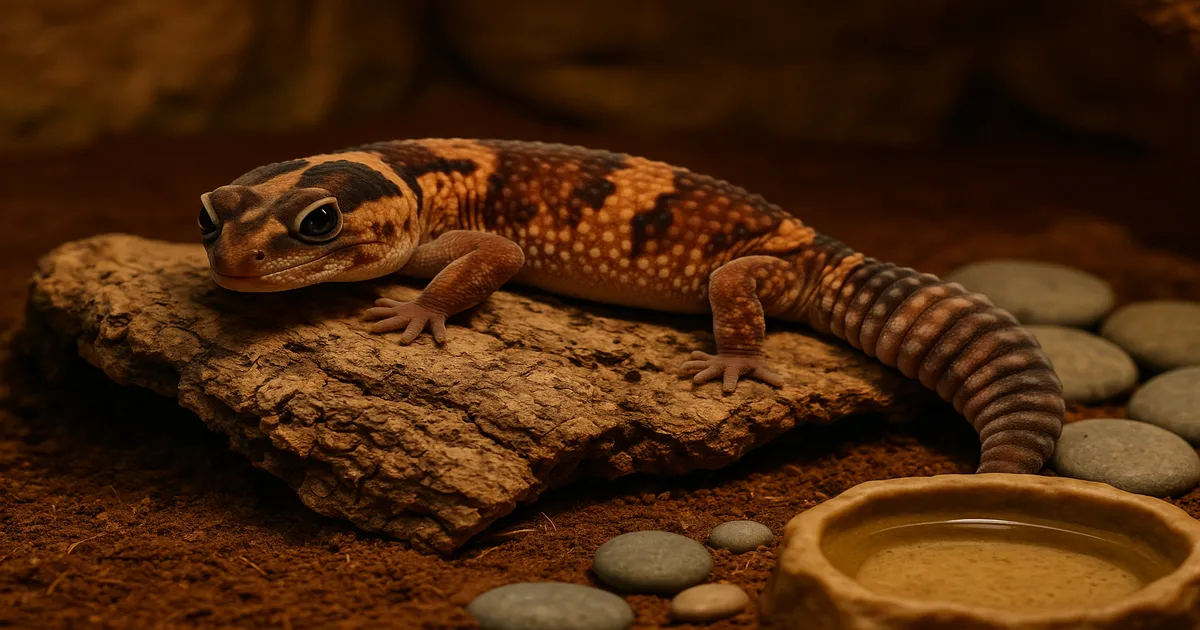
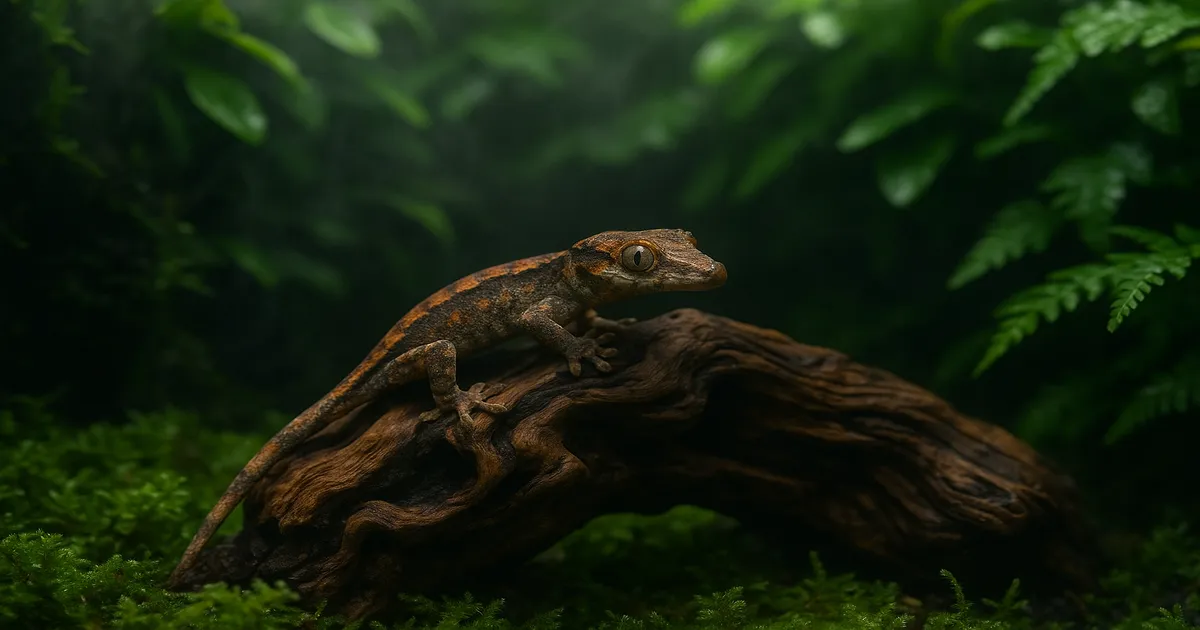
Quick Answer: Baby gargoyle geckos need cool temperatures (72–78°F), moderate-to-high humidity (60–80%), a small starter enclosure, and a diet built around meal replacement powders supplemented with small insects. They’re fragile in the first few months — dehydration and overheating are the two biggest killers — but with the right setup they’re genuinely rewarding geckos that can live 15–20+ years.
If you want to know how to care for a baby gargoyle gecko properly, the most important thing to understand upfront is this: these are not typical reptiles. They don’t need heat lamps. They don’t need a basking spot. They come out of the egg at 3–4 inches long and 2–3 grams, with almost no buffer against husbandry mistakes. A hatchling that’s too hot, too dry, or chronically stressed can crash fast — but get the basics right and you’ve got one of the most personable geckos in the hobby.
Baby Gargoyle Gecko Care at a Glance
| Parameter | Hatchling Target |
|---|---|
| Daytime temp | 72–78°F (22–26°C) |
| Nighttime temp | 65–72°F (18–22°C) |
| Absolute max | 85°F (29°C) |
| Humidity | 60–80% |
| Hatchling size | 3–4 in, 2–3 grams |
| Starter enclosure | 6×6×8 to 6×6×12 inches |
| MRP feeding | Every 2–3 days |
| Lifespan | 15–20+ years |
Species Background: What Gargoyle Geckos Actually Need
Gargoyle geckos (Rhacodactylus auriculatus) are native to the southern end of Grande Terre in New Caledonia — a French territory in the South Pacific with humid subtropical forests and a mild climate that never gets particularly hot. That last point matters enormously when you’re setting up a captive enclosure.
In the wild, they experience real seasonal variation: cooler, drier winters and warmer, wetter summers. That cycle drives breeding behavior in captivity. More immediately, it tells you these geckos are built for mild conditions, not tropical heat.
They’re also semi-arboreal, which sets them apart from crested geckos. Gargoyles use both the canopy and the ground — so tall enclosures with climbing structures at multiple levels serve them far better than wide, flat tanks. They’re crepuscular to nocturnal, so don’t panic when your baby spends all day wedged behind a piece of cork bark. That’s exactly what it should be doing.
Choosing the Right Enclosure for a Baby Gargoyle Gecko
Size Up Gradually — Don’t Start Big
This is the mistake I see most often. A hatchling does not need a 12×12×18 enclosure. In a space that large, babies struggle to find food, can’t maintain humidity microclimates, and often become chronically stressed. Start small and size up as they grow:
- Under 10 grams (0–3 months): 6×6×8 or 6×6×12 inches — a plastic critter keeper works perfectly
- 10–25 grams (3–6 months): 8×8×12 to 10×10×12 inches
- 25–40 grams (6–12 months): 12×12×18 inches, which can serve as a permanent home for most adults
For the first few months, a simple plastic critter keeper is genuinely one of the best options — cheap, easy to clean, and easy to monitor.
Once they’ve grown into the juvenile stage, an Exo Terra Mini Tall or Zoo Med Nano Tall both work well. For sub-adults, the Exo Terra 12×12×18 is the industry standard, and Zen Habitats makes a PVC version that holds humidity noticeably better than glass.
Always go vertical. A horizontal aquarium of the same volume doesn’t give them the thermal and humidity gradient they need.
Temperature and Humidity: The Two Things That Will Kill Your Gecko If You Get Them Wrong
Temperature
I’ll be direct: overheating kills more gargoyle geckos than almost anything else. Keepers coming from bearded dragons or ball pythons assume all reptiles need it warm. Gargoyle geckos need the opposite — they’re comfortable at temperatures most people keep their houses at.
- Daytime ambient: 72–78°F (22–26°C)
- Nighttime: 65–72°F (18–22°C)
- Absolute maximum: 85°F (29°C) — above this, especially in a small enclosure, you’re in dangerous territory
In most homes, you don’t need supplemental heating at all. If your room regularly drops below 65°F at night, a 25–40 watt ceramic heat emitter mounted on the top screen is your safest option. Never run it without a thermostat — the Inkbird ITC-306T is affordable and reliable, and the Herpstat 1 is the premium choice if you want something built to last.
Skip under-tank heaters entirely. Gargoyle geckos don’t thermoregulate from below, and UTHs create dangerous hot spots in small enclosures. Heat lamps over a hatchling setup are also a hard no.
Humidity and the Wet/Dry Cycle
Target 60–80%, but the cycle matters as much as the numbers. Let humidity drop to around 50–60% between mistings, then bring it back up to 80%+ when you mist. This wet/dry rhythm keeps the respiratory system healthy and makes shedding go smoothly.
Constantly saturated conditions — substrate that’s always soaking wet, humidity sitting at 100% all day — cause respiratory infections and fungal growth. More humid is not always safer.
For hatchlings, mist once in the morning and once in the evening. A hand pump sprayer works fine, or automate it with a Mist King or Exo Terra Monsoon.
Here’s a useful check: after misting, watch how long water droplets persist on the enclosure walls. If they evaporate in under 10 minutes, your enclosure is too dry or too well-ventilated. Droplets should linger for 30–60 minutes. For monitoring, a Govee or Inkbird Bluetooth sensor with phone alerts is worth every penny — analog dial gauges are notoriously inaccurate.
Feeding Baby Gargoyle Geckos
Meal Replacement Powders Come First
Gargoyle geckos are omnivores — fruit, nectar, insects, and occasionally small vertebrates in the wild. In captivity, meal replacement powders (MRPs) cover that nutritional profile better than any whole-food diet you could put together. The top options are Repashy Grubs ‘N’ Fruit, Pangea Fruit Mix Complete, and Black Panther Zoological (BPZ).
Rotate between at least two brands. Animals kept on a single MRP long-term just don’t look as robust as those on a rotation — the nutritional profiles differ enough that alternating them fills gaps neither formula covers alone.
Mix MRP with slightly warm water — not hot, just warm — and let it sit for five minutes before offering. It seems to improve feeding response in reluctant hatchlings, possibly because the warmer temperature mimics fermented fruit. Offer MRP every 2–3 days and remove any uneaten food after 24–36 hours. In a humid enclosure, old MRP grows mold fast.
Feeder Insects
Insects aren’t strictly required if you’re using a complete MRP, but they add enrichment and nutritional variety. Offer them 1–2 times per week. The sizing rule is simple: prey should be no wider than the space between the gecko’s eyes. For a freshly hatched gecko, that means 1/4-inch crickets, small dubia roaches, or small black soldier fly larvae (sold as NutriGrubs or CalciWorms).
NutriGrubs are underrated for hatchlings specifically — their calcium-to-phosphorus ratio is excellent, and they’re essentially self-supplementing. Worth keeping on hand.
Never leave crickets in the enclosure overnight. They’ll bite your gecko while it sleeps.
Supplements
- Calcium without D3: Dust insects at every feeding
- Multivitamin with D3: Every 2–4 weeks
Gut-loading your feeders matters more than heavy dusting. Feed your crickets or dubia a quality diet for 24–48 hours before use — the insect is the supplement delivery system, and what it contains is what your gecko gets. (Repashy Bug Burger 6oz)
Water
Provide a very shallow water dish — bottle-cap depth is right for hatchlings, since deeper dishes are a drowning risk. Many geckos prefer drinking droplets off the enclosure walls after misting anyway, so offer both.
Substrate, Decor, and Lighting
Substrate
Paper towel for the first 60 days, no exceptions. Even if you’re planning a bioactive setup long-term, paper towel lets you monitor waste output, catch health issues early, and keep things clean while your gecko is at its most vulnerable.
After that, coconut coir is a solid, affordable choice. For a long-term setup, an ABG-style bioactive mix with springtails and isopods is excellent — it maintains humidity naturally and eliminates most manual substrate maintenance. Avoid reptile carpet (it harbors bacteria and causes toe injuries) and anything cedar or pine, which are toxic to reptiles.
Hides and Climbing Structures
At minimum, two hides — one on the cooler side, one on the warmer side. Cork bark is the best material: it’s natural, holds humidity, and gargoyle geckos use it constantly.
One tip that actually makes a difference: lean cork bark slabs at a 45-degree angle rather than flat against the wall. Gargoyle geckos love to wedge themselves into diagonal spaces, and angled cork gets used far more than flat-mounted pieces. A feeding ledge at mid-height is also worth adding.
Safe live plants include pothos, snake plants, and bromeliads — all non-toxic and hardy enough to survive in a gecko enclosure. Pothos in particular is nearly indestructible and does a great job maintaining humidity.
Lighting
The old advice was that gargoyle geckos don’t need UVB. The current consensus among experienced keepers has shifted — low-level UVB provides real benefits for calcium metabolism and immune function. The Arcadia ShadeDweller Pro or Zoo Med T5 HO 5.0 are both appropriate at this intensity level. Run lights for 10–12 hours daily on a timer. No intense basking light needed.
Common Mistakes When Caring for Baby Gargoyle Geckos
Overheating. If your home gets above 80°F in summer, you need a plan — air conditioning, a cooler room, or a small fan for airflow. What works in January may be fatal in July.
Starting in an adult-sized enclosure. Hatchlings get lost, stressed, and underfed in too much space.
Constant saturation without dry periods. This is how you get respiratory infections. Let the enclosure dry out between mistings.
Oversized prey. Anything wider than the eye-socket spacing can cause impaction or injury.
Leaving crickets overnight. They bite sleeping geckos. Always remove uneaten feeders before lights out.
Handling too soon. Wait 2–4 weeks after bringing home a new hatchling before handling it. The gecko needs time to settle, eat, and establish a sense of security. Handling during a shed is also off-limits — the stress can cause incomplete shedding and retained shed on the toes, which can cut off circulation if left in place.
If your gecko drops its tail, treat it as a signal to review your husbandry, not just a quirky gecko thing. Tail regeneration is metabolically costly for a tiny hatchling, and a drop almost always means something is wrong.
Monitoring Growth and Knowing When to See a Vet
Weigh your gecko weekly on a digital kitchen scale for the first few months. A healthy hatchling should gain weight steadily — stalled or declining weight is an early warning sign worth acting on before it becomes a crisis.
Signs of dehydration: sunken eyes, wrinkled or loose-looking skin, lethargy. These can develop quickly in hatchlings.
Get a reptile vet lined up before you have an emergency. Red flags that warrant a visit: significant weight loss over 2+ weeks, wheezing or mucus around the mouth, retained shed on toes after a full day of soaking, and any swelling or unusual lumps.
Frequently Asked Questions About Baby Gargoyle Gecko Care
How often should I feed a baby gargoyle gecko?
Offer MRP every 2–3 days and remove uneaten food within 24–36 hours. Insects can be offered 1–2 times per week as a supplement. Consistent nutrition in the first year has a real impact on long-term health, so don’t skip feedings.
When can I start handling a baby gargoyle gecko?
Wait at least 2–4 weeks after bringing your hatchling home. Let it eat a few times and settle into its enclosure before you start picking it up. When you do start, keep sessions short — 5 minutes or less — and work up gradually. Never handle during a shed.
What temperature is too hot for a baby gargoyle gecko?
Anything above 85°F (29°C) is dangerous, and prolonged exposure above 80°F causes stress even if it doesn’t kill outright. These geckos have no heat tolerance buffer — they’re adapted to a mild climate and can’t cope the way a desert species would. If your room gets warm in summer, this needs to be your first priority.
Do baby gargoyle geckos need UVB lighting?
Current best practice says yes, at low intensity. The Arcadia ShadeDweller Pro (7% T5 HO) is the most commonly recommended option. It’s not the crisis it would be for a bearded dragon if you skip it, but the evidence for UVB benefits in Rhacodactylus species has gotten strong enough that it’s worth including from the start.
How do I know if my baby gargoyle gecko is healthy?
Steady weekly weight gain is your most reliable indicator. Beyond that: clear eyes, smooth skin that sheds cleanly, a willingness to eat, and normal activity levels at dusk and into the night. Sunken eyes, visible ribs or hip bones, lethargy during active hours, or refusal to eat for more than two weeks are all reasons to consult a reptile vet.