Quick Answer: African fat-tailed geckos (Hemitheconyx caudicinctus) are calm, long-lived lizards that make excellent pets — but they’re not quite the same as leopard geckos, and treating them like one is the most common mistake keepers make. Get the humidity right (50–70% ambient, 80–90% in the humid hide), put a thermostat on your under-tank heater, and provide three hides. Do those three things and you’ll have a thriving gecko for potentially 20+ years.
African Fat-Tailed Gecko Care: Species Snapshot
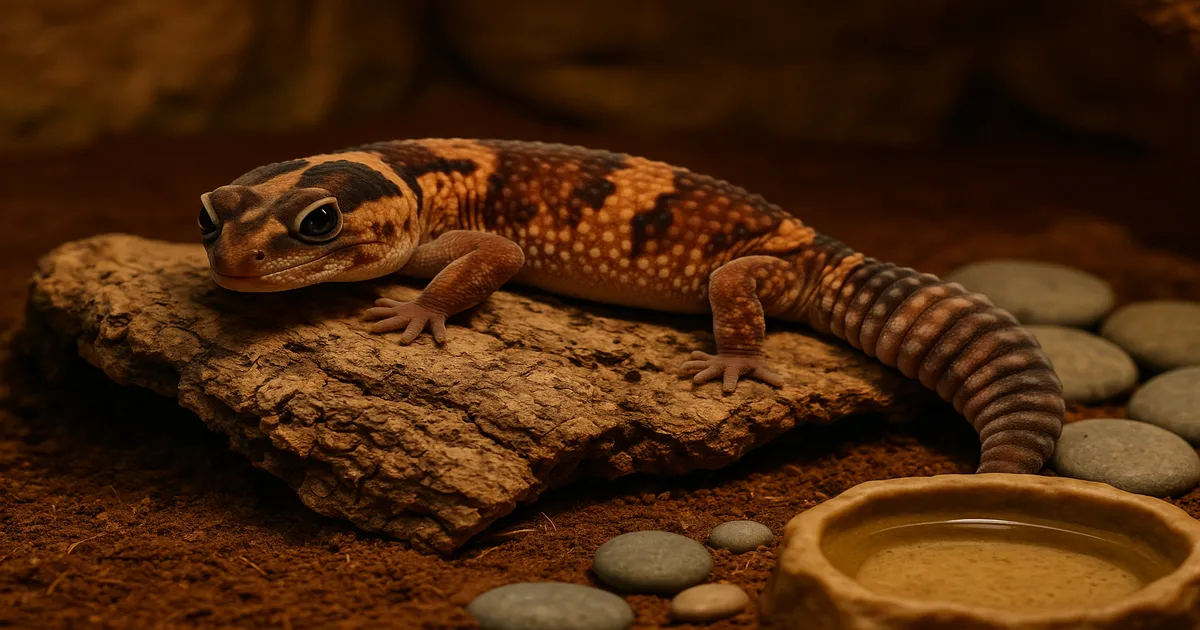
Knowing how to care for an African fat-tailed gecko properly starts with understanding what they actually are: a West African eublepharid gecko that evolved in seasonally humid savannas, not the dry scrubland conditions most keepers assume. Hemitheconyx caudicinctus reaches 7–9 inches (18–23 cm) as an adult, lives 15–20+ years in captivity, and has a temperament that’s noticeably calmer than a leopard gecko — almost slow-motion in the best way.
Key Care Parameters at a Glance
| Parameter | Target Range |
|---|---|
| Enclosure (adult) | 40-gal breeder, 36×18×18 in (91×46×46 cm) |
| Warm side surface temp | 90–95°F (32–35°C) |
| Cool side ambient | 72–78°F (22–26°C) |
| Ambient humidity | 50–70% |
| Humid hide interior | 80–90% |
| Feeding (adult) | Every 3–5 days, 5–7 prey items |
| Lifespan | 15–20+ years |
Understanding the African Fat-Tailed Gecko
Natural Habitat and Wild Behavior
AFTs range across a broad band of West Africa — Senegal, Nigeria, Cameroon, and into the Central African Republic — through the Sahel and Guinea savanna transition zones. They’re strictly terrestrial and nocturnal, spending daylight hours in humid burrows, under dense leaf litter, or tucked inside termite mounds where ground-level humidity runs dramatically higher than the open air above. That’s exactly why a humid hide isn’t optional: it replicates the microclimate these geckos instinctively seek out every single day.
Physical Characteristics and Morphs
The fat tail is a genuine energy-storage organ — think of it as a camel’s hump in miniature. A healthy, well-fed gecko has a tail that’s as wide as or wider than its neck, feeling firm and slightly yielding when gently pressed. Hard and rigid or noticeably thin? Investigate diet and hydration immediately.
Popular morphs include albino strains, whiteout/amelanistic, patternless, caramel, zulu, and oreo. Captive-bred specimens are widely available from reputable breeders. Always go captive-bred over wild-caught — the animals are healthier, better acclimated, and you’re not contributing to wild population pressure.
Temperament and Handling
These geckos are genuinely docile. A well-socialized AFT will sit calmly on your hand without the frantic scrambling you sometimes get from leopard geckos. They do produce a faint musk when stressed, which is actually a useful behavioral signal — if you’re getting that smell regularly during handling, something is off with either your technique or the gecko’s acclimation level.
How AFTs Differ from Leopard Geckos
Same family (Eublepharidae), similar size, often sold side by side — which leads a lot of keepers to treat them identically. Don’t. Leopard geckos tolerate 30–40% humidity without issue. AFTs need 50–70% ambient at minimum and will suffer chronic shedding problems at leopard gecko humidity levels. Everything else is fairly similar. Humidity is the dealbreaker.
Enclosure Setup
Size and Type
A 40-gallon breeder (36×18×18 in / 91×46×46 cm) is the sweet spot for one adult. A 20-gallon long (30×12×12 in / 76×30×30 cm) is the absolute minimum — not the ideal, the floor. Since AFTs are terrestrial, floor space matters far more than height.
For enclosure type, PVC enclosures are my preference for this species. They retain humidity far better than glass tanks with screen tops, and front-opening doors reduce handling stress considerably. A Zen Habitats 4×2×2 PVC panel enclosure is a solid choice that gives you room to grow. Glass terrariums work too, but you’ll need to partially cover the screen top — a piece of acrylic or aluminum foil does the job.
Substrate
- Bioactive mix (60–70% organic topsoil, 20–30% play sand, 10% coconut coir): Best overall. Retains humidity, supports burrowing, and works with isopod/springtail cleanup crews.
- Coconut fiber (coir): Affordable, good humidity retention, easy to spot-clean. Zoo Med Eco Earth is the standard go-to and it works well.
- Paper towel: Fine for quarantine only. Doesn’t support natural behavior or humidity maintenance.
Avoid calcium sand (impaction risk), cedar or pine shavings (toxic), and anything with sharp edges.
Hides: Warm, Cool, and Humid
Three hides. Non-negotiable. A gecko forced to choose between thermal comfort and feeling secure is a stressed gecko, and stressed geckos stop eating.
- Warm dry hide: Placed directly over or adjacent to the heat source
- Cool dry hide: On the cool end
- Humid hide: On the warm side, packed with damp sphagnum moss or coconut fiber — a repurposed Tupperware container with a hole cut in the lid works perfectly and costs almost nothing
Keep the humid hide damp, not soaking wet, and refresh the substrate every 2–3 days. This hide is what sets AFT care apart from most other ground-dwelling geckos.
Decor and Water
Cork bark flats and tubes, artificial plants, smooth rocks, and driftwood all add perceived security. Cork bark is particularly useful because it’s naturally hygroscopic — it buffers humidity fluctuations, which is a genuine practical benefit rather than just aesthetics.
Water dish goes on the cool side, changed daily. Keep it shallow — under 1 inch (2.5 cm) deep. Small geckos can drown in a dish that’s too deep, and it happens more than people expect.
Temperature and Heating
The Thermal Gradient
AFTs thermoregulate through belly contact with warm substrate, which is why under-tank heaters are the preferred primary heat source rather than overhead basking lamps.
- Warm side surface temp: 90–95°F (32–35°C) — measured on the substrate surface, not the air
- Warm side ambient air: 88–92°F (31–33°C)
- Cool side ambient: 72–78°F (22–26°C)
- Nighttime low: 68–72°F (20–22°C) — don’t let it drop below 65°F (18°C) for extended periods
Under-Tank Heaters and Thermostats
Unregulated UTHs routinely reach 110–120°F (43–49°C). That’s burn territory. Thermal burns on a gecko’s belly are serious injuries that often require veterinary treatment. A thermostat is not optional — it’s the difference between a safe setup and a dangerous one.
Proportional thermostats like the Herpstat 1 or Vivarium Electronics VE-300X1 are the gold standard. On/off thermostats like the Inkbird ITC-306 are more budget-friendly and work fine too. Either is acceptable — just use something.
The Arcadia Deep Heat Projector is an excellent alternative or supplement to a UTH, particularly in PVC enclosures. Ceramic heat emitters (CHEs) work for supplemental ambient heat in cold rooms but don’t provide the directional belly warmth AFTs need as a primary source.
Measuring Temperatures Correctly
Use an infrared temperature gun pointed directly at the substrate surface above the heat source. Ambient air probes tell you almost nothing useful for a ground-dwelling species. The Etekcity Lasergrip 774 is inexpensive and accurate enough for this purpose.
Humidity: The Most Overlooked Part of African Fat-Tailed Gecko Care
Target Ranges
- Ambient enclosure: 50–70%
- Humid hide interior: 80–90%
- Dry side: 40–50% is fine — you want a gradient here too
How to Maintain It
Moist substrate does most of the work. PVC enclosures retain humidity naturally; glass tanks with screen tops may need partial covering. Lightly mist one side of the enclosure every couple of days if needed, but don’t soak the whole thing — stagnant wet conditions breed bacteria and mold.
For the humid hide: fill a Tupperware container with damp (not dripping) sphagnum moss or coconut fiber, cut a gecko-sized hole in the lid, and place it on the warm side. Mist the moss inside every 2–3 days. Most AFTs find direct misting stressful, so target the hide substrate rather than the gecko itself.
Dial hygrometers are garbage — often off by 10–20%, which is a huge margin when your target range is only 20 percentage points wide. Use a digital probe hygrometer and place it mid-enclosure.
What Happens When Humidity Is Too Low
Retained shed (dysecdysis) is the direct result. Stuck shed around the toes is particularly dangerous — it constricts blood flow and can cause digit loss if left untreated. If you’re seeing retained shed consistently, humidity is almost always the culprit, and the humid hide is the first thing to check.
Feeding and Nutrition
Staple Feeders and Prey Sizing
Crickets, dubia roaches, and black soldier fly larvae (BSFL) are the best staple feeders. Mealworms are fine in moderation. Hornworms and silkworms make excellent occasional feeders — hornworms are especially useful for hydration.
Prey sizing rule: nothing wider than the space between the gecko’s eyes. Oversized prey causes regurgitation and stress, and it’s an easy mistake with juveniles.
Feeding Schedule
- Juveniles (under 6 months): Daily or every other day
- Sub-adults (6–12 months): Every other day
- Adults (12+ months): Every 3–5 days, 5–7 appropriately sized prey items
Supplementation
- Plain calcium (no D3): Every feeding or every other feeding
- Calcium with D3: Twice weekly without UVB; once weekly with UVB
- Multivitamin (Repashy Calcium Plus LoD or Herptivite): 1–2 times per week
Consistency matters more than perfection. Calcium deficiency leads to metabolic bone disease; D3 over-supplementation causes its own toxicity issues. Pick a schedule and stick to it.
Foods to Avoid
Waxworms are the big one. They’re high-fat, highly palatable, and genuinely addictive — a gecko that’s been eating them regularly will often refuse everything else and can develop hepatic lipidosis (fatty liver disease). Limit them to once a month at most. Also, always remove uneaten live crickets within 15–20 minutes; they’ll bite a resting gecko overnight and cause real injury.
Lighting
Do AFTs Need UVB?
Strictly speaking, no — AFTs have been kept successfully for decades without it. That said, the evidence for UVB benefits in crepuscular and nocturnal geckos has gotten stronger, and I think it’s worth adding if your setup allows. Better calcium metabolism, more natural activity patterns, and generally more alert behavior are all documented. If you go the UVB route, use a low-output bulb — the Arcadia ShadeDweller T5 or Zoo Med Reptisun 5.0 T5 HO run 10–12 hours a day, targeting 2–5 UVI at the gecko’s resting level. If you skip UVB, make sure your calcium-with-D3 supplementation is consistent.
A 12/12 light/dark cycle works year-round. If you’re planning to breed, shifting to a 10/14 cycle in winter mimics natural seasonal changes and helps condition the animals. A digital outlet timer makes this effortless.
Red and blue “night” bulbs are a hard no. Reptiles can perceive these wavelengths, and they disrupt sleep cycles and cause chronic stress. For nighttime heat, use a CHE or DHP on a thermostat — no light output, no disruption.
Common Mistakes to Avoid
- Running a UTH without a thermostat — causes burns, full stop
- Treating AFTs like leopard geckos and keeping humidity too low
- Skipping the humid hide entirely
- Trusting a dial hygrometer
- Housing in a 10-gallon tank
- Providing only one or two hides
- Cohabitating males — they will fight, and it can be fatal
- Overfeeding waxworms and creating a picky eater with fatty liver risk
- Leaving live crickets in the enclosure overnight
- Handling within the first two weeks after bringing the gecko home — wait at least 2–4 weeks
- Approaching from above (triggers a predator response)
Expert Tips
The tail health check. Press the tail gently between two fingers. It should feel firm and slightly yielding — like a ripe grape, not a raisin and not a water balloon. Hard and rigid suggests dehydration; soft and flaccid is a sign of illness or malnutrition. Quick check, useful information.
Bioactive setups. AFTs are one of the best candidates for a bioactive enclosure of any gecko species. Stable humidity, naturalistic burrowing substrate, and live microfauna from isopods and springtails create conditions that closely mirror their wild habitat. The initial setup takes effort; the long-term maintenance is easier and the gecko’s quality of life is noticeably better.
Reading behavior. A gecko that consistently retreats to the cool hide rather than the warm hide isn’t cold — it’s too hot, and your warm side temps are probably running high. Musk during handling signals stress. Refusal to eat after acquisition almost always means the acclimation period was too short. These animals communicate clearly if you know what to look for.
Quarantine new geckos. Any new gecko should spend 30–60 days in a separate quarantine enclosure before going near any other reptiles you own. Get a fecal test done through a reptile vet during this period — internal parasites are common and easily treated when caught early.
Find a vet before you need one. Red flags that warrant a visit: persistent anorexia lasting more than 3–4 weeks, labored or wheezing breathing, swollen joints or limbs, and any retained shed that won’t come off after a warm soak.
Frequently Asked Questions
How long do African fat-tailed geckos live? With proper care, 15–20 years is typical. Some individuals have reached 25+ years in captivity. They’re a long-term commitment — factor that in before you buy.
Can African fat-tailed geckos live with leopard geckos? No. Never cohabitate different gecko species. They have different humidity requirements, different stress thresholds, and different disease risks. Even if they don’t fight outright, the chronic stress of cohabitation shortens lifespans.
How do I know if my AFT is dehydrated? Check the tail — it should feel firm, not shriveled or rigid. Sunken eyes are another clear sign. Increase humid hide moisture, ensure fresh water is always available, and offer a hornworm or two for extra hydration.
Why is my African fat-tailed gecko not eating? The most common causes are: acclimation stress (new geckos often won’t eat for 1–3 weeks), temperatures that are too low, a hide that doesn’t feel secure, or a recent shed. If anorexia persists beyond 3–4 weeks with no obvious environmental cause, see a reptile vet.
Do African fat-tailed geckos need a companion? No. They’re solitary in the wild and do perfectly well alone. A single gecko in a well-set-up enclosure is healthier and less stressed than two geckos sharing space. The only exception is a male-female pair for breeding purposes — and even then, they should be housed separately outside of breeding introductions.