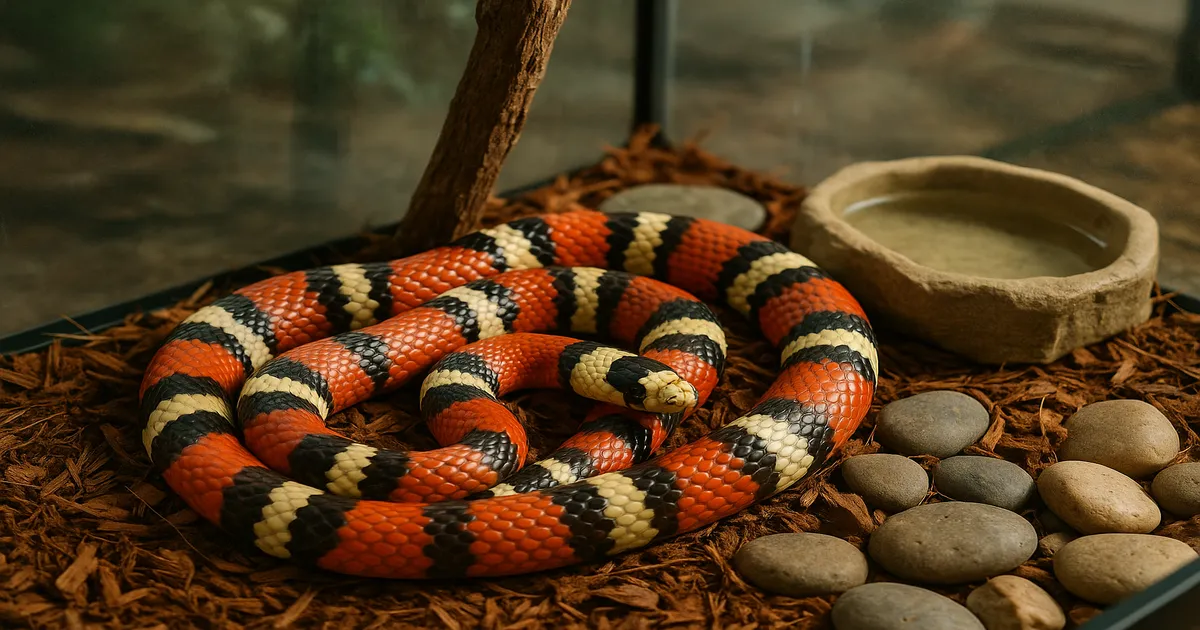
Quick Answer: Milk snakes are non-venomous, docile colubrids that make excellent pets with a lifespan of 15–22 years in captivity. They need a simple thermal gradient (85–88°F warm side, 72–76°F cool side), moderate humidity, frozen/thawed prey, and a very secure enclosure — because these snakes will find every gap you leave them.
Knowing how to take care of a milk snake properly isn’t complicated, but a handful of details trip people up — and getting them wrong leads to a stressed, sick, or escaped snake. I’ve kept and worked with multiple subspecies over the years, and the good news is that once you dial in the basics, milk snakes are genuinely low-maintenance animals.
Quick-Reference Care Snapshot
| Parameter | Requirement |
|---|---|
| Warm side temp | 85–88°F (29–31°C) |
| Cool side temp | 72–76°F (22–24°C) |
| Nighttime low | 65–68°F (18–20°C) |
| Humidity | 40–60% (50–70% for Central American subspecies) |
| Adult enclosure | 20–40 gallon breeder depending on subspecies |
| Feeding frequency | Every 10–14 days (adults) |
| Lifespan | 15–22 years |
What Kind of Snake Is a Milk Snake?
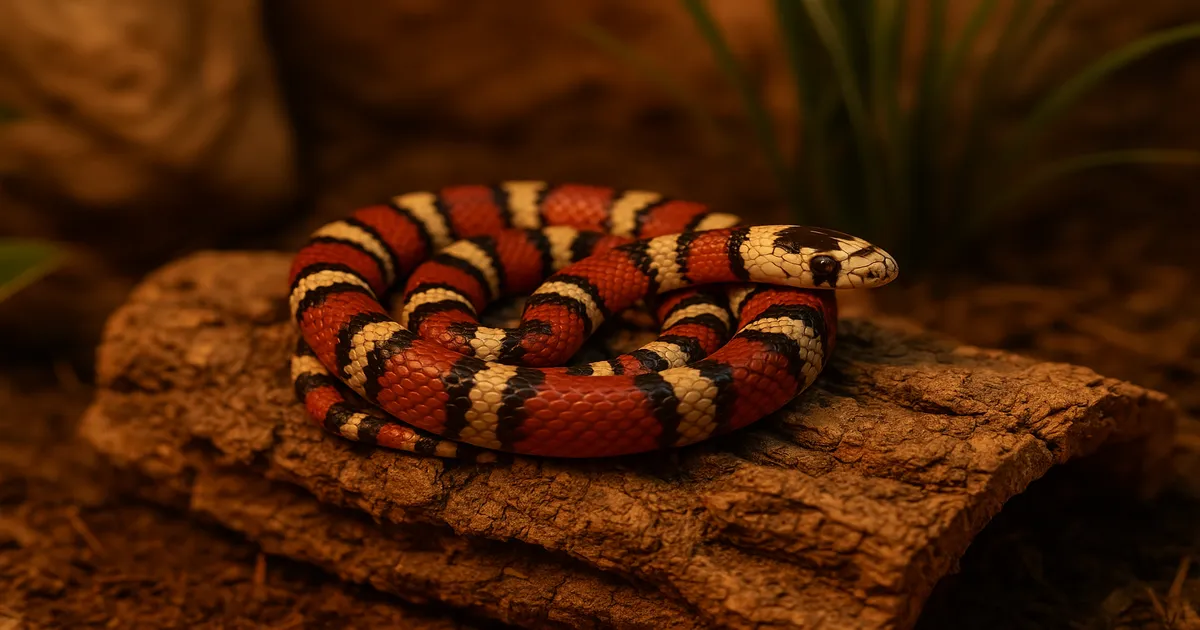
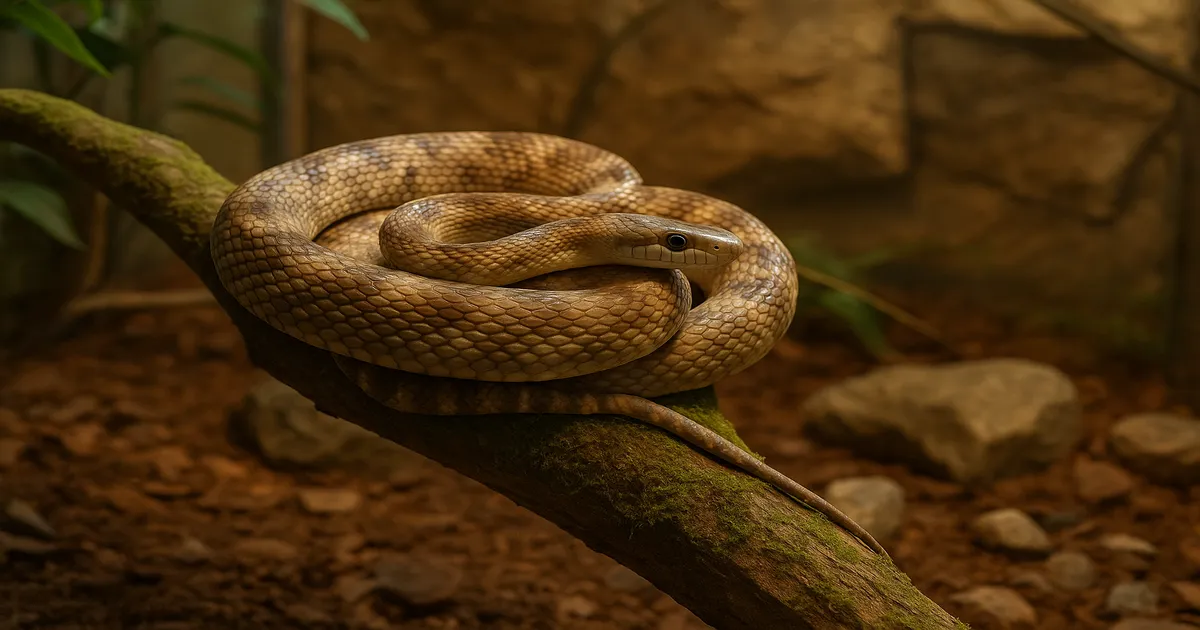
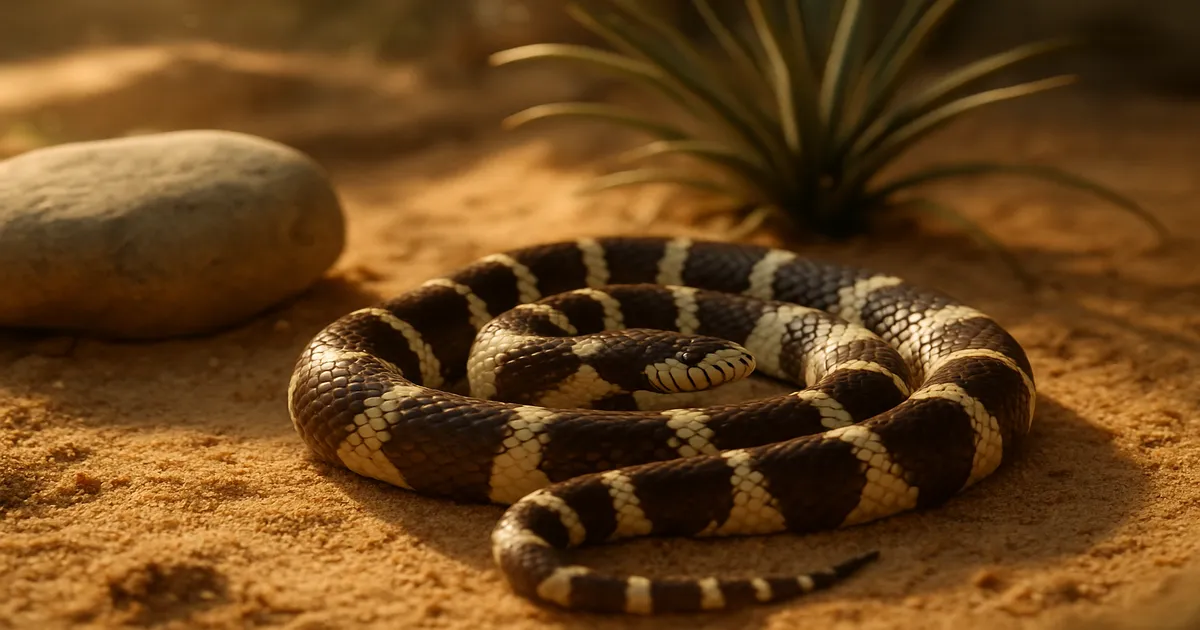
Milk snakes belong to the genus Lampropeltis — the same group as kingsnakes — and they share a lot of the same hardy, adaptable qualities that make kingsnakes so popular in the hobby. They’re native to North and Central America, with some subspecies reaching into South America. Size varies quite a bit: the Eastern milk snake tops out around 24–36 inches (61–91 cm), while a big Honduran can push 60 inches (152 cm).
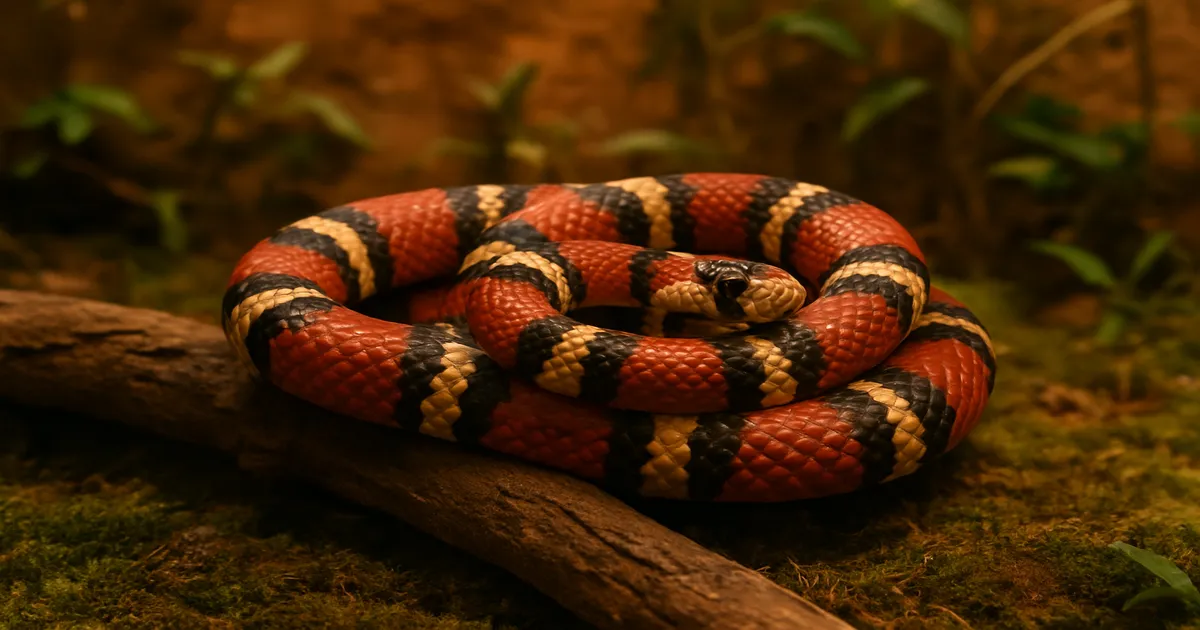
In the wild, they’re secretive, crepuscular-to-nocturnal hunters that spend their days tucked under rocks, logs, or deep in rodent burrows. That red-black-and-white banding mimics venomous coral snakes — a survival trick called Batesian mimicry. The old rhyme “red touches yellow, kill a fellow; red touches black, friend of Jack” helps tell them apart in North America, though it doesn’t apply reliably outside the US.
Are Milk Snakes Good Pets for Beginners?
Yes — with one caveat. Captive-bred milk snakes are genuinely excellent beginner snakes: manageable in size, tolerant of handling once acclimated, and no intense basking setups required. The caveat is that they’re escape artists, and some hatchlings can be stubborn feeders. Buy captive-bred from a reputable breeder, nail down the enclosure security, and you’ll be fine.
How to Set Up a Milk Snake Enclosure
Size by Age and Subspecies
Don’t buy a huge enclosure “to save money later.” A baby milk snake in a 40-gallon tank is stressed, often refuses to eat, and spends all its time trying to escape. Start small and size up as the snake grows.
- Hatchlings (0–12 months): 10-gallon tank (20” × 10” × 12”) or a small plastic tub
- Juveniles (1–2 years): 20-gallon long (30” × 12” × 12”) or equivalent tub
- Adults — small subspecies (Eastern, Pueblan): 20-gallon long minimum; a 36” × 18” × 12” enclosure is ideal
- Adults — large subspecies (Honduran, Sinaloan): 40-gallon breeder (36” × 18” × 16”) minimum
A useful rule of thumb: the enclosure’s perimeter should equal at least two-thirds to the full body length of the snake.
Glass vs. PVC vs. Plastic Tub
All three work. Here’s the honest breakdown.
Glass terrariums are the easiest to find locally and look great on a shelf. They lose heat faster than other options and can be heavy, but front-opening styles are genuinely worth the extra cost — approaching from above triggers a defensive response in many snakes, and front-opening doors fix that problem.
PVC enclosures are what most serious keepers eventually move to. They hold heat and humidity better, they’re lighter, and they last for decades. Higher upfront cost, but worth it if you’re in this for the long haul. (Animal Plastics T8)
Plastic tubs (Sterilite, IRIS) are the budget-friendly choice and work perfectly well — you’ll just need to drill ventilation holes. Especially practical if you’re keeping multiple animals.
Escape-Proofing: Not Optional
I cannot overstate this. Milk snakes are relentless. They’ll probe every edge of every lid every single night and squeeze through gaps you’d swear were impossibly small. Screen lids need locking clips on both ends — not one, both. Tub lids need to snap down firmly. Check the enclosure integrity regularly. A missing milk snake in your house is a bad situation for everyone involved.
Temperature and Heating
The Thermal Gradient
Milk snakes are temperate-to-subtropical animals. They don’t want or need the intense heat that desert species require, and assuming hotter is better is one of the most common beginner mistakes.
- Warm side: 85–88°F (29–31°C)
- Cool side: 72–76°F (22–24°C)
- Nighttime: 65–68°F (18–20°C) — actually beneficial, mimics natural conditions
- Hard limit: Sustained temps above 90°F (32°C) cause heat stress and can be fatal
Under-tank heaters (UTHs) are the most commonly used option and work well for most setups — cover roughly one-third of the floor on the warm side. Radiant heat panels are excellent for larger enclosures. Ceramic heat emitters work well for supplemental heating in cooler rooms.
Thermostats Are Non-Negotiable
Every heat source needs a thermostat. An unregulated UTH can reach 110–120°F (43–49°C) and cause severe thermal burns — burns that often need veterinary intervention and can be fatal. On/off thermostats work fine for UTHs; (Inkbird ITC-306T) for radiant heat panels and ceramic emitters, a pulse-proportional or dimming thermostat gives more precise control. (Herpstat 1)
Always verify actual surface temperatures with a digital probe thermometer and an infrared temp gun. The thermostat reading alone isn’t enough — surface temps can vary significantly from what the controller reports. (Etekcity Lasergrip 774)
Humidity, Lighting, and Substrate
Humidity by Subspecies
Most North American subspecies — Eastern, Pueblan, Nelson’s — do well at 40–60% relative humidity. Central American subspecies like the Honduran and Sinaloan prefer 50–70%. Use a digital hygrometer with a probe and place it on the cool side for the most representative reading. Skip the cheap analog dial gauges; they’re notoriously inaccurate.
The humid hide is your best humidity management tool. Take a plastic container, cut an entrance hole in the lid, and fill it with damp (not soaking) sphagnum moss. This gives your snake a high-humidity microclimate for shedding without making the whole enclosure damp. If you’re using aspen as your substrate, keep it dry — wet aspen molds fast.
Signs of too-low humidity: retained shed, wrinkled skin. Signs of too-high humidity: persistent moisture on the walls, substrate staying wet, and eventually scale rot or respiratory infections, both of which need a vet.
Lighting and Photoperiod
Milk snakes don’t strictly require UVB to survive, but the science is shifting. Recent research suggests low-level UVB may support immune function and overall wellbeing even in crepuscular species, and I think it’s worth providing. If you go that route, use a low-output T5 or T8 tube like the Arcadia 6% or Reptisun 5.0 positioned 12–18 inches (30–46 cm) from the basking area.
What they definitely need is a consistent 12-hour light/dark cycle. Milk snakes are photophobic — chronic bright light causes stress. Keep the enclosure out of direct sunlight and away from bright overhead lighting. If you want to trigger breeding behavior in adults, shortening the light cycle to 10 hours in winter mimics seasonal changes naturally.
Best Substrates
- Aspen shaving: The gold standard for most subspecies. Holds burrow tunnels well, spot-cleans easily, widely available. Keep it dry.
- Cypress mulch: Better for higher-humidity subspecies like the Honduran and Sinaloan. Holds moisture without molding as quickly as aspen.
- Coco coir: Great for bioactive setups; mixes well with topsoil for a naturalistic look.
- Paper towels: Best for hatchlings and quarantine — easy to monitor health, feeding, and droppings.
Aim for 2–4 inches (5–10 cm) of depth. Milk snakes burrow constantly and will use every bit of it.
Cedar and pine are toxic. The aromatic phenols cause respiratory damage and can be fatal. This isn’t a “maybe avoid it” situation — it’s a hard no. Reptile carpet is another one I’d skip: it harbors bacteria, snags on scales, and is miserable to clean.
Hides and Decor
Two hides are the minimum — one warm side, one cool side. A snake that has to choose between feeling secure and thermoregulating is a chronically stressed snake. Add a third humid hide in the middle zone for shedding. Hides should fit snugly; if the snake can rattle around inside, it’s too big.
Cork bark rounds, artificial plants, and sturdy branches all make good enrichment. Milk snakes are more semi-arboreal than most people expect and will climb given the chance. Put the water dish on the cool side — a dish on the warm side raises ambient humidity faster than you’d think.
How to Take Care of a Milk Snake’s Feeding Needs
What and How Often to Feed
- Hatchlings: One pinky mouse every 5–7 days
- Juveniles: Fuzzy to hopper mice every 7 days
- Adults: Adult mice or small rats every 10–14 days
Prey should be roughly the same width as the widest part of the snake’s body — no more than 1.5× the mid-body diameter. When in doubt, go smaller.
Frozen/Thawed Is the Right Call
Live prey injures snakes. I’ve seen it happen, and it’s not pretty — a cornered mouse or rat will bite, and those wounds get infected. Frozen/thawed prey is nutritionally equivalent, safer, and more convenient. Thaw in a sealed bag in warm water for 30–45 minutes. Never microwave it.
Milk snakes often have a strong feeding response, so always wash your hands before handling. A snake that smells rodents on your hands will sometimes act accordingly.
Handling Picky Feeders
Eastern milk snakes in particular can be lizard specialists and may refuse pinky mice initially. The fix is scenting: rub a blue-tongued skink or anole on the pinky before offering it, or use a shed lizard skin. It sounds fussy, but it works. “Braining” a frozen pinky — making a small incision to expose brain tissue — is another effective trick for stubborn hatchlings.
If a hatchling has gone 6–8 weeks without eating, assist feeding may be necessary. But always rule out husbandry issues first — incorrect temps, too-large enclosure, and stress are the most common culprits.
Common Milk Snake Care Mistakes
- Running the warm side above 90°F (32°C) — they’re not desert animals
- Using any heat source without a thermostat — thermal burns are common and serious
- Trusting the thermostat reading without verifying surface temps with a temp gun
- Feeding live prey — the injury risk isn’t worth it
- Handling within 48–72 hours of a meal — regurgitation causes lasting feeding strikes
- Overfeeding adults — every 10–14 days, not weekly; obesity shortens lifespans significantly
- Handling a newly acquired snake within the first 2–4 weeks — let it settle in
- Starting hatchlings in too large an enclosure — stress and feeding refusal follow
- Providing only one hide — you need at least two, no exceptions
- Using cedar or pine substrate — toxic, full stop
- Skipping quarantine on new animals — 60–90 days minimum, separate room, before they go near other reptiles
- Ignoring retained sheds — a retained eye cap that persists through multiple sheds is a veterinary emergency
Frequently Asked Questions About Milk Snake Care
How often should you feed a milk snake?
Adults every 10–14 days, juveniles weekly, hatchlings every 5–7 days. Overfeeding is a genuine problem in captivity — it leads to obesity and a shortened lifespan.
What size enclosure does a milk snake need?
A 20-gallon long works for smaller adult subspecies like the Eastern or Pueblan. Larger subspecies like the Honduran need at least a 40-gallon breeder. Hatchlings should start in a 10-gallon or small tub — oversized enclosures cause stress and feeding refusal.
Do milk snakes need UVB lighting?
They don’t strictly require it to survive, but low-level UVB likely offers real health benefits. If you provide it, use a low-output tube like the Arcadia 6% or Reptisun 5.0 and maintain a consistent 12-hour light/dark cycle. Keep the enclosure away from bright direct light — milk snakes are photophobic.
Why is my milk snake not eating?
The most common causes are incorrect temperatures, a too-large enclosure, stress from recent handling or relocation, and — in hatchlings of certain subspecies — a preference for lizard-scented prey. Try scenting prey with a lizard, confirm your warm side is hitting 85–88°F (29–31°C), and give a newly acquired snake 2–4 weeks to settle before offering food. If refusal continues past 6–8 weeks with no obvious husbandry issue, see a vet.
How do you tell a milk snake apart from a coral snake?
In North America, the rhyme “red touches yellow, kill a fellow; red touches black, friend of Jack” is the classic guide — milk snakes have red bands touching black, coral snakes have red bands touching yellow. This rule only applies to US species, so don’t rely on it outside North America. When in doubt, don’t handle any banded snake you find in the wild.