Quick Answer: Western hognose snakes thrive in a 20–40 gallon enclosure with a basking spot of 88–95°F (31–35°C), a cool side of 70–75°F (21–24°C), and ambient humidity kept between 30–50%. Feed adults frozen/thawed mice every 7–14 days, keep the substrate deep and sandy, and you’ll have a healthy snake that can live 15–20+ years.
Hognose snakes are one of the most entertaining, personality-packed snakes you can own — and learning how to properly care for a hognose snake is genuinely straightforward once you understand what they actually need. The challenge is that a lot of common advice gets a few key things wrong, particularly around humidity. Nail that, and you’re most of the way there.
Hognose Snake Care at a Glance
Western vs. Eastern vs. Southern Hognose
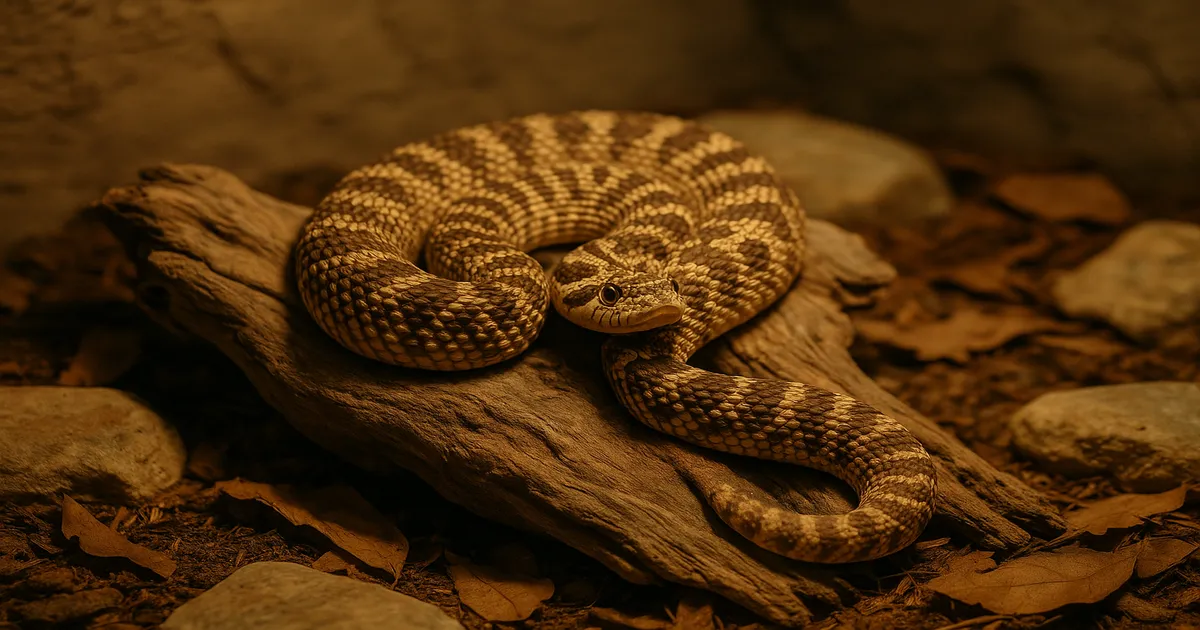
The Western hognose (Heterodon nasicus) is what you’ll find at virtually every reptile expo and from most breeders. It’s the most established in captivity, has the widest morph selection, and is generally the most handleable of the three. The Eastern hognose (H. platirhinos) is larger, more variable in temperament, and notoriously difficult to establish on mice — most wild-caught easterns won’t touch a rodent. The Southern hognose (H. simus) is small, increasingly rare in the wild, and almost never bred in captivity.
Unless you have a specific reason to seek out an Eastern or Southern, a captive-bred Western is the right call.
Key Care Stats
| Parameter | Target Range |
|---|---|
| Enclosure (adult female) | 30–40 gallon (36″×18″×12″) |
| Enclosure (adult male) | 10–20 gallon |
| Basking spot | 88–95°F (31–35°C) |
| Warm side ambient | 80–85°F (27–29°C) |
| Cool side ambient | 70–75°F (21–24°C) |
| Nighttime minimum | 65°F (18°C) |
| Ambient humidity | 30–50% |
| Feeding frequency (adults) | Every 7–14 days |
| Lifespan | 15–20+ years |
Understanding Hognose Snakes Before You Buy
Natural History and What It Means for Their Care
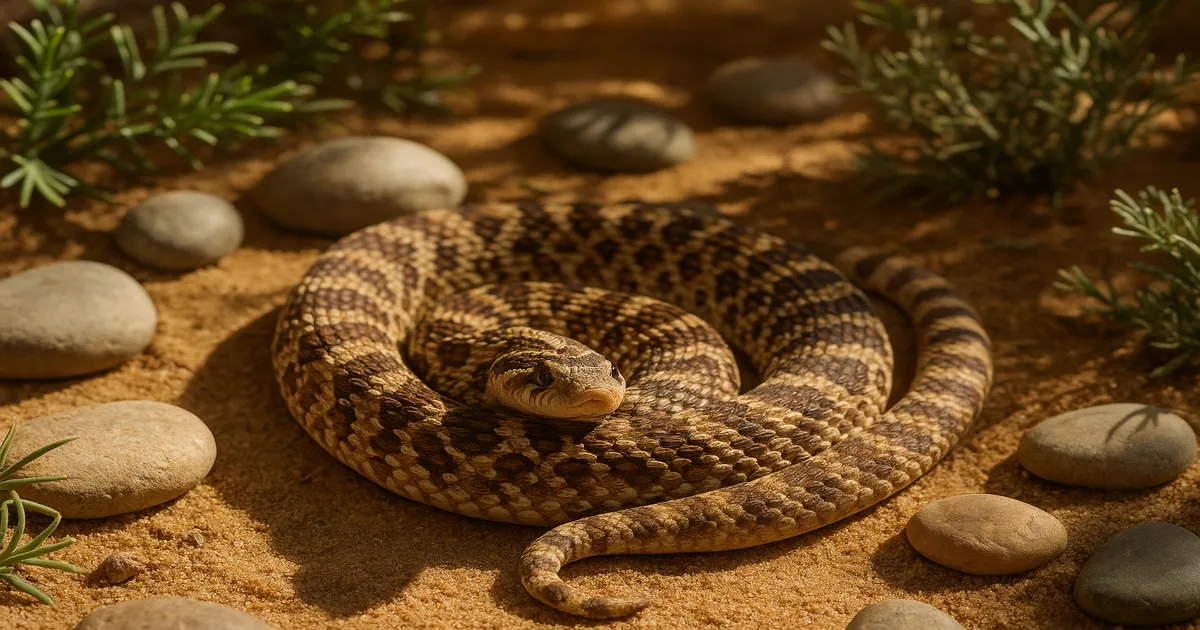
Western hognose snakes come from the sandy prairies and grasslands of central North America — loose, dry, well-draining soil they can burrow through with that upturned rostral scale. That origin shapes everything about how you keep them. They need dry conditions, a sandy substrate, and low ambient humidity. Keepers who treat them like a tropical species end up with sick snakes.
The Defensive Display: Hooding, Hissing, and Playing Dead
If you’ve never seen a hognose go into full defensive mode, it’s genuinely impressive. They flatten their necks cobra-style, hiss loudly, and strike — usually with a closed mouth. If that doesn’t work, they flip onto their backs, go limp, let their tongue hang out, and sometimes release a musky smell for good measure. The whole performance is a bluff. No hognose has ever actually wanted to fight anything.
Most individuals mellow out considerably with regular, calm handling. The display is a hardwired survival strategy, not a personality flaw.
Mild Venom: What You Need to Know
Hognose are rear-fanged and technically venomous — their Duvernoy’s gland secretions are effective on toads and small prey, but the risk to humans is very low. Bites are uncommon, and most produce no reaction at all. That said, sensitive individuals can experience localized swelling, redness, and itching, so it’s worth mentioning this to anyone who handles your snake.
Sexual Dimorphism and Lifespan
Female Western hognose typically reach 24–36 inches (61–91 cm). Males stay much smaller at 14–24 inches (36–61 cm) — a difference significant enough to affect both enclosure sizing and feeding frequency. Both sexes can live 15–20+ years in good care, so this is a real long-term commitment.
Always Buy Captive-Bred
Wild-caught hognose are heavily parasitized, stressed, and notoriously difficult to establish on captive prey. There’s no reason to buy one when captive-bred animals are widely available. A CB hognose will typically already be eating frozen/thawed mice before it leaves the breeder.
How to Properly Care for a Hognose Snake: Enclosure Setup
Enclosure Size by Age and Sex
- Juveniles under 12 inches: A 10-gallon (20″×10″×12″) is appropriate. Oversized enclosures stress young hognose and cause feeding refusals.
- Adult females: Minimum 20-gallon long (30″×12″×12″), though a 30–40 gallon (36″×18″×12″) is strongly preferred.
- Adult males: A 10–20 gallon is typically sufficient.
Floor space matters far more than height. Hognose are terrestrial burrowers, not climbers.
Glass, PVC, or Tubs?
Glass terrariums look great and give you good visibility, but they can be tricky to keep dry in humid climates since screen tops let moisture escape unevenly. Front-opening doors are a must if you go this route.
PVC enclosures are my personal preference for long-term setups. They insulate well, retain heat efficiently, and are easy to clean. (Animal Plastics T8)
Plastic tubs are what most serious breeders use — cheap, stackable, and they work extremely well. Drill ventilation holes on the sides near the top and you’re done.
Temperature and Heating
Place your heat source at one end of the enclosure, not the center. This creates a true warm-to-cool gradient so your snake can thermoregulate by moving between zones.
- Basking spot: 88–95°F (31–35°C)
- Warm side ambient: 80–85°F (27–29°C)
- Cool side ambient: 70–75°F (21–24°C)
- Nighttime minimum: 65°F (18°C)
Temperatures above 95°F cause heat stress. Above 105°F, you’re in potentially fatal territory. Always verify with an infrared temperature gun — stick-on thermometers aren’t accurate enough. (Etekcity Lasergrip 774)
Under-tank heaters are the most common starting point and work well, but they must be connected to a thermostat. Plugging one directly into the wall is how snakes get thermal burns. Deep heat projectors are worth considering too — they warm the substrate from above and do a noticeably better job of heating the snake’s core body temperature than a UTH alone.
For thermostats: a basic on/off unit works fine for UTHs, while a dimmer/proportional thermostat is better for radiant heat panels and basking bulbs. (Herpstat 1)
Humidity: The Most Misunderstood Part of Hognose Care
Keep ambient humidity between 30–50%. That’s it. Chronically high humidity — anything consistently above 60–65% — is the primary cause of respiratory infections and scale rot in this species. I’ve seen more hognose get sick from wet conditions than from any other husbandry mistake combined.
Don’t mist the whole enclosure. If your ambient humidity is too low, spot-mist one corner or check whether your substrate is bone dry throughout. The real solution for shedding is a humid hide: a plastic container with a hole cut in the lid, filled with damp sphagnum moss, placed on the cool side. It handles shedding needs without compromising the overall environment.
Substrate
The gold standard is a 60/40 or 70/30 mix of play sand and topsoil (no fertilizers, no perlite), laid down at least 3–4 inches deep. This lets them burrow naturally and mirrors their native habitat. Commercial alternatives like Zoo Med ReptiSand work if you don’t want to mix your own.
Aspen shavings are a workable secondary option — they hold burrow shape reasonably well — but they mold quickly if any moisture creeps in.
Avoid: cedar and pine (toxic aromatic oils), reptile carpet (harbors bacteria, causes snout abrasions), calcium sand (impaction risk), and colored sands (pointless dyes, no benefit).
Hides, Lighting, and Water
Two hides minimum — one warm side, one cool side. Size them snugly: the snake’s body should touch the walls on both sides. A hide that’s too large doesn’t give them the security response they’re after.
Hognose are diurnal, so a proper photoperiod matters: 12–14 hours of light in summer, 10–12 in winter. A simple LED on a timer covers the basics. UVB is increasingly worth including — the evidence is building that a low-output bulb supports D3 synthesis in diurnal species, and the downside risk is essentially zero.
Keep a shallow water dish on the cool side. Wide enough to soak in, shallow enough that a juvenile can’t drown. Change it every 2–3 days, or immediately if soiled.
Feeding Your Hognose Snake
Prey Size and Frequency
Hognose eat mice in captivity — occasionally small rats for large adult females. Prey should be no wider than 1–1.5× the snake’s widest body diameter. Oversized prey causes regurgitation, and a snake that’s regurgitated needs at least two weeks before being offered food again.
- Juveniles: Every 5–7 days
- Adult females: Every 10–14 days
- Adult males: Every 7–14 days, with the expectation that they may refuse entirely for 2–4 months during breeding season
Female hognose are prone to obesity. Feeding them every 5–7 days like you would a ball python is a mistake.
Frozen/Thawed Only
Always use frozen/thawed prey. Thaw in the refrigerator or in a sealed bag in warm water, then warm the prey to 100–105°F surface temperature before offering. Use warm water — never a microwave. Microwaves create hot spots that can burn your snake’s mouth.
Dealing with Feeding Refusals
A hognose refusing food isn’t automatically a problem. Males fast seasonally, females slow down during follicle development, and newly acquired animals often need a couple of weeks to settle in. Track weight monthly with a gram-accurate kitchen scale. If a snake loses more than 10% of its body weight over 4–6 weeks, that’s when to start investigating.
For genuinely stubborn feeders:
- Toad scenting — Rub the prey item with a toad or use commercially available toad scent. This is rooted in their natural prey preference and works surprisingly often.
- Fish scenting — Canned tuna rubbed on the prey item is a common alternative.
- Overnight leave-it method — Place a warmed prey item in the enclosure at night and leave it completely undisturbed. Many reluctant feeders will take prey when no one’s watching.
- Braining — Cut the skull to expose brain matter. Use this as a last resort. It works, but it’s messy and you don’t want to rely on it long-term.
Handling and Behavior
Settling In
When you bring a new hognose home, leave it alone for 7–14 days. No handling, minimal disturbance, just food and water. A snake that’s still acclimating is a snake that will give you its full defensive display every single time you open the enclosure.
How to Handle Without Triggering the Display
Use the scoop technique — slide your hand under the snake from below rather than reaching down from above. Approaching from above mimics a predator. Support as much of the body as you can, move slowly and confidently, and keep sessions to 5–10 minutes initially. Wash your hands before handling; food scents can trigger a feeding response you’d rather avoid.
A hognose that hoods up and hisses at you is scared, not aggressive. If you react by jerking away or immediately putting it back, you’re reinforcing the behavior. Stay calm, move slowly, and most hognose will settle down within a few minutes of being picked up.
When Your Hognose Plays Dead
Put it down and walk away. Seriously. If you flip it right-side-up, it’ll immediately flip back over — that’s the whole point of thanatosis. Leave it alone for 10–15 minutes and it’ll recover on its own. First-time keepers sometimes panic and think the snake is actually dying. It’s not.
Two to three short handling sessions per week beats one long one. Consistency matters more than duration, and most hognose become genuinely handleable within a few weeks.
Common Mistakes to Avoid
Humidity too high is the single most common error. Respiratory infections and scale rot are almost always a humidity problem. If your snake is wheezing, check your hygrometer first.
No thermostat on heating equipment is how thermal burns happen. Non-negotiable.
Enclosure too large for juveniles causes feeding refusals and stress. A 10-gallon for a juvenile hognose isn’t being cheap — it’s correct husbandry.
Misreading seasonal fasting as illness leads keepers to stress their snakes with unnecessary interventions. Track weight. If it’s stable, the snake is fine.
Handling too soon after acquisition or feeding undermines trust and risks regurgitation. Wait 7–14 days after bringing a new snake home, and 48–72 hours after any feeding.
Health Monitoring and Shedding
A healthy hognose has clear eyes (outside of shed), a rounded body with no visible ribs or hip bones, a clean vent, smooth scales, and alert behavior when active. Weigh monthly — it’s the single most useful health monitoring tool you have.
When your hognose goes opaque (blue eyes, dull skin), leave it completely alone and make sure the humid hide is stocked with damp sphagnum moss. Don’t handle, don’t try to help the shed along. Most hognose shed cleanly without any intervention.
If eye caps are retained after a shed, soak the snake in shallow lukewarm water for 20–30 minutes. The cap will often release on its own. If it doesn’t come off after a soak, see a reptile vet — don’t try to remove it dry with tweezers.
Common health issues to watch for include respiratory infections (wheezing, mucus around the mouth, labored breathing — almost always a humidity problem), mites (tiny black or red specks around the eyes and under scales), and mouth rot (redness or discharge around the jaw). Any of these warrants a vet visit. Find a reptile-experienced vet before you need one.
Frequently Asked Questions
Are hognose snakes good for beginners? Yes, with one caveat: their feeding quirks and seasonal fasting can stress out new keepers who don’t know what to expect. If you go in understanding that males fast seasonally and that the defensive display is harmless theater, they’re genuinely excellent beginner snakes.
Do hognose snakes like to be handled? Most do, once they’re settled in. The dramatic defensive display fades quickly with regular, calm handling. Some individuals stay theatrical their whole lives, but even those typically calm down once they’re actually in your hands.
How often should I feed my hognose snake? Juveniles every 5–7 days, adult females every 10–14 days, adult males every 7–14 days. Males may refuse food entirely for several months during breeding season — that’s normal.
Can hognose snakes live together? No. House them separately. Cohabitation causes chronic stress, competition for resources, and occasionally cannibalism. There’s no benefit to the snakes, only risk.
How do I know if my hognose snake is sick? Wheezing or mucus around the mouth suggests a respiratory infection. Retained eye caps, incomplete sheds, or unusual lethargy warrant a closer look. Weigh monthly — unexplained weight loss is often the first sign something’s wrong. When in doubt, see a reptile vet.