Quick Answer: Western hognose snakes are hardy, personable colubrids that thrive when kept dry, warm on one end, and given enough substrate to burrow. Females reach 24–36 inches; males stay smaller at 14–24 inches. Both can live 15–20+ years. Nail the humidity (30–50%), the thermal gradient (85–90°F warm side, 70–75°F cool side), and the feeding routine, and you’ve got one of the most rewarding snakes in the hobby.
Learning how to care for a western hognose snake isn’t complicated — but a few specific details trip up even experienced keepers. Humidity and substrate depth are the big ones. Get those wrong and it doesn’t matter how good everything else is. This guide covers the full setup: enclosure, heating, feeding, and how to get a stubborn hatchling to eat its first pinky.
Western Hognose Snake Care at a Glance
Species Snapshot: Size, Lifespan, and Temperament
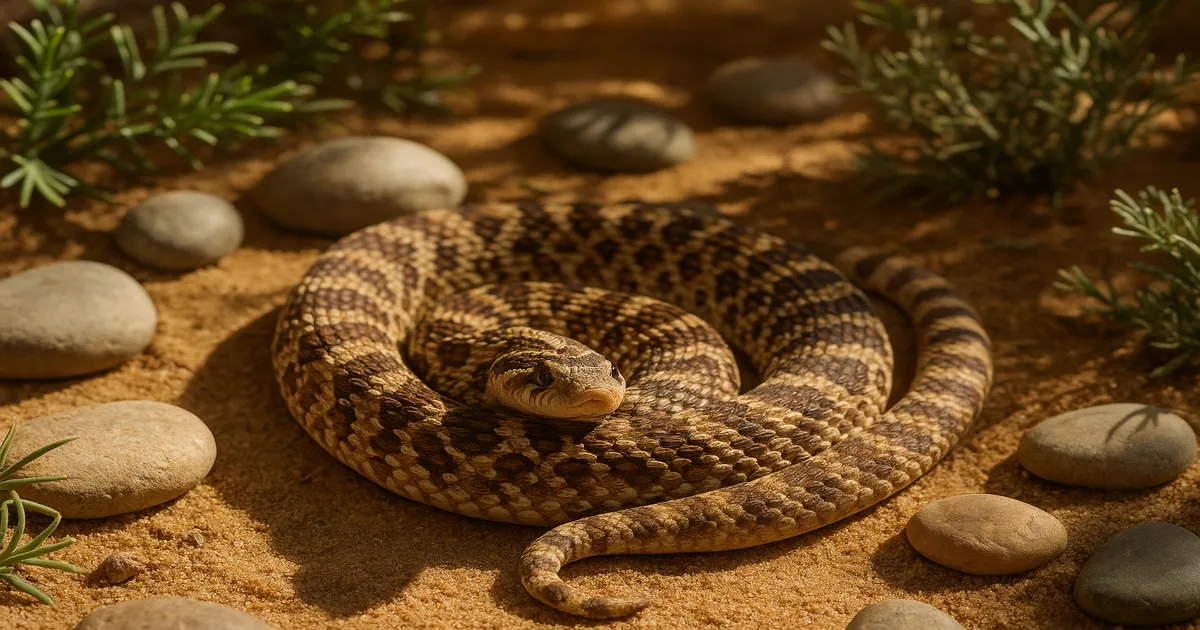
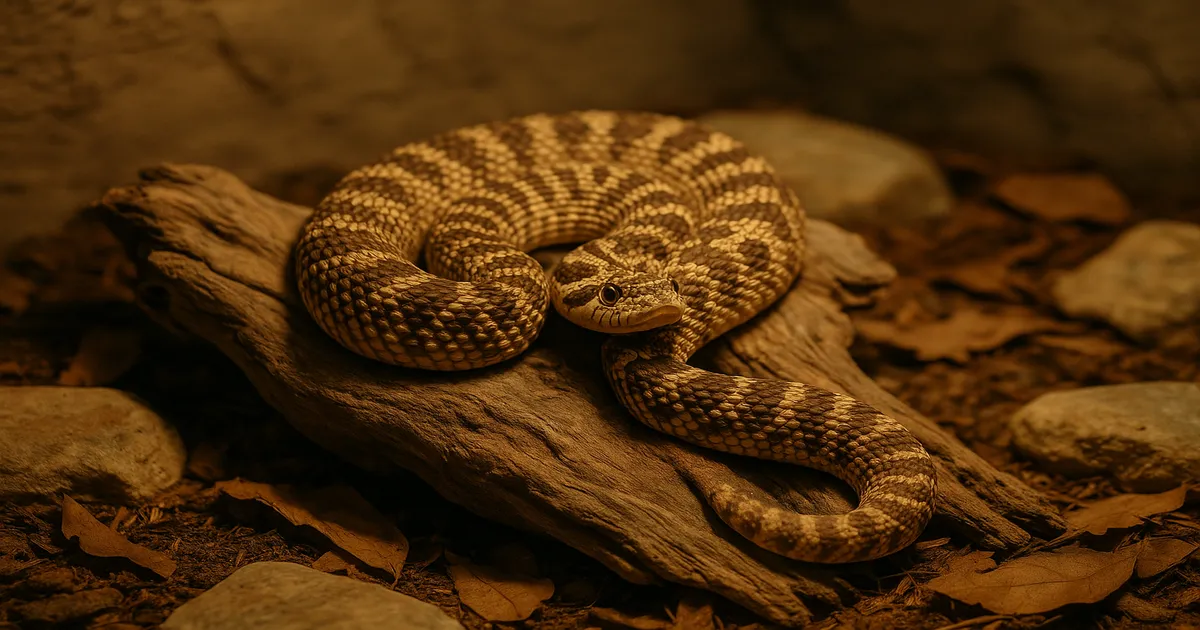
Western hognose snakes (Heterodon nasicus) come from the Great Plains of central North America — Kansas, Nebraska, Texas, up into the Canadian prairies. Dry, sandy, wide-open terrain. That origin matters for how you keep them.
Females typically reach 24–36 inches (60–90 cm); males stay noticeably smaller at 14–24 inches (35–60 cm). That size difference is one of the more pronounced in North American colubrids and directly affects enclosure sizing. With good care, expect 15–20+ years.
Temperament-wise, they’re calm snakes that occasionally put on a completely absurd defensive display. Once they settle in, most captive-bred individuals are easy to handle and genuinely enjoyable to keep.
Key Care Parameters
| Parameter | Specification |
|---|---|
| Warm side temperature | 85–90°F (29–32°C) |
| Basking spot | Up to 95°F (35°C) |
| Cool side temperature | 70–75°F (21–24°C) |
| Humidity | 30–50% RH |
| Substrate depth | 3–6 inches (7–15 cm) |
| Adult female enclosure | 36” × 18” × 12” minimum |
| Adult male enclosure | 24” × 18” × 12” minimum |
| Feeding frequency (adult) | Every 10–14 days |
| Lifespan | 15–20+ years |
Enclosure Setup for Western Hognose Snakes
Enclosure Type: Glass, PVC, or Rack
All three work. Glass terrariums are widely available and offer good visibility — front-opening doors are much better than top-opening for a species that can be skittish early on. Go with a front-opening Exo Terra if you’re using glass. PVC enclosures from Animal Plastics or Zen Habitats insulate better and hold up longer, though you’ll need to watch ventilation carefully since hognose need low humidity. Rack systems make sense if you’re keeping multiple animals.
Enclosure Size by Age and Sex
- Hatchlings: 10-gallon equivalent (20” × 10” × 12”) or a small 6–15 qt tub. Smaller spaces help them locate food and feel secure.
- Juveniles: 20-gallon equivalent (30” × 12” × 12”)
- Adult females: 36” × 18” × 12” minimum — a 40-gallon breeder works; 48” × 24” is better
- Adult males: 24” × 18” × 12” is genuinely sufficient given their smaller size
Don’t rush size upgrades. An oversized enclosure stresses hatchlings and is one of the most common causes of feeding refusals.
Substrate: Depth Matters More Than You Think
Three to four inches (7–10 cm) is the minimum; five to six inches (12–15 cm) is better. I’ve seen keepers put 1–2 inches of substrate in an otherwise perfect setup and wonder why their hognose seems stressed. This is almost always why.
Good options:
- Aspen shavings — holds burrow structure well, easy to spot-clean, affordable
- Coco coir — excellent burrowing medium; mix with play sand for a more arid feel (Eco Earth Coconut Fiber Substrate)
- 70% topsoil / 30% play sand — naturalistic, hognose love it, messier but worth it for adults
Avoid: Cedar, pine (toxic phenols), calcium sand (impaction risk), walnut shell.
Hides, Decor, and Water
Two hides minimum — one warm side, one cool side. They should be snug. A snake rattling around in an oversized hide won’t feel secure, and an insecure hognose is a defensive hognose. A third hide packed with damp sphagnum moss, placed mid-enclosure or on the cool side, works as a humid hide during shedding and is worth keeping year-round.
For decor: cork bark rounds and flats, artificial succulents, flat rocks (secured so they can’t shift), and driftwood all suit the arid aesthetic and give the snake something to interact with.
Water dish goes on the cool side — heavy ceramic or weighted so it can’t tip. Change it every 2–3 days, or immediately if soiled.
Temperature, Heating, and Lighting
Thermal Gradient
- Warm side: 85–90°F (29–32°C)
- Basking spot: Up to 95°F (35°C)
- Cool side: 70–75°F (21–24°C)
- Nighttime low: Don’t let ambient drop below 65°F (18°C)
The heat source should cover no more than one-third of the floor space. A uniformly hot enclosure with no cool escape isn’t a thermal gradient — it’s a slow cooker.
Heating Equipment
For glass enclosures and tubs, under-tank heaters (UTHs) work well for belly heat. Ultratherm makes reliable mats in a range of sizes. Radiant heat panels are the better choice for PVC — they mount inside the top and heat air efficiently. For a basking spot, a 25–50W incandescent or halogen bulb over the warm side does the job.
Every heating element needs a thermostat. Unregulated heat mats can exceed 120°F (49°C) and cause fatal thermal burns. A dimmer/rheostat is adequate for UTHs; for basking bulbs and radiant panels, a proportional or PID thermostat gives you the most precise control. The Herpstat 1 is the standard recommendation for good reason.
Humidity: The Detail That Kills Most Hognose
Aim for 30–50% relative humidity. Get a digital hygrometer and actually check it — this is the husbandry detail most people ignore until something goes wrong. Sustained humidity above 60% is the leading cause of respiratory infections and scale rot in this species.
If your enclosure is running too humid: increase ventilation, reduce the water dish size, or switch to a more porous substrate. Don’t just ignore a consistently high reading.
During pre-shed (eyes turn blue/opaque, colors dull), bump humidity to 50–60% temporarily using a damp sphagnum moss hide. You can lightly mist one side of the enclosure — one side only — and let it dry completely before misting again.
Lighting and Photoperiod
Run a seasonal light cycle: 12 hours on / 12 hours off in summer, 10 hours on / 14 hours off in winter. Use a timer. The shift matters for breeding readiness and supports better overall health even if you’re not breeding.
UVB used to be considered optional for hognose. The current best-practice answer is: provide it if you can. A low-output UVB bulb — Ferguson Zone 1–2, like the Arcadia ShadeDweller or Zoo Med ReptiSun 5.0 — supports D3 synthesis and long-term immune health. It’s not mandatory, but it’s increasingly hard to argue against.
One thing that is mandatory to avoid: red and blue “night” bulbs. Reptiles can see those wavelengths. They’re not providing darkness — they’re providing colored light that disrupts your snake’s cycle.
Feeding Your Western Hognose Snake
Prey Size and Feeding Schedule
The standard diet is appropriately sized mice — prey should be no wider than the widest point of the snake’s body.
| Life Stage | Prey Size | Frequency |
|---|---|---|
| Hatchling | Pinky mice | Every 5–7 days |
| Juvenile | Fuzzy to hopper mice | Every 7 days |
| Adult | Adult mice / small rats | Every 10–14 days |
Use frozen/thawed prey. Live rodents can injure your snake, and there’s no good reason to use them in captivity. Thaw overnight in the refrigerator, then warm in hot water to 100–105°F (38–41°C) before offering. Feed with tongs, not your fingers.
When Hatchlings Won’t Eat
This is the question I get more than any other about western hognose snakes. Hatchling refusals are completely normal — most come around within a few months with patience and the right approach.
Try these in order:
- Warm the prey properly. Thawed pinkies should reach 100–105°F (38–41°C). Cold prey gets refused constantly.
- Feed in a small deli cup or paper bag. The confined space reduces distraction and often triggers a feeding response.
- Overnight feeding. Leave a thawed pinky in the enclosure at night. Some reluctant feeders eat when unobserved.
- Toad or frog scenting. Rub the pinky with a frozen/thawed toad or frog. Hognose are hardwired to eat amphibians, and this scent often works immediately.
- Lizard scenting. Rub with shed lizard skin or a frozen/thawed anole.
- Braining. Lightly pierce the skull of the thawed pinky with a toothpick to release brain tissue scent. Not glamorous, but highly effective.
Force-feeding is a last resort and should only be done in consultation with a reptile vet.
Supplementation
- Calcium with D3: Dust prey lightly every 3–4 feedings if no UVB is provided; reduce frequency if UVB is present
- Multivitamin (Repashy Calcium Plus or Rep-Cal Herptivite): Every 4–6 feedings
More is not better. Hypervitaminosis A and D toxicity are real. Light dusting on a schedule — not a heavy coat every feeding.
Common Mistakes Western Hognose Keepers Make
Humidity too high. More hognose are harmed by excess humidity than almost anything else. Sustained levels above 60% cause respiratory infections, scale rot, and blister disease. Buy a digital hygrometer before you bring your snake home.
No thermostat. Unregulated heat mats hit 120°F+. That’s fatal. There’s no version of this where skipping the thermostat is acceptable.
Substrate too shallow. A hognose in 1–2 inches of substrate is like keeping a rabbit in a cage it can’t turn around in. Burrowing isn’t optional enrichment — it’s a behavioral need.
Enclosure too large for hatchlings. Start small and size up as the snake grows. A hatchling in a 40-gallon will often refuse food and stress out.
Misreading defensive behavior as aggression. A hooding, hissing hognose is scared, not aggressive. Putting it back in the enclosure immediately teaches it the display works. Calm, confident handling is the right response.
Skipping quarantine. New animals — even captive-bred — should be quarantined 30–90 days in a separate room before contact with existing animals. Get a baseline fecal exam from a reptile-experienced vet, and establish that relationship before you have an emergency.
Handling and Health
Start with 5–10 minute sessions, 2–3 times per week. Support the snake’s body fully. Wait at least 48–72 hours after feeding before handling. Build duration gradually.
Healthy signs: Clear eyes (cloudy during pre-shed is normal), smooth intact scales, active tongue-flicking, regular feeding, firm muscle tone.
See a vet for: Wheezing or audible breathing, mucus around the mouth or nostrils, retained shed (especially over the eyes), unusual lethargy outside pre-shed, lumps or asymmetry.
A normal shed comes off in one piece including the eye caps. If your snake retains shed, a 20–30 minute warm soak at 85–90°F (29–32°C) usually resolves it. A humid hide available year-round prevents most shed problems before they start.
Western Hognose Snake Care FAQ
How big do western hognose snakes get? Females typically reach 24–36 inches (60–90 cm); males are noticeably smaller at 14–24 inches (35–60 cm). It’s one of the more pronounced size differences in North American colubrids.
Are western hognose snakes good for beginners? Yes, with one caveat: hatchlings can be stubborn feeders, which frustrates some new keepers. If you’re prepared for that and can keep humidity low, they’re an excellent first snake — hardy, personable, and manageable in size.
Do western hognose snakes need UVB lighting? It’s not strictly required, but it’s increasingly recommended. A low-output UVB bulb (Ferguson Zone 1–2) supports D3 synthesis and long-term immune health. If you can provide it, do.
How often should I handle my western hognose snake? 2–3 times per week for 10–15 minutes is a good baseline once the snake is settled. Always wait 48–72 hours after feeding. New snakes need a few weeks to acclimate before regular handling begins.
Why is my western hognose snake hissing and flattening its neck? That’s the classic defensive display — completely normal and not a sign of aggression. They’ll hood up, hiss, make mock strikes, and if really pushed, flip onto their back and play dead. It looks dramatic. It’s pure bluff. Handle calmly and consistently, and most captive-bred hognose drop the theatrics within a few weeks.