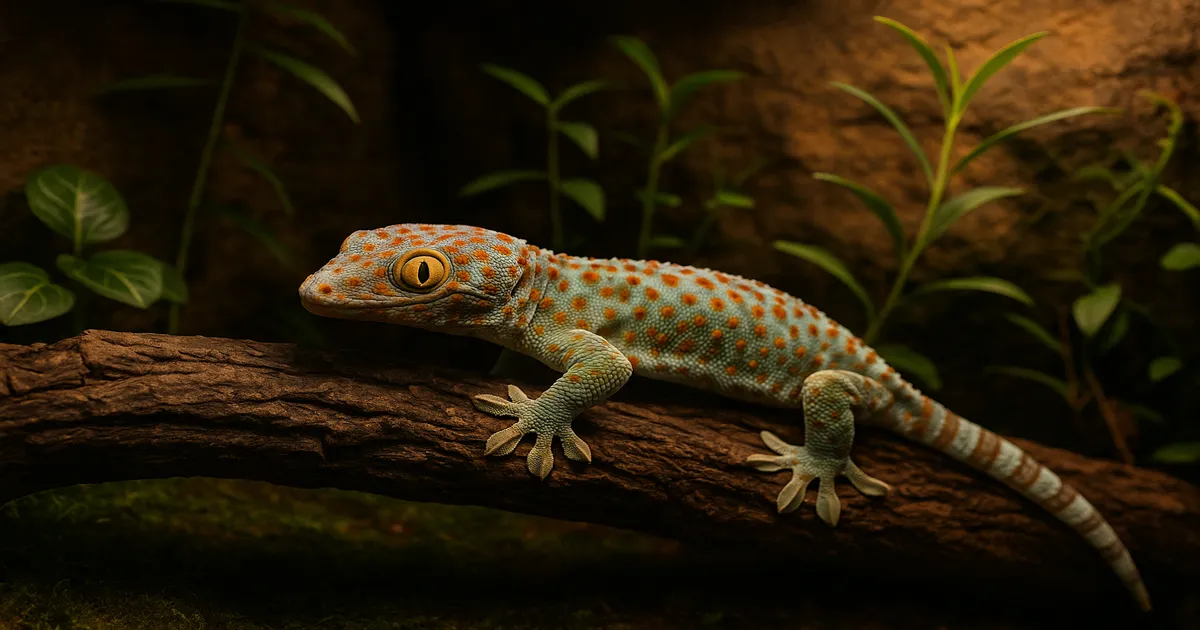
Quick Answer: Tokay geckos are opportunistic carnivores that thrive on a varied diet of live, gut-loaded insects. Adults should be fed 3–5 appropriately sized prey items, 2–3 times per week, about 30–60 minutes after lights-out. Proper prey sizing, consistent gut-loading, and a solid supplement schedule are what separate geckos that live 15+ years from ones that don’t make it to five.
Figuring out how to feed a tokay gecko properly is one of the most important things you’ll do as a keeper — and one of the most commonly botched. These geckos are tough, loud, and impressively bite-y, but they’re also surprisingly sensitive to nutritional gaps that seem minor on paper. Get the feeding right and you’ll have a healthy animal for decades. Get it wrong and you’re looking at metabolic bone disease, obesity, or a gecko that simply stops eating and wastes away.
What Do Tokay Geckos Eat in the Wild?
Tokay geckos (Gekko gecko) are generalist predators. If it moves and they can overpower it, it’s fair game. Across Southeast Asia that means large insects — moths, beetles, cockroaches — but also spiders, scorpions, smaller lizards, the occasional small snake, nestling birds, and tiny mice.
They hunt from dusk through the early morning hours, typically positioning themselves near light sources that attract insects. They’re ambush predators: motionless for long stretches, then explosive when prey gets close. Their conical teeth crush hard-shelled beetles without any trouble, which tells you something about how robust their feeding apparatus is.
The key takeaway for captive care is variety and prey size. Wild tokays regularly eat things that are large relative to their body. A cricket-only diet in captivity is the nutritional equivalent of a person eating nothing but plain rice — technically food, but missing a lot.
How to Feed a Tokay Gecko: Choosing the Right Prey
Staple Feeders
Your bread-and-butter feeders should be:
- Dubia roaches (Blaptica dubia) — nutritionally superior to crickets, quiet, and slow enough to be easy prey. If I had to pick one staple, this is it.
- Crickets (Acheta domesticus) — widely available and accepted readily. Fine as a staple, but gut-loading is especially important since their nutritional profile is mediocre without it.
Variety Feeders
Rotate these in every few feedings to keep things nutritionally rounded:
- Discoid roaches — similar to dubias, excellent nutritionally
- Hornworms — high moisture, great for a gecko that looks a little dehydrated
- Silkworms — soft-bodied and genuinely nutritious
- Black soldier fly larvae (NutriGrubs) — outstanding calcium-to-phosphorus ratio
- Superworms — high fat, use sparingly
- Mealworms — occasional only; high in chitin and fat
For large adult males, a pinky mouse once a month is fine as a supplement. Don’t make it a regular thing — the fat content adds up fast, and chronic vertebrate feeding leads to liver problems over time.
Prey to Avoid
Skip wild-caught insects entirely. The pesticide and parasite risk isn’t worth it. Also avoid anything too large — oversized prey causes regurgitation and can injure the gecko during the struggle.
Sizing Prey Correctly
The rule is simple: no wider than the space between the gecko’s eyes. For most adult tokays, that’s a large cricket or a medium-to-large dubia roach — which is reassuring once you’ve seen how big these animals actually get.
Feeder Insect Comparison
| Feeder | Protein | Fat | Notes |
|---|---|---|---|
| Dubia roach | High | Moderate | Best all-around staple |
| Cricket | Moderate | Low | Widely available; gut-load essential |
| Hornworm | Low | Low | High moisture; great for hydration |
| Silkworm | High | Low | Excellent variety feeder |
| BSFL | Moderate | Moderate | High calcium; good rotation feeder |
| Superworm | Moderate | High | Treat only |
| Waxworm | Low | Very high | Appetite stimulant only |
Gut-Loading: The Step Most Keepers Skip
A feeder insect that hasn’t been gut-loaded is basically empty calories wrapped in chitin. The nutritional value you’re delivering to your gecko comes almost entirely from what the insect ate in the 24–48 hours before you offered it. Skip this step and you’re supplementing a nutritional void.
Best gut-load foods:
- Collard greens, mustard greens, dandelion greens
- Squash and sweet potato
- Bee pollen
- Commercial gut-load products like Repashy Bug Burger or Mazuri Hi-Cal Cricket Diet
Avoid iceberg lettuce, citrus, and anything high in oxalates like spinach or beet greens — these interfere with calcium absorption.
Keep a separate gut-load container. Tossing some greens into the feeder bin an hour before feeding doesn’t cut it. Give your insects at least 24–48 hours on quality food before they go to your gecko.
Calcium and Vitamin Supplements
How to Dust Feeders
Put a small amount of supplement powder in a plastic bag or deli cup, drop in your feeders, and give a quick shake. You want a light, even coating — not a thick white crust. Over-dusted prey gets refused, and piling on supplements isn’t safer than using the right amount.
Supplement Schedule
Adults:
- Calcium without D3 — 2–3 feedings per week
- Calcium with D3 — 1–2 feedings per week (if no UVB lighting is provided)
- Multivitamin (Repashy Supervite or Rep-Cal Herptivite ) — once or twice per month
Juveniles get calcium at nearly every feeding — they’re building bone fast and the margin for error is smaller.
If you want to simplify, Repashy Calcium Plus is an all-in-one option that covers most bases without juggling three separate products. It’s what I’d recommend to anyone just starting out.
UVB and D3
Tokays are nocturnal, but they do benefit from low-level UVB. A 6% T5 HO bulb — the Arcadia Forest Canopy 6% is the one I’d reach for — on a 12-hour cycle supports natural D3 synthesis and reduces how much you need to supplement. If you’re running UVB, dial back your D3 supplement to once a week or less.
Over-Supplementing Is a Real Risk
Too much multivitamin leads to hypervitaminosis A. Too little calcium leads to metabolic bone disease — one of the most common preventable deaths in captive geckos. Stick to a schedule and write it down.
How to Feed a Tokay Gecko: Timing and Portions
Feeding Frequency by Age
- Juveniles: 3–4 prey items, 3–4 times per week
- Adults: 3–5 prey items, 2–3 times per week
Adults don’t need to eat every day. A lot of new keepers assume more food equals a healthier gecko. It doesn’t — it equals an obese gecko with a shortened lifespan.
When to Feed
Offer food 30–60 minutes after lights-out. Tokays are nocturnal and most active in the first few hours of darkness. Feeding during the day is a reliable way to get your food ignored.
Monitoring Weight
Weigh your gecko monthly on a digital kitchen scale. Healthy adult males typically land between 60–120g; females between 40–80g. A weight loss of 10–15% over four to six weeks is a sign something’s wrong and warrants a vet visit.
Seasonal appetite slowdowns in winter are normal. If weight is stable and the gecko looks healthy, a few weeks of reduced appetite isn’t a crisis.
Common Feeding Mistakes
Prey that’s too large. Causes regurgitation and internal injury. When in doubt, go smaller.
Cricket-only diet. Nutritional gaps and prey fatigue are both real. Rotate your feeders.
Feeding during daylight. Your gecko is asleep and stressed. Wait until after lights-out.
Leaving live prey in the enclosure. Crickets will bite a sleeping gecko, causing wounds and stress. Remove uneaten feeders within 30–60 minutes.
Overfeeding adults. Obesity shortens lifespan and tanks reproductive success in females.
Feeding a newly acquired gecko too soon. Give a new tokay 2–4 weeks to acclimate before making serious feeding attempts. A stressed gecko won’t eat, and pushing it makes things worse.
Using a separate feeding container. This works fine for ball pythons. For tokays, it’s counterproductive — pulling them out of their enclosure causes stress and biting. Always feed in the home enclosure.
Tips for Stubborn or Picky Feeders
Use erratic tong movement. Don’t just dangle prey in front of your gecko. Use feeding tongs to move the prey in jerky, unpredictable bursts — mimicking an injured insect. That erratic movement triggers the ambush response. Prey hanging limply from tongs often gets ignored entirely.
Break a slump with waxworms. If your tokay has gone off food, offer a single waxworm or superworm. These high-fat treats often reset the feeding response when nothing else is working. Use them once or twice to break the slump, then transition back to staple feeders.
Leave it and walk away. Some tokays simply won’t eat with you in the room. After lights-out, place 3–5 roaches or crickets in the enclosure, turn off the lights, and leave. Check back in an hour. Many shy feeders hunt perfectly well on their own — they just don’t want an audience.
Warm your feeders. Insects pulled straight from the refrigerator are sluggish and less appealing. Let them warm to room temperature for 30–60 minutes before offering. Warmer, more active prey triggers a much stronger feeding response.
Keep a feeding log. Track the date, prey type, number offered, number eaten, and supplements used. Patterns show up fast — you’ll notice if refusals always follow a husbandry change, or if a particular prey type consistently gets ignored. I’ve caught temperature drops and supplement schedule drift this way before they became real problems.
One last thing: wait 48–72 hours after feeding before any handling. Tokays that get jostled too soon after a meal regurgitate, and that’s unpleasant for both of you.
Frequently Asked Questions
How often should I feed my tokay gecko?
Juveniles do well on 3–4 prey items three to four times per week. Adults need 3–5 prey items two to three times per week. Daily feeding isn’t necessary and often leads to obesity in adults.
Why is my tokay gecko not eating?
Check your temperatures first — a gecko that’s too cold won’t eat or digest food properly. Ambient temps should sit around 80–85°F (27–29°C) during the day, with a basking spot no hotter than 90°F (32°C) and a nighttime drop to 72–75°F (22–24°C). If temps are fine, the gecko may still be acclimating to a new enclosure. Give it 3–4 weeks. If it’s still refusing food after that, see a vet.
Can tokay geckos eat pinky mice?
Yes, but rarely. A pinky mouse once a month is fine for large adult males. Don’t make it a regular part of the diet — the fat content is high, and overfeeding vertebrate prey leads to obesity and liver issues over time.
What’s the best feeder insect for tokay geckos?
Dubia roaches are hard to beat as a staple — nutritionally solid, easy to keep, and most tokays take to them readily. Crickets are a close second and more widely available. The real answer, though, is that variety beats any single “best” feeder. Rotate between at least two or three prey types for the best nutritional outcomes.
How do I know if my tokay gecko is a healthy weight?
Weigh your gecko monthly. A healthy adult male typically weighs 60–120g; females 40–80g. Beyond the scale, a healthy tokay should have a rounded tail base, visible muscle tone, and no visible hip bones or spine. A 10–15% weight drop over four to six weeks means it’s time to see a vet.