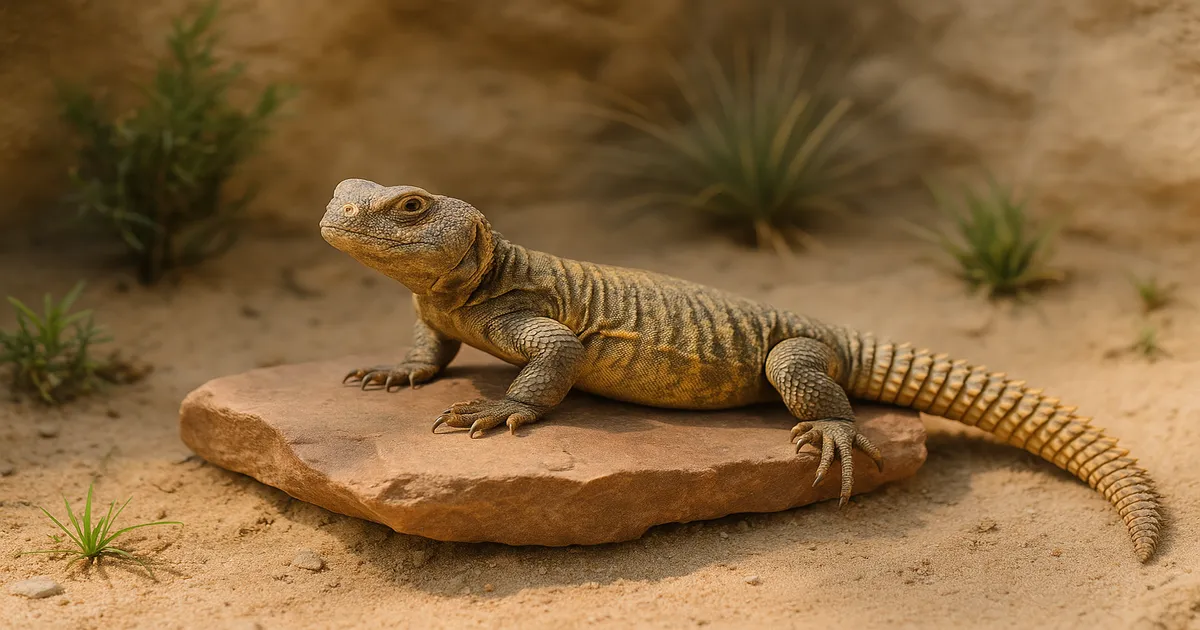
Quick Answer: Uromastyx are strict herbivores from some of the world’s harshest deserts. They need extreme basking heat (120–135°F surface temps), high-output UVB, low humidity (20–35%), and a spacious enclosure to thrive. Get these four things right and you’ll have a fascinating, long-lived lizard — many reach 20+ years in captivity. Get them wrong and you’ll have a sick animal within months.
Knowing how to care for uromastyx properly starts with accepting one uncomfortable truth: most of the “desert lizard” advice floating around the internet dramatically underestimates how extreme their requirements actually are. These aren’t bearded dragons with a different color scheme. They’re specialists, built for environments that would kill most other reptiles — and their captive care needs to reflect that.
Uromastyx Care at a Glance
Key Care Parameters
| Parameter | Requirement |
|---|---|
| Basking surface temp | 120–135°F (49–57°C) |
| Warm side air temp | 95–110°F (35–43°C) |
| Cool side air temp | 80–90°F (27–32°C) |
| Nighttime temp | 65–75°F (18–24°C) |
| Humidity | 20–35% RH |
| UVB | T5 HO 12% Desert or 10%, UVI 4.0–6.0 |
| Diet | Strict herbivore — greens, seeds, flowers |
| Lifespan | 15–25+ years |
| Minimum enclosure (most species) | 48 × 24 × 24 inches (120 × 60 × 60 cm) |
Are Uromastyx Good Pets for Beginners?
Honestly, they can be — but not because they’re easy. They’re unforgiving of thermal mistakes, and their heating requirements trip up a lot of keepers who’ve worked with other lizards. That said, U. geyri (Saharan uromastyx) and U. maliensis (Mali uromastyx) are genuinely excellent starting points. They’re hardy, tend to tame down well, and their care is well-documented. Stick with a captive-bred animal from a reputable breeder and you’ll avoid the acclimation nightmare that comes with wild-caught imports.
Understanding Uromastyx: Natural History and Popular Species
Where Do Uromastyx Come From?
The genus Uromastyx contains roughly 18–20 recognized species — taxonomy keeps shifting — spread across an enormous range from West Africa and Morocco through Egypt, the Arabian Peninsula, Iran, and into Pakistan and India. What unites all of them is habitat: rocky desert, gravel plains, and sun-baked hillsides where surface temperatures routinely exceed 120°F (49°C) in the afternoon. That context is everything when it comes to understanding their care.
Behavior and Biology Worth Knowing
Uromastyx are diurnal baskers. They emerge in the morning, soak up intense solar radiation, and retreat to burrows during peak afternoon heat. They’re fossorial by nature — in the wild they’ll dig burrows several feet long — and that instinct doesn’t disappear in captivity. A uromastyx that can’t dig is a stressed uromastyx, full stop.
They’re also solitary and territorial, particularly males. Many species brumate during cooler months, which affects how you manage lighting and feeding through winter. These aren’t behaviors to fight. They’re behaviors to accommodate.
Popular Species and Their Size Differences
| Species | Common Name | Adult Size | Beginner-Friendly? |
|---|---|---|---|
| U. geyri | Saharan Uromastyx | 12–16 in (30–41 cm) | ✅ Yes |
| U. maliensis | Mali Uromastyx | 14–18 in (36–46 cm) | ✅ Yes |
| U. ornata | Ornate Uromastyx | 10–14 in (25–36 cm) | ⚠️ Intermediate |
| U. ocellata | Ocellated Uromastyx | 10–14 in (25–36 cm) | ⚠️ Intermediate |
| U. dispar | African Uromastyx | 12–16 in (30–41 cm) | ⚠️ Intermediate |
| U. thomasi | Thomas’s Uromastyx | 10–12 in (25–30 cm) | ⚠️ Less common |
| U. aegyptia | Egyptian Uromastyx | 24–36 in (61–91 cm) | ❌ Advanced |
One note on U. ornata: males are among the most visually stunning lizards in the hobby, but they’re also more temperature-sensitive than the beginner species and don’t tolerate husbandry errors as gracefully. Worth the extra effort once you have a season or two of experience.
Always source captive-bred animals. Wild-caught uromastyx are frequently heavily parasitized, stressed beyond recovery, and only a fraction survive long-term in captivity. The price difference isn’t worth it.
Enclosure Setup for Uromastyx
Size: Bigger Than You Think
Uromastyx patrol large territories. A cramped enclosure doesn’t just limit movement — it causes chronic stress, immune suppression, and behavioral problems that are hard to reverse.
| Species Group | Minimum | Recommended |
|---|---|---|
| Small/medium (U. geyri, U. maliensis, U. ornata) | 48 × 24 × 24 in (120 × 60 × 60 cm) | 60 × 24 × 24 in (150 × 60 × 60 cm) |
| Large (U. aegyptia) | 72 × 36 × 24 in (180 × 90 × 60 cm) | 96 × 48 × 24 in (240 × 120 × 60 cm) |
Keep the footprint long rather than tall — uromastyx are terrestrial, not climbers. Front-opening designs make daily maintenance far easier and are less stressful for the animal than reaching in from above.
Enclosure Material: PVC, Glass, or Wood
PVC or melamine custom builds are my top recommendation. They retain heat well, hold up to extreme temperatures, and are lighter than glass. Animal Plastics makes solid options that are worth the investment.
Glass terrariums work for smaller species but lose heat quickly and may need insulation on the sides and back. Front-opening is non-negotiable if you go this route.
DIY wood enclosures are cost-effective for large setups — a 6-foot Egyptian enclosure in wood costs a fraction of a custom PVC build — but seal them thoroughly with polyurethane or line them with tile to handle the heat and prevent moisture damage.
Substrate: Depth Matters
The best mix is 70% play sand and 30% organic topsoil (no fertilizers, no perlite, nothing added), packed to at least 4–6 inches (10–15 cm) deep. This allows natural burrowing and holds burrow shape reasonably well. Excavator clay is another solid option if you want stable tunnel structures.
Avoid calci-sand, colored sands, walnut shell, and bark chips. The impaction risk from loose sand is actually quite low in uromastyx — unlike insectivores, they’re not lunging at prey and accidentally gulping substrate — but the wrong substrates offer no benefit and some real downsides.
Hides, Burrows, and Décor
At minimum, provide:
- A rock cave or hide on the warm side — flat flagstone or slate stacked into a cave shape retains heat beautifully and looks natural
- An artificial burrow — a 3–4 inch diameter PVC pipe buried at an angle in the substrate gives them a secure retreat that mimics a real burrow
- A basking platform — a flat rock or cork bark positioned directly under the basking bulb, elevated to bring the animal closer to the heat source
- Visual barriers on the cool side — additional rock formations or cork bark reduce stress by giving the animal places to feel hidden
Temperature: The Most Critical Factor in Uromastyx Care
Getting the Gradient Right
I’ll say it plainly: insufficient heat kills more captive uromastyx than anything else. Keepers read “desert lizard,” set up a 95°F basking spot, and wonder why their animal stops eating and slowly declines. In the wild, these lizards press their bodies against rocks that hit 130–140°F (54–60°C). They need that heat to digest food, absorb nutrients, and maintain immune function.
The full gradient you’re aiming for:
- Basking surface: 120–135°F (49–57°C)
- Warm side air: 95–110°F (35–43°C)
- Cool side air: 80–90°F (27–32°C)
- Nighttime: 65–75°F (18–24°C)
Measure Surface Temperature — Not Air Temperature
Throw away your stick-on dial thermometers. They’re notoriously inaccurate and will give you false confidence. The only way to properly measure basking surface temperature is with a digital infrared thermometer pointed directly at the rock or substrate your animal actually sits on. Air temperature 6 inches above the basking surface can read 30°F lower than the surface itself — and uromastyx thermoregulate by contact, not by floating in warm air. The Etekcity Lasergrip 774 is accurate, cheap, and widely available.
Heating Equipment
For primary basking heat, halogen PAR38 or BR40 flood bulbs are the way to go. Here’s a tip that’ll save you real money: buy them at a hardware store. A 4-pack of 90W PAR38 halogens costs the same as a single branded “reptile basking bulb” and they’re functionally identical. Clustering two smaller bulbs side by side — say, two 75W instead of one 150W — creates a wider, more naturalistic basking zone that lets the animal position itself more precisely within the gradient.
The Arcadia Deep Heat Projector is genuinely worth the price for supplemental heat — it penetrates tissue the way solar radiation does, rather than just warming surface air. If your room drops below 65°F (18°C) overnight, add a ceramic heat emitter on a thermostat for overnight use.
Skip under-tank heaters entirely. Uromastyx thermoregulate from above; belly heat from below doesn’t replicate natural thermoregulation and can cause burns.
Put all heat sources on a dimming thermostat. A Herpstat 1 or Inkbird ITC-306A PID controller gives you precise control and prevents dangerous temperature spikes.
UVB and Lighting for Uromastyx
High Output Is Non-Negotiable
Uromastyx are among the highest UVB-demanding lizards in the hobby. They fall in Ferguson Zone 3–4, which means they need a UV Index (UVI) of 4.0–6.0 in their basking zone. Without adequate UVB, they can’t synthesize vitamin D3 properly, which leads to metabolic bone disease and a cascade of other health problems. Dietary D3 supplements help, but they don’t replicate what proper UV exposure does physiologically — and over-supplementing fat-soluble D3 carries its own toxicity risks.
The two bulbs I’d recommend are the Arcadia T5 HO 12% Desert and the Zoo Med Reptisun T5 HO 10% . Linear T5 HO tubes outperform compact or coil bulbs significantly — stronger output, more consistent coverage, larger area. Size your tube to cover at least half the enclosure length.
Position the UVB tube 8–12 inches (20–30 cm) from the basking surface and use a quality reflector hood — a good reflector can boost usable UV output by 30–50%. Replace T5 HO bulbs every 12 months, even if they’re still producing visible light. UV output degrades well before the bulb burns out.
If you want to verify what your animal is actually receiving, a Solarmeter 6.5 is the gold standard for measuring UVI at the basking spot. It’s an investment, but it removes all guesswork.
Photoperiod and Seasonal Cycling
Run lights for 12–14 hours in summer and 10–12 hours in winter. Seasonal variation supports natural hormonal cycles, breeding behavior, and brumation. A simple digital outlet timer handles this automatically. Don’t use red or blue “night bulbs” for heat — uromastyx can perceive those wavelengths and it disrupts their rest. Ceramic heat emitters or a deep heat projector are the right tools for overnight warmth.
Feeding Uromastyx: What They Eat and What to Avoid
Strict Herbivores — No Exceptions
No insects. Ever. This is one of the most common mistakes new keepers make, often because they assume all lizards eat bugs. Uromastyx are obligate herbivores — their digestive systems are built for plant material, not protein and fat. Regular insect feeding leads to kidney disease, gout, and a significantly shortened lifespan. It’s not a treat; it’s a slow poison.
Staple Greens
The foundation of the diet should be dark leafy greens. Rotate through these regularly:
- Collard greens
- Dandelion greens (one of the best — high calcium, highly palatable)
- Endive and escarole
- Mustard greens
- Spring mix (as a base, not the sole item)
- Turnip greens
Avoid iceberg lettuce entirely — it’s nutritionally empty. Limit high-oxalate greens like spinach, beet greens, and Swiss chard; oxalic acid binds calcium and contributes to metabolic bone disease over time. Go easy on high-water-content vegetables like cucumber and zucchini — too much raises enclosure humidity and causes loose stools.
Seeds, Flowers, and Treats
Seeds are where things get fun. Millet, lentils, split peas, and dried quinoa are irresistible to most uromastyx — use them sparingly because they’re high in fat and phosphorus, but they’re invaluable for taming shy animals and building trust. Edible flowers like hibiscus, dandelion flowers, and rose petals make excellent additions to the salad bowl.
Supplementation
- Calcium carbonate (plain, no D3 if UVB lighting is adequate): dust food lightly 2–3 times per week
- Reptile multivitamin such as Repashy Supervite: once weekly
Water
Keep a small, shallow water dish on the cool side and change it every day or two. Most uromastyx rarely drink standing water — they get the majority of their moisture from food — but access should always be available. Don’t mist the enclosure as a hydration strategy. It doesn’t help and it raises humidity in ways that can trigger respiratory infections.
Common Uromastyx Care Mistakes
Under-heating is the single deadliest mistake. If your basking spot is under 110°F (43°C), your uromastyx can’t properly digest its food. You’ll see decreased appetite, lethargy, and a slowly declining animal — and it happens gradually enough that many keepers never connect the dots. Verify surface temperatures with an infrared thermometer any time something seems off.
Feeding insects is the other big one. Even occasional insect feeding adds up over months and years into real organ damage.
Chronic high humidity — anything consistently above 50% — sets the stage for respiratory infections and scale rot. If your climate is naturally humid, you may need active ventilation or a dehumidifier near the enclosure. Soaking should be reserved for therapeutic use only: a difficult shed or suspected dehydration.
Housing adult males together. They will fight, and the injuries can be severe or fatal. Don’t do it.
Skipping the acclimation period. Give new animals 4–8 weeks of minimal disturbance before regular handling — even captive-bred animals need time to settle in before they’re ready to trust you.
Uromastyx Care FAQ
How often should I feed my uromastyx? Adults do well with fresh greens offered daily or every other day. Juveniles under 12 months should be fed daily — they’re growing fast and need consistent nutrition. Remove uneaten food before it wilts and raises humidity.
Why is my uromastyx not eating? The most common cause is insufficient basking temperature. Check your surface temps with an infrared thermometer before assuming illness. Seasonal brumation is another normal reason for appetite reduction in fall and winter. If temperatures are correct and it’s not brumation season, a vet visit is warranted.
Can uromastyx be housed together? Adult males should never be housed together — they’re territorial and will fight. A male-female pair or a group of females can sometimes work in a large enough enclosure, but watch closely for signs of stress or bullying. When in doubt, separate.
How do I know if my uromastyx is healthy? A healthy uromastyx is alert during daylight hours, basks regularly, has clear eyes, smooth skin (outside of a shed), and a well-rounded tail base. The tail is a good weight indicator — a thin, pinched tail base suggests the animal is underweight or unwell.
Do uromastyx brumate? Many species do, yes. You’ll notice reduced appetite, longer periods of inactivity, and less basking as daylight hours shorten in autumn. This is normal. Reduce feeding, maintain temperatures, and let the animal lead. Most come out of it naturally as days lengthen in late winter or early spring.