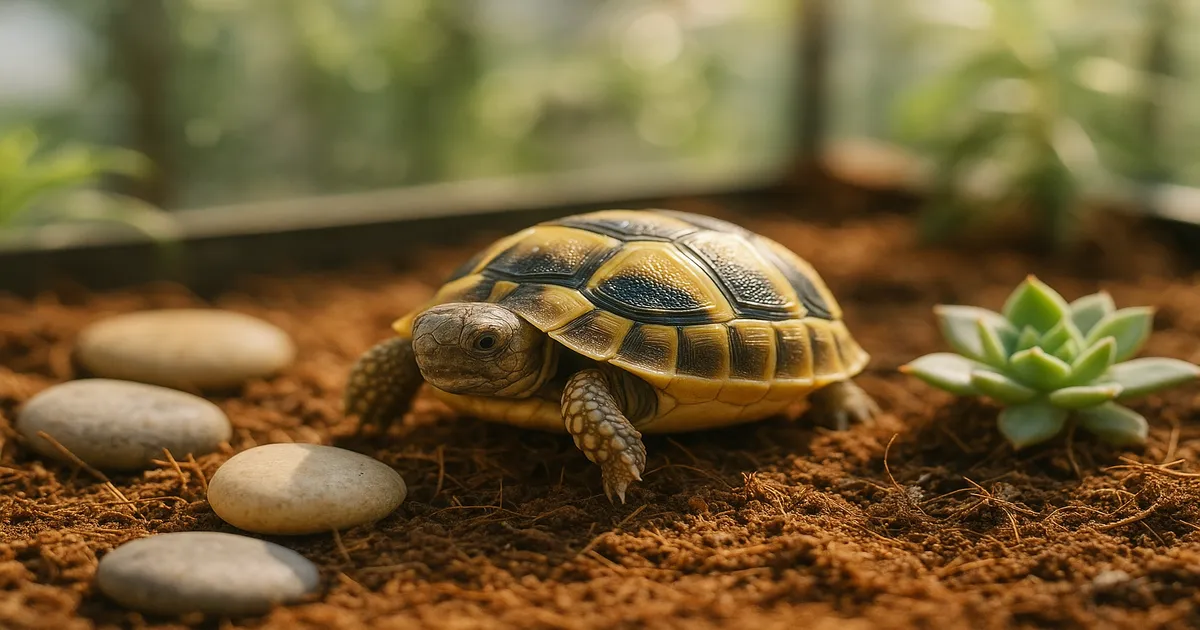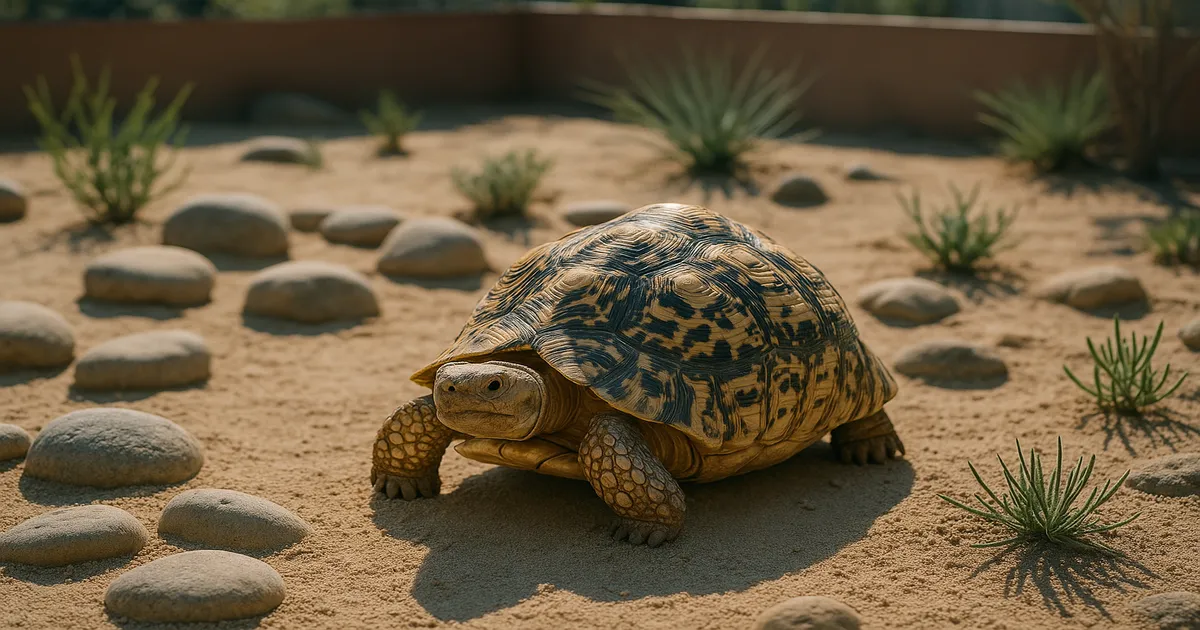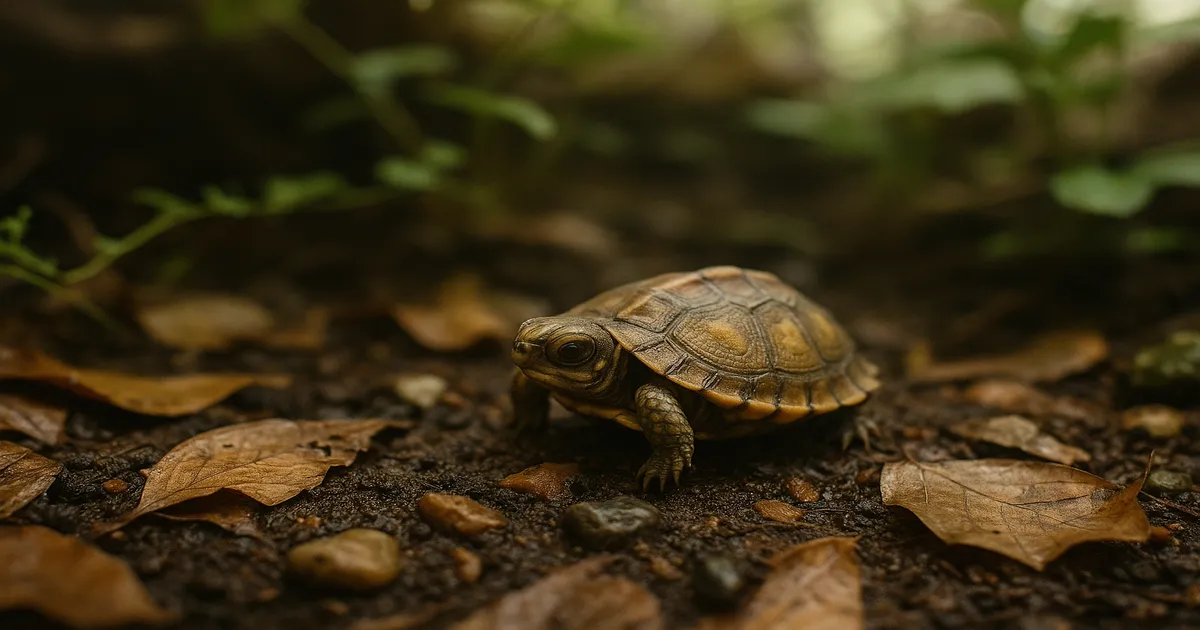
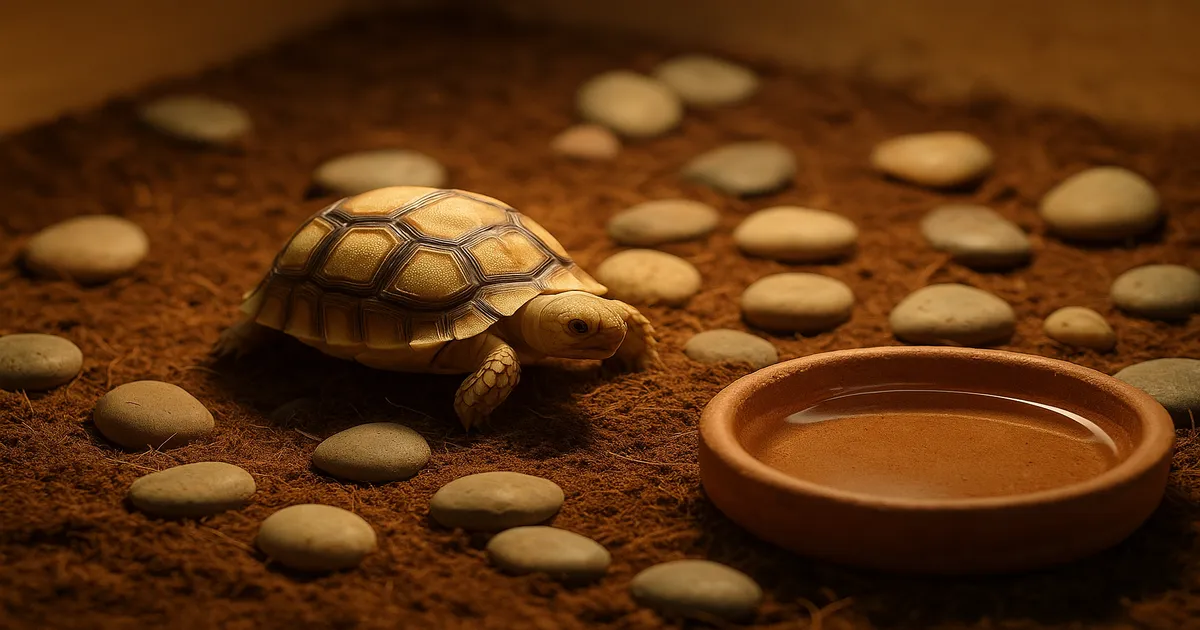
Quick Answer: Caring for sulcata tortoise hatchlings means providing a basking spot of 100–110°F (38–43°C), ambient humidity of 40–60%, a humid hide at 70–80%, daily feeding on grasses and hay, soaking 3–5 times per week, and quality T5 HO UVB lighting. Before you bring one home, understand that this 2-inch hatchling will become a 100–200 lb animal that may outlive you. This isn’t a starter reptile — it’s a multigenerational commitment.
Let’s be honest upfront: knowing how to care for sulcata tortoise hatchlings is only half the battle. The other half is genuinely understanding what you’re signing up for. Sulcatas (Centrochelys sulcata) are extraordinary animals, and getting hatchling care right sets the foundation for a healthy life measured in decades — but only if you go in with your eyes open.
What Makes Sulcata Hatchling Care Unique
Sulcatas come from the Sahel — a band of semi-arid scrubland stretching from Senegal east through Ethiopia, where daytime surface temps regularly top 100°F. But wild sulcatas spend much of their time underground in burrows that can reach 10 feet deep and 30 feet long. Those burrows stay significantly cooler and more humid than the surface. That’s the key insight: hatchlings aren’t built for uniform dry heat. They’re built for dramatic gradients — scorching basking spots and a cool, humid retreat to escape to.
Most care mistakes come from ignoring that second half. “It’s a desert tortoise, keep it dry and hot” is the kind of oversimplification that produces pyramided, dehydrated hatchlings.
Core requirements at a glance:
| Parameter | Target |
|---|---|
| Basking spot (surface) | 100–110°F (38–43°C) |
| Warm side ambient | 85–95°F (29–35°C) |
| Cool side ambient | 75–85°F (24–29°C) |
| Nighttime minimum | 70–72°F (21–22°C) |
| Ambient humidity | 40–60% |
| Humid hide humidity | 70–80% |
| Soaking | 15–20 min, 3–5×/week, water at 85–90°F |
| UVB (basking zone UVI) | 3.0–6.0 |
| Photoperiod | 12–14 hours |
The Long-Term Commitment
A sulcata hatchling weighs about an ounce and fits in your palm. In 15–20 years, that same animal will weigh 100–200 lbs and need an outdoor enclosure the size of a small yard. They live 70–100+ years. I’ve seen more sulcatas surrendered to rescues than almost any other tortoise species — because people bought the hatchling without thinking through the adult. If you can’t picture where a 150 lb tortoise will live in 20 years, please reconsider before purchasing.
Setting Up a Sulcata Hatchling Enclosure
Enclosure Types
A tortoise table is my top pick for beginners — open-topped, good ventilation, easy overhead lighting, and you can actually see your animal. You can build one cheaply or buy one pre-made. Large opaque plastic tubs (40–110 gallon) work as a budget option for very young hatchlings, but you’ll need to add ventilation by cutting a screen panel into the lid. Treat them as temporary housing.
Glass terrariums are the wrong tool for this job. Poor ventilation, difficult heat management, and the stress of a hatchling repeatedly trying to walk through glass walls make them a poor choice at any size.
Minimum Floor Space
- 0–6 months: 2 ft × 4 ft (61 × 122 cm)
- 6–12 months: 3 ft × 4 ft (91 × 122 cm) or larger
- Wall height: At least 12 inches (30 cm) — hatchlings are better climbers than they look
Plan to upgrade every 6–12 months. These animals grow fast.
Substrate
Use a 50/50 mix of plain topsoil and play sand at a depth of 3–4 inches (7.6–10 cm). It mimics the compacted, slightly sandy soils of the Sahel, allows natural digging, and holds humidity gradients well. Avoid cedar or pine shavings (toxic resins), calcium sand (impaction risk), reptile carpet (bacteria, torn toenails), and pure sand (dries out too fast, poor structure).
Hides and Enrichment
The humid hide is non-negotiable. Put a covered hide on the cool-to-mid side of the enclosure, fill it with damp coconut coir or sphagnum moss, and maintain 70–80% humidity inside. This is the burrow equivalent, and hatchlings will use it constantly. Add a second dry hide on the warm side.
For enrichment: flat rocks near the basking area absorb heat and help wear down the beak naturally. Growing edible plants like dandelion directly in the substrate gives the tortoise something to graze on throughout the day. Varied terrain — slight slopes, mixed substrate textures — encourages natural movement.
Temperature and Lighting for Sulcata Hatchlings
Basking Temperature
A basking spot of 100–110°F (38–43°C) isn’t optional — it’s the temperature sulcatas need to properly digest food and metabolize calcium. An 85–90°F basking spot might feel warm to you, but it’s not enough. You’ll end up with a lethargic tortoise that isn’t digesting properly and is quietly developing metabolic issues. Always verify surface temperature with an infrared temperature gun, not an ambient thermometer. (Etekcity Lasergrip 774)
Heating Equipment
Use a 50–100W halogen or incandescent flood bulb for the basking spot — adjust wattage until you hit the right surface temp. For overnight heat when the room drops below 70°F (21°C), use a ceramic heat emitter (CHE) or a deep heat projector (DHP). Both produce heat without disrupting the light cycle.
Never run heating equipment without a thermostat. Use a dimmer thermostat for the basking lamp and an on/off or pulse thermostat for the CHE or DHP. (Inkbird ITC-306A) Under-tank heaters are not appropriate for tortoises — they can’t effectively sense heat from below and risk overheating without realizing it.
UVB Lighting
Without adequate UVB, you’re looking at metabolic bone disease: soft shell, deformed bones, potentially fatal. Use a T5 HO fluorescent fixture spanning at least half the enclosure length. Good bulb options are the Arcadia 12% Desert T5 HO and the Zoo Med Reptisun 10.0 T5 HO. Target UVI 3.0–6.0 in the basking zone, measured with a Solarmeter 6.5 if you want to verify actual output.
Replace bulbs every 6–12 months — UV output degrades long before visible light fails. Set everything on a timer for a consistent 12–14 hour photoperiod. And whenever weather cooperates, 30 minutes of unfiltered natural sunlight beats any artificial UVB source.
Humidity and Soaking: The Most Overlooked Part of Sulcata Hatchling Care
“Desert tortoise” is a misleading label when it comes to hatchlings. Keeping them bone-dry is one of the most common and most damaging mistakes keepers make. The result is pyramiding — abnormal, raised scute growth that’s largely irreversible and associated with long-term health problems.
Target 40–60% ambient humidity. Lightly mist the substrate every day or two to maintain that gradient without making the whole enclosure wet. The humid hide should sit at 70–80% — damp, not soaking.
Soak hatchlings 3–5 times per week in water at 85–90°F (29–32°C) for 15–20 minutes per session. Water depth should be no more than ½–¾ inch (1.3–1.9 cm) — no deeper than the tortoise’s chin. Soaking supports hydration, stimulates appetite, and encourages defecation. Use a dedicated soaking tub that’s easy to disinfect between uses.
Feeding Sulcata Tortoise Hatchlings
What to Feed
Seventy to eighty percent of the diet should be high-fiber, low-protein grasses and hay:
- Bermuda grass (fresh or dried)
- Timothy hay
- Orchard grass hay
- Dried mixed grass hays
Rotate in supplemental greens several times per week: dandelion greens, collard greens, turnip greens, endive, escarole, and mulberry leaves. If you have a pesticide-free yard, dandelion (whole plant, flowers included), broadleaf plantain (Plantago major), and clover in moderation are all excellent free food sources.
What to Avoid
- Fruit — too high in sugar, disrupts gut flora
- Spinach — oxalates bind calcium and block absorption
- Kale and broccoli in large amounts — goitrogens affect thyroid function
- Any animal protein — causes rapid, abnormal growth and long-term kidney damage
- Iceberg lettuce — nutritionally worthless
Supplements
Dust food lightly with calcium carbonate (without D3) 3–5 times per week. Keep a cuttlebone available free-choice — most hatchlings gnaw on it readily. Use a multivitamin with D3 once every 1–2 weeks, but don’t overdo it. D3 toxicity from over-supplementation is a real risk.
Feed daily, in the morning after the basking lamp has been on for 1–2 hours. You want the tortoise warm and ready to digest before it eats.
Common Sulcata Hatchling Care Mistakes
Keeping hatchlings too dry. No humidity, no humid hide, no regular soaking — the result is pyramiding that affects the animal for life. Fix it: 40–60% ambient, 70–80% in the humid hide, soak 3–5 times per week.
Feeding too much protein. Commercial tortoise pellets, legumes, and high-protein vegetables drive rapid abnormal shell growth and can cause kidney damage over time. Base the diet on grass and hay. Use pellets occasionally at most.
Insufficient basking temperature. A “warm” basking spot leads to poor digestion, nutrient deficiencies, and eventually metabolic bone disease. Measure the surface with an infrared gun. If it’s not hitting 100–110°F (38–43°C), adjust wattage or lamp height.
Wrong UVB equipment. Compact coil UVB bulbs, “full spectrum” LED strips, and old fluorescent bulbs are not adequate. Use a quality T5 HO bulb and replace it on schedule.
Not planning for adult size. That 2-inch hatchling becomes a 150 lb animal in 15–20 years. Have a realistic plan for adult housing before you buy.
Equipment Checklist
- Tortoise table (min. 2 ft × 4 ft) or large opaque tub with added ventilation
- T5 HO UVB fixture and bulb (Arcadia 12% Desert or Zoo Med Reptisun 10.0)
- 50–100W halogen or incandescent basking bulb
- Ceramic heat emitter or deep heat projector for overnight heat
- Dimmer thermostat (basking lamp) + on/off thermostat (CHE/DHP)
- Substrate: topsoil, play sand, coconut coir for humid hide
- Two hides (one humid, one dry)
- Flat rocks for basking platform
- Shallow soaking tub
- Spray bottle for misting
- Cuttlebone (free-choice)
- Calcium carbonate powder (no D3)
- Multivitamin supplement
- Infrared temperature gun
- Dual-zone digital thermometer/hygrometer
Frequently Asked Questions About Sulcata Tortoise Hatchling Care
How often should I soak my sulcata hatchling? Three to five times per week, 15–20 minutes per session in water at 85–90°F (29–32°C). Water should be no deeper than the tortoise’s chin — about ½–¾ inch (1.3–1.9 cm). Soaking is one of the most important things you can do for a hatchling’s hydration and digestion.
Can sulcata hatchlings live outside? Not year-round in most climates, and not unsupervised at any age. Hatchlings are vulnerable to temperature swings, predators (birds, raccoons, even large insects), and escape. Once they’re 4–6 inches and your climate stays reliably above 70°F at night, supervised outdoor time is excellent. Full outdoor living is generally appropriate only for larger juveniles and adults in warm climates.
Why is my sulcata hatchling’s shell bumpy? Pyramiding — raised, peaked scutes — is almost always caused by insufficient humidity and/or too much dietary protein during the growth phase. It’s largely irreversible once set. Prevent it by maintaining 40–60% ambient humidity, providing a humid hide, soaking regularly, and keeping the diet grass-and-hay-based.
What’s the difference between a tortoise table and a terrarium for sulcata hatchlings? Ventilation and heat management, mainly. Tortoise tables are open-topped, which allows heat to dissipate naturally and makes it easy to create a proper temperature gradient. Glass terrariums trap heat unevenly, have poor airflow, and stress hatchlings that repeatedly try to walk through the transparent walls. Tortoise tables win every time for this species.
How fast do sulcata hatchlings grow? Fast. Under good conditions, a hatchling can go from roughly 2 inches and 1 oz at hatching to 6+ inches and several pounds within the first year. Growth rate varies with diet, temperature, and individual genetics, but plan to upgrade the enclosure every 6–12 months during the first few years.