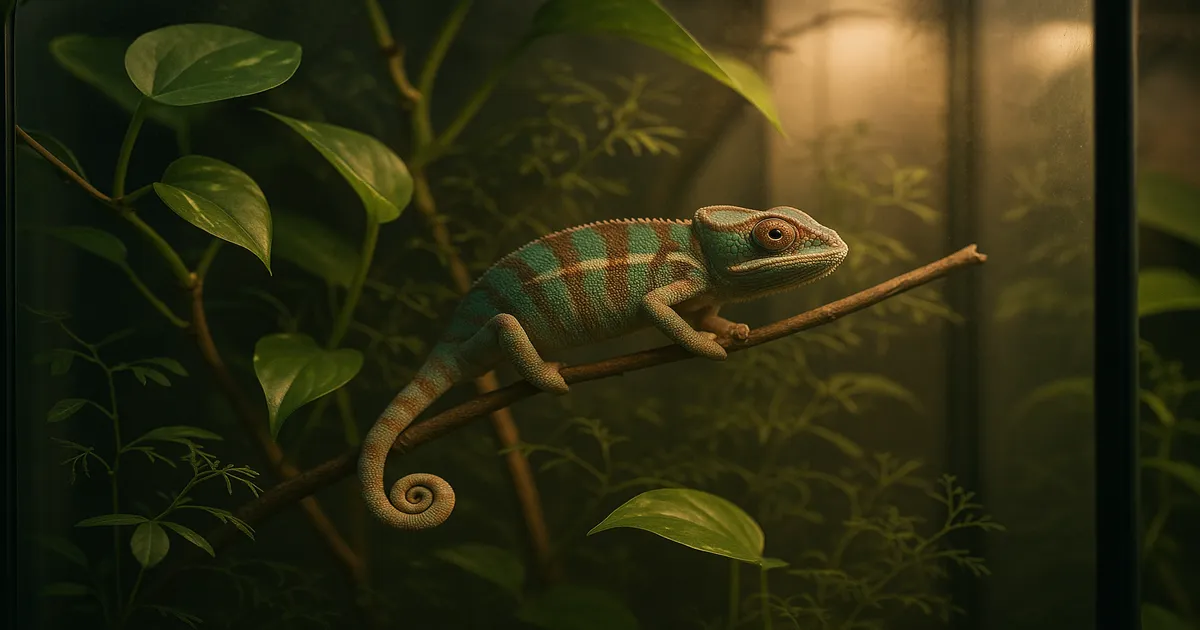
Quick Answer: Baby panther chameleons need a small screen enclosure, a basking spot of 80–85°F (27–29°C), misting 2–4 times daily, and daily feedings with appropriately sized prey. They’re one of the more forgiving chameleon species, but neonates are still fragile — dehydration and overheating can kill them fast.
Knowing how to care for a baby panther chameleon before you bring one home is the difference between raising a healthy, colorful animal and spending your first few months troubleshooting a sick one. Furcifer pardalis hatchlings are tiny, stress-prone, and dehydrate faster than you’d expect. Get the setup right, though, and they grow quickly — and reward you with some of the most spectacular coloration in the reptile hobby.
Baby Panther Chameleon Care at a Glance
| Parameter | Baby (0–3 months) | Juvenile (3–6 months) |
|---|---|---|
| Enclosure size | 12×12×24 in (30×30×61 cm) | 16×16×30 in (40×40×76 cm) |
| Basking temp | 80–85°F (27–29°C) | 85–90°F (29–32°C) |
| Ambient temp | 72–78°F (22–26°C) | 72–78°F (22–26°C) |
| Nighttime temp | 60–68°F (16–20°C) | 60–68°F (16–20°C) |
| Daytime humidity | 40–60% between mistings | 40–60% between mistings |
| Misting frequency | 2–4× daily, 1–3 min each | 2–3× daily |
| Feeding frequency | Daily | Daily or every other day |
| UVB | Arcadia 6% or Zoo Med 5.0 T5 HO | Same |
What You Need to Know Before Setup
Species Background
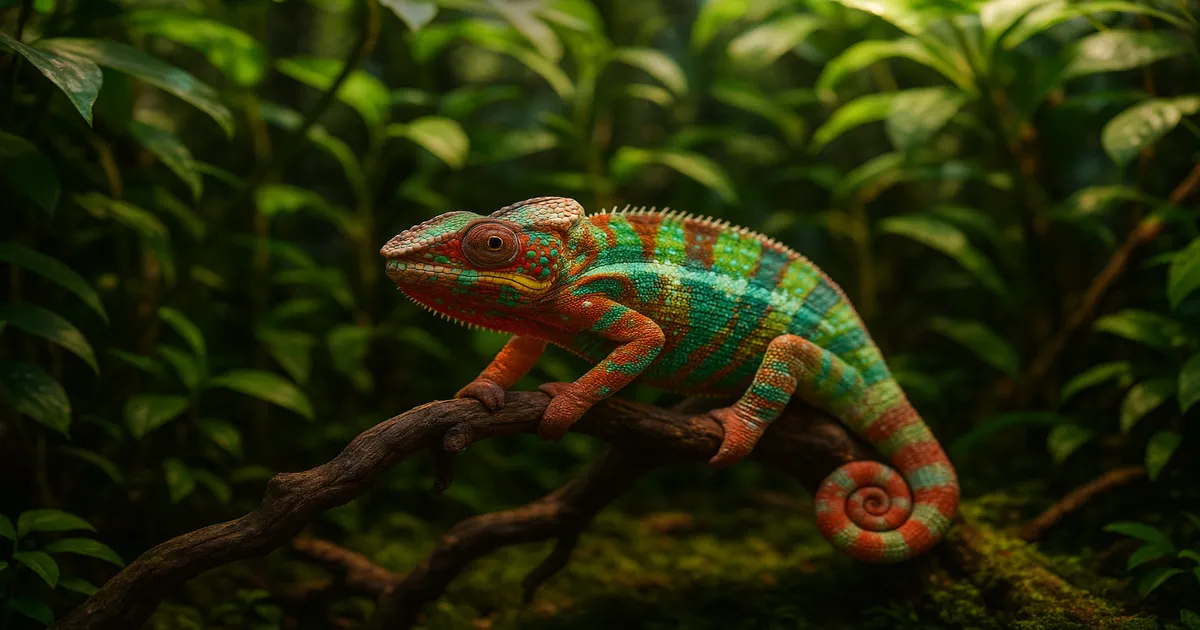
Panther chameleons come from the lowland tropical forests and coastal scrub of northern and eastern Madagascar — not high-altitude cloud forests. That distinction matters. They’re adapted to warm temperatures, distinct wet-dry humidity cycles, and intense equatorial sunlight. Males typically live 5–7 years in captivity; females run shorter at 3–5 years, mostly due to the toll of egg production. At hatching, neonates are roughly 2–3 inches (5–7.5 cm) long and weigh 1–2 grams.
Locale Varieties and Why Captive-Bred Matters
Panther chameleons are famous for locale-specific color morphs — Ambilobe, Ambanja, Nosy Be, Nosy Faly, Sambava, Tamatave. Each produces distinct coloration, and serious keepers care a lot about lineage purity. If you’re buying a locale-specific animal, get breeder documentation in writing.
Panthers are CITES Appendix II, so legal trade requires documentation. Always buy captive-bred. Wild-caught animals carry heavy parasite loads and rarely thrive long-term. This isn’t a gray area.
Why Hatchlings Are So Fragile
A 1–2 gram animal has almost no buffer. Neonates dehydrate rapidly, have undeveloped immune systems, and stress easily. Even a few days of marginal husbandry can spiral fast.
They’re also solitary from birth. Siblings must be separated immediately after hatching — even without visible fighting, the constant presence of another chameleon causes chronic stress that’s just as damaging as a physical injury.
Enclosure Setup for Baby Panther Chameleons
Size by Age
Bigger isn’t always better with babies. A hatchling in a full adult enclosure will struggle to find food and water. Use a three-stage approach:
- 0–3 months: 12×12×24 in (30×30×61 cm)
- 3–6 months: 16×16×30 in (40×40×76 cm)
- 6+ months: 24×24×48 in (61×61×122 cm) minimum for males
Screen Enclosures Only
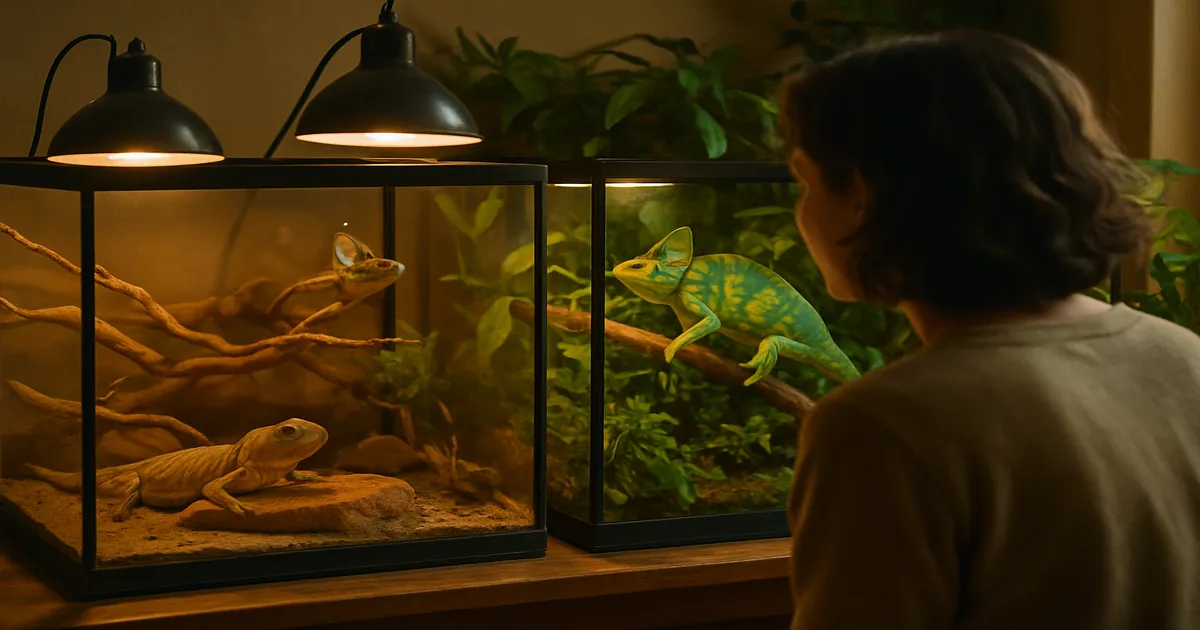
Glass terrariums trap heat and kill airflow — dangerous for chameleons at any age, but especially for babies. All-screen enclosures are the only sensible option. The Dragon Strand Nursery Cage was designed specifically for baby chameleons and is worth the investment. The Zoo Med Reptibreeze works fine for budget setups. If you want better humidity retention without sacrificing airflow, a DIY PVC screen build is a solid option.
Plants, Perches, and Decor
Live plants aren’t optional — they maintain humidity, provide cover, and reduce stress. Pothos is nearly indestructible and ideal for babies. Ficus, schefflera, hibiscus, and bromeliads all work well too. Just make sure anything you put in has been thoroughly rinsed; nursery plants are often treated with pesticides.
Branches should be pencil-width for hatchlings so their feet can wrap around properly. Cork bark, manzanita, and grapevine wood all work. Provide multiple horizontal perches at different heights so the animal can thermoregulate by moving up or down.
Substrate and Drainage
Skip loose substrate entirely for babies — it gets ingested and causes impaction. Paper towels or a bare bottom are the safest options. For planted setups, use a drainage layer of LECA topped with organic topsoil. Tilt the enclosure 5–10 degrees so water drains to one corner rather than pooling.
Temperature, Lighting, and Humidity
Basking Temperature
This is where a lot of people go wrong. Baby panther chameleons need a basking spot of 80–85°F (27–29°C) — not the 90–95°F (32–35°C) you’d use for adults. Neonates overheat and desiccate at adult temperatures. I’ve seen keepers lose babies within days of bringing them home because they set up the basking spot based on adult care guides. Don’t do that.
Ambient temps should stay 72–78°F (22–26°C) throughout the enclosure. At night, let it drop to 60–68°F (16–20°C) — this mimics natural conditions and supports immune function. Don’t add supplemental night heat unless your room drops below 58°F (14°C).
Use an infrared temperature gun to verify your basking surface temperature. Stick-on dial thermometers are notoriously inaccurate and will lie to you.
UVB Lighting
UVB isn’t optional. Panther chameleons are Ferguson Zone 2–3 animals, targeting a UVI of 1.5–3.0 at the basking perch. Use an Arcadia 6% Forest T5 HO or Zoo Med Reptisun 5.0 T5 HO, positioned 6–9 inches (15–23 cm) from the basking perch. Replace every 6 months — UV output degrades long before the bulb stops glowing.
For the basking light itself, a 40–60W incandescent or halogen PAR bulb in a deep dome ceramic fixture is all you need. Skip coil CFLs and any colored night lights — chameleons perceive red and blue wavelengths, and those bulbs disrupt their sleep.
A Solarmeter 6.5 removes all guesswork about your actual UVI at the perch. It’s not cheap, but it’s the only way to know for sure.
Humidity Cycling
The goal is wet-dry cycling, not constant high humidity. Between mistings, let daytime humidity drop to 40–60%. During and immediately after misting, it should hit 80–100%. Nighttime humidity rising naturally is fine — it mimics dew formation in the wild.
Mist babies 2–4 times daily, 1–3 minutes per session. Focus on morning and midday. Avoid late-night misting — if the enclosure doesn’t dry before lights-out, you’re creating conditions for bacterial and fungal growth.
How to Feed a Baby Panther Chameleon
Prey Sizing
Never offer a prey item wider than the space between your chameleon’s eyes. For a 2-gram hatchling, that’s very small. Oversized feeders cause choking, impaction, and prolapse — all serious, often fatal problems in babies.
Best Feeders by Age
- Weeks 1–2: Melanogaster fruit flies (Drosophila melanogaster) — the only thing small enough for brand-new hatchlings
- Weeks 3–4 onward: Transition to 1/4-inch crickets and small dubia roach nymphs
- Variety feeders: Small silkworms, small hornworms (sparingly — high water content causes loose stools), small black soldier fly larvae
Don’t keep feeding fruit flies past 3–4 weeks. Babies grow fast and need more substantial prey to support that growth.
Feeding Frequency and Method
- Hatchlings (0–8 weeks): Daily, as much as they’ll eat in 10–15 minutes
- Juveniles (2–6 months): Daily or every other day
The shooting gallery method is worth adopting from day one: place a small deli cup inside the enclosure with a few feeders in it. Babies learn to hunt from the cup quickly, you can monitor exactly how much they’re eating, and no crickets are loose to hide and bite a sleeping chameleon overnight.
Gut-Loading and Supplementation
A well-gut-loaded cricket is worth ten poorly-fed, heavily-dusted ones. Load feeders 24–48 hours before offering with collard greens, dandelion greens, mustard greens, and carrots.
Supplementation schedule for babies:
- Calcium without D3 (e.g., Zoo Med Repti Calcium without D3 ): 5–6 days per week
- Calcium with D3: 2× per month
- Multivitamin (e.g., Repashy Supervite ): 2× per month, alternating with D3 calcium
D3 and vitamin A are fat-soluble — they accumulate. Stick to the schedule.
Keeping Baby Panther Chameleons Hydrated
Panther chameleons drink droplets off leaves. They won’t touch a water bowl. Misting is how you hydrate them, and for babies it needs to happen consistently.
An automated misting system like a MistKing is worth every penny — consistency matters more than anything else here. A pump-action hand sprayer works as a backup.
A simple drip system — a plastic cup with a pinhole in the bottom dripping onto leaves — also triggers drinking behavior reliably and supplements your misting schedule.
Spotting Dehydration Early
The earliest indicator is urate color. The white solid portion of waste should be white. Orange or yellow urates mean dehydration — often before you see any behavioral change. Check the enclosure floor daily.
Sunken eyes and lethargy are later-stage signs. Act before you get there.
If a baby won’t drink during normal misting, the shower method helps: run a hot shower to generate steam, place the baby on a small branch in the bathroom, and let them drink in the humid environment for 15–20 minutes. Use this once or twice a week at most — it supplements proper misting, it doesn’t replace it.
Common Mistakes When Caring for Baby Panther Chameleons
A few of these are genuinely easy to make, especially if you’re coming from adult care guides:
- Basking temps set for adults — this one kills neonates fast
- Glass enclosures — poor ventilation, heat buildup, chronic stress
- Misting only once a day — not enough for a 1–2 gram animal
- Late-night misting — wet enclosure at lights-out breeds bacteria and fungus gnats
- Prey items too large — follow the eye-width rule, always
- Over-supplementing D3 and vitamin A — toxicity is cumulative and sneaks up on you
- Crickets-only diet — variety isn’t optional
- Handling too early or too often — limit it to once or twice a week for the first 2–3 months, and only when the animal is calm and showing good color
- High-traffic enclosure placement — constant movement outside the enclosure reads as predator activity
FAQs About Baby Panther Chameleon Care
How often should I feed a baby panther chameleon?
Hatchlings should be fed daily — as many appropriately sized feeders as they’ll eat in 10–15 minutes. Juveniles (2–6 months) can go daily or every other day. Always remove uneaten feeders; crickets left overnight will bite a sleeping chameleon.
What temperature does a baby panther chameleon need?
A basking spot of 80–85°F (27–29°C) — significantly lower than the 90–95°F used for adults. Ambient temps should stay 72–78°F (22–26°C), with a nighttime drop to 60–68°F (16–20°C).
How do I know if my baby panther chameleon is dehydrated?
Check the urates first. The white solid portion of waste should be white — orange or yellow means dehydration, often before you see any behavioral change. Sunken eyes and lethargy are later-stage signs. Increase misting frequency if urates are off-color.
Can baby panther chameleons live together?
No. Panther chameleons are solitary from birth. Siblings must be separated immediately after hatching — cohabitation causes chronic stress that can be fatal even without visible fighting.
When can I start handling a baby panther chameleon?
Keep it to once or twice a week maximum for the first 2–3 months, and only when the animal is calm and showing good coloration. Dark or dull colors mean stress — back off. Babies that are eating and drinking well tolerate brief, gentle handling much better than animals still settling in.