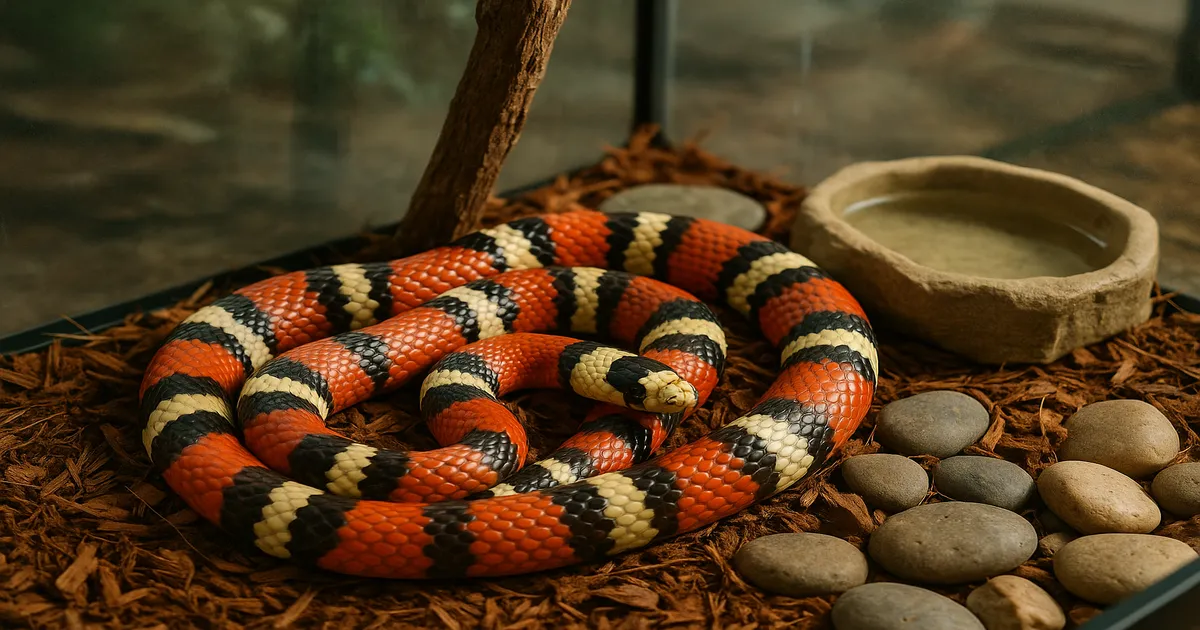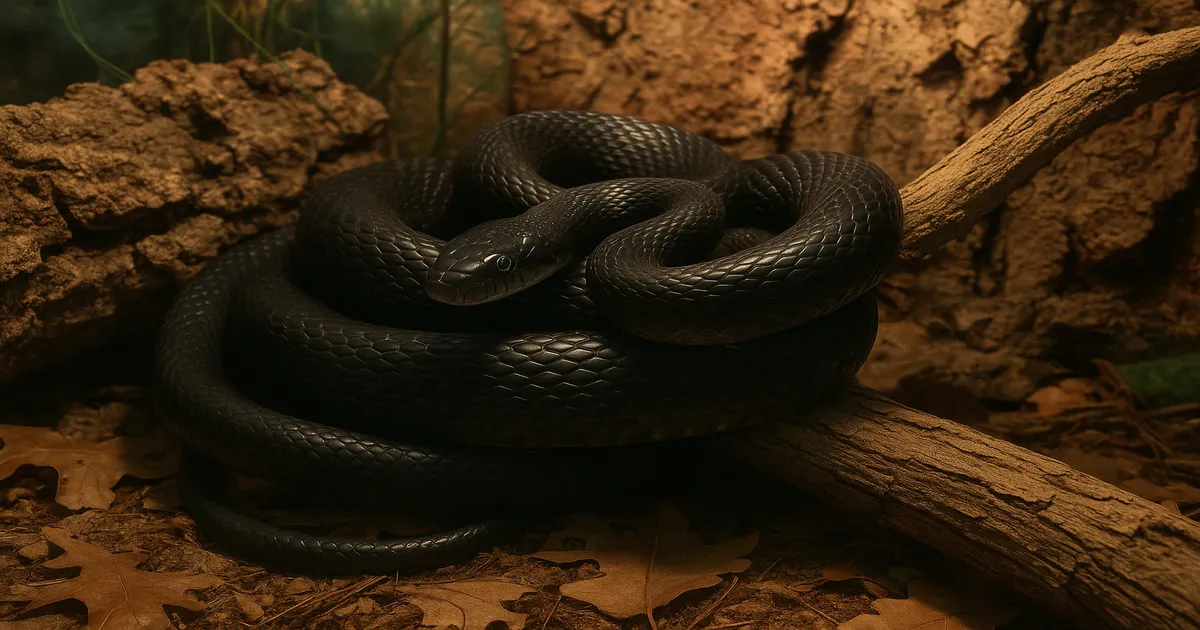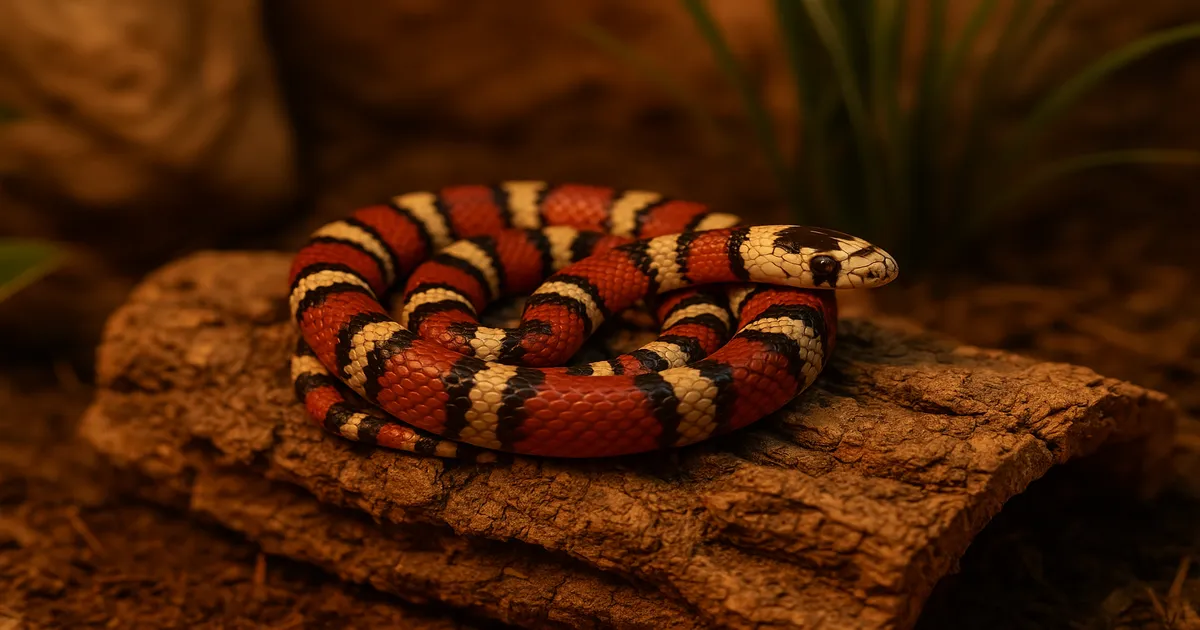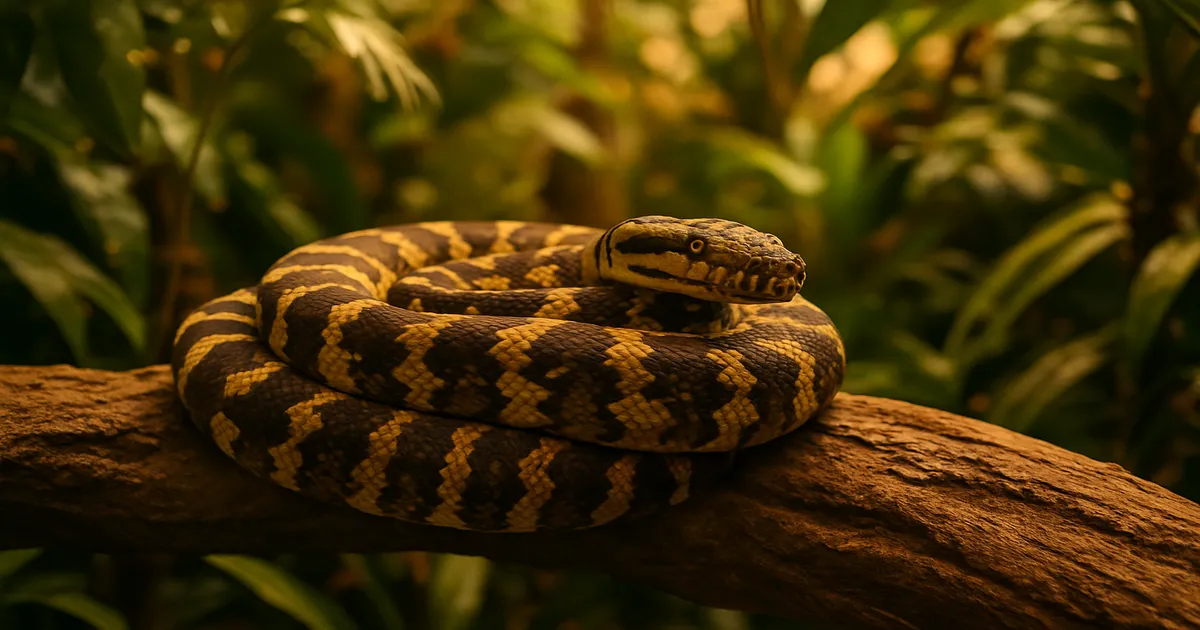
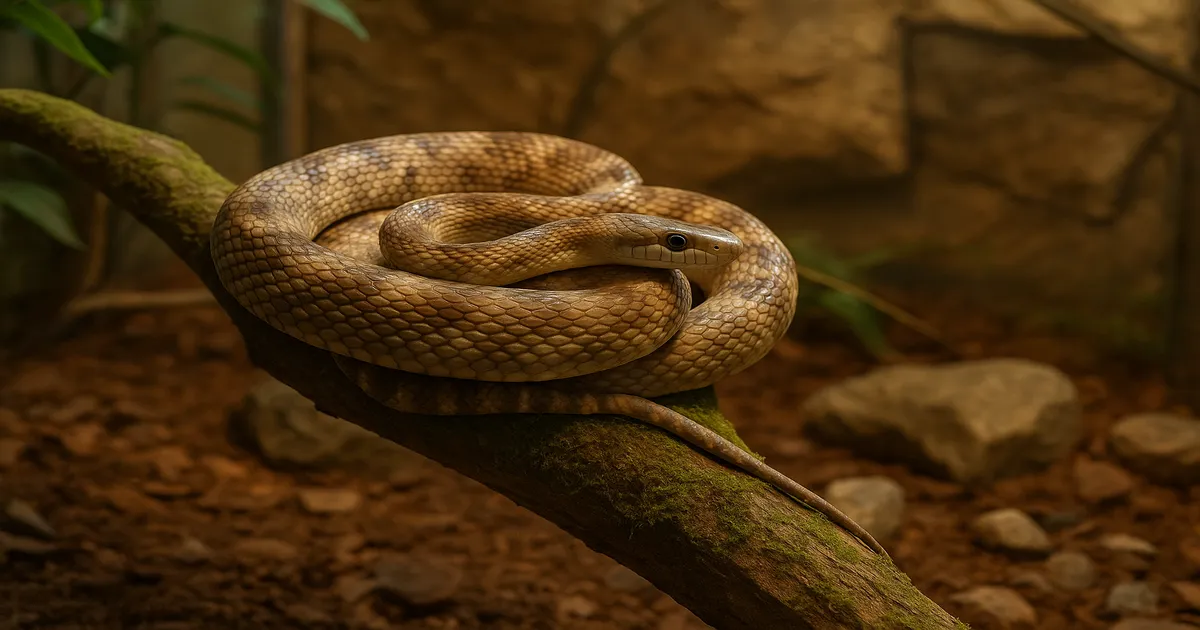
Quick Answer: Texas rat snakes (Pantherophis obsoletus lindheimeri) are active, semi-arboreal colubrids that reach 4–6 feet and live 15–20+ years in captivity. They need a properly sized enclosure with real vertical space, a warm-side temperature of 85–90°F (29–32°C), and frozen/thawed rodents every 10–14 days as adults. Juveniles are famously feisty, but they tame down reliably with consistent handling.
How to Care for a Texas Rat Snake: What You Need to Know First
If you’re researching how to care for a Texas rat snake, here’s the honest version: these aren’t corn snakes. They’re bigger, bolder, more active, and they’ll let you know when they’re unhappy. That’s exactly why experienced keepers love them — but it’s also why they’re not the best choice for someone who’s never held a snake before.
Do your homework, set up the enclosure properly, and you’ll have a genuinely impressive animal that can live 20 years with you. Cut corners and you’ll spend that time dealing with a stressed, defensive snake that won’t eat.
Species Snapshot
Adults typically reach 4–6 feet (1.2–1.8 m), with the occasional individual pushing 7 feet (2.1 m). Males tend to run slightly larger. With good care, captive animals routinely hit 15–20 years — sometimes longer. Wild individuals rarely make it past 10–12. That gap tells you a lot about how much husbandry matters.
Temperament-wise, juveniles are notoriously defensive — musking, striking, tail-vibrating. Most settle down significantly with patient, consistent handling. Captive-bred adults are generally calm, though they stay more “spirited” than a ball python. That’s part of the appeal.
Texas rat snakes are legal to keep in most U.S. states without a permit, but verify your local regulations before acquiring one.
Key Care Parameters at a Glance
| Parameter | Value |
|---|---|
| Adult Size | 4–6 ft (1.2–1.8 m), occasionally 7 ft |
| Lifespan | 15–20+ years in captivity |
| Enclosure (adult) | 4×2×2 ft minimum; 6×2×4 ft preferred |
| Warm Side | 85–90°F (29–32°C) |
| Cool Side | 72–76°F (22–24°C) |
| Humidity | 40–60% (60–70% during shed) |
| Feeding Frequency | Every 10–14 days (adults) |
Natural History: Why It Matters for How You Keep Them
Native Range and Habitat
Texas rat snakes are native to central Texas, Louisiana, Oklahoma, and Arkansas. They’re one of the most ecologically flexible snakes in North America — equally comfortable in riparian forests, rocky hillsides, farmland, and suburban backyards. That adaptability is why they tolerate a wider range of captive conditions than many more specialized species.
The regional nickname “chicken snake” comes from their habit of raiding henhouses for eggs and chicks. Farmers weren’t wrong — these snakes are opportunistic and bold.
Semi-Arboreal Behavior: Vertical Space Is Non-Negotiable
In the wild, Texas rat snakes regularly climb trees to raid bird nests. This isn’t a quirk — it’s a core behavioral trait, and it directly affects how you set up their enclosure. A flat, shallow tank with nothing to climb is a welfare problem for this species, not just a missed enrichment opportunity.
I’ve seen keepers house Texas rat snakes in setups that would be perfectly fine for a corn snake, then wonder why their animal is constantly nose-rubbing. Vertical space isn’t optional here.
Juvenile vs. Adult Coloration
Juveniles are boldly patterned with gray-brown blotches on a lighter background — a pattern that genuinely resembles a juvenile copperhead, which leads to a lot of unnecessary killings in the wild. Adults darken considerably, many becoming nearly uniform olive-yellow, orange, or dark gray with only faint pattern remnants. The transformation is dramatic enough that new keepers sometimes think they have two different animals.
Activity Patterns
Texas rat snakes are primarily crepuscular to nocturnal in summer and shift toward more diurnal activity in spring and fall. This matters for feeding — offering food in the evening aligns with their natural activity peak and usually produces a more reliable response. In the wild they brumate from roughly November through February. Captive brumation is optional unless you’re breeding.
Enclosure Setup
Size by Age
Don’t start a juvenile in an adult-sized enclosure. A big empty space stresses a small snake and makes feeding harder.
- Juvenile (under 2 ft): 20-gallon long (30”×12”×12”)
- Sub-adult (2–4 ft): 40-gallon breeder (36”×18”×18”)
- Adult (4+ ft): 4×2×2 ft minimum; a 6×2×4 ft enclosure is strongly preferred for a large, active adult
Enclosure Type
PVC enclosures are the best overall choice for adults. They retain heat and humidity far better than glass, they’re durable, easy to clean, and front-opening doors reduce handling stress. (Zen Habitats 4x2x2 PVC Panel Enclosure)
Glass terrariums are affordable and widely available, but screen lids bleed heat and humidity constantly. They work — you’ll just spend more time fighting your own setup.
Rack systems are fine for breeders managing multiple animals but aren’t great for a species that genuinely benefits from vertical space.
Height Matters
Aim for at least 18–24 inches (46–61 cm) of interior height. A 4×2×4 ft enclosure is genuinely better for this species than a 6×2×2 ft enclosure, all else being equal. Texas rat snakes will use every inch of vertical space you give them.
Thermal Gradient
Heat source goes on one end only — never the center. The snake needs to move freely between warm and cool zones to thermoregulate. Put hides on both the warm and cool sides, and place the water bowl on the cool end to avoid spiking humidity.
Temperature, Humidity, and Lighting
Heating Options
- Under-tank heater (UTH): Works for juveniles in small enclosures. Cover no more than one-third of the floor, warm-side only. Always run through a thermostat.
- Radiant heat panel (RHP): The best option for larger PVC enclosures. Mounts to the ceiling, provides even ambient warmth, doesn’t dry things out.
- Ceramic heat emitter (CHE): Good for maintaining ambient nighttime temps without adding light.
- Basking bulb: A 25–50W halogen or incandescent PAR bulb positioned 8–12 inches above the basking surface works well for a localized warm spot.
Thermostats Are Mandatory
No thermostat, no heat source. An unregulated heat mat or bulb can easily reach 120°F+ (49°C) inside an enclosure and kill a snake. Use a proportional thermostat — it regulates temperature smoothly rather than cycling on and off. (Herpstat 1)
Humidity
Normal day-to-day humidity should sit at 40–60%. During a shed, bump it to 60–70% by lightly misting one side or adding a humid hide packed with damp sphagnum moss. (Exo Terra Snake Cave)
Below 30% causes stuck sheds, dehydration, and respiratory irritation. Consistently above 70% leads to respiratory infections and scale rot. Both ends are real problems.
UVB and Photoperiod
Texas rat snakes won’t die without UVB, but the evidence supporting it for all reptiles keeps growing. I provide it. A low-output T5 HO tube rated for Ferguson Zone 1–2 — something like a 6% Forest Canopy bulb — is the right choice.
Use a timer for your photoperiod: 12–14 hours of light in summer, 10–12 in winter. Skip the colored “night” bulbs — red and blue light isn’t invisible to snakes. If you need nighttime heat, use a CHE or radiant heat panel.
Substrate, Hides, and Enrichment
Substrate
Cypress mulch is my top pick. It holds humidity well, allows burrowing, resists mold, and looks natural. Hard to beat as an all-around substrate.
Aspen shavings work in more humid climates but mold quickly when wet — avoid them during shed cycles or in dry regions.
Bioactive mixes (roughly 60% topsoil, 30% coco coir, 10% play sand with isopods and springtails) are excellent for naturalistic setups and keepers who want a self-maintaining environment.
Aim for 3–6 inches of depth regardless of what you use. Texas rat snakes burrow more than most people expect. Never use cedar or pine — the aromatic phenols are toxic.
Hides
Minimum two: one warm side, one cool side. The hide should be snug enough that the snake feels fully enclosed — a hide that’s too large provides no sense of security, and a stressed snake often stops eating. Cork bark rounds are my favorite option. Durable, look great, hold slight humidity.
Climbing Structures and Plants
Thick, sturdy branches with a diameter roughly matching the snake’s body width are ideal. Grapevine, manzanita, and driftwood all work. Secure everything firmly — a falling branch is a real injury risk.
Add flat cork bark pieces and platforms at varying heights. Live pothos (Epipremnum aureum) is an excellent plant choice — non-toxic, nearly indestructible, and genuinely useful for adding visual cover and humidity.
Feeding Your Texas Rat Snake
What and How Much
Frozen/thawed mice and rats are the complete diet. Never feed live prey — even a small mouse can inflict serious bite wounds and eye injuries, especially if left unattended. It’s an unnecessary risk.
Prey size should match the snake’s widest body diameter. When in doubt, go slightly smaller — prey that’s too large causes regurgitation.
Feeding Schedule
- Juveniles (under 1 year): Every 5–7 days
- Sub-adults: Every 7–10 days
- Adults: Every 10–14 days
Overfeeding is a genuine problem. Texas rat snakes have enthusiastic feeding responses and will eat every time you offer food. Portion control is entirely on you.
Technique and Timing
Use 12–18-inch stainless steel or bamboo tongs to present prey — never hand-feed. Offer food in the evening to align with their natural crepuscular activity peak.
Feeding Refusals
New snakes commonly refuse food for 2–6 weeks during acclimation. Don’t panic, don’t over-handle, and don’t keep offering food every few days. Give the animal time to settle. If a wild-caught individual is refusing mice, try scent-wiping a frozen/thawed mouse with lizard shed or a quail feather to trigger a feeding response. Brain-feeding (cutting the skull to expose brain tissue) is a last resort for stubborn refusers, but it works.
Wait at least 48 hours after a meal before handling — 72 hours after a larger prey item. Handling a digesting snake causes regurgitation, which stresses the animal and wastes energy reserves.
Handling and Taming
What to Expect from a Juvenile
Be honest with yourself going in: juvenile Texas rat snakes are often nippy, musky, and dramatic. That’s normal. It doesn’t mean the animal is permanently aggressive. Most calm down substantially within a few months of consistent, gentle handling. Don’t give up on a feisty juvenile.
Handling Technique
Approach from the side, not from above. A hand coming down from overhead mimics a predator strike and will trigger a defensive response almost every time. Slide your hand under the snake from the side and let it move onto you rather than grabbing it.
For defensive individuals, a snake hook is a standard professional tool — not a sign of failure. Lift and reposition the snake with the hook, wait a few seconds for it to calm down, then pick it up normally.
Reading Body Language
Musking is a defense mechanism, not aggression. A snake that musks on you is scared, not angry. Don’t overreact — just continue calm handling. Tail vibrating is the same: a startle response, not a threat display.
Pre-shed signs include opaque or “blue” eyes, dull coloration, and reduced activity. Stop handling during this period. The snake is temporarily blind and will be more defensive. Resume sessions after the shed is complete.
Building Trust
Ten to fifteen minutes, three to four times per week is far more effective than a long session once a week. Consistency is what builds trust. Short, positive interactions repeated regularly will get you to a calm, handleable snake faster than anything else.
Common Mistakes to Avoid
Enclosure too small or too flat. Chronic stress shows up as constant nose-rubbing, feeding refusals, and abnormal pacing. For a semi-arboreal species, a flat enclosure with no climbing structures is a genuine welfare issue.
No thermostat. An unregulated heat source can reach 120°F+ inside an enclosure. Every heat source needs a thermostat, full stop.
Feeding live prey, wrong-sized prey, or overfeeding. Live prey injures snakes. Wrong-sized prey causes regurgitation. Overfeeding causes obesity. All three are avoidable with frozen/thawed rodents on a proper schedule.
Skipping quarantine. Every new snake — regardless of source — should spend 90 days in quarantine in a separate room before going near any other reptiles. Parasites and pathogens don’t announce themselves.
Ignoring incomplete sheds. A retained shed usually resolves with a soak and a humid hide. Retained eye caps are different — if they’re not gone within 24–48 hours of the shed completing, see a reptile vet. Don’t try to pick them off yourself; you can damage the eye.
Frequently Asked Questions About Texas Rat Snake Care
Are Texas rat snakes good pets for beginners?
They can be, but they’re better suited to keepers who’ve had at least one other snake. They’re more active, more defensive as juveniles, and need more space than a typical beginner species. If you’ve kept a corn snake and want something with more personality, a Texas rat snake is a natural next step.
How big does a Texas rat snake get in captivity?
Most adults reach 4–6 feet (1.2–1.8 m), with large individuals occasionally hitting 7 feet (2.1 m). Plan your enclosure around the adult size from the start — you’ll be upgrading anyway.
How often should I feed my Texas rat snake?
Juveniles eat every 5–7 days, sub-adults every 7–10 days, and adults every 10–14 days. Always use frozen/thawed prey sized to match the snake’s widest body diameter. These snakes will eat every time you offer food, so overfeeding is a real risk.
Why is my Texas rat snake musking and striking — will it ever calm down?
Almost certainly yes, especially if it’s captive-bred. Juvenile Texas rat snakes are famously defensive, but the vast majority settle down with consistent, gentle handling over a few months. Approach from the side, keep sessions short, and don’t give up. Wild-caught adults are a different story — they can remain defensive long-term, which is one of several good reasons to buy captive-bred.
Do Texas rat snakes need UVB lighting?
They won’t die without it, but there’s growing evidence that UVB benefits all reptiles — improved vitamin D3 synthesis, better immune function, and more natural behavior. I run a low-output T5 HO 6% tube on all my colubrids. It’s a cheap insurance policy for a snake you might have for 20 years.