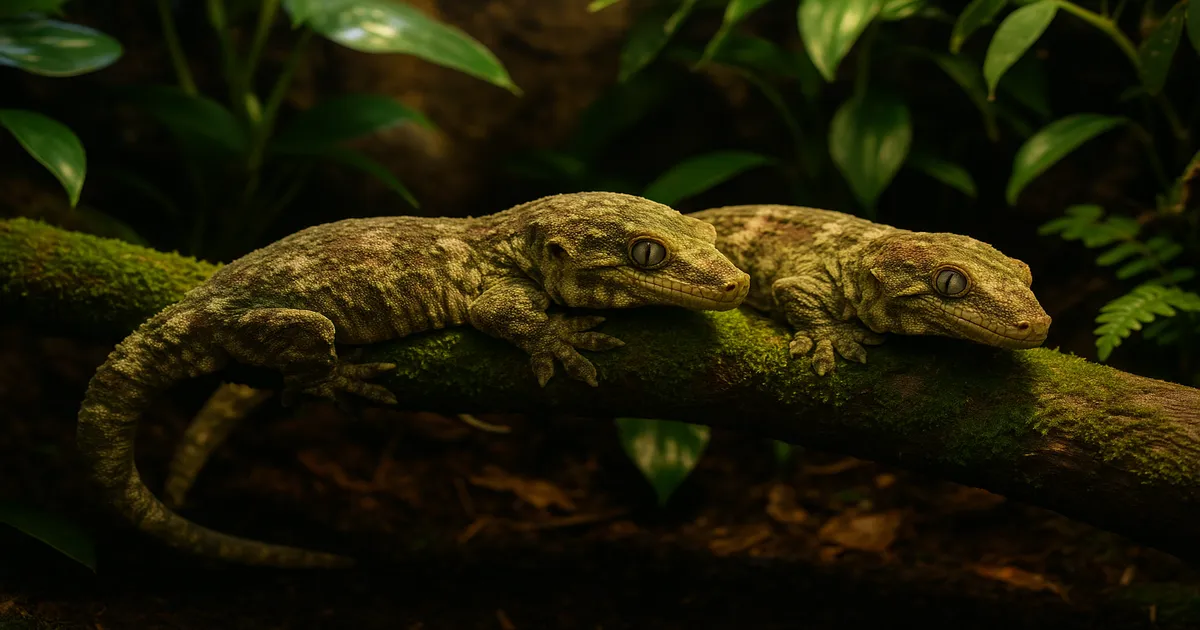
Quick Answer: To breed chahoua geckos, condition females to at least 50–55g before pairing, run a 6–8 week winter cooling cycle to trigger reproductive behavior, then introduce the male for 2–4 week periods starting in late winter. Females lay two-egg clutches every 4–6 weeks for 4–6 clutches per season. Incubate eggs at 68–74°F (20–23°C) for 90–120 days.
Chahoua geckos (Mniarogekko chahoua) are one of the most rewarding species to breed in the New Caledonian gecko hobby — and one of the easiest to get badly wrong. If you’re serious about learning how to breed chahoua geckos, there’s a specific set of conditions and timing you need to nail. Get it right and a healthy female will give you 4–6 clutches per season, with hatchlings selling anywhere from $300 to well over $1,500 depending on locale and lineage. Get it wrong and you’re looking at dead eggs, a depleted female, or worse.
This guide covers everything from pre-breeding conditioning through hatchling care — including the mistakes that trip up even experienced keepers.
Quick Stats: Key Numbers Every Chahoua Breeder Needs
| Parameter | Value |
|---|---|
| Female minimum weight before breeding | 45g (ideally 50–55g) |
| Clutch size | 2 eggs |
| Clutches per season | 4–6 |
| Incubation temperature | 68–74°F (20–23°C) |
| Incubation duration | 90–120 days |
| Male minimum age | 18 months |
Understanding Chahoua Biology and Locale Differences
Mainland vs. Pine Island: Why Locale Matters
There are two recognized locales, and mixing them is one of the most damaging things you can do to your breeding program’s long-term value. Mainland (Grande Terre) animals tend to be larger-bodied with muted greens, browns, and grays. Pine Island (Île des Pins) animals are generally more colorful — rich reds, oranges, vivid white patterning — and they command significantly higher prices from serious collectors.
Keep meticulous lineage records from day one. A proven Pine Island pair with documented lineage can sell for $2,000–$5,000+. The same animals with muddy or unknown records are worth a fraction of that. Don’t cross locales. The offspring aren’t worth less because of some arbitrary rule — they’re worth less because nobody can verify what they are, and serious buyers won’t touch them.
Reproductive Biology
Chahouas lay two eggs per clutch. A healthy, well-conditioned female produces 4–6 clutches during breeding season, roughly one every 4–6 weeks. That’s manageable for record-keeping, but it puts real metabolic demands on the female — demands that compound fast if she’s not properly conditioned going in.
Females should be at least 45g before any pairing, ideally 50–55g for a first-timer. Males can become sexually active earlier, but I’d hold off pairing any male under 18 months regardless of size. Rushing it doesn’t benefit anyone.
Chahouas are listed on CITES Appendix II, which restricts wild collection. Captive breeding isn’t just commercially smart — it genuinely matters for the species.
Pre-Breeding Conditioning: How to Breed Chahoua Geckos Successfully
Minimum Weight and Age Requirements
Breeding an underweight female is the single most preventable mistake in chahoua husbandry. A female under 45g that starts producing clutches is at serious risk of egg binding, metabolic bone disease, and death. The energetic cost of producing calcified eggs is enormous, and a small female simply doesn’t have the reserves.
Weigh females every two weeks during breeding season. If one drops below 45g mid-season, pull the male immediately and give her 4–6 weeks of heavy feeding before any reintroduction.
The Winter Cooling Cycle
This is the step most people skip, and it shows in their results. Dropping ambient temperatures to 65–68°F (18–20°C) for 6–8 weeks — roughly November through January in the Northern Hemisphere — mimics the seasonal shift these geckos experience in New Caledonia. During this period, reduce the photoperiod to 10 hours and cut feeding frequency slightly.
When you ramp conditions back up in February–March, breeding activity typically kicks in within 4–6 weeks. The cooling cycle resets the hormonal clock. Without it, many females produce sporadic clutches with poor fertility, or just won’t breed at all.
Pre-Breeding Diet and Nutrition
Six to eight weeks before pairing, switch to a higher-fat, higher-protein meal replacement powder. Pangea Breeding Formula is my go-to, though Repashy Superload is equally solid. Bump live insect feedings to 2–3 times per week — gut-loaded dubia roaches or crickets dusted with calcium and D3.
Consistent calcium supplementation isn’t optional. Females pulling calcium from their own bones to make eggshells is a real thing that happens when supplementation is inadequate, and it compounds over a long breeding season.
Photoperiod Schedule
Use digital outlet timers — don’t rely on manually switching lights. Run 12–14 hours of light through spring and summer, drop to 10–11 hours during the winter cooling period. Consistency matters as much as duration; irregular photoperiods send mixed signals and undermine the whole cycle.
Enclosure Setup for Breeding Adults
For a single pair, the minimum is an 18” × 18” × 36” (45 × 45 × 90 cm) vertical enclosure. A trio (one male, two females) needs at least 24” × 18” × 36” (60 × 45 × 90 cm). Vertical orientation isn’t a preference — chahouas are highly arboreal and a horizontal enclosure is genuinely inadequate.
Temperature and humidity targets:
- Daytime ambient: 72–78°F (22–26°C)
- Nighttime: 65–72°F (18–22°C)
- Never exceed 85°F (29°C) — sustained heat above this causes stress; above 88°F (31°C) can be fatal within hours
- Daytime humidity: 50–60% with a dry-down period
- Post-misting: 80–100%
Mist heavily once or twice daily, with evening misting being the more important session. The enclosure needs to dry down between mistings — stagnant wet conditions cause respiratory infections.
For substrate, bioactive ABG mix at 3–4 inches (7–10 cm) depth is my preference. It maintains humidity naturally and gives females a more naturalistic environment. That said, the most important egg-laying real estate isn’t the substrate — it’s a horizontal cork tube placed near the top of the enclosure (2–3 inch / 5–7 cm diameter). Females frequently deposit eggs inside these rather than in ground-level lay boxes. Check them weekly during breeding season. Also provide a dedicated lay box — a small container of moist sphagnum moss or coconut fiber — as a backup. Eggs laid in open substrate often desiccate or get waterlogged.
The Exo Terra 18” × 18” × 36” is the industry standard for a pair. For breeding groups, Zen Habitats 4’ × 2’ × 2’ PVC holds humidity better than all-glass and is easier to clean.
For heating, radiant heat panels are the best option — they maintain ambient warmth without creating dangerous hot spots. Whatever you use, a thermostat is non-negotiable. Herpstat and Vivarium Electronics are both proven. Skip under-tank heaters for arboreal species and never use heat rocks.
Low-output UVB is worth running even though chahouas are nocturnal — there’s documented benefit for calcium metabolism. An Arcadia 6% T5 HO or Zoo Med Reptisun 5.0 T5 HO works well. Keep the fixture 12–18 inches (30–45 cm) above the highest perch and run it on a timer.
The Breeding Process: Pairing, Eggs, and Incubation
Introducing the Male
After your spring ramp-up in February–March, introduce the male to the female’s enclosure for 2–4 weeks, then separate them. Don’t leave pairs together continuously — males will breed relentlessly and females wear down fast. Watch for stress behaviors: excessive hiding, refusal to eat, weight loss. If you see these, separate immediately regardless of where you are in the pairing cycle.
Finding and Collecting Eggs
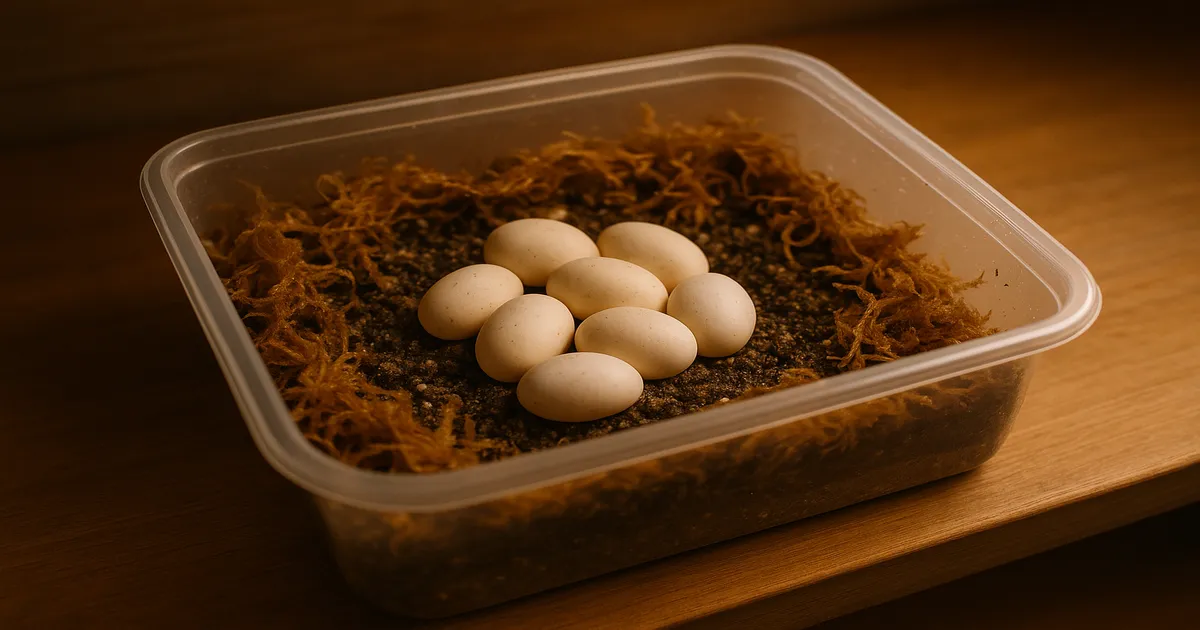
Check cork tubes and lay boxes weekly. When you find eggs, mark the top of each one immediately with a soft pencil dot — never rotate or flip a chahoua egg after this point. Flipping can drown the embryo. Transfer eggs gently to your incubation containers, maintaining the same orientation throughout.
Incubation
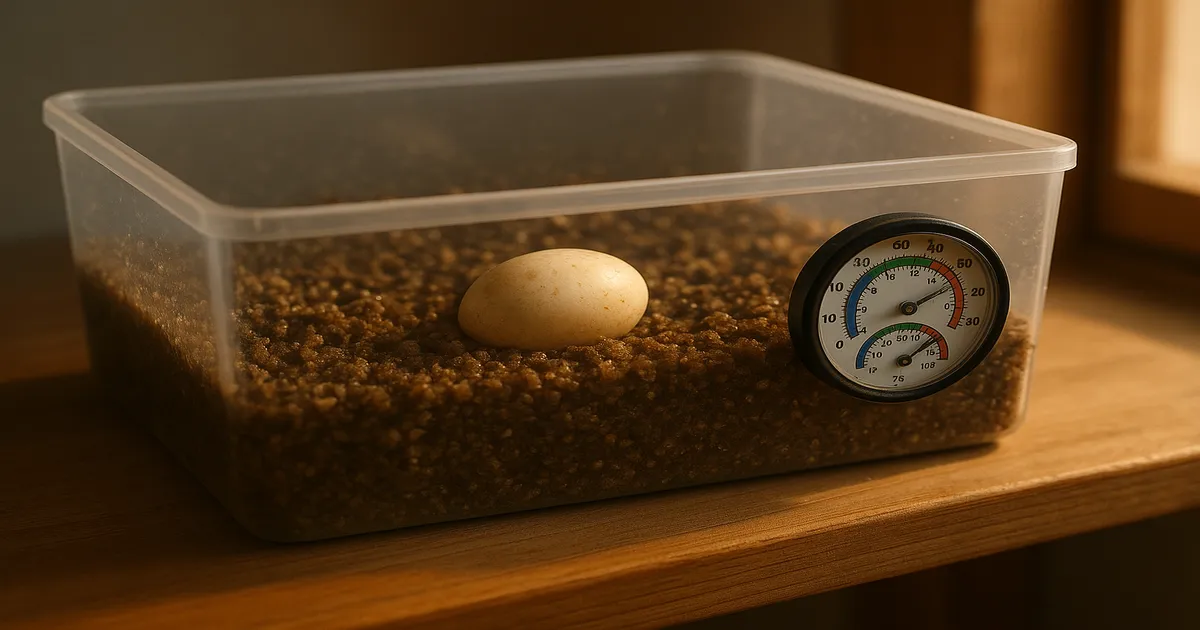
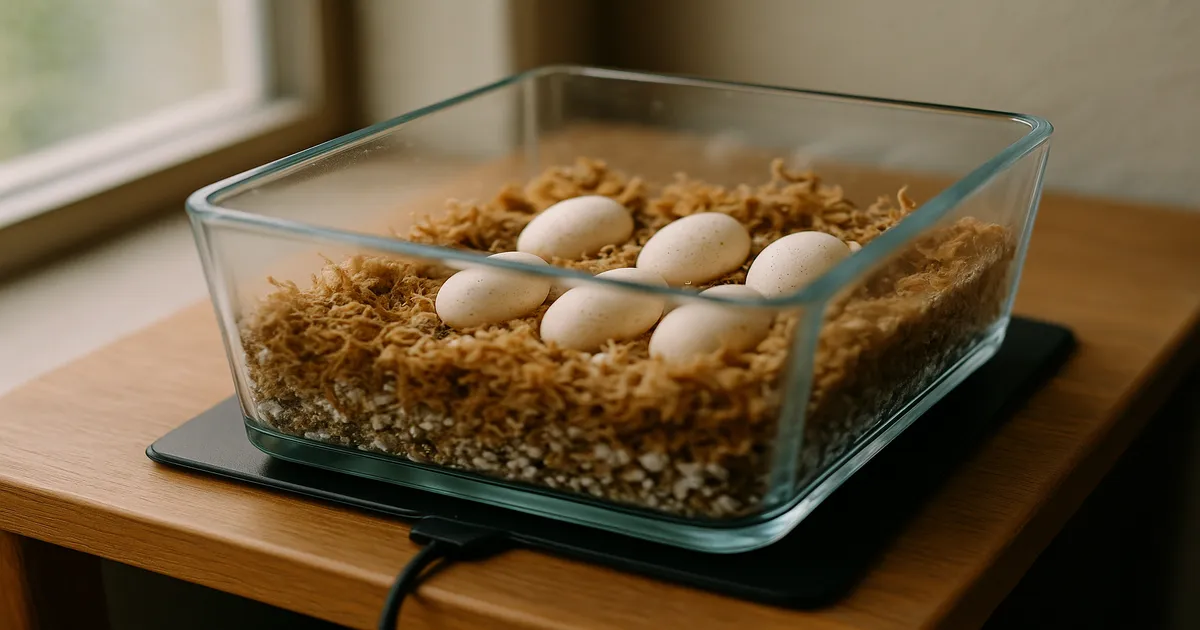
Chahoua eggs incubate at 68–74°F (20–23°C) — cooler than almost any other reptile egg you’re likely to encounter. A standard reptile incubator set to 80°F won’t work here. A Hovabator 1588 works well, but my favorite setup for this species is a wine cooler with an Inkbird thermostat dialed to 70°F (21°C) — inexpensive, stable, and purpose-built for cool temperatures.
For incubation media, mix vermiculite or perlite 1:1 by weight with water. Use deli cups with small ventilation holes as incubation containers and keep a digital hygrometer inside the incubator. Maintain 75–85% ambient humidity around the containers.
I prefer the lower end of the temperature range — eggs incubated at 68–70°F (20–21°C) take the full 90–120 days but tend to produce noticeably larger, more vigorous hatchlings. Faster isn’t better with this species.
Candling and Monitoring
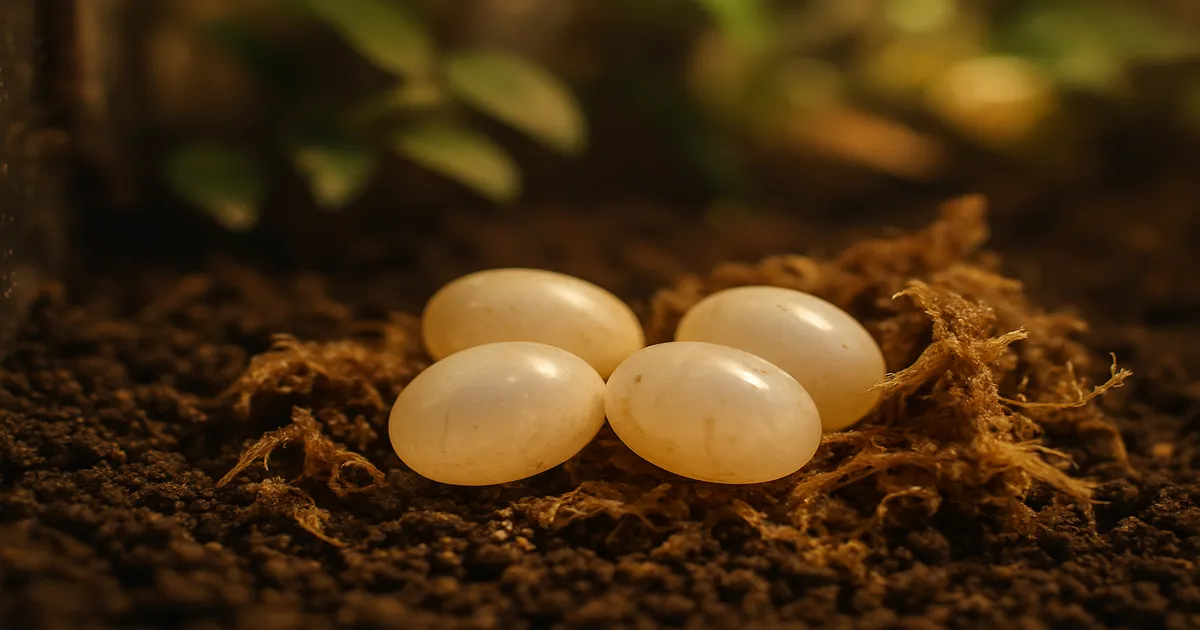
At 2–3 weeks, hold a bright LED candler against each egg in a dark room. Fertile eggs show a pink or red embryo with visible blood vessels. Infertile eggs stay uniformly pale or yellow. Weighing eggs is also useful: fertile eggs absorb moisture and gain weight over time; infertile eggs stay flat or lose weight.
Check eggs no more than every two weeks. Resist the urge to open containers more frequently — humidity fluctuations are a real risk. Don’t discard any egg until it’s clearly collapsed, thoroughly moldy, or has been incubating for 120+ days with no sign of life. Chahoua eggs can look rough and still hatch.
Hatchling Care
Start hatchlings in small enclosures — an 8” × 8” × 12” (20 × 20 × 30 cm) faunarium or a large deli cup with ventilation works well. Small spaces reduce stress and make it much easier for hatchlings to locate food. Paper towel substrate is fine short-term; it’s easy to clean and lets you monitor waste and feeding response clearly. Transition to a 12” × 12” × 18” (30 × 30 × 45 cm) enclosure somewhere between 3–12 months as the animal grows.
Offer appropriately sized prey — nothing wider than the gecko’s head. Small crickets or micro roaches are ideal first feeders. Introduce MRP early; getting hatchlings onto a mixed diet from the start makes long-term husbandry much easier.
Weigh hatchlings regularly from the beginning. A hatchling not gaining weight by the second week needs attention. Separate siblings by 3–4 months — competition for food and early dominance behaviors cause stress and uneven growth even at small sizes.
Common Breeding Mistakes to Avoid
Running enclosures too warm is the most common cause of unexplained death in captive chahouas. Many keepers coming from bearded dragons or ball pythons keep their homes at temperatures that are genuinely dangerous for this species. If your house sits at 78°F (26°C) in summer, you may need active cooling. Flat 24/7 temperatures with no nighttime drop suppress hormonal cycling and undermine breeding success over time.
On the breeding management side: don’t pair underweight females, don’t leave males in continuously, and don’t push beyond 5–6 clutches per season without monitoring female condition after every clutch. A depleted female takes a full off-season to recover — if she recovers at all.
For incubation: never go above 80°F (27°C), don’t check eggs every few days, and don’t flip eggs. Mark the top with a pencil the moment you find them. And don’t discard eggs that look slightly off — chahoua eggs are surprisingly resilient.
Finally, keep records. Breeding a mainland animal to a Pine Island animal doesn’t produce something interesting — it produces something unverifiable. Locale, lineage, pairing dates, clutch numbers — document all of it from day one. A well-documented breeding program is an asset; a poorly documented one is just a collection of geckos.
Frequently Asked Questions About How to Breed Chahoua Geckos
What is the minimum weight for a female chahoua before breeding?
The hard minimum is 45g, but 50–55g is the better target for a first-time breeder. Underweight females face serious risks including egg binding and metabolic bone disease. Weigh females throughout the season and pull any animal that drops below 45g.
What temperature should chahoua eggs be incubated at?
68–74°F (20–23°C), with the lower end of that range preferred. Eggs incubated at 68–70°F tend to produce larger, more vigorous hatchlings, though incubation runs the full 90–120 days. Never incubate above 80°F (27°C) — it causes deformities and embryo death.
How many clutches does a chahoua lay per year?
A healthy, well-conditioned female typically produces 4–6 clutches per breeding season, each containing two eggs, roughly every 4–6 weeks. Monitor female weight closely — if she’s losing condition, separate the male and increase feeding before the next pairing.
How do you tell if chahoua eggs are fertile?
Candle eggs with a bright LED at 2–3 weeks. Fertile eggs show a pink or red embryo with visible blood vessels; infertile eggs remain uniformly pale. Weighing eggs is also useful — fertile eggs gain weight over time as they absorb moisture, while infertile eggs stay flat or lose weight.
Can you keep a male and female chahoua together permanently?
No. Continuous cohabitation stresses females significantly — males will breed repeatedly and females can lose weight rapidly and become depleted. Introduce the male for 2–4 week periods only, then separate. If a female shows signs of stress at any point, pull the male immediately.