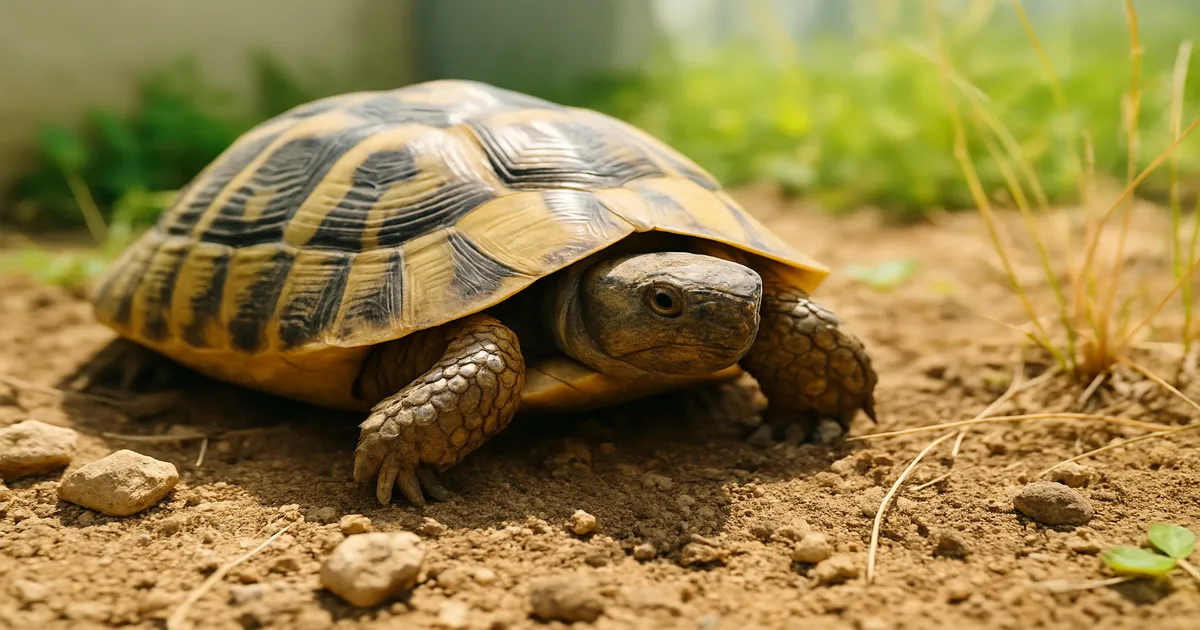
Quick Answer: The best substrate for a Hermann’s tortoise is a 70/30 blend of peat-free organic topsoil and play sand. This mix mimics the sandy-loam soils of their Mediterranean homeland, holds moisture correctly, and supports natural burrowing behaviour. Lay it at least 4–6 inches (10–15 cm) deep and keep the cool end slightly moist.
Getting the substrate right is one of those things that separates a tortoise that merely survives from one that genuinely thrives. It’s also, frustratingly, one of the most misunderstood aspects of Hermann’s tortoise care — probably because people hear “Mediterranean” and picture a beach. The best substrate for a Hermann’s tortoise needs to hold some moisture, support burrow structure, and mimic the mineral-rich loamy soils of southern Europe. A bone-dry sandbox won’t cut it.
Best Substrate for Hermann’s Tortoise: The Top Options
The Gold Standard Mix
A 70:30 or 60:40 blend of peat-free organic topsoil and play sand is what most experienced keepers settle on. It’s cheap, widely available, holds its shape for burrows, and creates a natural humidity gradient when you manage moisture correctly. Here’s how the main options compare:
| Substrate | Moisture Retention | Burrowing Suitability | Cost | Availability |
|---|---|---|---|---|
| Topsoil + Play Sand (70/30) | ★★★★☆ | ★★★★★ | ★★★★★ | ★★★★★ |
| Coco Coir Blend (50/30/20) | ★★★★★ | ★★★☆☆ | ★★★★☆ | ★★★★☆ |
| Arcadia EarthMix Arid | ★★★★☆ | ★★★★☆ | ★★☆☆☆ | ★★★☆☆ |
Substrate affects humidity, thermoregulation, hydration, behavioural health, and pathogen load. Your tortoise also ingests substrate while grazing, so what you put down matters chemically, not just physically. It’s not a detail — it’s foundational.
Understanding Hermann’s Tortoise Natural Habitat
Wild Soil Conditions
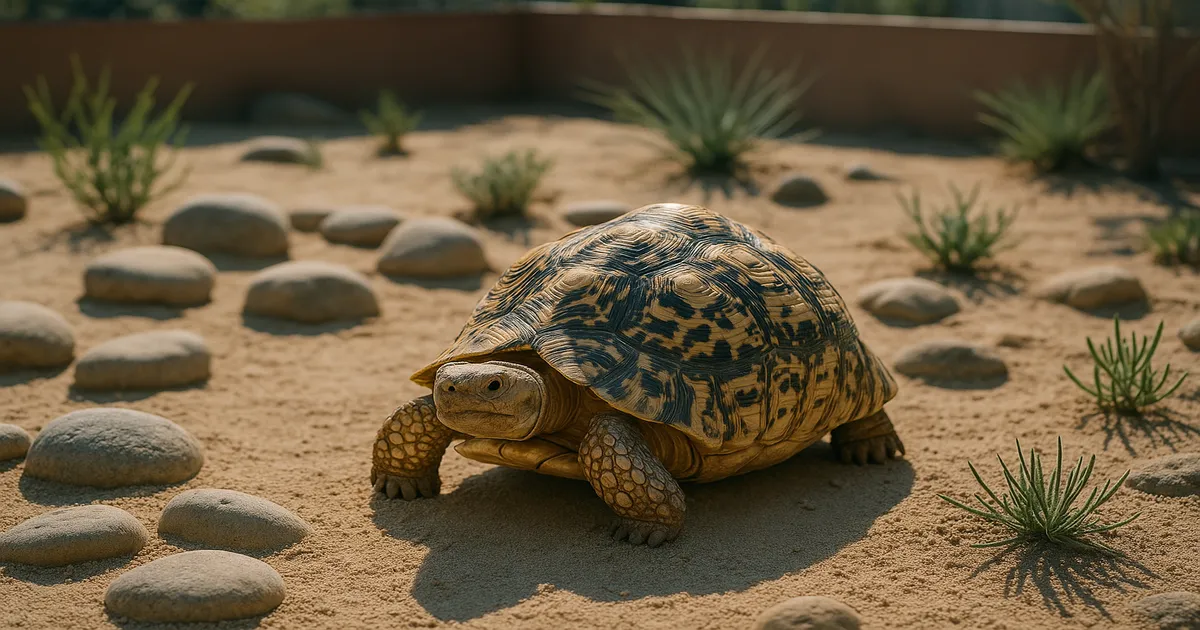
Hermann’s tortoises come from garrigue, maquis, rocky hillsides, and open woodland across the Mediterranean basin. The soils there are well-draining, slightly alkaline, mineral-rich, and sandy-loamy — often underlaid by limestone bedrock. Think crumbly, textured earth with leaf litter on top, not a beach or a desert floor.
The soil in their natural range isn’t consistently dry, either. Spring and autumn bring real moisture; summers bake the ground hard. Wild tortoises move through these cycles instinctively, and captive setups should reflect that variation — at least across the enclosure, if not across the calendar.
Western vs Eastern Hermann’s: Does It Matter?
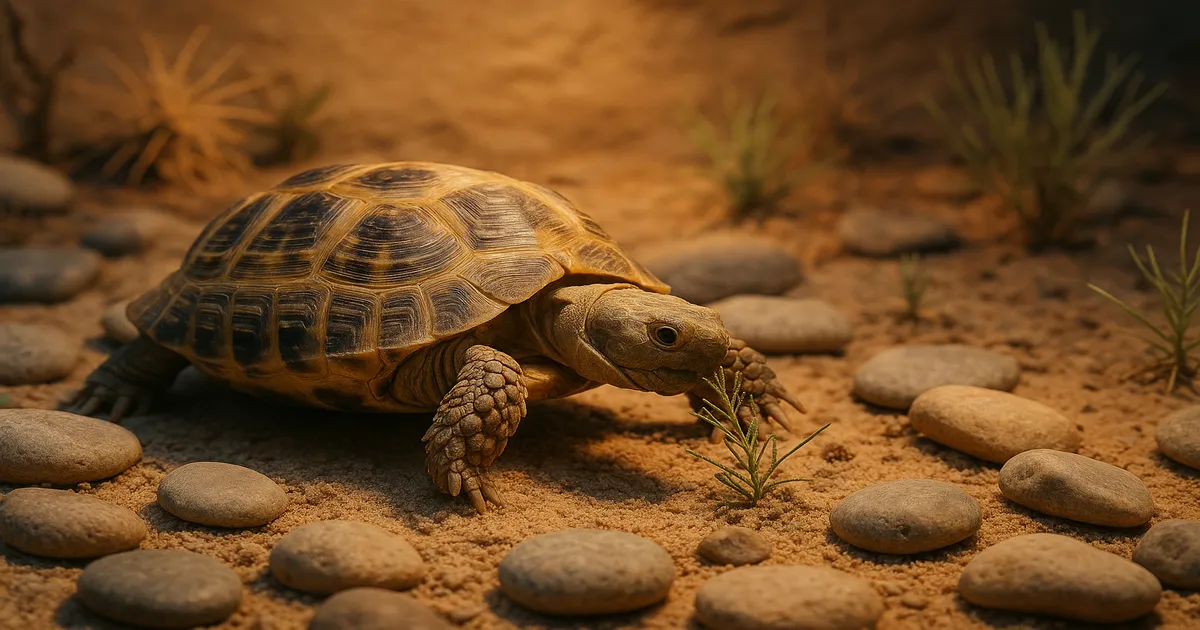
Broadly, no — both subspecies need the same substrate type. The Eastern Hermann’s (T. h. boettgeri), being the larger of the two at 7–11 inches (18–28 cm), will benefit from greater substrate depth simply because it digs deeper burrows. Push for a full 6 inches (15 cm) for adult easterns indoors, and deeper still for outdoor pens.
Top Substrate Choices for Hermann’s Tortoises
Topsoil and Play Sand: The Everyday Recommendation
This is what I’d recommend to anyone setting up their first Hermann’s tortoise enclosure, and it’s still what I’d use for my tenth.
- Ratio: 70% topsoil to 30% play sand, or 60/40 for slightly better drainage
- Topsoil: Must be peat-free, fertilizer-free, and pesticide-free. In the UK, B&Q’s own-brand peat-free topsoil works well; in the US, look for bagged organic topsoil at any garden centre
- Sand: Play sand only — not builder’s sand, not silica sand. The rounded grain is softer and safer if ingested
The finished mix should clump loosely when you squeeze a handful and crumble apart again — like damp garden soil after rain. If it packs solid or falls apart completely, adjust the ratio.
Coconut Coir Blends: Best for Hatchlings
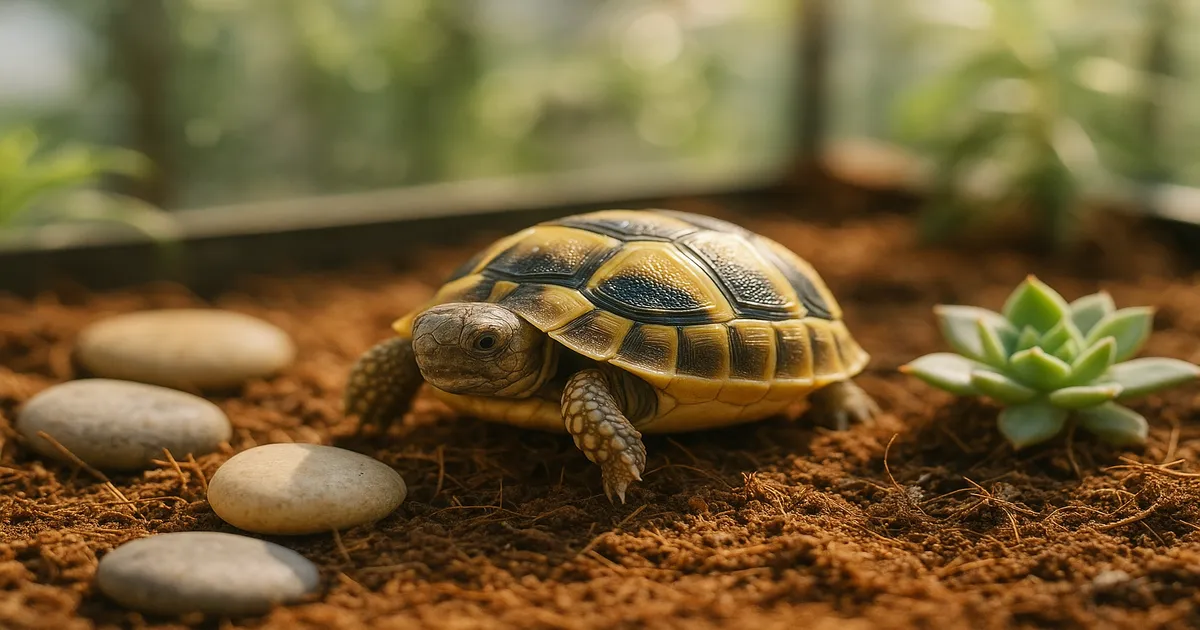
Coco coir on its own is too fine and too dusty when it dries out. Mixed properly, though, it’s excellent — especially for hatchlings, where the softer texture is gentler on small bodies. Use a 50:30:20 ratio of coir to topsoil to play sand. Zoo Med Eco Earth and Exo Terra Plantation Soil are the most widely available options.
Commercial Mixes: Worth It for Indoor Setups
If you want a ready-made option, Arcadia EarthMix Arid is genuinely well-formulated — it contains a blend of topsoil, sand, and mineral components that closely mirrors natural Mediterranean soils. Tortoise Life Substrate is another reasonable choice. They cost more than a DIY mix, but they’re convenient and consistent. For large outdoor enclosures where you need volume, DIY wins on cost. For a standard indoor tortoise table, either works fine.
Orchid Bark and Leaf Litter as a Surface Dressing
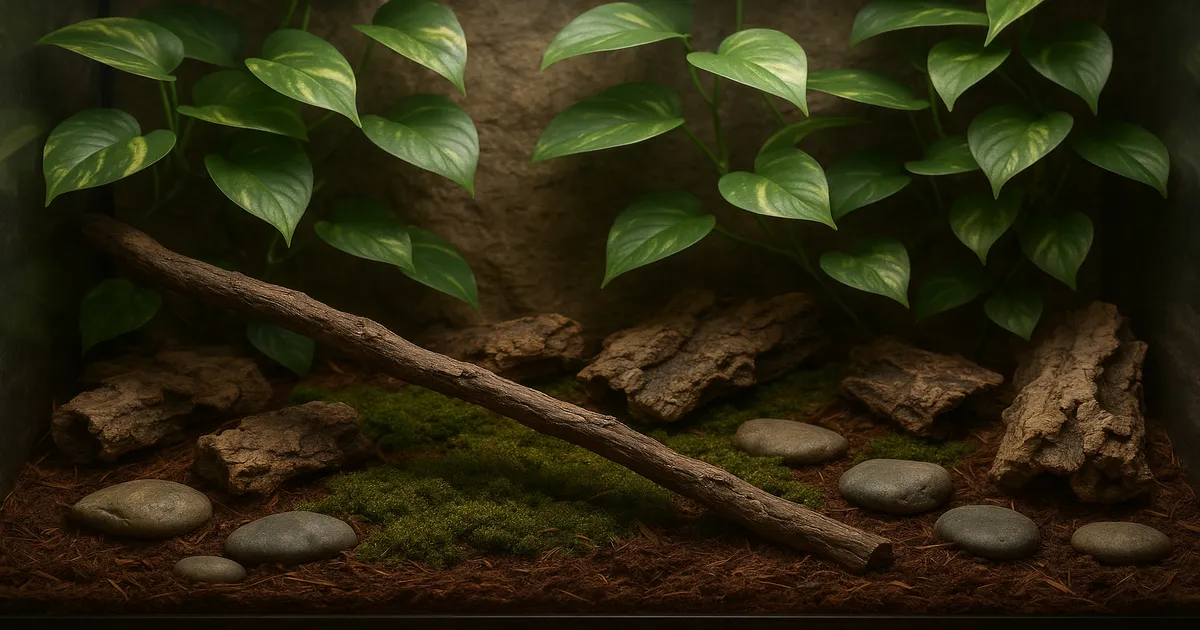
Don’t use orchid bark as a primary substrate — it retains moisture unevenly, can harbour mould, and large pieces are an ingestion risk. What it is good for is as a surface dressing in the humid hide or shaded cool end. A thin layer of orchid bark or dried oak leaf litter on top of your main mix adds natural texture and helps maintain localised humidity exactly where you need it.
Substrates to Avoid
Some of these are genuinely dangerous. Don’t let a low price or clever marketing talk you into any of the following:
- Pure sand — dries instantly, can’t hold burrow structure, zero humidity. Impaction risk if ingested in volume.
- Calcium sand / Vita-Sand — the “digestible calcium” marketing is a myth. It causes serious gut impaction. Avoid entirely.
- Cedar or pine shavings — aromatic oils in both are toxic to reptiles. Full stop.
- Wood chips or large bark chips — mould risk, poor humidity retention, and tortoises will eat them.
- Reptile carpet / astroturf — prevents burrowing, shreds nails, and bacteria accumulate in the fibres faster than you can clean it.
- Gravel or pea gravel — hard on the plastron, impaction risk, completely unnatural.
- Cat litter — never.
- Paper towels / newspaper — fine for a quarantine tub or a sick animal that needs monitoring, not for a permanent setup.
- Silica sand — fine particles cause respiratory irritation and eye problems. It’s not the same as play sand.
How to Set Up Your Substrate Layer
Depth
- Indoor enclosures: 4 inches (10 cm) minimum; 6 inches (15 cm) is what you should actually aim for
- Outdoor enclosures: 12 inches (30 cm) — this supports full burrowing and allows tortoises to self-regulate temperature by digging down
Two inches of topsoil mix doesn’t allow burrowing, doesn’t buffer temperature, and dries out in hours. Shallow substrate is one of the most common mistakes I see, and one of the easiest to fix.
Moisture Gradient
Water the cool-end substrate more heavily when you first set up the enclosure and leave the basking end dry. The tortoise will seek out the moisture level it needs, just as it would moving across a hillside in the wild. You’re not aiming for wet mud at one end — just noticeably more moisture. A squeezed handful should barely hold its shape.
Lightly mist the cool-end substrate every 2–3 days to maintain this. Don’t mist the tortoise directly, and don’t spray the enclosure walls — that just raises ambient humidity without benefiting the tortoise and can cause respiratory problems in a poorly ventilated setup.
Target Humidity Levels
- Ambient (most of the enclosure): 40–60% RH
- Humid hide / cool end: 70–80% RH
- Basking area: 30–40% RH
A digital hygrometer at each end of the enclosure will tell you where you actually are versus where you think you are. The Inkbird IBS-TH2 is inexpensive and accurate enough for this purpose.
Drainage Base Layer
Put down a 1–2 inch (2–5 cm) base layer of coarse sand or fine gravel before adding your main substrate mix. This prevents the bottom of your substrate from becoming waterlogged and anaerobic — which is where bacterial and fungal problems start. Small step, real difference over time.
Useful Additions
I add crushed oyster shell or cuttlefish bone to my substrate mix at about 5–10% by volume. It nudges the pH toward the alkaline range of natural Mediterranean soils and provides incidental calcium as the tortoise grazes. It’s not a substitute for proper supplementation, but it mirrors what they’d encounter naturally.
If you’re using garden topsoil or anything wild-collected, bake it first. Spread it on a baking sheet and heat at 250°F (120°C) for 30 minutes. This kills pathogens, mould spores, and invertebrate eggs. Bagged commercial topsoil is lower risk, but I still bake it when setting up a hatchling enclosure.
Substrate and Pyramiding
Pyramiding — that stacked, uneven scute growth you see in poorly kept tortoises — is strongly linked to chronically low humidity during growth phases. Substrate that holds zero moisture contributes directly to this. A substrate that maintains a humidity gradient isn’t optional for growing tortoises; it’s the difference between a smooth, healthy shell and permanent deformity. This is one reason I’m so insistent on the topsoil-sand mix over pure sand setups.
Common Mistakes and Quick Fixes
Substrate too shallow — 1–2 inches prevents burrowing and thermal buffering. Add more mix until you hit at least 4 inches (10 cm), ideally 6 inches (15 cm).
Bone-dry substrate throughout — this is a Mediterranean tortoise, not a desert species. Establish a moisture gradient with the cool end noticeably damper than the basking end.
Fertilised or treated topsoil — garden centre topsoil often contains fertilizers, perlite, or pesticide residues. Read the label. Choose certified organic, additive-free topsoil and bake it before use.
Neglecting substrate maintenance — urates, bacteria, and mould accumulate over time. Spot-clean daily and do a full substrate replacement every 3–6 months depending on how many animals you’re keeping.
Checking surface temperature — air temperature and substrate surface temperature aren’t the same thing. Use an infrared thermometer to check what the substrate surface reads under your basking lamp. It should sit around 95–100°F (35–38°C). I’ve seen substrate hit 110–115°F (43–46°C) under a powerful lamp — hot enough to cause plastron burns.
Frequently Asked Questions
What is the best substrate for a Hermann’s tortoise?
A 70:30 blend of peat-free organic topsoil and play sand is the best all-round choice. It mimics the sandy-loam soils of their Mediterranean habitat, holds burrow structure, supports a humidity gradient, and is cheap to source. For hatchlings, a 50:30:20 mix of coconut coir, topsoil, and play sand is a softer alternative.
How deep should the substrate be?
The minimum for an indoor enclosure is 4 inches (10 cm), but 6 inches (15 cm) is strongly preferred for adults — especially Eastern Hermann’s. Outdoor enclosures should have at least 12 inches (30 cm) to allow full burrowing and natural thermoregulation.
Can I use coconut coir on its own?
No. Pure coir becomes dusty when dry, lacks mineral content, and can irritate the respiratory tract. Mix it at roughly 50% coir, 30% topsoil, and 20% play sand. This combination works particularly well for hatchlings.
Which substrates are dangerous for Hermann’s tortoises?
Calcium sand and Vita-Sand cause gut impaction despite being marketed as safe. Cedar and pine shavings contain aromatic oils toxic to all reptiles. Silica sand causes respiratory irritation. Reptile carpet prevents burrowing and harbours bacteria. Stick to organic topsoil-based mixes and you’ll sidestep all of these.
How often should I change the substrate?
Spot-clean daily to remove urates, faeces, and uneaten food. Full replacement every 3–6 months — more frequently in smaller enclosures or with multiple animals. Replacing substrate too often disrupts the beneficial microbial balance that helps manage waste naturally, so monthly full changes aren’t doing you any favours if you’re keeping on top of daily spot-cleaning.