
Quick Answer: Veiled chameleons shed in patches over several days to two weeks — not in one piece like a snake. The most important thing you can do is bump misting to 3–5 sessions daily, run a cool-mist fogger for 2–3 hours before lights-on, and make sure the enclosure has rough branches and live plants for the chameleon to rub against. Never pull shed skin, and keep your hands off until at least 48–72 hours after the shed looks complete.
Knowing how to help a veiled chameleon shed comes down to one thing more than anything else: humidity. Almost every case of retained shed I’ve seen — in my own animals and in setups I’ve helped troubleshoot — traces back to inadequate moisture, not some mysterious health condition. Get the humidity right, give them something rough to rub against, and most veiled chameleons will shed cleanly without any help from you.
Understanding Veiled Chameleon Shedding
How It Differs from Snake Shedding
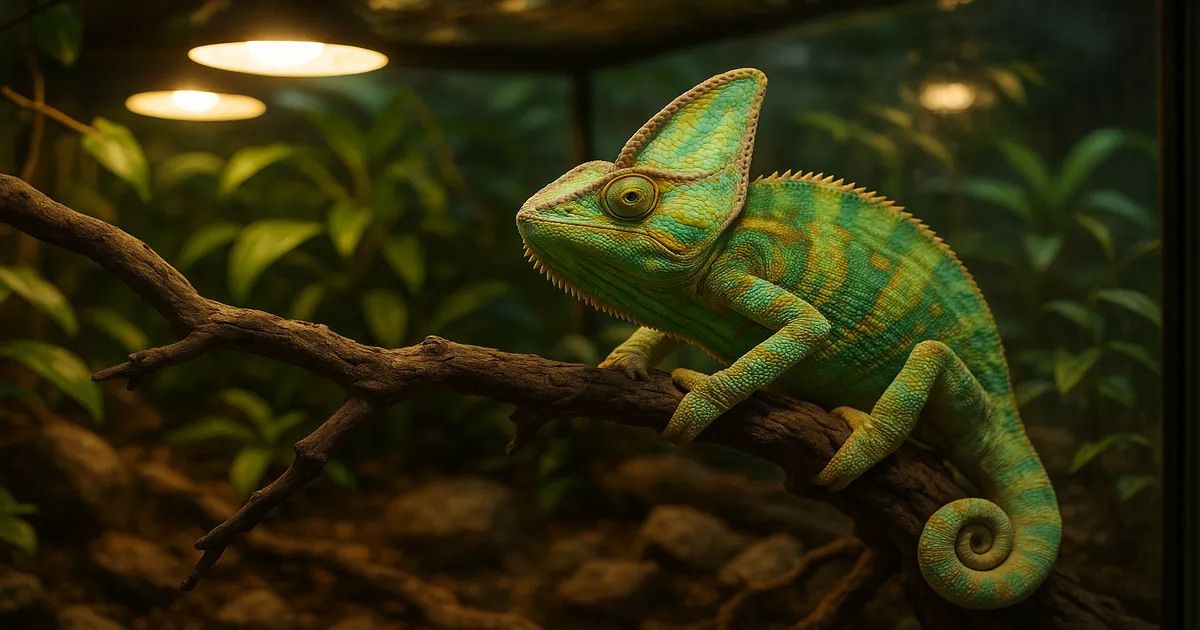
If you’re coming from snake keeping, forget everything you know. Veiled chameleons don’t peel out of their skin in one satisfying piece — they shed in patches and fragments, starting around the casque and head, then working down the body, limbs, and tail over several days to two weeks. It looks messy and incomplete. That’s completely normal.
You’ll also rarely catch them in the act. Most shedding happens overnight or in short early-morning bursts, which is why a lot of keepers don’t realize a shed is underway until they spot a patch of dull, hanging skin on the casque.
How Often Do Veiled Chameleons Shed?
- Juveniles (under 12 months): Every 3–6 weeks — they’re growing fast
- Adults: Every 4–8 weeks, depending on health, season, and growth rate
Frequent shedding in a young animal is a good sign. If shedding slows dramatically in an adult, look at nutrition and husbandry before assuming something is wrong.
Signs a Shed Is Coming
- Dull, grayish, or washed-out coloration
- Reduced appetite (1–3 days before and during)
- Increased stillness or hiding
- Skin beginning to lift around the casque or eye turrets
- Slightly puffy-looking eye turrets
- Mild irritability — some individuals get noticeably grumpier
How to Help a Veiled Chameleon Shed: Humidity First
The Wet/Dry Cycle Explained
Wild veiled chameleons in Yemen’s highlands wake up to morning fog and coastal dew, then spend the afternoon in relatively dry conditions. That’s the pattern you’re replicating. The goal is wet/dry cycling — regular high-humidity spikes followed by a proper drying-out period. Constant saturation causes respiratory infections and bacterial dermatitis, so don’t just crank the fogger and walk away.
Target ranges:
- Daytime ambient: 30–50%
- During misting spikes: 80–100%
- Overnight: 70–80%
Increasing Misting During a Shed
Once you notice pre-shed signs, bump your misting frequency to 3–5 sessions daily, each running 2–5 minutes. A 30-second mist does almost nothing. The enclosure needs to be thoroughly wet — droplets on every surface — for the ambient humidity to actually spike and for the chameleon to drink properly.
An automated misting system makes this dramatically easier. Manual misting on a consistent schedule is one of the most common failure points I see with new keepers. Life gets busy, you miss a session, and suddenly you’ve got retained shed on three toes.
The Overnight Fogger Protocol
This is the single biggest upgrade you can make during a shed. Run a cool-mist ultrasonic fogger for 2–3 hours before your lights turn on — somewhere around 4–6 AM. (Zoo Med Reptifogger) It mimics the highland morning fog that wild chameleons wake up to, and the difference in shed quality is noticeable. I’ve watched chameleons knock out huge sections of a shed in the first hour after lights-on when this protocol is running.
Don’t run the fogger all night. Two to three hours before dawn is the sweet spot — enough to raise overnight humidity without leaving the enclosure soaking wet for hours.
Enclosure Setup That Supports Easy Shedding
Enclosure Type and Size
Screen enclosures work well in most climates and provide the ventilation veiled chameleons need. (Zoo Med ReptiBreeze 24x24x48) If you’re in a desert region — Arizona, Nevada, parts of the Southwest — you’ll lose humidity so fast through screen walls that maintaining proper misting spikes becomes a constant battle. In that case, a PVC or hybrid enclosure with screened top and front panels is the smarter choice. (Dragon Strand Tall Boy)
Minimum enclosure sizes:
- Adult male: 24” × 24” × 48” (60 × 60 × 120 cm)
- Adult female: 18” × 18” × 36” (45 × 45 × 90 cm)
Bigger is always better. A cramped enclosure limits the chameleon’s ability to move between humid and dry zones, which matters more during a shed than at any other time.
Live Plants and Rough Branches
Most people treat plants and branches as decoration. They’re not — they’re functional shedding equipment. Live plants hold water droplets for hours after misting, sustaining humidity in localized zones. Rough-textured branches give the chameleon physical surfaces to rub against to work off loose patches.
Good plant choices: pothos, schefflera, hibiscus, ficus. For branches, cork bark tubes, manzanita, and grapevine wood all have the right texture. Vary branch diameters from pencil-thin to about 1.5 inches (4 cm) — the thinner branches are especially useful for working shed off the toes and feet.
One trick that works well: direct one misting nozzle at a dense plant cluster in the upper third of the enclosure. The chameleon can move into that zone when it needs moisture, while the rest of the enclosure maintains better airflow.
Temperature Ranges
- Basking spot: 90–95°F (32–35°C) for adults
- Ambient cool side: 72–78°F (22–26°C)
- Nighttime drop: 60–70°F (15–21°C)
The nighttime temperature drop matters. It mimics highland conditions and supports the hormonal cycles that regulate shedding. Never let the basking spot exceed 100°F (38°C) — heat stress dehydrates the animal and is a direct path to dysecdysis.
Use an infrared temperature gun for basking spot readings. (Etekcity Lasergrip 774) Dial thermometers stuck to the side of the enclosure are nearly useless for this.
How to Treat Retained Shed on a Veiled Chameleon
Retained Shed on Toes and Tail Tip
Retained shed on the toes or tail tip is an emergency. Constriction can cut off circulation and cause necrosis within days — digit loss is a real outcome if you don’t act quickly.
Treatment:
- Soak a small piece of paper towel in lukewarm water (85–90°F / 29–32°C)
- Wrap it loosely around the affected foot or tail tip
- Place the chameleon in a secure, ventilated container for 10–15 minutes
- Use a damp cotton swab in a rolling motion — never pulling — to gently remove the softened shed
The shed should release with almost no resistance. If you’re applying any real force, the skin isn’t ready. Add more moisture and wait.
Retained Shed Around the Eye Turrets
The eyes need extra caution. Never try to peel shed from around the eye turrets with dry fingers or tweezers.
- Apply a few drops of sterile saline eyewash (standard 0.9% NaCl contact lens saline works fine) directly to the eye area
- Wait 5 minutes
- Attempt gentle removal with a damp cotton swab
If the shed doesn’t release after two saline applications, stop and see a reptile vet. Retained shed around the eye turrets can restrict eye rotation and cause vision problems — don’t force it.
When to See a Vet
A healthy shed completes in 3–10 days. If shed is still present after 14 days, the animal is lethargic, or you can see constriction rings forming on toes or tail, get to a reptile-experienced vet. Don’t wait on constriction — that’s a same-day call.
Common Mistakes That Cause Shedding Problems
Handling during a shed. Put the animal down and leave it alone. New skin is vascular and sensitive — handling causes stress, can tear fresh skin, and leads to retained patches in areas the chameleon can’t reach. No handling from the first pre-shed signs until at least 48–72 hours after the shed looks complete.
Pulling dry shed skin. I can’t say this enough: pulling dry shed skin, especially around the toes, tail tip, and eye turrets, causes permanent damage. Constriction injuries, digit loss, scarring — all from impatience. If it’s not sliding off with the gentlest possible pressure after thorough moistening, it needs more time and moisture.
Humidity errors. Too low is the most common cause of dysecdysis, especially in dry climates. Too high constantly causes respiratory infections. Misting sessions under 30 seconds are effectively useless. Pick one and fix it.
Supplementation mistakes. Over-supplementing retinol vitamin A (hypervitaminosis A) causes severe dysecdysis and skin sloughing. Use only beta-carotene sources — Repashy Calcium Plus LoD is a solid choice. Limit multivitamin dusting to twice monthly and use plain calcium for the rest of your feedings.
Diet and Hydration During a Shed
Internal hydration matters as much as environmental humidity. During a shed, lean heavily on hornworms (Manduca sexta) — they’re approximately 85% water and function almost like a hydration supplement in feeder form. Silkworms are another excellent option. Temporarily pull back on crickets and other dry-bodied feeders; you want every calorie to come with as much moisture as possible.
Watch for these dehydration signs, especially during a shed:
- Sunken eyes
- Yellow or orange urates (healthy urates are white)
- Skin that doesn’t spring back quickly when gently pinched
- Wrinkled or loose skin along the flanks
If you’re seeing any of these, increase misting frequency immediately and add hornworms to the rotation.
Frequently Asked Questions
How long does it take a veiled chameleon to shed?
Anywhere from 3 to 10 days, with patches coming off at different times. If shed is still present after 14 days, something is off — usually humidity — and you should address it actively rather than waiting.
Should I mist more when my veiled chameleon is shedding?
Yes, noticeably more. Bump from your standard 2–4 daily sessions up to 3–5, and make sure each session runs a full 2–5 minutes. Adding an overnight cool-mist fogger for 2–3 hours before lights-on makes a significant difference in shed quality.
What do I do if my veiled chameleon has retained shed on its toes?
Treat it within 24–48 hours — don’t wait for it to fall off on its own. Wrap the affected foot in a lukewarm damp paper towel, keep the chameleon in a ventilated container for 10–15 minutes, then use a damp cotton swab in a rolling motion to gently remove the softened shed. Never pull.
Is it normal for a veiled chameleon to stop eating during a shed?
Completely normal. Reduced appetite typically starts 1–3 days before the shed begins and may continue through it. Most animals resume normal feeding within a day or two of finishing. If appetite doesn’t return within a week after shedding is done, that’s worth investigating.
Can I handle my veiled chameleon while it’s shedding?
No. The new skin underneath is sensitive and vascular, and handling causes stress that can lead to retained shed. Leave the animal alone from the time you notice pre-shed signs until at least 48–72 hours after the shed appears complete.